Introduction
Attack Surface Management (ASM) platforms help organizations discover, monitor, and secure all internet-facing assets that could be exposed to cyber threats. In simple terms, ASM gives you a complete view of everything attackers can see—domains, IPs, APIs, cloud assets, shadow IT—and continuously checks for vulnerabilities or misconfigurations.
As businesses rapidly adopt cloud, SaaS, APIs, and distributed systems, their attack surface grows faster than traditional security tools can track. ASM platforms solve this by providing continuous visibility, risk prioritization, and automated monitoring, helping security teams proactively reduce exposure before attackers exploit it.
Common Use Cases
- Discovering unknown or shadow IT assets
- Monitoring external attack surface continuously
- Identifying exposed services, APIs, and credentials
- Prioritizing vulnerabilities based on real-world risk
- Supporting compliance and security audits
What Buyers Should Evaluate
- Asset discovery accuracy and coverage
- Continuous monitoring capabilities
- Risk prioritization and scoring
- Integration with security tools (SIEM, SOAR, EDR)
- Ease of use and reporting
- Automation and alerting
- Cloud and API visibility
- Scalability for large environments
- Security and compliance features
- Vendor support and ecosystem
Best for: Security teams, SOC analysts, enterprises, cloud-first organizations, and companies managing large digital footprints.
Not ideal for: Small businesses with limited online presence or organizations relying only on internal security tools without external exposure concerns.
Key Trends in Attack Surface Management (ASM)
- AI-driven asset discovery: Automated identification of unknown assets
- Continuous monitoring over periodic scans: Real-time visibility instead of scheduled assessments
- Integration with SOAR and SIEM: Faster incident response workflows
- Cloud and SaaS visibility: Expanding beyond traditional infrastructure
- Risk-based prioritization: Focusing on exploitable vulnerabilities first
- External attack surface + internal visibility merging
- Automation in remediation workflows
- API and microservices monitoring
- Third-party risk visibility (supply chain security)
- Security posture dashboards for executives
How We Selected These Tools (Methodology)
- Evaluated market leaders and widely adopted ASM platforms
- Assessed asset discovery depth and accuracy
- Reviewed continuous monitoring and alerting capabilities
- Considered integration with broader security ecosystem
- Evaluated ease of use and reporting clarity
- Analyzed security and compliance features
- Considered performance and scalability
- Reviewed vendor reputation and enterprise adoption
- Balanced enterprise and mid-market solutions
- Focused on real-world usability and modern security needs
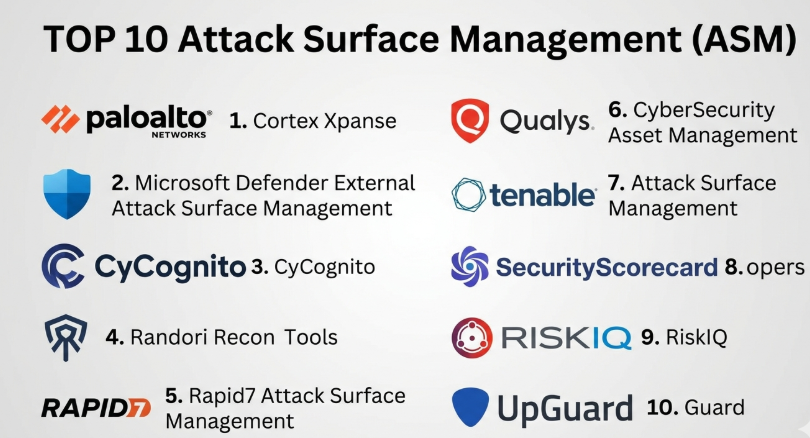
Top Attack Surface Management (ASM) Platforms
#1 — Palo Alto Cortex Xpanse
Short description: Enterprise-grade ASM platform providing real-time visibility into global attack surfaces and proactive risk management.
Key Features
- Continuous asset discovery
- Real-time risk detection
- Internet-wide scanning
- Cloud and SaaS visibility
- Automated alerting
- Integration with Cortex ecosystem
Pros
- Highly accurate asset discovery
- Strong enterprise capabilities
Cons
- Premium pricing
- Complex setup
Platforms / Deployment
Cloud
Security & Compliance
Encryption, RBAC; others Not publicly stated
Integrations & Ecosystem
Integrates deeply with security platforms
- SIEM tools
- SOAR platforms
- Cloud services
Support & Community
Enterprise-level support with strong documentation
#2 — Microsoft Defender External Attack Surface Management
Short description: ASM solution integrated with Microsoft security ecosystem for external asset visibility.
Key Features
- Continuous discovery
- Asset inventory management
- Risk prioritization
- Threat intelligence integration
- Cloud-native architecture
Pros
- Strong Microsoft integration
- Easy deployment for Azure users
Cons
- Best within Microsoft ecosystem
- Limited standalone usage
Platforms / Deployment
Cloud
Security & Compliance
MFA, RBAC, encryption; others Not publicly stated
Integrations & Ecosystem
- Microsoft Defender
- Azure services
- Security tools
Support & Community
Strong enterprise support
#3 — CyCognito
Short description: ASM platform focused on identifying exposed assets and prioritizing real risks.
Key Features
- Automated asset discovery
- Risk prioritization
- Attack simulation
- Continuous monitoring
- Security analytics
Pros
- Strong risk prioritization
- Good automation
Cons
- Limited ecosystem
- Pricing not transparent
Platforms / Deployment
Cloud
Security & Compliance
Not publicly stated
Integrations & Ecosystem
- Security tools
- APIs
- Cloud platforms
Support & Community
Good enterprise support
#4 — Randori Recon
Short description: ASM platform emphasizing attacker perspective and offensive security insights.
Key Features
- External asset discovery
- Attack surface mapping
- Risk scoring
- Threat intelligence
- Continuous monitoring
Pros
- Attacker-focused insights
- Strong risk prioritization
Cons
- Niche approach
- Smaller ecosystem
Platforms / Deployment
Cloud
Security & Compliance
Not publicly stated
Integrations & Ecosystem
- Security tools
- APIs
Support & Community
Moderate support
#5 — Rapid7 Attack Surface Management
Short description: ASM solution integrated with Rapid7’s security ecosystem for visibility and risk management.
Key Features
- Asset discovery
- Risk prioritization
- Vulnerability insights
- Integration with Insight platform
- Continuous monitoring
Pros
- Strong integration with Rapid7
- Good reporting
Cons
- Limited outside ecosystem
- Moderate learning curve
Platforms / Deployment
Cloud
Security & Compliance
Not publicly stated
Integrations & Ecosystem
- InsightVM
- SIEM
- APIs
Support & Community
Strong documentation
#6 — Qualys CyberSecurity Asset Management
Short description: Asset discovery and ASM solution integrated with Qualys security platform.
Key Features
- Global asset discovery
- Continuous monitoring
- Vulnerability detection
- Cloud visibility
- Reporting dashboards
Pros
- Strong asset visibility
- Enterprise-ready
Cons
- UI complexity
- Requires training
Platforms / Deployment
Cloud
Security & Compliance
Not publicly stated
Integrations & Ecosystem
- Qualys platform
- APIs
- Security tools
Support & Community
Enterprise-level support
#7 — Tenable Attack Surface Management
Short description: ASM solution focused on external exposure and vulnerability prioritization.
Key Features
- External asset discovery
- Risk-based prioritization
- Continuous monitoring
- Vulnerability integration
- Reporting
Pros
- Strong vulnerability integration
- Easy to use
Cons
- Limited automation
- Ecosystem dependency
Platforms / Deployment
Cloud
Security & Compliance
Not publicly stated
Integrations & Ecosystem
- Tenable platform
- APIs
- Security tools
Support & Community
Good support
#8 — SecurityScorecard
Short description: Platform focused on external security ratings and attack surface visibility.
Key Features
- External asset monitoring
- Security scoring
- Risk insights
- Third-party risk analysis
- Reporting
Pros
- Easy-to-understand scoring
- Strong reporting
Cons
- Limited deep scanning
- Focused on external view
Platforms / Deployment
Cloud
Security & Compliance
Not publicly stated
Integrations & Ecosystem
- Security tools
- APIs
- Risk platforms
Support & Community
Good documentation
#9 — RiskIQ (Microsoft)
Short description: Digital footprint discovery platform integrated into Microsoft security ecosystem.
Key Features
- Internet asset discovery
- Threat intelligence
- Asset correlation
- Continuous monitoring
- Risk insights
Pros
- Strong threat intelligence
- Microsoft ecosystem
Cons
- Integration dependency
- Complex setup
Platforms / Deployment
Cloud
Security & Compliance
Not publicly stated
Integrations & Ecosystem
- Microsoft Defender
- Threat intelligence tools
Support & Community
Enterprise support
#10 — UpGuard
Short description: ASM and risk management platform focused on external security posture.
Key Features
- Asset discovery
- Risk scoring
- Third-party risk monitoring
- Continuous monitoring
- Reporting
Pros
- Simple interface
- Good for risk management
Cons
- Limited deep technical scanning
- Smaller ecosystem
Platforms / Deployment
Cloud
Security & Compliance
Not publicly stated
Integrations & Ecosystem
- APIs
- Security tools
- Risk platforms
Support & Community
Moderate support
Comparison Table (Top 10)
| Tool Name | Best For | Platform(s) Supported | Deployment | Standout Feature | Public Rating |
|---|---|---|---|---|---|
| Cortex Xpanse | Enterprise ASM | Web | Cloud | Internet-wide visibility | N/A |
| Microsoft Defender ASM | Microsoft users | Web | Cloud | Ecosystem integration | N/A |
| CyCognito | Risk prioritization | Web | Cloud | Attack simulation | N/A |
| Randori Recon | Offensive insights | Web | Cloud | Attacker perspective | N/A |
| Rapid7 ASM | Rapid7 users | Web | Cloud | Integrated security stack | N/A |
| Qualys ASM | Asset visibility | Web | Cloud | Global discovery | N/A |
| Tenable ASM | Vulnerability focus | Web | Cloud | Risk-based scoring | N/A |
| SecurityScorecard | Risk scoring | Web | Cloud | Security ratings | N/A |
| RiskIQ | Threat intelligence | Web | Cloud | Digital footprint | N/A |
| UpGuard | Risk management | Web | Cloud | Third-party risk | N/A |
Attack Surface Management (ASM)
| Tool Name | Core (25%) | Ease (15%) | Integrations (15%) | Security (10%) | Performance (10%) | Support (10%) | Value (15%) | Weighted Total |
|---|---|---|---|---|---|---|---|---|
| Cortex Xpanse | 9 | 7 | 8 | 9 | 9 | 9 | 7 | 8.4 |
| Microsoft Defender | 8 | 8 | 9 | 8 | 8 | 9 | 8 | 8.3 |
| CyCognito | 8 | 7 | 7 | 8 | 8 | 8 | 7 | 7.8 |
| Randori | 7 | 7 | 6 | 7 | 8 | 7 | 7 | 7.2 |
| Rapid7 ASM | 8 | 8 | 8 | 8 | 8 | 8 | 7 | 8.0 |
| Qualys ASM | 8 | 7 | 8 | 8 | 8 | 8 | 7 | 7.9 |
| Tenable ASM | 8 | 8 | 7 | 8 | 8 | 8 | 7 | 7.9 |
| SecurityScorecard | 7 | 9 | 7 | 7 | 7 | 8 | 8 | 7.6 |
| RiskIQ | 8 | 7 | 8 | 8 | 8 | 8 | 7 | 7.9 |
| UpGuard | 7 | 8 | 7 | 7 | 7 | 7 | 8 | 7.3 |
How to interpret scores:
These scores are comparative benchmarks across the listed tools. Higher scores indicate stronger capabilities relative to others in this list. Enterprises should prioritize integration and security, while smaller teams may focus on ease of use and value.
Which Attack Surface Management (ASM) Platform Is Right for You?
Solo / Freelancer
- Not typically required
- Consider basic security scanning tools
SMB
- Best: UpGuard, SecurityScorecard
- Focus on simplicity and affordability
Mid-Market
- Best: Tenable, Rapid7, Qualys
- Balance visibility and cost
Enterprise
- Best: Cortex Xpanse, Microsoft Defender, CyCognito
- Focus on scale, automation, and integrations
Budget vs Premium
- Budget: UpGuard, SecurityScorecard
- Premium: Cortex Xpanse, CyCognito
Feature Depth vs Ease of Use
- Advanced: Cortex Xpanse, CyCognito
- Easy: SecurityScorecard, UpGuard
Integrations & Scalability
- High: Microsoft Defender, Rapid7
- Moderate: Tenable, Qualys
Security & Compliance Needs
- High: Cortex Xpanse, Microsoft Defender
- Moderate: Tenable, Qualys
Attack Surface Management (ASM)
What is ASM in cybersecurity?
ASM helps organizations identify and monitor all externally exposed assets to reduce security risks.
How is ASM different from vulnerability scanning?
ASM focuses on discovering assets first, then assessing risk, while vulnerability scanners focus on known systems.
Is ASM necessary for small businesses?
Not always, unless they have significant online exposure.
How much does ASM cost?
Pricing varies widely depending on scale and features.
Can ASM tools prevent attacks?
They reduce risk but do not replace security controls.
How long does implementation take?
Typically quick for SaaS tools but depends on complexity.
Are ASM tools cloud-based?
Most modern ASM tools are cloud-native.
What are common mistakes?
Ignoring shadow IT and not acting on discovered risks.
Can ASM integrate with SIEM/SOAR?
Yes, most tools support integrations.
What are alternatives to ASM?
Manual asset tracking or vulnerability scanning, though less effective.
Conclusion
Attack Surface Management (ASM) platforms have become a critical component of modern cybersecurity strategies as organizations continue to expand their digital footprint. With increasing reliance on cloud, APIs, and distributed systems, maintaining visibility over external assets is no longer optional. Leading solutions like Cortex Xpanse and Microsoft Defender provide enterprise-grade capabilities, while tools like UpGuard and SecurityScorecard offer simpler approaches for smaller teams. The right choice depends on your organization’s scale, security maturity, and integration needs. Instead of choosing based on features alone, focus on visibility accuracy, risk prioritization, and ecosystem compatibility. Start by shortlisting a few tools, run a pilot, and validate how effectively they uncover and manage your real-world attack surface.
