Introduction
Product Feedback & Roadmap Tools help teams collect user feedback, prioritize features, and communicate product direction in a structured way. In simple terms, these tools act as a bridge between customers, product teams, and stakeholders, ensuring that product decisions are based on real user needs rather than assumptions.
In today’s fast-moving digital landscape, especially with AI-driven products and rapid release cycles, these tools have become essential. Companies can no longer rely on gut decisions—data-backed product development is now the standard.
Real-world use cases:
- SaaS companies collecting feature requests from users
- Product managers prioritizing backlog using customer insights
- Customer success teams tracking user pain points
- Startups validating product-market fit quickly
- Enterprises aligning roadmap with stakeholder expectations
What buyers should evaluate:
- Feedback collection channels (in-app, email, surveys)
- Roadmap visualization and sharing capabilities
- Prioritization frameworks (RICE, voting, scoring)
- Integration ecosystem (CRM, support tools, dev tools)
- Automation and AI insights
- Security and compliance
- Scalability for growing teams
- Customization and workflow flexibility
Best for: Product managers, SaaS founders, UX teams, customer success teams, and enterprises building customer-centric products.
Not ideal for: Very small teams with no structured product process or businesses that don’t rely on user feedback (e.g., internal-only tools).
Key Trends in Product Feedback & Roadmap Tools
- AI-powered feedback analysis to automatically categorize and prioritize user inputs
- Unified product experience platforms combining feedback, roadmap, and analytics
- Real-time collaboration across distributed product teams
- Customer-facing roadmaps for transparency and engagement
- Integration-first ecosystems with tools like Jira, Slack, Zendesk, and GitHub
- Automation workflows for feedback routing and tagging
- Privacy and compliance focus (GDPR-ready data handling)
- In-app feedback widgets replacing traditional surveys
- Usage-based prioritization combining behavioral analytics with feedback
- Flexible pricing models for startups vs enterprise scale
How We Selected These Tools (Methodology)
- Evaluated market adoption and brand recognition
- Assessed feature completeness across feedback + roadmap workflows
- Considered performance and reliability signals
- Reviewed security and compliance posture
- Checked integration ecosystem and API capabilities
- Analyzed fit across SMB, mid-market, and enterprise
- Focused on product innovation and AI capabilities
- Ensured global usability and scalability
- Prioritized tools with active development and community usage
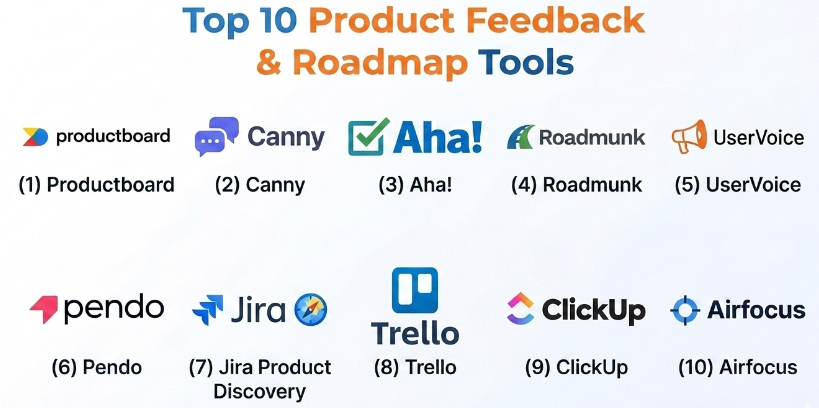
Top 10 Product Feedback & Roadmap Tools
#1 — Productboard
Short description: A leading product management platform that helps teams collect feedback, prioritize features, and build customer-driven roadmaps. Ideal for product teams in scaling SaaS companies.
Key Features
- Centralized feedback repository
- Feature prioritization frameworks
- Customer segmentation insights
- Interactive roadmap sharing
- AI-assisted insights
- Product portal for stakeholders
Pros
- Strong prioritization capabilities
- Enterprise-grade roadmap visibility
Cons
- Learning curve for new users
- Pricing can scale quickly
Platforms / Deployment
Web / Cloud
Security & Compliance
SSO, RBAC, encryption; SOC 2 (commonly referenced)
Integrations & Ecosystem
Integrates with Jira, Slack, Salesforce, Zendesk.
- REST APIs
- CRM integrations
- Dev tools integration
Support & Community
Strong documentation, onboarding support, enterprise support tiers.
#2 — Canny
Short description: A simple yet powerful feedback management tool designed for startups and SMBs to collect, prioritize, and act on user feedback.
Key Features
- Public feedback boards
- Voting system
- Roadmap sharing
- Changelog updates
- User segmentation
- Feedback tagging
Pros
- Easy to use
- Clean UI
Cons
- Limited advanced analytics
- Less suited for enterprise
Platforms / Deployment
Web / Cloud
Security & Compliance
SSO, GDPR; others not publicly stated
Integrations & Ecosystem
Slack, Intercom, Zapier integrations
- API access
- Lightweight integrations
Support & Community
Good documentation; community-driven support.
#3 — Aha!
Short description: A comprehensive product roadmap and strategy platform used by enterprises for advanced planning and execution.
Key Features
- Strategy roadmaps
- Idea management
- Release planning
- Goal tracking
- Custom workflows
- Reporting dashboards
Pros
- Extremely feature-rich
- Strong enterprise capabilities
Cons
- Complex interface
- Expensive for small teams
Platforms / Deployment
Web / Cloud
Security & Compliance
SSO, encryption, audit logs; SOC 2 (commonly referenced)
Integrations & Ecosystem
Jira, Azure DevOps, Slack
- API integrations
- Enterprise connectors
Support & Community
Premium support tiers, strong enterprise onboarding.
#4 — Roadmunk
Short description: A roadmap-focused tool that helps product teams visualize and communicate product strategies effectively.
Key Features
- Timeline and swimlane roadmaps
- Drag-and-drop interface
- Prioritization scoring
- Scenario planning
- Collaboration tools
Pros
- Excellent roadmap visualization
- Easy to use
Cons
- Limited feedback collection
- Less analytics depth
Platforms / Deployment
Web / Cloud
Security & Compliance
Not publicly stated
Integrations & Ecosystem
Jira, Slack integrations
- API access
Support & Community
Standard documentation and support.
#5 — UserVoice
Short description: A long-standing feedback platform that enables companies to capture and act on customer insights.
Key Features
- Feedback forums
- Voting system
- Customer insights
- Roadmap sharing
- Analytics dashboards
Pros
- Proven platform
- Good feedback workflows
Cons
- UI feels dated
- Limited innovation
Platforms / Deployment
Web / Cloud
Security & Compliance
Not publicly stated
Integrations & Ecosystem
CRM and support tools
- API support
Support & Community
Moderate support; legacy user base.
#6 — Pendo
Short description: A product experience platform combining analytics, feedback, and in-app guidance for data-driven decisions.
Key Features
- In-app feedback collection
- Product analytics
- User behavior tracking
- Roadmap insights
- Guides and onboarding
Pros
- Strong analytics
- All-in-one platform
Cons
- Expensive
- Requires setup effort
Platforms / Deployment
Web / Cloud
Security & Compliance
SSO, encryption; SOC 2 (commonly referenced)
Integrations & Ecosystem
CRM, analytics, dev tools
- APIs
- Data integrations
Support & Community
Enterprise-level support and training.
#7 — Jira Product Discovery
Short description: A feedback and prioritization tool integrated within the Atlassian ecosystem, ideal for teams already using Jira.
Key Features
- Idea management
- Prioritization scoring
- Roadmap views
- Jira integration
- Custom fields
Pros
- Seamless Jira integration
- Flexible workflows
Cons
- Limited standalone usage
- Requires Atlassian ecosystem
Platforms / Deployment
Web / Cloud
Security & Compliance
SSO, RBAC; SOC 2 (Atlassian ecosystem)
Integrations & Ecosystem
Atlassian tools
- APIs
- Dev integrations
Support & Community
Strong community and documentation.
#8 — Trello (for Roadmaps)
Short description: A flexible Kanban-based tool often used for lightweight roadmap and feedback tracking.
Key Features
- Boards and cards
- Custom workflows
- Collaboration tools
- Power-ups
- Simple roadmap tracking
Pros
- Very easy to use
- Flexible
Cons
- Not purpose-built
- Limited analytics
Platforms / Deployment
Web / iOS / Android / Cloud
Security & Compliance
SSO, encryption (Atlassian)
Integrations & Ecosystem
Extensive integrations via Power-Ups
- APIs
Support & Community
Large global community.
#9 — ClickUp
Short description: A versatile work management platform that supports feedback tracking and roadmap planning.
Key Features
- Task management
- Custom dashboards
- Roadmap views
- Feedback tracking
- Automation
Pros
- All-in-one tool
- Highly customizable
Cons
- Can feel cluttered
- Learning curve
Platforms / Deployment
Web / Windows / macOS / iOS / Android
Security & Compliance
SSO, encryption; others not publicly stated
Integrations & Ecosystem
Slack, GitHub, Google Workspace
- APIs
Support & Community
Strong documentation and support.
#10 — Airfocus
Short description: A modular product management platform focused on prioritization and roadmap planning.
Key Features
- Prioritization scoring
- Roadmap visualization
- Custom fields
- Integrations
- Scenario planning
Pros
- Strong prioritization
- Clean UI
Cons
- Limited feedback capture
- Pricing tiers
Platforms / Deployment
Web / Cloud
Security & Compliance
Not publicly stated
Integrations & Ecosystem
Jira, Trello, Slack
- API support
Support & Community
Good onboarding and support.
Comparison Table (Top 10)
| Tool Name | Best For | Platform(s) Supported | Deployment | Standout Feature | Public Rating |
|---|---|---|---|---|---|
| Productboard | Enterprise PM teams | Web | Cloud | Customer-driven prioritization | N/A |
| Canny | Startups | Web | Cloud | Voting-based feedback | N/A |
| Aha! | Enterprise strategy | Web | Cloud | Advanced roadmaps | N/A |
| Roadmunk | Roadmap visualization | Web | Cloud | Visual timelines | N/A |
| UserVoice | Feedback forums | Web | Cloud | Community voting | N/A |
| Pendo | Product analytics | Web | Cloud | Behavior + feedback | N/A |
| Jira Product Discovery | Jira users | Web | Cloud | Native integration | N/A |
| Trello | Lightweight use | Web/iOS/Android | Cloud | Kanban flexibility | N/A |
| ClickUp | All-in-one teams | Multi-platform | Cloud | Custom workflows | N/A |
| Airfocus | Prioritization | Web | Cloud | Scoring models | N/A |
Evaluation & Scoring of Product Feedback & Roadmap Tools
| Tool Name | Core (25%) | Ease (15%) | Integrations (15%) | Security (10%) | Performance (10%) | Support (10%) | Value (15%) | Weighted Total |
|---|---|---|---|---|---|---|---|---|
| Productboard | 9 | 7 | 9 | 8 | 8 | 8 | 7 | 8.2 |
| Canny | 7 | 9 | 7 | 7 | 8 | 7 | 9 | 7.9 |
| Aha! | 10 | 6 | 9 | 8 | 8 | 9 | 6 | 8.3 |
| Roadmunk | 7 | 8 | 7 | 6 | 7 | 7 | 7 | 7.2 |
| UserVoice | 7 | 7 | 7 | 6 | 7 | 7 | 7 | 7.0 |
| Pendo | 9 | 7 | 9 | 8 | 9 | 8 | 6 | 8.3 |
| Jira Product Discovery | 8 | 7 | 9 | 8 | 8 | 8 | 7 | 8.0 |
| Trello | 6 | 10 | 8 | 7 | 8 | 8 | 9 | 7.9 |
| ClickUp | 8 | 7 | 9 | 7 | 8 | 8 | 8 | 8.0 |
| Airfocus | 8 | 8 | 8 | 6 | 7 | 7 | 7 | 7.6 |
How to interpret scores:
These scores are comparative, not absolute. A higher score indicates better overall capability for most use cases, but the best tool depends on your context. For example, startups may prioritize ease and value, while enterprises may prioritize integrations and security.
Which Product Feedback & Roadmap Tools
Solo / Freelancer
Use Canny or Trello for simplicity and low cost.
SMB
ClickUp or Airfocus provide flexibility without enterprise complexity.
Mid-Market
Productboard or Jira Product Discovery balance power and usability.
Enterprise
Aha! or Pendo offer advanced capabilities and scalability.
Budget vs Premium
- Budget: Trello, Canny
- Premium: Aha!, Productboard, Pendo
Feature Depth vs Ease of Use
- Deep features: Aha!, Productboard
- Easy tools: Canny, Trello
Integrations & Scalability
- Best: Jira Product Discovery, Productboard
Security & Compliance Needs
- Enterprise-ready: Productboard, Pendo, Aha!
Frequently Asked Questions (FAQs)
1. What are Product Feedback & Roadmap Tools?
They are platforms that help collect user feedback and translate it into actionable product plans and roadmaps.
2. How much do these tools cost?
Pricing varies widely—from free plans to enterprise subscriptions. Exact pricing is often not publicly stated.
3. Are these tools suitable for startups?
Yes, tools like Canny and Trello are ideal for startups due to simplicity and affordability.
4. Do they integrate with development tools?
Most tools integrate with Jira, GitHub, and Slack to streamline workflows.
5. Can I migrate from one tool to another?
Yes, but migration can require manual effort or API-based data transfer.
6. Are these tools secure?
Most offer SSO, encryption, and RBAC, but certifications vary by vendor.
7. Do they support AI features?
Modern tools increasingly use AI for feedback categorization and prioritization.
8. How long does implementation take?
Simple tools can be set up in hours, while enterprise tools may take weeks.
9. What are common mistakes when choosing a tool?
Overbuying features, ignoring integrations, and not involving stakeholders.
10. What are alternatives to these tools?
Spreadsheets, project management tools, or custom-built solutions.
Conclusion
Product Feedback & Roadmap Tools are no longer optional—they are a core part of building customer-centric products in a competitive market. Whether you are a startup validating ideas or an enterprise managing complex product portfolios, these tools help you make smarter, faster, and more aligned decisions. However, there is no one-size-fits-all solution. The right choice depends on your team size, workflow complexity, integration needs, and budget. A practical next step is to shortlist 2–3 tools that align with your requirements, run a pilot with real use cases, and validate how well they integrate into your existing ecosystem before making a final decision.