Introduction
A Pathology Laboratory Information System (LIS) is software that manages lab workflows—everything from patient sample collection to test processing, reporting, billing, and compliance. In simple terms, it is the digital backbone of pathology labs, replacing manual processes with automated, traceable systems.
healthcare landscape, LIS platforms are more critical than ever. Labs face increasing test volumes, regulatory pressure, and demand for faster turnaround times. At the same time, integration with electronic health records (EHR), AI-assisted diagnostics, and remote access is becoming standard.
Real-world use cases:
- Managing high-volume diagnostic labs with automated workflows
- Tracking samples across collection, testing, and reporting stages
- Integrating lab results into hospital systems (EHR/EMR)
- Supporting pathology imaging and digital pathology workflows
- Ensuring compliance and audit readiness
What buyers should evaluate:
- Workflow automation depth
- Reporting and analytics capabilities
- Integration with EHR/EMR systems
- Scalability for test volume growth
- Data security and compliance features
- AI/automation support
- Deployment flexibility (cloud vs on-premise)
- User experience and training needs
- Vendor support and reliability
Best for: Hospitals, diagnostic labs, pathology chains, research labs, and healthcare IT teams managing lab operations at scale.
Not ideal for: Very small clinics or labs with minimal testing needs—simpler lab tracking tools or spreadsheets may be sufficient.
Key Trends in Pathology Laboratory Information Systems
- AI-assisted diagnostics for anomaly detection and faster result validation
- Cloud-first LIS platforms replacing legacy on-premise systems
- Interoperability standards (FHIR, HL7) enabling seamless data exchange
- Automation of lab workflows including barcode tracking and robotics integration
- Digital pathology integration with imaging and slide management systems
- Real-time analytics dashboards for lab performance and quality metrics
- Compliance-first architecture driven by stricter healthcare regulations
- Mobile access for lab technicians and doctors
- Subscription-based pricing models replacing large upfront costs
- Integration with patient portals and telemedicine systems
How We Selected These Tools (Methodology)
- Strong market presence and adoption across healthcare institutions
- Comprehensive feature coverage for pathology workflows
- Proven performance and reliability in high-volume labs
- Security posture including access control and audit capabilities
- Depth of integration ecosystem (EHR, billing, imaging systems)
- Support for modern deployment models (cloud/hybrid)
- Vendor reputation and long-term product stability
- Flexibility across lab sizes—from SMB to enterprise
- Feedback signals from real-world implementations
- Alignment with future-ready capabilities like AI and analytics
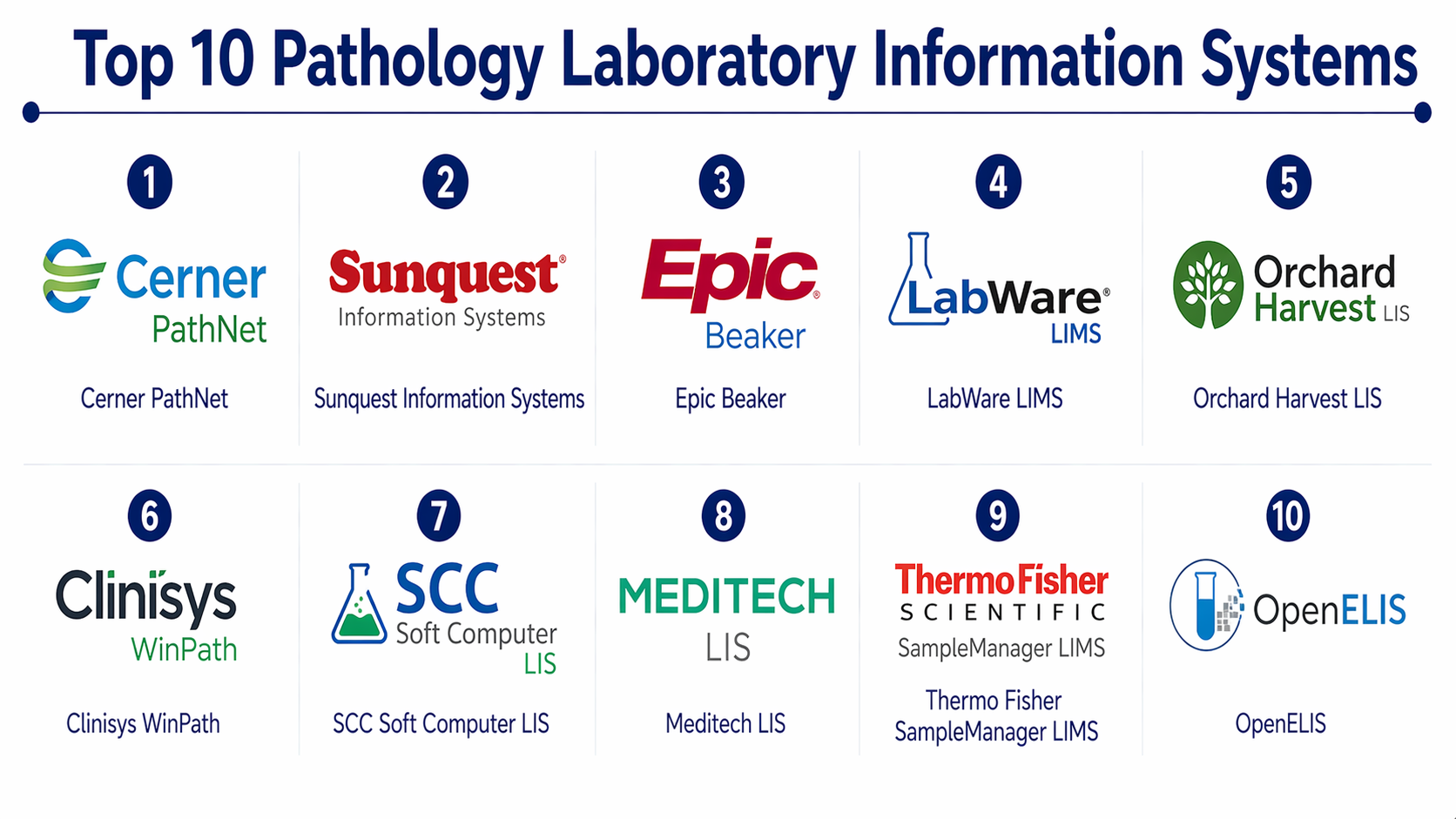
Top 10 Pathology Laboratory Information Systems
#1 — Cerner PathNet
Short description :
Cerner PathNet is a widely used LIS designed for hospitals and large healthcare systems. It integrates tightly with Cerner’s EHR ecosystem, enabling end-to-end patient data management. The system supports complex lab workflows, automation, and reporting. It is ideal for enterprise-scale labs with high volumes and compliance needs.
Key Features
- End-to-end lab workflow management
- Integration with EHR systems
- Advanced reporting and analytics
- Automation for sample tracking
- Multi-site lab management
- Regulatory compliance tools
Pros
- Strong integration with hospital systems
- Scalable for large healthcare networks
Cons
- Complex implementation
- Requires training for users
Platforms / Deployment
- Web / Windows
- Cloud / Hybrid
Security & Compliance
- RBAC, audit logs, encryption
- Compliance details: Not publicly stated
Integrations & Ecosystem
Supports deep integration within hospital IT systems and external tools.
- EHR/EMR systems
- Billing platforms
- Imaging systems
- HL7/FHIR standards
Support & Community
Enterprise-grade support with structured onboarding; community details not publicly stated.
#2 — Sunquest Information Systems
Short description :
Sunquest LIS focuses on laboratory efficiency and workflow automation. It is widely adopted in diagnostic labs and hospitals, offering advanced analytics and integration capabilities. Known for its flexibility, it supports both centralized and distributed lab operations.
Key Features
- Workflow automation
- Real-time analytics
- Multi-site lab support
- Data integration tools
- Sample tracking system
Pros
- Strong workflow customization
- Reliable performance
Cons
- UI may feel outdated
- Implementation complexity
Platforms / Deployment
- Web / Windows
- Cloud / Hybrid
Security & Compliance
Not publicly stated
Integrations & Ecosystem
- EHR systems
- Middleware platforms
- Lab instruments
- APIs available
Support & Community
Structured enterprise support; community visibility limited.
#3 — Epic Beaker
Short description :
Epic Beaker is part of the Epic healthcare ecosystem, offering tight integration with patient records. It is designed for large healthcare organizations that need seamless data flow between clinical and lab systems.
Key Features
- Integrated lab and clinical workflows
- Real-time reporting
- Order management system
- Data analytics
- Instrument connectivity
Pros
- Deep integration with Epic ecosystem
- Strong usability
Cons
- Limited flexibility outside Epic
- High cost
Platforms / Deployment
- Web
- Cloud / Hybrid
Security & Compliance
Not publicly stated
Integrations & Ecosystem
- Epic EHR
- Billing systems
- Lab devices
Support & Community
Strong enterprise support and user network.
#4 — LabWare LIMS
Short description :
LabWare is a configurable LIMS platform used across industries, including pathology labs. It provides flexibility for labs needing customization and supports regulatory compliance.
Key Features
- Customizable workflows
- Regulatory compliance tools
- Data management
- Reporting engine
- Integration capabilities
Pros
- Highly configurable
- Industry-wide adoption
Cons
- Requires customization effort
- Learning curve
Platforms / Deployment
- Web / Windows
- Cloud / Self-hosted
Security & Compliance
Not publicly stated
Integrations & Ecosystem
- Lab instruments
- ERP systems
- APIs
Support & Community
Good documentation; enterprise support available.
#5 — Orchard Harvest LIS
Short description :
Orchard Harvest LIS is designed for laboratories of all sizes, offering flexibility and ease of use. It supports complex workflows and integrates well with lab instruments and systems.
Key Features
- Workflow automation
- Instrument integration
- Billing support
- Reporting tools
- Multi-location support
Pros
- User-friendly interface
- Flexible deployment
Cons
- Limited advanced analytics
- Customization constraints
Platforms / Deployment
- Web / Windows
- Cloud / Hybrid
Security & Compliance
Not publicly stated
Integrations & Ecosystem
- EHR systems
- Lab devices
- APIs
Support & Community
Responsive support; community moderate.
#6 — Clinisys WinPath
Short description :
Clinisys WinPath is widely used in pathology labs, especially in Europe. It offers strong workflow management and compliance features for clinical labs.
Key Features
- Pathology workflow management
- Reporting tools
- Compliance features
- Data analytics
- Integration support
Pros
- Strong regulatory support
- Reliable system
Cons
- Limited modern UI
- Regional focus
Platforms / Deployment
- Windows
- On-premise / Hybrid
Security & Compliance
Not publicly stated
Integrations & Ecosystem
- Lab instruments
- Hospital systems
Support & Community
Stable enterprise support; community varies.
#7 — SCC Soft Computer LIS
Short description :
SCC Soft Computer LIS offers scalable solutions for pathology labs with strong reporting and integration capabilities. It is commonly used in large diagnostic labs.
Key Features
- Lab workflow automation
- Reporting tools
- Instrument integration
- Billing modules
- Data management
Pros
- Scalable architecture
- Strong reporting
Cons
- Complex setup
- UI not modern
Platforms / Deployment
- Web / Windows
- Cloud / Hybrid
Security & Compliance
Not publicly stated
Integrations & Ecosystem
- EHR
- Billing systems
- APIs
Support & Community
Enterprise support; limited public community.
#8 — Meditech LIS
Short description :
Meditech LIS integrates with Meditech hospital systems and provides essential lab management capabilities for hospitals and labs.
Key Features
- Lab workflow management
- Reporting tools
- Integration with hospital systems
- Sample tracking
- Data analytics
Pros
- Integrated ecosystem
- Reliable performance
Cons
- Limited flexibility
- Interface limitations
Platforms / Deployment
- Web
- Cloud / Hybrid
Security & Compliance
Not publicly stated
Integrations & Ecosystem
- Meditech EHR
- Lab devices
Support & Community
Vendor-driven support; community limited.
#9 — Thermo Fisher SampleManager LIMS
Short description :
SampleManager is a powerful LIMS platform used across labs including pathology. It offers strong data management and compliance capabilities.
Key Features
- Data management
- Workflow automation
- Compliance tools
- Reporting
- Integration APIs
Pros
- Strong compliance features
- Highly scalable
Cons
- Complex implementation
- High cost
Platforms / Deployment
- Web / Windows
- Cloud / Self-hosted
Security & Compliance
Not publicly stated
Integrations & Ecosystem
- Lab instruments
- Enterprise systems
- APIs
Support & Community
Strong enterprise support; documentation available.
#10 — OpenELIS
Short description :
OpenELIS is an open-source LIS designed for resource-constrained environments. It provides essential lab management features and is widely used in public health labs.
Key Features
- Open-source flexibility
- Sample tracking
- Reporting tools
- Basic workflow management
- Customizable
Pros
- Cost-effective
- Community-driven
Cons
- Limited advanced features
- Requires technical expertise
Platforms / Deployment
- Web
- Self-hosted
Security & Compliance
Not publicly stated
Integrations & Ecosystem
- APIs
- Custom integrations
Support & Community
Strong open-source community; support varies.
Comparison Table (Top 10)
| Tool Name | Best For | Platform(s) Supported | Deployment | Standout Feature | Public Rating |
|---|---|---|---|---|---|
| Cerner PathNet | Enterprise hospitals | Web, Windows | Cloud/Hybrid | Deep EHR integration | N/A |
| Sunquest LIS | Large labs | Web, Windows | Cloud/Hybrid | Workflow automation | N/A |
| Epic Beaker | Epic users | Web | Cloud/Hybrid | Unified patient data | N/A |
| LabWare LIMS | Custom workflows | Web, Windows | Cloud/Self-hosted | High configurability | N/A |
| Orchard Harvest LIS | SMB labs | Web, Windows | Cloud/Hybrid | Ease of use | N/A |
| Clinisys WinPath | Pathology labs | Windows | On-premise/Hybrid | Compliance focus | N/A |
| SCC Soft Computer | Diagnostic labs | Web, Windows | Cloud/Hybrid | Reporting capabilities | N/A |
| Meditech LIS | Hospitals | Web | Cloud/Hybrid | System integration | N/A |
| SampleManager LIMS | Enterprise labs | Web, Windows | Cloud/Self-hosted | Data management | N/A |
| OpenELIS | Public health labs | Web | Self-hosted | Open-source flexibility | N/A |
Evaluation & Pathology Laboratory Information Systems
| Tool Name | Core (25%) | Ease (15%) | Integrations (15%) | Security (10%) | Performance (10%) | Support (10%) | Value (15%) | Weighted Total |
|---|---|---|---|---|---|---|---|---|
| Cerner PathNet | 9 | 7 | 9 | 8 | 9 | 8 | 6 | 8.2 |
| Sunquest LIS | 8 | 7 | 8 | 7 | 8 | 7 | 7 | 7.6 |
| Epic Beaker | 9 | 8 | 9 | 8 | 9 | 8 | 6 | 8.3 |
| LabWare LIMS | 8 | 6 | 8 | 7 | 8 | 7 | 7 | 7.5 |
| Orchard Harvest LIS | 7 | 8 | 7 | 6 | 7 | 7 | 8 | 7.3 |
| Clinisys WinPath | 7 | 6 | 7 | 7 | 7 | 7 | 7 | 7.0 |
| SCC Soft Computer | 8 | 6 | 8 | 7 | 8 | 7 | 7 | 7.4 |
| Meditech LIS | 7 | 7 | 7 | 7 | 7 | 7 | 7 | 7.1 |
| SampleManager LIMS | 9 | 6 | 8 | 8 | 9 | 8 | 6 | 8.0 |
| OpenELIS | 6 | 6 | 6 | 5 | 6 | 6 | 9 | 6.5 |
How to interpret scores:
These scores are comparative, not absolute. A higher score indicates stronger overall capability for enterprise environments. Lower scores do not mean poor quality—they often reflect trade-offs like cost, complexity, or niche focus. Always align scores with your specific needs.
Which Pathology Laboratory Information Systems
Solo / Freelancer
Basic LIS tools or open-source solutions like OpenELIS are suitable. Avoid enterprise platforms due to cost and complexity.
SMB
Orchard Harvest LIS or LabWare LIMS provide a balance of usability and functionality without heavy enterprise overhead.
Mid-Market
Sunquest and SCC Soft Computer offer strong workflow automation and scalability for growing labs.
Enterprise
Cerner PathNet, Epic Beaker, and SampleManager LIMS are best suited for large healthcare systems with complex needs.
Budget vs Premium
- Budget: OpenELIS
- Mid-range: Orchard, LabWare
- Premium: Cerner, Epic
Feature Depth vs Ease of Use
- Deep features: Cerner, LabWare
- Ease of use: Orchard, Meditech
Integrations & Scalability
Choose tools with strong EHR integration if operating within hospitals.
Security & Compliance Needs
Enterprise tools typically provide better compliance support; smaller tools may require additional controls.
Frequently Asked Questions (FAQs)
1. What is a Pathology LIS?
A system that manages lab operations, from sample collection to reporting, improving efficiency and accuracy.
2. How much does a LIS cost?
Pricing varies widely based on features and scale. Many vendors use subscription models or enterprise licensing.
3. How long does implementation take?
Implementation can take weeks to months depending on system complexity and integrations.
4. Can LIS integrate with EHR systems?
Yes, most modern LIS platforms support integration via HL7 or APIs.
5. Are LIS platforms secure?
Most include security features, but compliance levels vary. Always verify vendor capabilities.
6. What are common mistakes when choosing LIS?
Ignoring integration needs, underestimating training requirements, and focusing only on price.
7. Can LIS handle multiple lab locations?
Yes, many systems support multi-site lab operations.
8. Is cloud LIS better than on-premise?
Cloud offers flexibility and scalability, while on-premise provides more control.
9. Can I switch LIS later?
Yes, but migration can be complex and requires planning.
10. Are open-source LIS reliable?
They can be reliable but require technical expertise for setup and maintenance.
Conclusion
Pathology Laboratory Information Systems are essential for modern healthcare operations, helping labs manage increasing workloads, ensure compliance, and deliver accurate results quickly. The right LIS depends heavily on your organization’s size, integration needs, and technical capabilities. Enterprise systems like Cerner PathNet and Epic Beaker offer deep integration and scalability, while solutions like Orchard Harvest and OpenELIS provide flexibility for smaller labs.