Introduction
Fraud Detection Platforms help organizations identify, prevent, and investigate suspicious activities across digital transactions, user behavior, and account interactions. These tools go beyond basic rule-based systems by using machine learning, behavioral analytics, device intelligence, and real-time decisioning to detect fraud before it causes financial or reputational damage.
As digital transactions grow across ecommerce, fintech, banking, and online services, fraud patterns are becoming more advanced. Organizations now need platforms that not only detect fraud but also reduce false positives, improve customer experience, and support real-time decision-making. These tools are essential for balancing security with seamless user interactions.
Common real-world use cases include:
- Preventing payment fraud in ecommerce platforms
- Detecting account takeover attempts
- Monitoring suspicious login behavior
- Identifying synthetic identity fraud during onboarding
- Reducing chargebacks and transaction disputes
What buyers should evaluate:
- Accuracy of fraud detection models
- Real-time decision-making capabilities
- Behavioral and device intelligence
- Ease of integration with existing systems
- Case management and investigation tools
- Custom rule creation and flexibility
- Reporting and analytics features
- Scalability across transaction volume
- Cost vs performance value
Best for: Ecommerce companies, fintech startups, banks, marketplaces, gaming platforms, and subscription-based businesses handling large volumes of digital transactions.
Not ideal for: Small businesses with low transaction volumes or those already covered by built-in fraud protections from payment providers.
Key Trends in Fraud Detection Platforms
- AI-driven fraud detection replacing static rule-based systems
- Real-time decision engines with millisecond response times
- Behavioral biometrics and device fingerprinting
- Integration of fraud detection with identity verification
- Reduction of false positives using machine learning
- Unified fraud and risk management platforms
- Increased focus on account takeover prevention
- Automation of fraud investigation workflows
- Expansion into scam detection and abuse prevention
- Cloud-first deployment models with API-first design
How We Selected These Tools (Methodology)
- Strong adoption across ecommerce, fintech, and banking sectors
- Feature completeness across fraud detection lifecycle
- Real-time detection and response capabilities
- Integration support with modern digital systems
- Balance between automation and manual review
- Vendor maturity and product reliability
- Scalability across transaction volumes
- Support for multiple fraud use cases
- Practical usability for fraud and risk teams
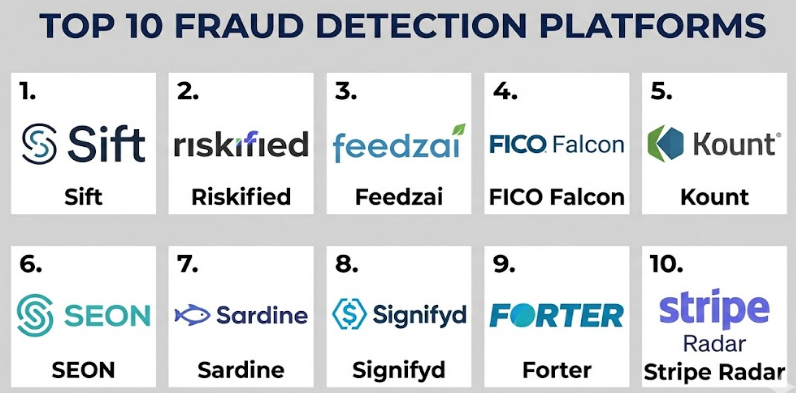
Top 10 Fraud Detection Platforms Tools
#1 — Sift
Short description: A digital fraud prevention platform focused on real-time detection for ecommerce, fintech, and online services.
Key Features
- Real-time fraud detection
- Account takeover protection
- Payment fraud prevention
- Behavioral analytics
- Risk scoring engine
- Case management tools
Pros
- Strong for digital businesses
- Comprehensive fraud coverage
Cons
- Pricing may be high
- Requires tuning for best results
Platforms / Deployment
- Web
- Cloud
Security & Compliance
- SSO, encryption, RBAC
- Not publicly stated
Integrations & Ecosystem
- Payment systems
- APIs
- SaaS integrations
Support & Community
Strong enterprise support.
#2 — Riskified
Short description: A platform focused on ecommerce fraud prevention and chargeback protection.
Key Features
- Chargeback protection
- Fraud risk scoring
- Machine learning models
- Transaction monitoring
- Automated approvals
Pros
- Strong ecommerce focus
- Reduces chargebacks
Cons
- Limited outside ecommerce
- Pricing varies
Platforms / Deployment
- Web
- Cloud
Security & Compliance
- Encryption, access control
- Not publicly stated
Integrations & Ecosystem
- Ecommerce platforms
- Payment gateways
Support & Community
Good support for merchants.
#3 — Feedzai
Short description: An AI-driven fraud detection platform widely used in banking and financial services.
Key Features
- Real-time transaction monitoring
- Machine learning models
- Behavioral analytics
- Risk scoring
- Case management
Pros
- Strong AI capabilities
- Enterprise-grade solution
Cons
- Complex setup
- Higher cost
Platforms / Deployment
- Web
- Cloud / Hybrid
Security & Compliance
- SSO, encryption
- Not publicly stated
Integrations & Ecosystem
- Banking systems
- APIs
Support & Community
Enterprise-level support.
#4 — FICO Falcon
Short description: A well-known fraud detection platform used by financial institutions.
Key Features
- Transaction monitoring
- Risk scoring models
- Fraud analytics
- Decision management
- Case management
Pros
- Trusted in banking
- Strong analytics
Cons
- Legacy complexity
- Requires expertise
Platforms / Deployment
- Web
- Cloud / On-premise
Security & Compliance
- Encryption, RBAC
- Not publicly stated
Integrations & Ecosystem
- Financial systems
- APIs
Support & Community
Strong enterprise support.
#5 — Kount
Short description: A fraud prevention platform focused on identity trust and transaction risk.
Key Features
- Identity verification
- Fraud scoring
- Device intelligence
- Chargeback prevention
- Reporting dashboards
Pros
- Strong identity signals
- Good for ecommerce
Cons
- Limited advanced customization
- Pricing varies
Platforms / Deployment
- Web
- Cloud
Security & Compliance
- SSO, encryption
- Not publicly stated
Integrations & Ecosystem
- Payment systems
- APIs
Support & Community
Moderate support ecosystem.
#6 — SEON
Short description: A modern fraud detection tool focused on startups and fintech companies.
Key Features
- Device fingerprinting
- Email and phone analysis
- Fraud scoring
- Rule-based engine
- Real-time monitoring
Pros
- Easy to use
- Flexible rule engine
Cons
- Limited enterprise depth
- Smaller ecosystem
Platforms / Deployment
- Web
- Cloud
Security & Compliance
- Encryption
- Not publicly stated
Integrations & Ecosystem
- APIs
- SaaS tools
Support & Community
Good support for growing companies.
#7 — Sardine
Short description: A unified fraud and payments platform for modern fintech and crypto companies.
Key Features
- Fraud detection
- Payment processing
- Risk scoring
- Real-time monitoring
- Compliance workflows
Pros
- All-in-one platform
- Strong fintech focus
Cons
- Niche focus
- Not ideal for all industries
Platforms / Deployment
- Web
- Cloud
Security & Compliance
- SSO, encryption
- Not publicly stated
Integrations & Ecosystem
- Payment platforms
- APIs
Support & Community
Growing support ecosystem.
#8 — Signifyd
Short description: A fraud protection platform focused on ecommerce and revenue protection.
Key Features
- Fraud detection
- Chargeback protection
- Order approval automation
- Risk scoring
- Reporting tools
Pros
- Strong revenue protection
- Easy for ecommerce
Cons
- Limited outside ecommerce
- Pricing varies
Platforms / Deployment
- Web
- Cloud
Security & Compliance
- Encryption
- Not publicly stated
Integrations & Ecosystem
- Ecommerce platforms
- APIs
Support & Community
Good merchant support.
#9 — Forter
Short description: A fraud prevention platform designed for large ecommerce and digital commerce businesses.
Key Features
- Identity-based fraud detection
- Real-time approvals
- Behavioral analytics
- Fraud scoring
- Global data network
Pros
- Strong accuracy
- Global coverage
Cons
- Enterprise-focused
- Cost may be high
Platforms / Deployment
- Web
- Cloud
Security & Compliance
- SSO, encryption
- Not publicly stated
Integrations & Ecosystem
- Ecommerce platforms
- APIs
Support & Community
Enterprise support.
#10 — Stripe Radar
Short description: A built-in fraud detection tool for businesses using Stripe payments.
Key Features
- Machine learning-based detection
- Custom rules
- Real-time monitoring
- Fraud insights
- Integration with payments
Pros
- Easy to use
- Built into payment system
Cons
- Limited outside Stripe
- Less advanced than standalone tools
Platforms / Deployment
- Web
- Cloud
Security & Compliance
- Encryption, access control
- Not publicly stated
Integrations & Ecosystem
- Stripe ecosystem
- APIs
Support & Community
Strong documentation and support.
Comparison Table (Top 10)
| Tool Name | Best For | Platform(s) Supported | Deployment | Standout Feature | Public Rating |
|---|---|---|---|---|---|
| Sift | Digital businesses | Web | Cloud | Real-time detection | N/A |
| Riskified | Ecommerce | Web | Cloud | Chargeback protection | N/A |
| Feedzai | Banking | Web | Cloud/Hybrid | AI fraud detection | N/A |
| FICO Falcon | Financial institutions | Web | Cloud/On-premise | Risk scoring | N/A |
| Kount | Identity fraud | Web | Cloud | Device intelligence | N/A |
| SEON | Startups | Web | Cloud | Easy rule engine | N/A |
| Sardine | Fintech | Web | Cloud | Unified platform | N/A |
| Signifyd | Ecommerce | Web | Cloud | Revenue protection | N/A |
| Forter | Large ecommerce | Web | Cloud | Identity-based detection | N/A |
| Stripe Radar | Stripe users | Web | Cloud | Built-in fraud tool | N/A |
Evaluation & Scoring of Fraud Detection Platforms
| Tool Name | Core (25%) | Ease (15%) | Integrations (15%) | Security (10%) | Performance (10%) | Support (10%) | Value (15%) | Weighted Total |
|---|---|---|---|---|---|---|---|---|
| Sift | 9 | 8 | 8 | 8 | 8 | 8 | 7 | 8.1 |
| Riskified | 8 | 8 | 7 | 7 | 7 | 8 | 7 | 7.5 |
| Feedzai | 9 | 6 | 8 | 9 | 9 | 9 | 6 | 8.3 |
| FICO Falcon | 9 | 5 | 7 | 9 | 9 | 8 | 6 | 7.9 |
| Kount | 8 | 7 | 7 | 7 | 7 | 7 | 7 | 7.4 |
| SEON | 7 | 8 | 6 | 7 | 7 | 7 | 8 | 7.3 |
| Sardine | 8 | 7 | 7 | 7 | 7 | 7 | 7 | 7.4 |
| Signifyd | 8 | 8 | 7 | 7 | 7 | 8 | 7 | 7.6 |
| Forter | 9 | 7 | 8 | 8 | 8 | 8 | 6 | 8.0 |
| Stripe Radar | 7 | 9 | 6 | 7 | 7 | 7 | 8 | 7.3 |
How to interpret scores:
- Higher Core score = stronger fraud detection capabilities
- Ease reflects usability and onboarding
- Integrations are critical for scaling
- Value reflects ROI vs cost
- Always select based on your use case
Which Fraud Detection Platform Is Right for You?
Solo / Freelancer
Use built-in payment fraud tools like Stripe Radar.
SMB
SEON, Stripe Radar, and Signifyd are easier to deploy and manage.
Mid-Market
Sift, Kount, and Sardine provide strong balance of features.
Enterprise
Feedzai, Forter, and FICO Falcon offer deep capabilities.
Budget vs Premium
- Budget: Stripe Radar, SEON
- Premium: Feedzai, Forter
Feature Depth vs Ease of Use
- Depth: Feedzai, FICO
- Ease: Stripe Radar, SEON
Integrations & Scalability
Choose tools with strong APIs and system integrations.
Security & Compliance Needs
Highly regulated industries should prioritize enterprise-grade platforms.
Frequently Asked Questions (FAQs)
What is a fraud detection platform?
It helps detect and prevent fraudulent activities in real time.
How much do these tools cost?
Pricing varies based on usage and features.
Are they only for banks?
No, ecommerce and fintech also use them.
Can they reduce chargebacks?
Yes, many tools focus on chargeback reduction.
Are they real-time?
Most modern tools provide real-time detection.
Do they use AI?
Yes, most platforms use machine learning.
Are they easy to integrate?
Many offer APIs for integration.
Can small businesses use them?
Yes, some tools are designed for SMBs.
What are common mistakes?
Over-relying on rules without ML.
What are alternatives?
Basic payment provider fraud tools.
Conclusion
Fraud detection platforms are essential for any business handling digital transactions. As fraud becomes more advanced, relying on basic rule-based systems is no longer enough. These platforms help organizations detect threats early, reduce financial losses, and improve customer trust. the right solution depends on your business size and complexity. Small businesses can start with lightweight tools, while enterprises require advanced AI-driven platforms with deep analytics and integrations.
