Introduction
Security Awareness Training Platforms help organizations educate employees about cyber threats and safe digital behavior. Instead of relying only on technical security controls, these tools focus on the human layer—helping employees recognize phishing emails, avoid risky actions, and follow secure practices in daily work.
In today’s environment, human error is one of the biggest causes of security incidents. Organizations are now expected to go beyond basic annual training and build continuous awareness programs. These platforms combine training modules, phishing simulations, risk scoring, and reporting to reduce overall human risk.
Common real-world use cases include:
- Running phishing simulation campaigns for employees
- Training staff on password security and data protection
- Compliance training for regulations and standards
- Role-based security training for departments like finance or HR
- Tracking employee risk levels and behavior changes
What buyers should evaluate:
- Quality and variety of training content
- Phishing simulation capabilities
- Ease of deployment and management
- Reporting and analytics features
- Integration with email and security systems
- Automation of training campaigns
- Personalization and adaptive learning
- Multi-language support
- Pricing and scalability
Best for: Security teams, IT managers, compliance officers, and organizations that want to reduce human-related security risks.
Not ideal for: Very small teams needing only basic compliance training or organizations focused purely on technical security tools rather than employee behavior.
Key Trends in Security Awareness Training Platforms
- Shift from compliance-based training to behavior-based risk reduction
- AI-driven personalization of training content
- Continuous microlearning instead of annual training sessions
- Advanced phishing simulations with real-world scenarios
- Gamification to improve engagement
- Real-time risk scoring for employees
- Integration with security and identity platforms
- Automation of campaigns and training workflows
- Multi-language and global workforce support
- Focus on measurable outcomes rather than completion rates
How We Selected These Tools (Methodology)
- Market adoption and industry recognition
- Strength of phishing simulation features
- Quality and depth of training content
- Ease of use for administrators and employees
- Integration capabilities with enterprise systems
- Security and compliance readiness
- Scalability across SMB and enterprise
- Vendor maturity and reliability
- Balance between automation and customization
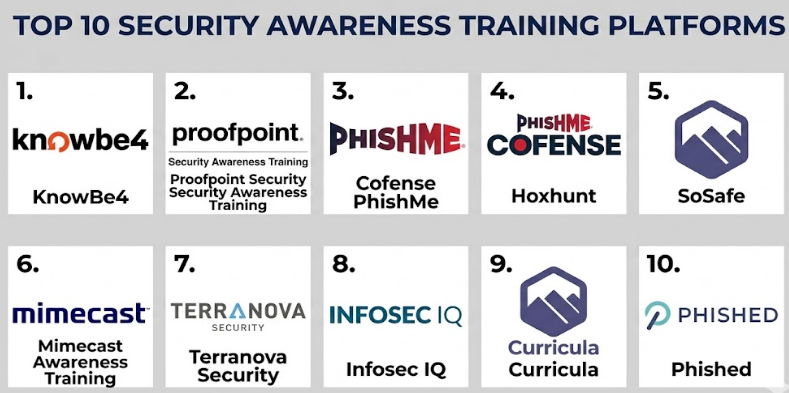
Top 10 Security Awareness Training Platforms
#1 — KnowBe4
Short description: One of the most widely used platforms for security awareness training and phishing simulations.
Key Features
- Large training content library
- Phishing simulation campaigns
- Risk scoring and reporting
- Automated training workflows
- Compliance training modules
- Multi-language support
Pros
- Easy to deploy and manage
- Extensive content library
Cons
- Premium pricing tiers
- Some content may feel repetitive
Platforms / Deployment
- Web
- Cloud
Security & Compliance
- SSO, MFA, encryption
- Not publicly stated
Integrations & Ecosystem
- Email platforms
- Security tools
- APIs
Support & Community
Strong support with large user base.
#2 — Proofpoint Security Awareness Training
Short description: A robust platform combining threat intelligence with training and phishing simulation.
Key Features
- Targeted phishing simulations
- Threat-based training
- Risk scoring
- Behavior analytics
- Automated campaigns
Pros
- Strong threat intelligence integration
- Enterprise-grade capabilities
Cons
- Complex setup
- Higher cost
Platforms / Deployment
- Web
- Cloud
Security & Compliance
- SSO, encryption
- Not publicly stated
Integrations & Ecosystem
- Email security tools
- SIEM systems
- APIs
Support & Community
Enterprise-level support.
#3 — Cofense PhishMe
Short description: A platform focused heavily on phishing detection and employee training.
Key Features
- Phishing simulation
- Reporting and analytics
- Threat intelligence
- Incident response integration
- Training modules
Pros
- Strong phishing focus
- Good reporting
Cons
- Limited general training content
- Best for phishing-focused programs
Platforms / Deployment
- Web
- Cloud
Security & Compliance
- SSO, encryption
- Not publicly stated
Integrations & Ecosystem
- Security tools
- Email platforms
- APIs
Support & Community
Strong enterprise support.
#4 — Hoxhunt
Short description: A modern platform using gamification and AI-driven training to improve engagement.
Key Features
- Gamified learning
- AI-driven simulations
- Real-time feedback
- Risk scoring
- Behavioral analytics
Pros
- Highly engaging
- Personalized learning
Cons
- Premium pricing
- Limited customization for some workflows
Platforms / Deployment
- Web
- Cloud
Security & Compliance
- SSO, encryption
- Not publicly stated
Integrations & Ecosystem
- Email systems
- APIs
Support & Community
Strong support with modern approach.
#5 — SoSafe
Short description: A platform focused on human-centric security training with behavioral science techniques.
Key Features
- Behavioral training modules
- Phishing simulations
- Role-based training
- Reporting dashboards
- Risk scoring
Pros
- Strong user engagement
- Good behavioral focus
Cons
- Limited enterprise customization
- Smaller ecosystem
Platforms / Deployment
- Web
- Cloud
Security & Compliance
- SSO, encryption
- Not publicly stated
Integrations & Ecosystem
- SaaS tools
- APIs
Support & Community
Growing support network.
#6 — Mimecast Awareness Training
Short description: A training platform integrated with email security capabilities.
Key Features
- Phishing simulations
- Awareness training modules
- Reporting dashboards
- Threat intelligence integration
- Campaign automation
Pros
- Strong email security integration
- Good for existing users
Cons
- Limited standalone capabilities
- Better within Mimecast ecosystem
Platforms / Deployment
- Web
- Cloud
Security & Compliance
- SSO, encryption
- Not publicly stated
Integrations & Ecosystem
- Email platforms
- Security tools
Support & Community
Strong enterprise support.
#7 — Terranova Security
Short description: A platform focused on compliance training and awareness programs.
Key Features
- Training content library
- Compliance modules
- Phishing simulations
- Reporting tools
- Multi-language support
Pros
- Strong compliance focus
- Wide content availability
Cons
- Less advanced analytics
- UI can be basic
Platforms / Deployment
- Web
- Cloud
Security & Compliance
- SSO, encryption
- Not publicly stated
Integrations & Ecosystem
- LMS systems
- APIs
Support & Community
Moderate support ecosystem.
#8 — Infosec IQ
Short description: A training platform offering a mix of technical and awareness-based content.
Key Features
- Security training courses
- Phishing simulations
- Reporting dashboards
- Risk tracking
- Content library
Pros
- Good balance of content
- Flexible training options
Cons
- Limited advanced automation
- Smaller ecosystem
Platforms / Deployment
- Web
- Cloud
Security & Compliance
- SSO, encryption
- Not publicly stated
Integrations & Ecosystem
- Security tools
- APIs
Support & Community
Good documentation and support.
#9 — Curricula
Short description: A lightweight platform focused on engaging storytelling-based training.
Key Features
- Story-based training modules
- Phishing simulations
- Employee engagement tracking
- Reporting dashboards
- Easy deployment
Pros
- Simple and engaging
- Easy to use
Cons
- Limited advanced features
- Not ideal for large enterprises
Platforms / Deployment
- Web
- Cloud
Security & Compliance
- SSO, encryption
- Not publicly stated
Integrations & Ecosystem
- SaaS tools
- APIs
Support & Community
Good support for SMBs.
#10 — Phished
Short description: A platform focused on automated phishing simulations and adaptive training.
Key Features
- Automated phishing campaigns
- AI-based training
- Risk scoring
- Reporting tools
- Continuous learning
Pros
- Automation-first approach
- Easy deployment
Cons
- Limited content variety
- Smaller ecosystem
Platforms / Deployment
- Web
- Cloud
Security & Compliance
- SSO, encryption
- Not publicly stated
Integrations & Ecosystem
- APIs
- Email platforms
Support & Community
Moderate support.
Comparison Table (Top 10)
| Tool Name | Best For | Platform(s) Supported | Deployment | Standout Feature | Public Rating |
|---|---|---|---|---|---|
| KnowBe4 | Enterprises | Web | Cloud | Content library | N/A |
| Proofpoint | Enterprises | Web | Cloud | Threat-based training | N/A |
| Cofense PhishMe | Phishing focus | Web | Cloud | Phishing simulations | N/A |
| Hoxhunt | Engagement | Web | Cloud | Gamification | N/A |
| SoSafe | Behavioral training | Web | Cloud | Human-centric approach | N/A |
| Mimecast Awareness | Email users | Web | Cloud | Email integration | N/A |
| Terranova Security | Compliance | Web | Cloud | Compliance training | N/A |
| Infosec IQ | Mixed training | Web | Cloud | Content variety | N/A |
| Curricula | SMBs | Web | Cloud | Story-based learning | N/A |
| Phished | Automation | Web | Cloud | Automated campaigns | N/A |
Evaluation & Scoring of Security Awareness Training Platforms
| Tool Name | Core (25%) | Ease (15%) | Integrations (15%) | Security (10%) | Performance (10%) | Support (10%) | Value (15%) | Weighted Total |
|---|---|---|---|---|---|---|---|---|
| KnowBe4 | 9 | 8 | 8 | 8 | 8 | 9 | 7 | 8.2 |
| Proofpoint | 9 | 6 | 9 | 9 | 9 | 9 | 6 | 8.3 |
| Cofense PhishMe | 8 | 7 | 7 | 8 | 8 | 8 | 7 | 7.8 |
| Hoxhunt | 8 | 8 | 7 | 7 | 7 | 7 | 7 | 7.5 |
| SoSafe | 7 | 8 | 6 | 7 | 7 | 7 | 7 | 7.2 |
| Mimecast Awareness | 8 | 7 | 8 | 8 | 8 | 8 | 6 | 7.8 |
| Terranova Security | 7 | 7 | 6 | 7 | 7 | 7 | 7 | 7.0 |
| Infosec IQ | 7 | 7 | 6 | 7 | 7 | 7 | 7 | 7.0 |
| Curricula | 6 | 9 | 5 | 6 | 6 | 7 | 7 | 6.8 |
| Phished | 7 | 8 | 6 | 7 | 7 | 6 | 7 | 7.1 |
How to interpret scores:
- Higher Core score means stronger training capabilities
- Ease reflects usability and adoption speed
- Integrations matter for scaling security programs
- Value reflects ROI based on pricing
- Always choose based on your organization’s needs
Which Security Awareness Training Platform Is Right for You?
Solo / Freelancer
Basic training tools or free resources may be enough.
SMB
Curricula, Phished, and Infosec IQ are easier to deploy and manage.
Mid-Market
Hoxhunt, SoSafe, and Mimecast provide a good balance of features and usability.
Enterprise
KnowBe4 and Proofpoint are better suited for large-scale deployments.
Budget vs Premium
- Budget: Curricula, Phished
- Premium: Proofpoint, KnowBe4
Feature Depth vs Ease of Use
- Depth: Proofpoint, KnowBe4
- Ease: Curricula, Hoxhunt
Integrations & Scalability
Choose tools with strong integration support for email and security systems.
Security & Compliance Needs
Highly regulated industries should choose enterprise-grade platforms.
Frequently Asked Questions (FAQs)
What is security awareness training?
It teaches employees how to recognize and avoid cyber threats.
How much do these platforms cost?
Pricing varies depending on features and company size.
Are they necessary for small businesses?
Yes, even small teams face phishing risks.
How long does training take?
Typically short modules spread over time.
Can phishing simulations be automated?
Yes, most platforms support automation.
Do these tools improve security?
Yes, they reduce human-related risks.
Are they easy to deploy?
Most cloud-based tools are quick to deploy.
Do they support compliance requirements?
Yes, many include compliance training modules.
Can they integrate with email systems?
Yes, integration is a core feature.
What are alternatives?
Basic training courses or manual awareness programs.
Conclusion
Security awareness training platforms are essential for reducing human risk in modern organizations. While technical defenses are important, employees remain one of the biggest attack surfaces. These platforms help build a culture of security by continuously educating users and tracking behavior. the right platform depends on your organization’s size, maturity, and goals. Smaller teams may prefer simple and cost-effective tools, while enterprises need advanced analytics, automation, and integration capabilities.
