Introduction
Web3 Node Infrastructure platforms provide the backend connectivity, blockchain node management, APIs, indexing services, and developer infrastructure required to build decentralized applications (dApps), blockchain services, wallets, exchanges, and Web3 ecosystems. These platforms simplify access to blockchain networks without requiring organizations to operate complex node clusters internally.
In Web3 infrastructure is becoming increasingly critical as blockchain ecosystems expand across decentralized finance (DeFi), AI-powered blockchain services, gaming, digital identity, enterprise tokenization, and real-world asset platforms. Modern node infrastructure providers now offer multi-chain APIs, real-time blockchain data streaming, decentralized RPC services, analytics, indexing pipelines, enterprise-grade uptime guarantees, and AI-assisted monitoring capabilities.
Common real-world use cases include:
- Decentralized application backend infrastructure
- Blockchain API management
- Wallet and exchange connectivity
- NFT and gaming infrastructure
- Real-time blockchain analytics
- Enterprise blockchain integrations
- Cross-chain decentralized services
When evaluating Web3 Node Infrastructure platforms, buyers should consider:
- Blockchain network coverage
- API reliability and latency
- Multi-chain support
- Scalability and uptime
- Security architecture
- Developer tooling
- Analytics and indexing capabilities
- Enterprise governance controls
- Pricing predictability
- Global infrastructure availability
Best for: Web3 startups, blockchain developers, crypto exchanges, NFT platforms, DeFi protocols, enterprise blockchain teams, gaming companies, and organizations requiring scalable blockchain connectivity.
Not ideal for: Organizations without blockchain-related workloads or teams requiring only minimal blockchain interaction.
Key Trends in Web3 Node Infrastructure
- Multi-chain RPC infrastructure is becoming standard.
- AI-assisted blockchain monitoring is expanding.
- Decentralized node infrastructure networks are growing.
- Real-time blockchain analytics pipelines are improving.
- Enterprise-grade uptime guarantees are becoming competitive differentiators.
- Blockchain indexing services are becoming more advanced.
- Rollup and Layer-2 infrastructure support is increasing rapidly.
- API observability and performance tooling are maturing.
- Web3 infrastructure compliance tooling is evolving.
- Edge-based blockchain delivery infrastructure is improving.
How We Selected These Tools (Methodology)
The platforms in this list were selected based on developer adoption, infrastructure scalability, blockchain coverage, API reliability, enterprise readiness, and ecosystem maturity.
Selection criteria included:
- Blockchain and protocol support
- Infrastructure reliability
- API performance and scalability
- Developer ecosystem adoption
- Security and operational maturity
- Enterprise integration capabilities
- Indexing and analytics support
- Documentation quality
- Multi-chain support
- Innovation in decentralized infrastructure
The final list includes centralized infrastructure providers, decentralized node networks, blockchain indexing platforms, and enterprise-grade Web3 connectivity services.
Web3 Node Infrastructure
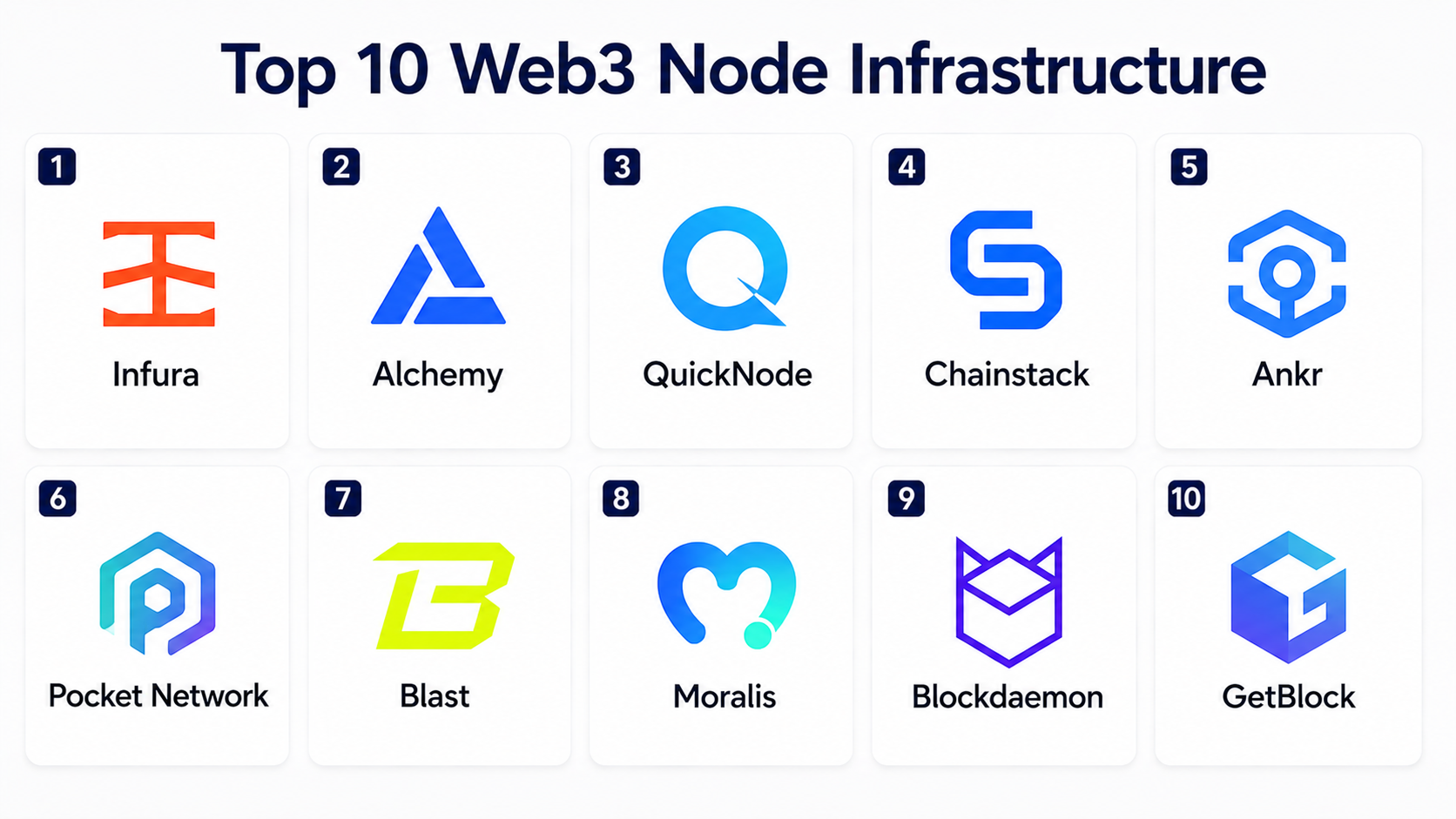
#1 — Infura
Short description :
Infura is one of the most widely used Web3 infrastructure platforms, providing scalable blockchain APIs and node access for Ethereum and multiple blockchain ecosystems.
Key Features
- Ethereum node infrastructure
- Multi-chain API access
- Scalable RPC endpoints
- WebSocket support
- Developer dashboards
- Blockchain data APIs
- Enterprise infrastructure services
Pros
- Strong Ethereum ecosystem adoption
- Reliable API infrastructure
- Good developer onboarding experience
Cons
- Centralization concerns
- Usage-based pricing can scale quickly
- Heavy Ethereum ecosystem focus
Platforms / Deployment
- Web / Linux
- Cloud
Security & Compliance
- API authentication
- Access controls
- Infrastructure monitoring
Integrations & Ecosystem
Infura integrates deeply with Ethereum and Web3 ecosystems.
- MetaMask
- Ethereum
- IPFS
- Web3 frameworks
- APIs
Support & Community
Infura has broad Web3 developer adoption and mature documentation.
#2 — Alchemy
Short description :
Alchemy is a Web3 developer infrastructure platform offering blockchain APIs, node services, analytics, monitoring, and application scalability tooling.
Key Features
- Multi-chain blockchain APIs
- Smart contract monitoring
- Web3 analytics
- NFT APIs
- Enhanced developer tooling
- Transaction debugging
- Scalable RPC infrastructure
Pros
- Excellent developer experience
- Strong analytics and monitoring
- Broad blockchain ecosystem support
Cons
- Premium pricing for large workloads
- Cloud dependency
- Advanced enterprise workflows can become costly
Platforms / Deployment
- Web / Linux
- Cloud
Security & Compliance
- API authentication
- Infrastructure monitoring
- Access governance controls
Integrations & Ecosystem
Alchemy integrates with modern Web3 development ecosystems.
- Ethereum
- Polygon
- Solana
- Wallet systems
- Developer frameworks
Support & Community
Alchemy provides extensive developer education and enterprise support resources.
#3 — QuickNode
Short description :
QuickNode is a blockchain infrastructure provider focused on fast RPC access, multi-chain APIs, and scalable node infrastructure for Web3 applications.
Key Features
- Multi-chain RPC services
- Blockchain APIs
- Global infrastructure distribution
- WebSocket support
- NFT and analytics APIs
- Elastic scaling
- Developer dashboards
Pros
- Fast API performance
- Broad blockchain compatibility
- Good scalability support
Cons
- Enterprise pricing can increase rapidly
- Some advanced analytics require premium plans
- Heavy cloud infrastructure dependency
Platforms / Deployment
- Web / Linux
- Cloud
Security & Compliance
- API security
- Monitoring controls
- Infrastructure protection workflows
Integrations & Ecosystem
QuickNode integrates with modern blockchain ecosystems and developer frameworks.
- Ethereum
- Solana
- Polygon
- APIs
- Wallet infrastructure
Support & Community
QuickNode has strong startup and Web3 developer ecosystem adoption.
#4 — Chainstack
Short description :
Chainstack is a multi-cloud blockchain infrastructure platform designed for enterprise-grade node management and decentralized application deployment.
Key Features
- Multi-cloud blockchain deployment
- Dedicated node infrastructure
- Managed blockchain services
- Multi-chain compatibility
- Enterprise governance controls
- Monitoring dashboards
- API management tooling
Pros
- Strong enterprise deployment flexibility
- Good multi-cloud architecture
- Broad protocol compatibility
Cons
- Enterprise complexity
- Advanced workflows require infrastructure expertise
- Pricing may vary significantly
Platforms / Deployment
- Web / Linux
- Cloud / Hybrid
Security & Compliance
- RBAC
- Encryption
- Infrastructure isolation
- Monitoring controls
Integrations & Ecosystem
Chainstack integrates with enterprise and Web3 ecosystems.
- AWS
- Google Cloud
- Ethereum
- Polygon
- APIs
Support & Community
Chainstack provides enterprise onboarding and technical support services.
#5 — Ankr
Short description :
Ankr is a decentralized Web3 infrastructure platform providing blockchain node services, RPC APIs, staking infrastructure, and developer tooling.
Key Features
- Decentralized node infrastructure
- Multi-chain RPC APIs
- Staking infrastructure
- Blockchain analytics
- Load-balanced node access
- Web3 developer APIs
- Cross-chain support
Pros
- Broad blockchain compatibility
- Decentralized infrastructure model
- Strong staking ecosystem integration
Cons
- Ecosystem complexity for beginners
- Enterprise governance tooling still evolving
- Some advanced workflows require customization
Platforms / Deployment
- Web / Linux
- Cloud / Hybrid
Security & Compliance
- Infrastructure monitoring
- API authentication
- Node redundancy controls
Integrations & Ecosystem
Ankr integrates with decentralized and enterprise blockchain ecosystems.
- Ethereum
- BNB Chain
- Polygon
- APIs
- Web3 applications
Support & Community
Ankr has active Web3 infrastructure community adoption.
#6 — Pocket Network
Short description :
Pocket Network is a decentralized blockchain data platform that distributes RPC requests across independent node operators for resilient Web3 infrastructure access.
Key Features
- Decentralized RPC network
- Blockchain node marketplace
- Multi-chain infrastructure
- Distributed node routing
- API access services
- Blockchain data delivery
- Infrastructure decentralization
Pros
- Reduced centralization risks
- Distributed infrastructure architecture
- Broad blockchain support
Cons
- Operational complexity
- Ecosystem maturity still evolving
- Enterprise adoption smaller than centralized providers
Platforms / Deployment
- Linux
- Hybrid / Self-hosted
Security & Compliance
- Distributed node verification
- API protection workflows
- Infrastructure redundancy
Integrations & Ecosystem
Pocket Network integrates with decentralized Web3 infrastructure ecosystems.
- Ethereum
- Polygon
- APIs
- Node operators
- Developer frameworks
Support & Community
Pocket Network has strong decentralized infrastructure community participation.
#7 — Blast
Short description :
Blast is a blockchain infrastructure platform focused on scalable node access, APIs, and enterprise-grade Web3 connectivity services.
Key Features
- Blockchain node hosting
- Multi-chain APIs
- Dedicated infrastructure support
- RPC endpoint management
- Elastic scalability
- Monitoring dashboards
- Enterprise infrastructure tooling
Pros
- Flexible deployment workflows
- Good infrastructure scalability
- Broad blockchain protocol support
Cons
- Smaller ecosystem visibility
- Enterprise onboarding complexity
- Limited ecosystem maturity compared to larger competitors
Platforms / Deployment
- Web / Linux
- Cloud / Hybrid
Security & Compliance
- Access controls
- Infrastructure monitoring
- API authentication
Integrations & Ecosystem
Blast integrates with blockchain and enterprise infrastructure ecosystems.
- Ethereum
- APIs
- Wallet systems
- Developer frameworks
- Monitoring tools
Support & Community
Blast provides technical onboarding and infrastructure support resources.
#8 — Moralis
Short description :
Moralis is a Web3 backend platform providing APIs, indexing services, authentication workflows, and blockchain infrastructure for decentralized applications.
Key Features
- Web3 APIs
- Blockchain indexing
- User authentication
- NFT APIs
- Real-time blockchain sync
- Cross-chain support
- Backend automation tooling
Pros
- Strong developer productivity tooling
- Good Web3 backend automation
- Broad blockchain compatibility
Cons
- More backend-focused than node-focused
- Advanced scaling may require premium plans
- Infrastructure abstraction may limit customization
Platforms / Deployment
- Web / Linux
- Cloud
Security & Compliance
- Authentication workflows
- API security controls
- Access management
Integrations & Ecosystem
Moralis integrates with decentralized application development ecosystems.
- Ethereum
- Solana
- APIs
- Wallet systems
- Backend frameworks
Support & Community
Moralis has strong Web3 developer education and onboarding resources.
#9 — Blockdaemon
Short description :
Blockdaemon is an enterprise blockchain infrastructure platform offering node hosting, validator infrastructure, staking services, and institutional blockchain connectivity.
Key Features
- Managed blockchain nodes
- Validator infrastructure
- Institutional staking services
- Multi-chain compatibility
- API management
- Enterprise governance controls
- Monitoring and observability
Pros
- Strong enterprise infrastructure maturity
- Broad institutional blockchain support
- Reliable managed node services
Cons
- Enterprise-focused pricing
- Less beginner-friendly
- Advanced governance complexity
Platforms / Deployment
- Web / Linux
- Cloud / Hybrid
Security & Compliance
- RBAC
- Encryption
- Infrastructure isolation
- Audit logging
Integrations & Ecosystem
Blockdaemon integrates with enterprise blockchain ecosystems.
- Exchanges
- Custody platforms
- APIs
- Institutional infrastructure
- Validator systems
Support & Community
Blockdaemon provides enterprise onboarding and institutional support services.
#10 — GetBlock
Short description :
GetBlock is a blockchain API and node infrastructure provider delivering shared and dedicated node access across multiple blockchain ecosystems.
Key Features
- Shared and dedicated nodes
- Multi-chain API support
- Blockchain RPC services
- Elastic infrastructure scaling
- WebSocket support
- Node management tooling
- Cross-chain compatibility
Pros
- Broad blockchain support
- Flexible node access options
- Good developer accessibility
Cons
- Smaller ecosystem visibility
- Advanced enterprise tooling limited
- Premium scaling costs may vary
Platforms / Deployment
- Web / Linux
- Cloud
Security & Compliance
- API authentication
- Monitoring workflows
- Access protection controls
Integrations & Ecosystem
GetBlock integrates with blockchain development ecosystems.
- Ethereum
- BNB Chain
- Solana
- APIs
- Wallet systems
Support & Community
GetBlock has growing Web3 infrastructure ecosystem adoption.
Comparison Table (Top 10)
| Tool Name | Best For | Platform(s) Supported | Deployment | Standout Feature | Public Rating |
|---|---|---|---|---|---|
| Infura | Ethereum infrastructure | Web, Linux | Cloud | Large-scale Ethereum APIs | N/A |
| Alchemy | Developer analytics and APIs | Web, Linux | Cloud | Advanced Web3 tooling | N/A |
| QuickNode | Fast multi-chain RPC access | Web, Linux | Cloud | High-performance RPC infrastructure | N/A |
| Chainstack | Enterprise blockchain deployment | Web, Linux | Hybrid | Multi-cloud blockchain hosting | N/A |
| Ankr | Decentralized node services | Web, Linux | Hybrid | Decentralized RPC infrastructure | N/A |
| Pocket Network | Distributed blockchain APIs | Linux | Hybrid | Decentralized node marketplace | N/A |
| Blast | Enterprise blockchain APIs | Web, Linux | Hybrid | Scalable node infrastructure | N/A |
| Moralis | Web3 backend services | Web, Linux | Cloud | Blockchain indexing and APIs | N/A |
| Blockdaemon | Institutional blockchain infrastructure | Web, Linux | Hybrid | Enterprise validator infrastructure | N/A |
| GetBlock | Multi-chain node access | Web, Linux | Cloud | Dedicated and shared nodes | N/A |
Evaluation & Web3 Node Infrastructure
| Tool Name | Core (25%) | Ease (15%) | Integrations (15%) | Security (10%) | Performance (10%) | Support (10%) | Value (15%) | Weighted Total |
|---|---|---|---|---|---|---|---|---|
| Infura | 10 | 9 | 10 | 8 | 9 | 9 | 8 | 9.0 |
| Alchemy | 10 | 9 | 10 | 8 | 9 | 9 | 8 | 9.0 |
| QuickNode | 9 | 9 | 9 | 8 | 9 | 8 | 8 | 8.7 |
| Chainstack | 9 | 7 | 9 | 9 | 8 | 8 | 8 | 8.4 |
| Ankr | 8 | 8 | 8 | 8 | 8 | 8 | 9 | 8.2 |
| Pocket Network | 8 | 6 | 7 | 8 | 7 | 7 | 8 | 7.4 |
| Blast | 7 | 7 | 7 | 7 | 8 | 7 | 8 | 7.3 |
| Moralis | 8 | 9 | 8 | 8 | 8 | 8 | 8 | 8.1 |
| Blockdaemon | 9 | 7 | 8 | 10 | 9 | 9 | 7 | 8.5 |
| GetBlock | 7 | 8 | 7 | 7 | 8 | 7 | 8 | 7.5 |
These scores are comparative rather than absolute. Some Web3 infrastructure platforms focus heavily on developer productivity and APIs, while others prioritize decentralized infrastructure, enterprise governance, or institutional blockchain operations. Buyers should evaluate providers based on blockchain compatibility, uptime requirements, observability needs, and long-term scalability goals.
Which Web3 Node Infrastructure
Solo / Freelancer
Independent developers and small Web3 builders may prefer:
- Infura
- Alchemy
- Moralis
These platforms provide fast onboarding and strong developer tooling.
SMB
Small and medium-sized blockchain startups should prioritize scalability and API reliability.
Recommended options:
- QuickNode
- Ankr
- Moralis
Mid-Market
Mid-sized organizations often require better governance and infrastructure flexibility.
Recommended options:
- Chainstack
- QuickNode
- Blockdaemon
Enterprise
Large enterprises with institutional blockchain workloads should prioritize operational maturity and governance controls.
Recommended options:
- Blockdaemon
- Chainstack
- Alchemy
Budget vs Premium
- Budget-friendly: Ankr, GetBlock
- Premium enterprise: Blockdaemon, Chainstack
- Balanced value: QuickNode, Alchemy
Feature Depth vs Ease of Use
- Best developer experience: Alchemy
- Best enterprise deployment flexibility: Chainstack
- Best decentralized infrastructure: Pocket Network
Integrations & Scalability
- Best Ethereum ecosystem integration: Infura
- Best enterprise infrastructure scalability: Blockdaemon
- Best backend automation: Moralis
Security & Compliance Needs
Organizations with strict infrastructure governance requirements should prioritize:
- Blockdaemon
- Chainstack
- Alchemy
Frequently Asked Questions (FAQs)
1. What is Web3 node infrastructure?
Web3 node infrastructure provides blockchain connectivity, APIs, node hosting, and backend services required for decentralized applications and blockchain systems.
2. Why do developers use blockchain infrastructure providers?
Running blockchain nodes internally can be complex and resource-intensive. Infrastructure providers simplify scalability, maintenance, and uptime management.
3. What are RPC APIs?
RPC APIs allow applications to communicate with blockchain networks for transactions, data queries, and smart contract interactions.
4. Are Web3 infrastructure platforms secure?
Leading platforms implement authentication, monitoring, and infrastructure security controls, but application-level security remains essential.
5. What is decentralized node infrastructure?
Decentralized infrastructure distributes blockchain services across independent node operators rather than relying on centralized providers.
6. Which blockchains are commonly supported?
Ethereum, Polygon, Solana, BNB Chain, Avalanche, Arbitrum, and Optimism are commonly supported across major platforms.
7. Can enterprises use Web3 infrastructure providers?
Yes. Many platforms offer enterprise-grade governance, dedicated infrastructure, compliance tooling, and institutional support.
8. What should buyers prioritize when selecting infrastructure providers?
Buyers should evaluate uptime, API latency, blockchain coverage, scalability, observability, governance controls, and pricing predictability.
9. Are blockchain indexing services important?
Yes. Indexing services improve query performance and enable real-time analytics for decentralized applications.
10. Can AI systems integrate with Web3 infrastructure?
Yes. AI systems increasingly use blockchain infrastructure for decentralized data verification, digital identity, and automated smart contract interactions.
Conclusion
Web3 Node Infrastructure platforms have become foundational technology layers for decentralized applications, enterprise blockchain systems, NFT ecosystems, AI-integrated Web3 services, and institutional digital asset operations. As blockchain adoption accelerates globally, organizations increasingly require scalable, secure, and high-performance infrastructure capable of supporting multi-chain decentralized workloads. Infura and Alchemy continue to dominate developer-focused blockchain infrastructure, while QuickNode and Moralis provide strong scalability and backend automation capabilities.
