Introduction
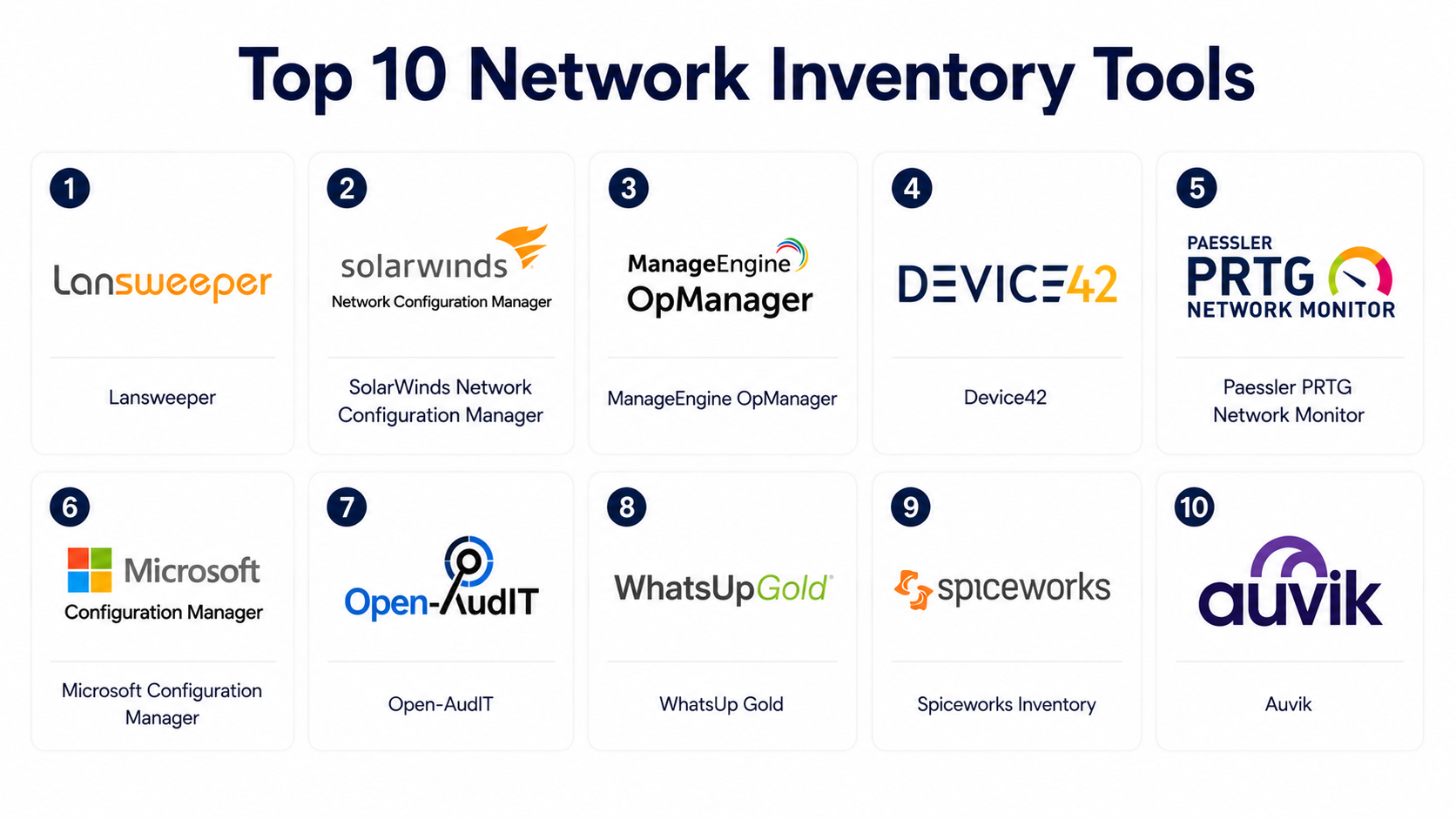
Network Inventory Tools help organizations automatically discover, track, classify, and monitor network-connected devices, infrastructure components, software assets, IP addresses, and configuration details across IT environments. In simple terms, these platforms provide centralized visibility into routers, switches, servers, firewalls, wireless devices, endpoints, cloud resources, and other connected infrastructure assets.
In network inventory management has become increasingly important because organizations now operate highly distributed hybrid environments spanning cloud infrastructure, remote workforces, IoT devices, edge computing systems, and software-defined networks. Manual inventory tracking is no longer practical at scale. Modern Network Inventory Tools now combine automated discovery, real-time monitoring, AI-assisted analytics, configuration management, and cybersecurity visibility to improve operational reliability and security governance.
Common real-world use cases include:
- Network infrastructure discovery
- IT asset inventory management
- Compliance and audit preparation
- Cybersecurity visibility and monitoring
- Network configuration tracking
When evaluating Network Inventory Tools, buyers should consider:
- Automated network discovery capabilities
- Agentless and agent-based inventory support
- Real-time monitoring and updates
- Cloud and hybrid infrastructure support
- Reporting and analytics quality
- Network topology visualization
- Configuration management support
- Security and compliance capabilities
- Integration ecosystem maturity
- Ease of deployment and scalability
Best for: Network operations teams, enterprise IT departments, cybersecurity teams, managed service providers, telecom organizations, educational institutions, and businesses managing distributed infrastructure environments.
Not ideal for: Very small businesses with minimal infrastructure or organizations managing only a handful of devices manually.
Key Trends in Network Inventory Tools
- AI-assisted device classification is improving inventory accuracy.
- Continuous network discovery is replacing periodic manual scans.
- Hybrid cloud visibility is becoming a core enterprise requirement.
- Integration with cybersecurity and SIEM platforms is increasing rapidly.
- Agentless discovery methods are gaining popularity for operational simplicity.
- Real-time topology mapping is improving operational troubleshooting.
- SaaS and cloud asset visibility are becoming more important.
- Automation workflows are reducing manual infrastructure administration.
- IoT and OT device discovery capabilities are expanding.
- Compliance-driven reporting is becoming increasingly automated.
How We Selected These Tools (Methodology)
The tools in this list were selected based on infrastructure visibility, operational maturity, scalability, and market adoption.
Our evaluation process included:
- Market reputation and enterprise adoption
- Network discovery accuracy
- Monitoring and operational visibility capabilities
- Integration ecosystem maturity
- Automation and analytics features
- Scalability across distributed environments
- Security and governance functionality
- Reporting and visualization quality
- Ease of deployment and usability
- Vendor reliability and customer support
The final selection includes enterprise infrastructure leaders, SMB-friendly inventory platforms, and network-focused operational visibility solutions.
Network Inventory Tools
#1 — Lansweeper
Short description :
Lansweeper is one of the most widely used network inventory and IT asset discovery platforms. It provides agentless discovery, hardware and software inventory tracking, cloud visibility, and detailed reporting across distributed infrastructure environments. Organizations use Lansweeper to improve operational visibility, cybersecurity readiness, and compliance management. Its ease of deployment and broad device support make it popular among both SMBs and enterprises.
Key Features
- Agentless network discovery
- Hardware and software inventory tracking
- Cloud and hybrid asset visibility
- Automated scanning schedules
- Reporting and analytics dashboards
- Device relationship mapping
- Vulnerability visibility support
Pros
- Easy deployment and onboarding
- Broad infrastructure discovery coverage
- Strong reporting functionality
Cons
- Advanced workflow automation varies
- UI modernization could improve
- Enterprise governance depth is limited compared to full ITSM suites
Platforms / Deployment
- Web / Windows
- Cloud / Self-hosted
Security & Compliance
- RBAC
- Audit logs
- Encryption
- SSO/SAML
- GDPR
Integrations & Ecosystem
Lansweeper integrates with IT operations, cybersecurity, and service management ecosystems.
- ServiceNow
- Jira
- Microsoft 365
- Intune
- APIs
- SIEM platforms
Support & Community
Large global user community with extensive documentation and operational support resources.
#2 — SolarWinds Network Configuration Manager
Short description :
SolarWinds Network Configuration Manager focuses on network inventory, configuration management, and operational monitoring for enterprise infrastructure environments. It provides visibility into routers, switches, firewalls, and network devices while supporting compliance auditing and configuration tracking.
Key Features
- Network device discovery
- Configuration management
- Compliance auditing
- Network topology mapping
- Automated backup workflows
- Configuration change tracking
- Reporting dashboards
Pros
- Strong network visibility
- Excellent configuration management support
- Useful compliance reporting capabilities
Cons
- Primarily network-focused
- Limited cloud-native inventory depth
- Advanced asset lifecycle management varies
Platforms / Deployment
- Web / Windows
- Self-hosted
Security & Compliance
- RBAC
- Encryption
- Audit logs
- MFA
- GDPR
Integrations & Ecosystem
SolarWinds integrates with operational monitoring and infrastructure management systems.
- ServiceNow
- VMware
- Active Directory
- APIs
- SIEM platforms
- Monitoring tools
Support & Community
Large network administrator community with extensive technical documentation and support resources.
#3 — ManageEngine OpManager
Short description :
ManageEngine OpManager combines network inventory discovery, infrastructure monitoring, configuration management, and operational analytics into a unified platform. It is widely used by SMBs and mid-market organizations seeking affordable infrastructure visibility and operational monitoring capabilities.
Key Features
- Automated network discovery
- Device inventory management
- Network performance monitoring
- Topology mapping
- Configuration management
- Reporting dashboards
- Alerting and notifications
Pros
- Affordable operational visibility
- Easy deployment process
- Broad monitoring functionality
Cons
- UI modernization could improve
- Advanced analytics depth varies
- Enterprise-scale customization may require expertise
Platforms / Deployment
- Web / Windows / Linux
- Cloud / Self-hosted
Security & Compliance
- RBAC
- Encryption
- SSO/SAML
- Audit logs
- GDPR
Integrations & Ecosystem
ManageEngine integrates with IT operations and infrastructure management ecosystems.
- Active Directory
- Microsoft 365
- Jira
- APIs
- Zoho ecosystem
- Endpoint tools
Support & Community
Large IT operations community with extensive documentation and onboarding support.
#4 — Device42
Short description :
Device42 is an infrastructure visibility and network inventory platform focused on dependency mapping, automated discovery, and hybrid infrastructure intelligence. It provides visibility into physical, virtual, and cloud infrastructure assets while supporting operational governance and CMDB integration.
Key Features
- Automated infrastructure discovery
- Dependency mapping
- Network inventory management
- Rack visualization
- Cloud asset discovery
- IP address management
- Reporting dashboards
Pros
- Strong infrastructure visualization
- Excellent dependency mapping
- Good hybrid environment support
Cons
- Technical interface for some users
- Advanced workflows may require expertise
- Smaller ecosystem compared to larger vendors
Platforms / Deployment
- Web / Linux
- Cloud / Self-hosted
Security & Compliance
- RBAC
- Encryption
- Audit logs
- SSO/SAML
- GDPR
Integrations & Ecosystem
Device42 integrates with operational automation and infrastructure management platforms.
- ServiceNow
- VMware
- Jira
- Ansible
- APIs
- Monitoring systems
Support & Community
Provides enterprise onboarding and infrastructure-focused support resources.
#5 — Paessler PRTG Network Monitor
Short description :
Paessler PRTG Network Monitor provides network inventory discovery, infrastructure monitoring, and operational visibility capabilities for SMBs and enterprise environments. It supports automated device discovery and real-time operational monitoring using a sensor-based architecture.
Key Features
- Automated network discovery
- Infrastructure monitoring
- Device inventory tracking
- Network topology visualization
- Real-time alerts
- Reporting dashboards
- Sensor-based monitoring
Pros
- Easy deployment and setup
- Strong monitoring capabilities
- Good SMB operational visibility
Cons
- Primarily monitoring-focused
- Advanced lifecycle management limited
- Enterprise governance depth varies
Platforms / Deployment
- Web / Windows / Mobile
- Cloud / Self-hosted
Security & Compliance
- RBAC
- Encryption
- MFA
- Audit logs
- GDPR
Integrations & Ecosystem
PRTG integrates with operational monitoring and infrastructure management tools.
- VMware
- APIs
- Monitoring systems
- Microsoft Teams
- Network devices
- Alerting platforms
Support & Community
Strong technical documentation and active network operations community.
#6 — Microsoft Configuration Manager
Short description :
Microsoft Configuration Manager provides endpoint discovery, inventory management, operational visibility, and configuration monitoring across enterprise Windows environments. It is widely adopted by organizations heavily invested in Microsoft infrastructure ecosystems.
Key Features
- Endpoint discovery
- Hardware and software inventory
- Configuration management
- Patch management
- Compliance monitoring
- Reporting and analytics
- Operating system deployment
Pros
- Strong Microsoft ecosystem integration
- Mature endpoint management capabilities
- Broad enterprise adoption
Cons
- Primarily Windows-focused
- Complex administration requirements
- Cloud-native support varies
Platforms / Deployment
- Windows
- Hybrid / Self-hosted
Security & Compliance
- RBAC
- Encryption
- Audit logs
- MFA
- Active Directory integration
Integrations & Ecosystem
Microsoft Configuration Manager integrates deeply with Microsoft operational environments.
- Intune
- Azure
- Microsoft Defender
- Active Directory
- APIs
- Endpoint tools
Support & Community
Extensive enterprise ecosystem with strong documentation and Microsoft support resources.
#7 — Open-AudIT
Short description :
Open-AudIT is an open-source network inventory and auditing platform designed for organizations seeking flexible and cost-effective infrastructure visibility. It provides automated discovery, device classification, and operational reporting capabilities across diverse network environments.
Key Features
- Automated network discovery
- Hardware inventory tracking
- Software auditing
- Reporting dashboards
- Device classification
- Network scanning
- Open-source customization
Pros
- Cost-effective deployment
- Flexible customization capabilities
- Broad infrastructure support
Cons
- Enterprise automation depth varies
- UI may feel less modern
- Advanced support options limited
Platforms / Deployment
- Web / Linux / Windows
- Self-hosted
Security & Compliance
- RBAC
- Encryption
- Audit logs
- GDPR
Integrations & Ecosystem
Open-AudIT integrates with infrastructure and operational management systems.
- APIs
- Monitoring platforms
- CMDB tools
- Network management systems
Support & Community
Open-source community support with technical documentation and community-driven resources.
#8 — WhatsUp Gold
Short description :
WhatsUp Gold is a network monitoring and inventory platform focused on operational visibility, automated discovery, and infrastructure performance management. It is commonly used by mid-market organizations and IT operations teams.
Key Features
- Automated device discovery
- Network inventory management
- Topology mapping
- Infrastructure monitoring
- Alerting and notifications
- Performance analytics
- Configuration visibility
Pros
- Strong operational visibility
- Easy-to-use interface
- Good monitoring functionality
Cons
- Enterprise customization depth varies
- Advanced automation capabilities limited
- Cloud-native inventory support evolving
Platforms / Deployment
- Web / Windows
- Cloud / Self-hosted
Security & Compliance
- RBAC
- Encryption
- Audit logs
- MFA
- GDPR
Integrations & Ecosystem
WhatsUp Gold integrates with operational monitoring and network management systems.
- VMware
- APIs
- Monitoring platforms
- SIEM systems
- Alerting tools
Support & Community
Provides onboarding support and operational guidance for infrastructure teams.
#9 — Spiceworks Inventory
Short description :
Spiceworks Inventory is a lightweight IT inventory and network discovery platform designed primarily for SMBs and smaller IT teams. It offers asset tracking, network scanning, and operational visibility capabilities with simplified deployment workflows.
Key Features
- Network inventory discovery
- Asset tracking
- Device monitoring
- Reporting dashboards
- Automated scanning
- Software inventory
- Help desk integration
Pros
- Easy setup process
- SMB-friendly usability
- Cost-effective deployment
Cons
- Enterprise scalability limitations
- Advanced automation features limited
- Reporting depth varies
Platforms / Deployment
- Web / Windows
- Cloud / Self-hosted
Security & Compliance
- RBAC
- Encryption
- Audit logs
- GDPR
Integrations & Ecosystem
Spiceworks integrates with SMB operational and infrastructure management environments.
- Microsoft 365
- Active Directory
- APIs
- Help desk platforms
- Monitoring tools
Support & Community
Strong SMB-focused community with active forums and operational support resources.
#10 — Auvik
Short description :
Auvik is a cloud-based network management and inventory platform focused on automated network discovery, topology visualization, and infrastructure monitoring. It is popular among managed service providers and IT operations teams managing distributed environments.
Key Features
- Automated network discovery
- Real-time topology mapping
- Cloud-based monitoring
- Device inventory management
- Configuration backups
- Traffic analysis
- Alerting and notifications
Pros
- Excellent network visualization
- Strong cloud-based management
- Good MSP operational support
Cons
- Primarily network-focused
- Advanced IT asset lifecycle features limited
- Enterprise customization depth varies
Platforms / Deployment
- Web / Mobile
- Cloud
Security & Compliance
- SSO/SAML
- MFA
- Encryption
- Audit logs
- RBAC
- GDPR
Integrations & Ecosystem
Auvik integrates with network operations, monitoring, and service management ecosystems.
- ConnectWise
- ServiceNow
- APIs
- Monitoring tools
- PSA platforms
- SIEM systems
Support & Community
Strong MSP-focused support ecosystem with onboarding and operational guidance.
Comparison Table (Top 10)
| Tool Name | Best For | Platform(s) Supported | Deployment | Standout Feature | Public Rating |
|---|---|---|---|---|---|
| Lansweeper | Broad infrastructure visibility | Web, Windows | Cloud, Self-hosted | Agentless discovery | N/A |
| SolarWinds Network Configuration Manager | Network configuration governance | Web, Windows | Self-hosted | Configuration tracking | N/A |
| ManageEngine OpManager | SMB infrastructure monitoring | Web, Windows, Linux | Cloud, Self-hosted | Affordable monitoring | N/A |
| Device42 | Dependency mapping | Web, Linux | Cloud, Self-hosted | Infrastructure visualization | N/A |
| Paessler PRTG Network Monitor | Real-time infrastructure monitoring | Web, Windows, Mobile | Cloud, Self-hosted | Sensor-based monitoring | N/A |
| Microsoft Configuration Manager | Windows enterprise environments | Windows | Hybrid, Self-hosted | Endpoint management | N/A |
| Open-AudIT | Open-source inventory management | Web, Linux, Windows | Self-hosted | Open-source flexibility | N/A |
| WhatsUp Gold | Mid-market operational visibility | Web, Windows | Cloud, Self-hosted | Topology mapping | N/A |
| Spiceworks Inventory | SMB inventory management | Web, Windows | Cloud, Self-hosted | Simple deployment | N/A |
| Auvik | MSP network operations | Web, Mobile | Cloud | Real-time topology mapping | N/A |
Evaluation & Network Inventory Tools
| Tool Name | Core (25%) | Ease (15%) | Integrations (15%) | Security (10%) | Performance (10%) | Support (10%) | Value (15%) | Weighted Total (0–10) |
|---|---|---|---|---|---|---|---|---|
| Lansweeper | 9 | 9 | 8 | 8 | 8 | 8 | 9 | 8.55 |
| SolarWinds Network Configuration Manager | 8 | 7 | 7 | 8 | 8 | 8 | 7 | 7.55 |
| ManageEngine OpManager | 8 | 8 | 7 | 7 | 8 | 8 | 9 | 7.95 |
| Device42 | 8 | 7 | 8 | 8 | 8 | 7 | 7 | 7.65 |
| Paessler PRTG Network Monitor | 7 | 8 | 7 | 7 | 8 | 8 | 8 | 7.45 |
| Microsoft Configuration Manager | 8 | 6 | 9 | 8 | 8 | 8 | 7 | 7.65 |
| Open-AudIT | 7 | 7 | 6 | 7 | 7 | 6 | 9 | 7.00 |
| WhatsUp Gold | 7 | 8 | 7 | 7 | 8 | 7 | 8 | 7.40 |
| Spiceworks Inventory | 6 | 9 | 6 | 6 | 7 | 8 | 9 | 7.15 |
| Auvik | 8 | 8 | 8 | 8 | 8 | 8 | 7 | 7.85 |
These scores are comparative evaluations intended to help organizations understand relative strengths across operational categories. Enterprise-focused tools generally perform better in scalability, integrations, and governance, while SMB-focused tools often provide stronger usability and cost efficiency. Buyers should prioritize the scoring categories most aligned with infrastructure complexity, operational maturity, and compliance needs.
Which Network Inventory Tools
Solo / Freelancer
Solo operators and very small businesses generally only require lightweight inventory visibility or basic network monitoring rather than enterprise-grade network inventory systems.
SMB
Lansweeper, Spiceworks Inventory, and ManageEngine OpManager provide strong usability, affordability, and operational visibility for SMB infrastructure environments.
Mid-Market
Auvik, Device42, and WhatsUp Gold work well for organizations balancing operational visibility, scalability, and infrastructure management complexity.
Enterprise
Service-focused enterprises may prioritize Lansweeper, Microsoft Configuration Manager, or SolarWinds Network Configuration Manager for advanced operational governance and infrastructure visibility.
Budget vs Premium
Budget-conscious buyers should evaluate Open-AudIT, Spiceworks Inventory, and ManageEngine OpManager. Enterprises requiring advanced automation and governance may justify investment in Lansweeper or SolarWinds.
Feature Depth vs Ease of Use
Microsoft Configuration Manager and SolarWinds provide deep operational capabilities but require experienced administration. Spiceworks and PRTG emphasize simplicity and easier onboarding.
Integrations & Scalability
Organizations heavily invested in Microsoft, VMware, AWS, Azure, or ITSM ecosystems should prioritize tools with strong native integrations and API support.
Security & Compliance Needs
Highly regulated industries should prioritize platforms offering audit logs, RBAC, encryption, continuous monitoring, and compliance-focused operational reporting.
Frequently Asked Questions (FAQs)
1. What is a Network Inventory Tool?
A Network Inventory Tool automatically discovers, tracks, and monitors devices, software, configurations, and connected infrastructure across IT environments.
2. Why is network inventory important in modern IT operations?
Organizations now manage distributed cloud, hybrid, remote, and IoT infrastructure environments that require centralized visibility and operational governance.
3. What devices can these tools discover?
Most tools can discover routers, switches, servers, endpoints, wireless devices, cloud assets, firewalls, printers, and virtual infrastructure components.
4. Are agentless inventory tools better?
Agentless discovery simplifies deployment and maintenance, though some organizations combine agentless and agent-based approaches for deeper visibility.
5. Can these tools support cloud infrastructure?
Yes. Modern platforms increasingly support AWS, Azure, Google Cloud, SaaS environments, and hybrid infrastructure discovery.
6. How do Network Inventory Tools improve cybersecurity?
They help identify unauthorized devices, unmanaged infrastructure, outdated software, and operational vulnerabilities across networks.
7. Which industries rely heavily on these platforms?
Finance, telecom, healthcare, education, manufacturing, government, and managed services organizations are major adopters.
8. What deployment models are commonly available?
Most vendors provide cloud, self-hosted, or hybrid deployment models depending on operational requirements.
9. What features matter most in network inventory platforms?
Important features include automated discovery, topology mapping, reporting, monitoring, configuration management, integrations, and operational analytics.
10. Are these tools difficult to implement?
Implementation complexity depends on infrastructure size and operational requirements. SMB deployments are generally simpler than enterprise rollouts.
11. What are common implementation mistakes?
Common issues include incomplete scanning coverage, poor asset classification, insufficient integration planning, and weak reporting configuration.
12. Can smaller organizations benefit from network inventory tools?
Yes. Even small IT teams can improve operational visibility, troubleshooting, compliance readiness, and infrastructure management efficiency.
Conclusion
Network Inventory Tools have become essential operational platforms for organizations managing increasingly distributed, cloud-driven, and security-sensitive infrastructure environments. In beyond, businesses require automated discovery, real-time visibility, operational analytics, and infrastructure governance to maintain operational efficiency and cybersecurity readiness.The ideal solution depends heavily on infrastructure complexity, operational maturity, compliance requirements, and ecosystem integrations.
