Introduction
Data Center Infrastructure Management (DCIM) Software is a category of platforms designed to monitor, manage, and optimize physical and logical infrastructure inside data centers. This includes power systems, cooling, rack space, servers, network assets, environmental sensors, and capacity planning tools—all unified into a single operational view.
In DCIM has become increasingly critical due to rising cloud adoption, AI workloads, high-density GPU clusters, and energy efficiency pressures. Modern data centers are no longer static environments—they are dynamic, hybrid, and highly automated systems that require real-time visibility and predictive intelligence.
Typical use cases include:
- Monitoring power usage effectiveness (PUE) and energy efficiency
- Managing rack space, capacity, and asset inventory
- Preventing overheating and optimizing cooling systems
- Tracking hardware lifecycle and utilization
- Supporting AI and high-density compute workloads
- Planning expansions and data center scaling
- Improving uptime and operational resilience
When evaluating DCIM Software, buyers should consider:
- Real-time monitoring capabilities (power, cooling, sensors)
- Asset discovery and inventory accuracy
- Capacity planning and forecasting tools
- Integration with ITSM, BMS, and cloud systems
- Automation and alerting capabilities
- Visualization (3D rack views, dashboards)
- Scalability across multiple data centers
- Security and access controls
- API and extensibility support
- Energy efficiency analytics
Best for: Large enterprises, cloud providers, colocation facilities, telecom operators, and organizations running high-density or mission-critical infrastructure.
Not ideal for: Small businesses or organizations without dedicated data center infrastructure, where simpler IT monitoring tools may be sufficient.
Key Trends in DCIM Software
- Rapid adoption of AI-driven predictive capacity planning
- Integration with hybrid cloud and edge infrastructure monitoring
- Increased focus on energy optimization and sustainability reporting
- Support for AI workloads and GPU cluster monitoring
- Shift toward real-time digital twin data center modeling
- Growth of API-first and automation-centric DCIM platforms
- Convergence of DCIM + ITSM + observability tools
- Strong emphasis on carbon footprint tracking and ESG reporting
- Expansion of IoT-based environmental sensor integration
- Cloud-native DCIM platforms replacing legacy on-prem tools
How We Selected These Tools (Methodology)
- Market adoption across enterprise and colocation environments
- Breadth of infrastructure monitoring capabilities
- Accuracy of asset tracking and inventory management
- Strength of capacity planning and forecasting features
- Integration capabilities with ITSM, cloud, and monitoring systems
- Scalability for multi-site and global data centers
- Visualization quality (dashboards, rack maps, digital twins)
- Vendor maturity and long-term product stability
- Automation and API extensibility
- Support for energy efficiency and sustainability metrics
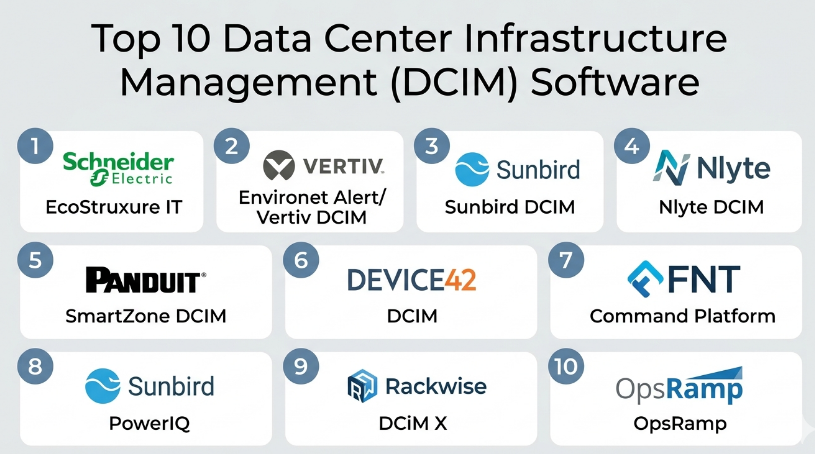
Top 10 Data Center Infrastructure Management (DCIM) Software
#1 — Schneider Electric EcoStruxure IT
Short description :
Schneider Electric EcoStruxure IT is one of the most widely adopted DCIM platforms globally. It provides real-time monitoring, predictive analytics, and infrastructure optimization across physical data center environments. It is particularly strong in energy management, cooling optimization, and asset visibility. The platform is used by enterprises and colocation providers to improve uptime and reduce operational costs.
Key Features
- Real-time power and environmental monitoring
- Asset tracking and lifecycle management
- Predictive failure and capacity analytics
- Cooling and energy optimization insights
- Multi-site data center visibility
- Alarm and incident management
- Dashboard-based infrastructure visualization
Pros
- Strong global enterprise adoption
- Excellent energy efficiency analytics
- Deep hardware ecosystem integration
Cons
- Complex for small environments
- Requires onboarding effort for full utilization
- Premium pricing for advanced modules
Platforms / Deployment
- Web / Windows / Linux
- Cloud / Hybrid
Security & Compliance
- SSO/SAML
- MFA
- Encryption
- Audit logs
- RBAC
- Compliance support varies by deployment
Integrations & Ecosystem
- ITSM platforms
- BMS systems
- IoT sensor networks
- Cloud monitoring tools
- API-based integrations
Support & Community
Strong enterprise support and global partner ecosystem.
#2 — Vertiv Environet Alert / Vertiv DCIM
Short description :
Vertiv DCIM solutions provide infrastructure monitoring and alerting for data centers, focusing heavily on power, cooling, and physical infrastructure reliability. It is widely used in enterprise and telecom environments where uptime is critical.
Key Features
- Environmental and power monitoring
- Alarm and event management
- Asset tracking and reporting
- Capacity utilization insights
- Remote infrastructure visibility
- Predictive alerting systems
- Multi-site monitoring
Pros
- Strong reliability monitoring
- Good fit for critical infrastructure
- Tight integration with Vertiv hardware
Cons
- Less advanced visualization compared to modern platforms
- Ecosystem-dependent value
- UI can feel traditional
Platforms / Deployment
- Web / Windows
- Cloud / Hybrid
Security & Compliance
- SSO/SAML
- MFA
- Audit logs
- RBAC
- Compliance support varies
Integrations & Ecosystem
- Vertiv hardware ecosystem
- ITSM tools
- BMS systems
- Monitoring platforms
Support & Community
Strong enterprise-grade support, especially for infrastructure customers.
#3 — Sunbird DCIM
Short description :
Sunbird DCIM is a modern, visualization-rich platform designed for data center management, focusing on 3D modeling, capacity planning, and operational efficiency. It is widely used by enterprises seeking improved visibility and planning capabilities.
Key Features
- 3D data center visualization
- Capacity planning and forecasting
- Asset lifecycle management
- Power and environmental monitoring
- Workflow automation
- Change management tracking
- Real-time dashboards
Pros
- Strong visualization capabilities
- Modern UI and usability
- Good planning and forecasting tools
Cons
- Premium pricing model
- Requires training for advanced features
- Less hardware-native integration than vendors like Schneider
Platforms / Deployment
- Web / Windows
- Cloud / Hybrid
Security & Compliance
- SSO/SAML
- MFA
- Encryption
- Audit logs
- RBAC
Integrations & Ecosystem
- ITSM systems
- CMDB platforms
- Monitoring tools
- API integrations
Support & Community
Strong enterprise support and onboarding services.
#4 — Nlyte DCIM
Short description :
Nlyte DCIM provides enterprise-grade infrastructure management with strong focus on asset tracking, capacity planning, and compliance reporting. It is commonly used in large-scale enterprise and government environments.
Key Features
- Asset and inventory management
- Capacity planning tools
- Power and cooling monitoring
- Workflow automation
- Compliance reporting dashboards
- Data center modeling
- Change management tracking
Pros
- Strong enterprise compliance support
- Mature DCIM capabilities
- Good scalability for large environments
Cons
- UI can feel traditional
- Complex implementation process
- Higher operational overhead
Platforms / Deployment
- Web / Windows / Linux
- Cloud / Hybrid
Security & Compliance
- SSO/SAML
- MFA
- Audit logs
- RBAC
- Strong compliance reporting features
Integrations & Ecosystem
- ITSM platforms
- CMDB tools
- BMS systems
- Monitoring tools
Support & Community
Enterprise-focused support and professional services available.
#5 — Panduit SmartZone DCIM
Short description :
Panduit SmartZone DCIM focuses on infrastructure visibility, energy monitoring, and asset tracking, often integrated with Panduit hardware solutions. It is used in enterprise and colocation environments.
Key Features
- Power and environmental monitoring
- Rack and asset management
- Capacity planning
- Alerting and notifications
- Infrastructure visualization
- Reporting dashboards
- Energy usage tracking
Pros
- Strong hardware integration
- Good for colocation environments
- Reliable monitoring capabilities
Cons
- Less advanced analytics than newer platforms
- Ecosystem dependency
- UI modernization varies
Platforms / Deployment
- Web / Windows
- Cloud / Hybrid
Security & Compliance
- SSO/SAML
- MFA
- Audit logs
- RBAC
Integrations & Ecosystem
- Panduit infrastructure systems
- ITSM tools
- Monitoring systems
- API integrations
Support & Community
Strong enterprise hardware-backed support.
#6 — Device42 DCIM
Short description :
Device42 combines DCIM with IT asset management and discovery features. It is widely used for hybrid IT environments where infrastructure spans on-prem and cloud systems.
Key Features
- Automated asset discovery
- Infrastructure dependency mapping
- Capacity planning
- IP address management
- Power and rack tracking
- Visualization dashboards
- Workflow automation
Pros
- Strong discovery automation
- Good hybrid IT visibility
- Easy integration with ITSM systems
Cons
- Less specialized in cooling optimization
- Visualization less advanced than Sunbird
- Requires tuning for large environments
Platforms / Deployment
- Web / Windows / Linux
- Cloud / Hybrid
Security & Compliance
- SSO/SAML
- MFA
- Encryption
- Audit logs
- RBAC
Integrations & Ecosystem
- ServiceNow
- CMDB systems
- Cloud platforms
- Monitoring tools
- API integrations
Support & Community
Strong mid-market and enterprise support.
#7 — FNT Command Platform
Short description :
FNT Command is an enterprise DCIM and infrastructure management platform with strong focus on telecommunications, large enterprises, and complex infrastructure environments.
Key Features
- Infrastructure lifecycle management
- Network and data center modeling
- Capacity and resource planning
- Workflow automation
- Asset and service mapping
- Compliance reporting
- Multi-site management
Pros
- Strong telecom and enterprise fit
- Highly scalable architecture
- Detailed infrastructure modeling
Cons
- Complex setup and configuration
- Steeper learning curve
- Less intuitive UI
Platforms / Deployment
- Web / Windows / Linux
- Cloud / Hybrid / On-prem
Security & Compliance
- SSO/SAML
- MFA
- Audit logs
- RBAC
- Strong enterprise compliance support
Integrations & Ecosystem
- ITSM platforms
- CMDB systems
- Network management tools
- API integrations
Support & Community
Enterprise-grade global support network.
#8 — Sunbird PowerIQ
Short description :
PowerIQ focuses specifically on power monitoring and energy management within data centers. It is often used alongside broader DCIM platforms to enhance energy visibility.
Key Features
- Power monitoring and metering
- Energy usage analytics
- PDU integration
- Capacity tracking
- Environmental sensor integration
- Real-time alerts
- Reporting dashboards
Pros
- Strong energy monitoring focus
- High accuracy power insights
- Good for sustainability goals
Cons
- Narrower scope than full DCIM suites
- Requires pairing with other tools
- Limited workflow management
Platforms / Deployment
- Web / Windows
- Cloud / Hybrid
Security & Compliance
- SSO/SAML
- MFA
- Audit logs
- RBAC
Integrations & Ecosystem
- Sunbird ecosystem
- ITSM tools
- Monitoring platforms
- API integrations
Support & Community
Strong enterprise support within ecosystem deployments.
#9 — Rackwise DCiM X
Short description :
Rackwise DCiM X provides infrastructure management, asset tracking, and capacity planning tools designed for enterprise data centers and colocation providers.
Key Features
- Rack and asset management
- Capacity planning tools
- Power and cooling monitoring
- Infrastructure visualization
- Change tracking
- Reporting dashboards
- Workflow automation
Pros
- Strong visualization of infrastructure
- Good colocation fit
- Flexible deployment options
Cons
- UI less modern than newer competitors
- Smaller ecosystem
- Requires configuration effort
Platforms / Deployment
- Web / Windows
- Cloud / Hybrid
Security & Compliance
- SSO/SAML
- MFA
- Audit logs
- RBAC
Integrations & Ecosystem
- ITSM systems
- Monitoring tools
- CMDB platforms
- API integrations
Support & Community
Moderate enterprise support and niche adoption.
#10 — OpsRamp (DCIM + Observability Layer)
Short description :
OpsRamp provides infrastructure monitoring and operational intelligence that overlaps with DCIM capabilities. It is used in hybrid IT environments to unify infrastructure visibility and operations management.
Key Features
- Infrastructure monitoring and observability
- Event and alert correlation
- Asset visibility across hybrid environments
- Capacity insights
- Automation workflows
- Performance analytics
- AIOps-driven insights
Pros
- Strong hybrid IT visibility
- AI-driven operations insights
- Good automation capabilities
Cons
- Not a pure DCIM platform
- Requires integration for full DCIM coverage
- Complex for small teams
Platforms / Deployment
- Web / Windows / Linux
- Cloud
Security & Compliance
- SSO/SAML
- MFA
- Encryption
- Audit logs
- RBAC
Integrations & Ecosystem
- ITSM systems
- Cloud providers
- Monitoring tools
- CMDB platforms
- API integrations
Support & Community
Strong enterprise support with growing ecosystem adoption.
Comparison Table (Top 10)
| Tool Name | Best For | Platform(s) Supported | Deployment | Standout Feature | Public Rating |
|---|---|---|---|---|---|
| Schneider EcoStruxure IT | Global enterprises | Multi-platform | Cloud/Hybrid | Energy optimization | N/A |
| Vertiv DCIM | Critical infrastructure | Multi-platform | Hybrid | Power reliability monitoring | N/A |
| Sunbird DCIM | Visualization-focused teams | Multi-platform | Cloud/Hybrid | 3D modeling | N/A |
| Nlyte DCIM | Large enterprises | Multi-platform | Cloud/Hybrid | Compliance reporting | N/A |
| Panduit SmartZone | Colocation providers | Multi-platform | Cloud/Hybrid | Hardware integration | N/A |
| Device42 | Hybrid IT environments | Multi-platform | Cloud/Hybrid | Automated discovery | N/A |
| FNT Command | Telecom/enterprise | Multi-platform | Hybrid/On-prem | Infrastructure modeling | N/A |
| Sunbird PowerIQ | Energy monitoring | Multi-platform | Cloud/Hybrid | Power analytics | N/A |
| Rackwise DCiM X | Colocation/enterprise | Multi-platform | Cloud/Hybrid | Rack visualization | N/A |
| OpsRamp | Hybrid IT ops | Multi-platform | Cloud | AIOps-driven insights | N/A |
Evaluation & DCIM Software
| Tool Name | Core (25%) | Ease (15%) | Integrations (15%) | Security (10%) | Performance (10%) | Support (10%) | Value (15%) | Weighted Total |
|---|---|---|---|---|---|---|---|---|
| Schneider EcoStruxure | 9 | 8 | 9 | 9 | 9 | 9 | 7 | 8.6 |
| Vertiv DCIM | 8 | 7 | 8 | 8 | 9 | 8 | 8 | 8.0 |
| Sunbird DCIM | 9 | 8 | 8 | 8 | 8 | 8 | 7 | 8.1 |
| Nlyte | 9 | 7 | 8 | 9 | 8 | 8 | 7 | 8.0 |
| Panduit SmartZone | 8 | 7 | 7 | 8 | 8 | 8 | 8 | 7.8 |
| Device42 | 8 | 8 | 9 | 8 | 8 | 8 | 8 | 8.3 |
| FNT Command | 9 | 6 | 9 | 9 | 8 | 8 | 7 | 8.0 |
| PowerIQ | 8 | 8 | 7 | 8 | 9 | 8 | 8 | 8.0 |
| Rackwise | 7 | 7 | 7 | 7 | 7 | 7 | 8 | 7.2 |
| OpsRamp | 8 | 8 | 9 | 8 | 8 | 8 | 8 | 8.2 |
These scores are comparative and reflect overall category fit rather than absolute performance. DCIM selection depends heavily on infrastructure complexity, energy goals, and integration requirements with ITSM, cloud, and monitoring ecosystems.
Which Data Center Infrastructure Management (DCIM) Software
Solo / Freelancer
DCIM tools are generally not required for solo users. Lightweight infrastructure monitoring or cloud dashboards are more appropriate.
SMB
SMBs with small server rooms may use simplified DCIM or monitoring tools like Device42 or basic power monitoring solutions.
Mid-Market
Mid-market organizations benefit from Sunbird DCIM, Device42, and Vertiv solutions for balancing visibility and operational control.
Enterprise
Enterprises require full-scale platforms like Schneider EcoStruxure, Nlyte, FNT Command, and OpsRamp for global infrastructure management.
Budget vs Premium
- Budget-friendly: Rackwise, Device42 (mid-tier usage)
- Mid-tier: Sunbird, Vertiv, PowerIQ
- Premium enterprise: Schneider, Nlyte, FNT Command
Feature Depth vs Ease of Use
- Deepest functionality: Schneider, FNT Command, Nlyte
- Easiest to use: Device42, Sunbird
- Balanced platforms: Vertiv, OpsRamp
Integrations & Scalability
- Strong enterprise ecosystems: Schneider, Nlyte, FNT
- Hybrid IT integration leaders: Device42, OpsRamp
- Hardware-centric solutions: Vertiv, Panduit
Energy & Compliance Needs
Organizations focusing on sustainability and compliance should prioritize:
- Energy usage analytics
- PUE tracking
- Carbon footprint reporting
- Audit-ready asset management
- Predictive capacity planning
Schneider EcoStruxure and Vertiv are especially strong in this area.
Frequently Asked Questions (FAQs)
1. What is DCIM software?
DCIM software helps organizations monitor and manage physical data center infrastructure including power, cooling, racks, and IT assets.
2. Why is DCIM important?
It improves uptime, reduces energy costs, and provides visibility into complex infrastructure environments.
3. Does DCIM work with cloud environments?
Yes, modern DCIM platforms integrate with hybrid and cloud environments for unified infrastructure visibility.
4. Is DCIM only for large enterprises?
Primarily yes, but mid-market organizations with on-prem infrastructure can also benefit.
5. What is PUE in DCIM?
PUE (Power Usage Effectiveness) measures energy efficiency in a data center and is commonly tracked in DCIM tools.
6. Can DCIM reduce energy costs?
Yes, by optimizing cooling, power distribution, and capacity planning.
7. What is the difference between DCIM and ITSM?
DCIM manages physical infrastructure; ITSM manages IT service workflows and tickets.
8. Does DCIM support automation?
Yes, many modern DCIM platforms include automation for alerts, workflows, and capacity planning.
9. What is a digital twin in DCIM?
A digital twin is a virtual representation of a data center used for simulation and planning.
10. How does DCIM help with AI workloads?
It helps manage high-density GPU clusters, power consumption, and cooling requirements.
11. What are common DCIM challenges?
Implementation complexity, data accuracy, integration issues, and user adoption.
12. Can DCIM integrate with monitoring tools?
Yes, most platforms integrate with IT monitoring, SIEM, and CMDB systems.
Conclusion
Data Center Infrastructure Management (DCIM) software has become essential for modern digital infrastructure operations, especially as workloads grow in complexity due to AI, cloud hybridization, and sustainability demands. These platforms provide critical visibility into power, cooling, assets, and capacity planning, enabling organizations to run data centers more efficiently and reliably. While enterprise-grade platforms like Schneider Electric EcoStruxure, Nlyte, and FNT Command dominate large-scale deployments, tools like Device42 and Sunbird offer strong flexibility for hybrid IT and mid-market environments. Ultimately, the best DCIM solution depends on infrastructure scale, integration requirements, and energy optimization goals.
