Introduction
Crypto Custody Platforms are specialized solutions that securely store, manage, govern, and protect digital assets such as cryptocurrencies, tokenized assets, NFTs, and blockchain-based financial instruments. These platforms provide infrastructure for institutional investors, enterprises, exchanges, banks, asset managers, and high-net-worth individuals to securely hold digital assets while minimizing operational and security risks.
In crypto custody has evolved far beyond simple cold storage. Modern custody platforms now support multi-party computation (MPC), staking services, tokenized asset management, decentralized finance (DeFi) integrations, regulatory compliance workflows, institutional governance controls, AI-driven fraud detection, and cross-chain asset orchestration. As digital assets become increasingly integrated into traditional finance, secure custody infrastructure is becoming critical for enterprise blockchain adoption.
Common real-world use cases include:
- Institutional cryptocurrency custody
- Enterprise treasury management
- Exchange asset protection
- Digital asset fund management
- NFT custody
- Tokenized asset storage
- Regulatory-compliant digital asset operations
When evaluating Crypto Custody Platforms, buyers should consider:
- Security architecture
- Cold storage capabilities
- MPC and multi-signature support
- Regulatory compliance readiness
- Asset coverage
- Insurance availability
- Governance and approval workflows
- API and integration support
- Scalability and operational reliability
- Institutional reporting capabilities
Best for: Financial institutions, crypto exchanges, hedge funds, enterprises, custodians, fintech companies, digital asset managers, and organizations managing significant cryptocurrency holdings.
Not ideal for: Casual retail crypto users with small portfolios or organizations without blockchain-related financial operations.
Key Trends in Crypto Custody Platforms
- MPC-based custody architecture is becoming mainstream.
- Institutional demand for regulated custody is increasing.
- Staking and yield-generation features are expanding.
- AI-driven fraud and transaction monitoring is improving.
- Tokenized real-world asset custody is growing rapidly.
- Multi-chain custody support is becoming standard.
- Integration with traditional banking systems is accelerating.
- Enterprise governance and approval workflows are maturing.
- Insurance-backed custody services are becoming more competitive.
- Compliance automation for digital assets is expanding globally.
How We Selected These Tools (Methodology)
The platforms in this list were selected based on institutional adoption, security reputation, governance capabilities, operational maturity, blockchain support, and long-term relevance in enterprise digital asset management.
Selection criteria included:
- Security architecture maturity
- Institutional adoption
- Regulatory readiness
- Asset coverage
- Governance and compliance tooling
- API and integration flexibility
- Operational reliability
- Scalability
- Insurance and recovery models
- Ecosystem trust and reputation
The final list includes enterprise custody providers, institutional wallet infrastructure platforms, regulated custody services, and blockchain-native custody ecosystems.
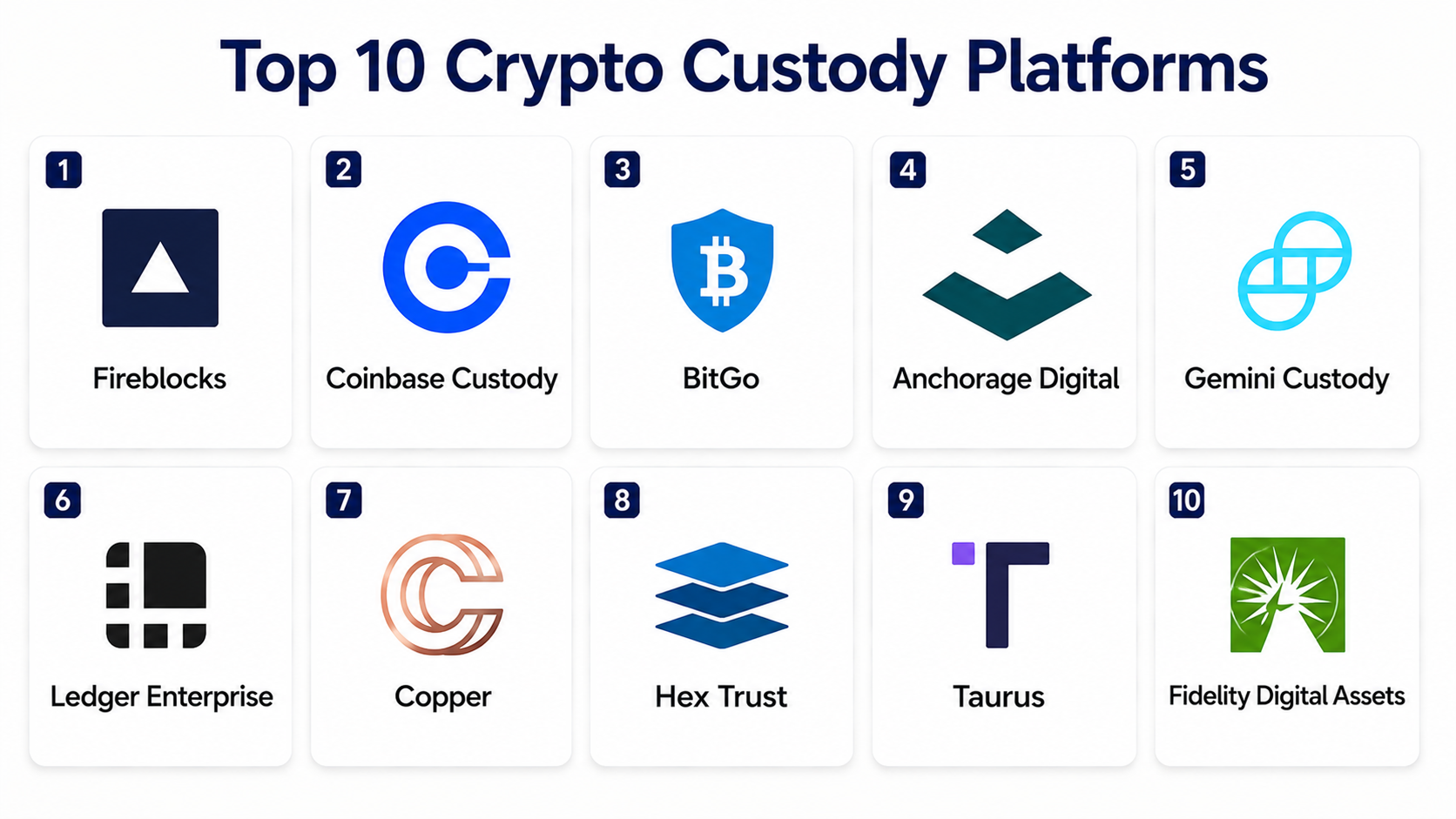
Crypto Custody Platforms
#1 — Fireblocks
Short description :
Fireblocks is one of the leading institutional digital asset custody and transfer platforms, offering MPC-based security, governance workflows, and enterprise-grade blockchain infrastructure.
Key Features
- MPC wallet architecture
- Institutional custody workflows
- Secure asset transfers
- Policy-based governance controls
- Multi-chain support
- API-driven infrastructure
- Staking and treasury management
Pros
- Strong institutional security reputation
- Excellent governance controls
- Broad blockchain ecosystem compatibility
Cons
- Enterprise-oriented pricing
- Complex onboarding for smaller teams
- Advanced workflows require operational expertise
Platforms / Deployment
- Web / Linux
- Cloud / Hybrid
Security & Compliance
- MPC security
- RBAC
- Audit logs
- Encryption
- Governance workflows
Integrations & Ecosystem
Fireblocks integrates with institutional blockchain and financial ecosystems.
- Exchanges
- Banking infrastructure
- APIs
- DeFi platforms
- Compliance systems
Support & Community
Fireblocks provides enterprise onboarding and institutional support services.
#2 — Coinbase Custody
Short description :
Coinbase Custody is an institutional digital asset custody platform designed for regulated cryptocurrency storage and enterprise asset management.
Key Features
- Institutional cold storage
- Regulated custody workflows
- Multi-asset support
- Governance controls
- Secure asset management
- Reporting infrastructure
- Staking services
Pros
- Strong institutional trust
- Regulatory-focused operations
- Broad digital asset support
Cons
- Enterprise-focused pricing
- Limited self-hosting flexibility
- Coinbase ecosystem dependency
Platforms / Deployment
- Web
- Cloud
Security & Compliance
- Cold storage
- Access governance
- Encryption
- Audit workflows
Integrations & Ecosystem
Coinbase Custody integrates with enterprise and institutional crypto ecosystems.
- Coinbase Prime
- APIs
- Exchanges
- Asset management systems
- Compliance tooling
Support & Community
Coinbase provides enterprise support and institutional onboarding resources.
#3 — BitGo
Short description :
BitGo is a digital asset custody and financial infrastructure platform offering institutional-grade wallet security, governance controls, and blockchain asset management.
Key Features
- Multi-signature custody
- Institutional wallet infrastructure
- Governance workflows
- API integrations
- Multi-chain support
- Secure transaction approvals
- Insurance-related workflows
Pros
- Strong institutional adoption
- Mature governance capabilities
- Broad blockchain compatibility
Cons
- Enterprise complexity
- Premium pricing structure
- Advanced setup requirements
Platforms / Deployment
- Web / Linux
- Cloud / Hybrid
Security & Compliance
- Multi-signature security
- RBAC
- Audit logging
- Encryption
Integrations & Ecosystem
BitGo integrates with institutional blockchain ecosystems.
- Exchanges
- APIs
- Banking systems
- Wallet infrastructure
- Compliance platforms
Support & Community
BitGo provides enterprise-grade onboarding and support services.
#4 — Anchorage Digital
Short description :
Anchorage Digital is an institutional crypto platform offering custody, staking, governance, and regulated digital asset infrastructure services.
Key Features
- Institutional custody
- Secure staking services
- Governance tooling
- Multi-chain asset support
- Compliance workflows
- API integrations
- Secure transaction infrastructure
Pros
- Strong institutional focus
- Broad staking capabilities
- Regulated digital asset operations
Cons
- Enterprise-oriented onboarding
- Premium service pricing
- Limited suitability for smaller organizations
Platforms / Deployment
- Web / Linux
- Cloud
Security & Compliance
- Encryption
- Governance controls
- Audit workflows
- Access management
Integrations & Ecosystem
Anchorage Digital integrates with enterprise blockchain and financial systems.
- APIs
- Staking ecosystems
- Exchanges
- Institutional finance systems
- Compliance tooling
Support & Community
Anchorage Digital provides institutional support and onboarding services.
#5 — Gemini Custody
Short description :
Gemini Custody is an institutional crypto custody platform focused on secure digital asset storage, governance workflows, and regulated crypto operations.
Key Features
- Institutional asset custody
- Cold storage infrastructure
- Governance controls
- Multi-asset support
- Reporting workflows
- Secure transfer approvals
- Compliance-focused architecture
Pros
- Strong security reputation
- Regulated operational model
- Good institutional reporting workflows
Cons
- Enterprise-focused environment
- Limited infrastructure customization
- Advanced integrations may require enterprise plans
Platforms / Deployment
- Web
- Cloud
Security & Compliance
- Cold storage
- Encryption
- Audit controls
- Access governance
Integrations & Ecosystem
Gemini Custody integrates with institutional crypto ecosystems.
- Gemini Exchange
- APIs
- Asset management systems
- Reporting tools
- Compliance infrastructure
Support & Community
Gemini provides institutional onboarding and enterprise support.
#6 — Ledger Enterprise
Short description :
Ledger Enterprise provides enterprise-grade hardware-backed digital asset custody infrastructure with governance controls and secure transaction workflows.
Key Features
- Hardware-backed custody
- Secure key management
- Enterprise governance controls
- Multi-asset support
- Offline storage workflows
- Institutional wallet infrastructure
- API integrations
Pros
- Strong hardware security
- Offline asset protection
- Trusted hardware ecosystem
Cons
- Hardware operational dependency
- Enterprise deployment complexity
- Advanced workflows require setup planning
Platforms / Deployment
- Windows / macOS / Linux
- Self-hosted / Hybrid
Security & Compliance
- Offline key storage
- Hardware security modules
- Governance controls
- Encryption
Integrations & Ecosystem
Ledger Enterprise integrates with institutional blockchain ecosystems.
- APIs
- Wallet infrastructure
- Exchanges
- Governance systems
- Compliance platforms
Support & Community
Ledger provides enterprise support and onboarding resources.
#7 — Copper
Short description :
Copper is a digital asset custody and settlement platform focused on institutional security, governance automation, and secure trading workflows.
Key Features
- Institutional custody
- MPC security
- Secure settlement infrastructure
- Governance controls
- Trading connectivity
- Multi-chain asset support
- API integrations
Pros
- Strong trading infrastructure support
- Good governance workflows
- Broad institutional connectivity
Cons
- Enterprise-oriented complexity
- Advanced onboarding requirements
- Pricing may vary significantly
Platforms / Deployment
- Web / Linux
- Cloud / Hybrid
Security & Compliance
- MPC security
- Governance workflows
- Access controls
- Audit logging
Integrations & Ecosystem
Copper integrates with institutional trading and blockchain ecosystems.
- Exchanges
- APIs
- Settlement systems
- Trading infrastructure
- Compliance tooling
Support & Community
Copper provides enterprise onboarding and institutional support.
#8 — Hex Trust
Short description :
Hex Trust is an institutional digital asset custodian offering secure storage, staking infrastructure, and regulated crypto asset management workflows.
Key Features
- Institutional custody
- Secure staking services
- Governance workflows
- Multi-chain support
- API infrastructure
- Compliance tooling
- Asset reporting systems
Pros
- Strong Asia-Pacific institutional presence
- Good staking support
- Enterprise-grade operational workflows
Cons
- Enterprise-focused pricing
- Smaller ecosystem visibility than major global providers
- Advanced deployment complexity
Platforms / Deployment
- Web / Linux
- Cloud
Security & Compliance
- Governance controls
- Encryption
- Audit logging
- Access management
Integrations & Ecosystem
Hex Trust integrates with institutional digital asset ecosystems.
- APIs
- Exchanges
- Staking systems
- Compliance infrastructure
- Enterprise platforms
Support & Community
Hex Trust provides enterprise onboarding and institutional support services.
#9 — Taurus
Short description :
Taurus is a digital asset custody and tokenization infrastructure platform focused on institutional blockchain asset management and regulated financial integration.
Key Features
- Institutional custody
- Tokenized asset support
- Governance workflows
- Multi-chain infrastructure
- Banking integration support
- Compliance tooling
- API infrastructure
Pros
- Strong banking integration capabilities
- Good tokenization support
- Enterprise-grade governance
Cons
- Enterprise-focused deployment complexity
- Limited suitability for smaller organizations
- Pricing varies significantly
Platforms / Deployment
- Web / Linux
- Cloud / Hybrid
Security & Compliance
- Governance controls
- Encryption
- Audit logging
- Secure asset workflows
Integrations & Ecosystem
Taurus integrates with enterprise financial and blockchain ecosystems.
- Banking systems
- APIs
- Tokenization platforms
- Institutional infrastructure
- Compliance tooling
Support & Community
Taurus provides institutional onboarding and technical support services.
#10 — Fidelity Digital Assets
Short description :
Fidelity Digital Assets is an institutional digital asset custody platform focused on secure cryptocurrency storage and enterprise financial integration.
Key Features
- Institutional crypto custody
- Secure cold storage
- Governance workflows
- Enterprise reporting
- Asset management infrastructure
- Financial ecosystem integration
- Compliance-focused operations
Pros
- Strong institutional financial reputation
- Mature operational governance
- Enterprise-grade reporting workflows
Cons
- Institutional-only focus
- Limited flexibility for smaller organizations
- Traditional financial onboarding processes
Platforms / Deployment
- Web
- Cloud
Security & Compliance
- Cold storage
- Governance controls
- Encryption
- Audit workflows
Integrations & Ecosystem
Fidelity Digital Assets integrates with institutional financial ecosystems.
- Financial systems
- APIs
- Enterprise reporting platforms
- Asset management workflows
- Compliance systems
Support & Community
Fidelity provides enterprise onboarding and institutional client support.
Comparison Table (Top 10)
| Tool Name | Best For | Platform(s) Supported | Deployment | Standout Feature | Public Rating |
|---|---|---|---|---|---|
| Fireblocks | Institutional digital asset operations | Web, Linux | Hybrid | MPC custody infrastructure | N/A |
| Coinbase Custody | Regulated institutional custody | Web | Cloud | Institutional cold storage | N/A |
| BitGo | Enterprise wallet governance | Web, Linux | Hybrid | Multi-signature security | N/A |
| Anchorage Digital | Regulated digital asset services | Web, Linux | Cloud | Institutional staking infrastructure | N/A |
| Gemini Custody | Compliance-focused crypto custody | Web | Cloud | Regulated custody operations | N/A |
| Ledger Enterprise | Hardware-backed enterprise custody | Windows, macOS, Linux | Hybrid | Offline hardware security | N/A |
| Copper | Institutional trading custody | Web, Linux | Hybrid | Secure settlement workflows | N/A |
| Hex Trust | Institutional staking and custody | Web, Linux | Cloud | Enterprise staking services | N/A |
| Taurus | Banking-integrated custody | Web, Linux | Hybrid | Tokenized asset infrastructure | N/A |
| Fidelity Digital Assets | Enterprise crypto asset management | Web | Cloud | Institutional financial integration | N/A |
Evaluation & Crypto Custody Platforms
| Tool Name | Core (25%) | Ease (15%) | Integrations (15%) | Security (10%) | Performance (10%) | Support (10%) | Value (15%) | Weighted Total |
|---|---|---|---|---|---|---|---|---|
| Fireblocks | 10 | 8 | 10 | 10 | 9 | 9 | 7 | 9.1 |
| Coinbase Custody | 9 | 8 | 8 | 9 | 8 | 8 | 7 | 8.2 |
| BitGo | 9 | 7 | 9 | 10 | 9 | 9 | 7 | 8.7 |
| Anchorage Digital | 9 | 7 | 8 | 9 | 8 | 8 | 7 | 8.1 |
| Gemini Custody | 8 | 8 | 7 | 9 | 8 | 8 | 7 | 7.9 |
| Ledger Enterprise | 9 | 6 | 8 | 10 | 8 | 8 | 7 | 8.1 |
| Copper | 8 | 7 | 8 | 9 | 8 | 8 | 7 | 7.9 |
| Hex Trust | 8 | 7 | 7 | 8 | 8 | 7 | 8 | 7.7 |
| Taurus | 9 | 7 | 9 | 9 | 8 | 8 | 7 | 8.2 |
| Fidelity Digital Assets | 9 | 7 | 8 | 9 | 9 | 9 | 6 | 8.2 |
These scores are comparative rather than absolute. Some crypto custody platforms prioritize institutional governance and compliance, while others focus on trading infrastructure, staking support, hardware security, or banking integration. Buyers should evaluate providers based on regulatory needs, governance complexity, blockchain support, operational scale, and long-term digital asset management strategies.
Which Crypto Custody Platforms
Solo / Freelancer
Most institutional crypto custody platforms are not designed for solo users. Smaller investors may prefer retail-oriented custody or hardware wallet solutions instead.
SMB
Small and medium-sized blockchain companies should prioritize usability and operational flexibility.
Recommended options:
- Ledger Enterprise
- Copper
- Hex Trust
Mid-Market
Mid-sized organizations often require governance controls and scalable digital asset workflows.
Recommended options:
- BitGo
- Anchorage Digital
- Taurus
Enterprise
Large financial institutions and enterprises should prioritize compliance, governance, and operational maturity.
Recommended options:
- Fireblocks
- Coinbase Custody
- Fidelity Digital Assets
Budget vs Premium
- Budget-conscious enterprise: Ledger Enterprise
- Premium institutional platforms: Fireblocks, Fidelity Digital Assets
- Balanced enterprise value: BitGo, Taurus
Feature Depth vs Ease of Use
- Best governance controls: Fireblocks
- Best hardware-backed security: Ledger Enterprise
- Best financial integration: Fidelity Digital Assets
Integrations & Scalability
- Best institutional blockchain integrations: BitGo
- Best banking ecosystem support: Taurus
- Best settlement infrastructure: Copper
Security & Compliance Needs
Organizations with strict governance and regulatory requirements should prioritize:
- Fireblocks
- Coinbase Custody
- Fidelity Digital Assets
- BitGo
Frequently Asked Questions (FAQs)
1. What is a crypto custody platform?
A crypto custody platform securely stores and manages digital assets such as cryptocurrencies, NFTs, and tokenized financial instruments.
2. Why is crypto custody important?
Custody platforms help protect digital assets from theft, operational mistakes, insider risks, and governance failures.
3. What is MPC custody?
MPC (Multi-Party Computation) custody distributes cryptographic signing processes across multiple parties to improve security.
4. Are crypto custody platforms regulated?
Some institutional custody providers operate under financial or digital asset regulatory frameworks depending on jurisdiction.
5. What is cold storage?
Cold storage refers to storing private keys offline to reduce exposure to online attacks.
6. Can crypto custody platforms support staking?
Yes. Many modern custody platforms now support staking and yield-generation workflows.
7. What industries use crypto custody platforms?
Financial institutions, exchanges, fintech companies, hedge funds, enterprises, and tokenization platforms commonly use them.
8. What should buyers prioritize when selecting a custody provider?
Buyers should evaluate security architecture, governance workflows, insurance options, regulatory alignment, and blockchain compatibility.
9. Are hardware-based custody systems safer?
Hardware-backed custody can improve security by isolating private keys from internet-connected systems.
10. Can enterprises integrate custody platforms with existing financial systems?
Yes. Many enterprise custody platforms support APIs and integrations with banking, compliance, and treasury management systems.
Conclusion
Crypto Custody Platforms have become foundational infrastructure for institutional blockchain adoption, enterprise treasury management, tokenized asset ecosystems, and regulated digital finance operations. As organizations increasingly manage cryptocurrencies, tokenized assets, NFTs, and decentralized financial instruments, secure and governed custody infrastructure is becoming essential for operational trust and regulatory alignment. Fireblocks currently leads in institutional MPC-based custody infrastructure, while BitGo and Coinbase Custody remain major players in enterprise digital asset security.
