Introduction
Business‑to‑Business (B2B) e‑commerce platforms are software solutions that enable companies to sell products and services online to other businesses. Unlike B2C platforms, B2B systems handle complex pricing rules, bulk ordering, customer‑specific catalogs, credit terms, contract pricing, and integration with enterprise systems like ERP and CRM. For manufacturers, wholesalers, distributors, and enterprise sellers, a B2B e‑commerce platform transforms manual sales processes into automated, scalable digital experiences.
Why it matters now: Digital transformation continues to accelerate across industries, with business buyers expecting self‑service ordering, real‑time inventory visibility, personalized pricing, and seamless integration with internal systems. In 2026 and beyond, AI‑driven recommendations, headless commerce capabilities, mobile‑first experiences, and automated pricing rules are key differentiators. B2B sellers not adopting modern platforms risk losing market share to competitors that deliver faster, data‑driven ordering experiences.
Real‑world use cases:
- Wholesale distributors allowing clients to place bulk orders online with tiered pricing.
- Manufacturers providing account‑specific catalogs and negotiated pricing for strategic customers.
- Multi‑location enterprises enabling internal re‑orders and stock transfers via self‑service portals.
- Businesses automating order approvals, credit checks, and tax compliance during checkout.
- Sellers using analytics to forecast demand and optimize pricing across segments.
Evaluation criteria for buyers:
- Feature richness and configurability
- Flexible pricing and contract management
- Integration with ERP/CRM and billing systems
- Scalability and performance
- Security and compliance
- Ease of use for sellers and buyers
- Support for mobile and omnichannel experiences
- AI/automation capabilities
- Customization and extensibility
- Deployment and total cost of ownership
Best for: Mid‑market to large enterprises, wholesalers, distributors, manufacturers with digital sales channels, multichannel sellers with complex pricing and integration needs.
Not ideal for: Small businesses with very simple catalogs, low transaction volumes, or where manual order processing is adequate.
Key Trends in B2B E‑commerce Platforms
- AI‑driven product recommendations and pricing optimization.
- Self‑service portals with personalized catalogs and negotiated pricing.
- Headless commerce architectures enabling custom storefronts and omnichannel touchpoints.
- Mobile‑first ordering for buyers on the go.
- Integration with ERP/CRM for real‑time inventory, pricing, and customer data.
- Usage‑based and subscription ordering models for repeat business.
- Automated workflows for approvals, credit checks, and invoicing.
- Internationalization including multi‑currency and local tax compliance.
- Smarter analytics and insights for demand forecasting.
How We Selected These Tools (Methodology)
- Established market adoption and mindshare.
- Evaluation of core B2B commerce features and configurability.
- Assessment of integration capabilities with key enterprise systems.
- Analysis of security posture and compliance readiness.
- Consideration of performance and scalability for high‑volume sellers.
- Judgment of ease of use and customization.
- Inclusion of AI and automation capabilities.
- Balance of enterprise and mid‑market needs.
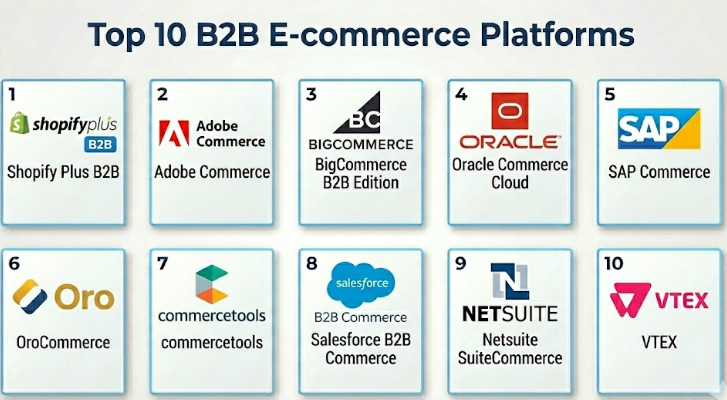
#1 — Shopify Plus B2B
Short description: Shopify Plus B2B empowers merchants to sell to business buyers with customized catalogs, pricing, and checkout experiences. It’s ideal for brands and distributors scaling their online B2B channels.
Key Features
- Custom pricing per customer group
- Bulk ordering and minimum quantity rules
- Customer‑specific catalogs
- Mobile optimized storefronts
- Headless commerce support
- AI‑enabled recommendations
- Multi‑currency and tax configurations
Pros
- Easy to launch and manage
- Strong ecosystem and app marketplace
- Intuitive admin and buyer UX
Cons
- May require apps for advanced B2B workflows
- Pricing can rise with transaction volume
- Core ERP integrations may need middleware
Platforms / Deployment
- Web / iOS / Android
- Cloud
Security & Compliance
- SSO/SAML, encryption
- GDPR, PCI/DSS compliance
Integrations & Ecosystem
Connects with CRM, ERP, payment gateways, and analytics tools.
- CRM plugins
- ERP connectors via middleware
- Payment and tax engines
Support & Community
Extensive documentation, developer community, forums, and support plans.
#2 — Adobe Commerce (Magento B2B)
Short description: Adobe Commerce delivers enterprise‑grade B2B e‑commerce with powerful catalog management, pricing tools, workflows, and customization for complex B2B processes.
Key Features
- Tiered and account‑specific pricing
- Shared catalogs and negotiated quotes
- Requisition lists and quick order forms
- Workflow approvals
- Multi‑storefront support
- Advanced promotions and discounts
- Custom checkout flows
Pros
- Highly customizable and extensible
- Strong B2B feature set out of the box
- Enterprise scale and performance
Cons
- Requires development expertise
- Upfront implementation cost
- Ongoing maintenance effort
Platforms / Deployment
- Web
- Cloud / On‑premise
Security & Compliance
- Role‑based access control
- Data encryption
- Compliance with PCI/DSS
Integrations & Ecosystem
Large ecosystem of extensions, ERP connectors, and third‑party integrations.
- ERP systems
- CRM and marketing automation
- Payment and fulfillment providers
Support & Community
Strong developer community, documentation, and enterprise support options.
#3 — BigCommerce B2B Edition
Short description: BigCommerce B2B Edition provides mid‑market sellers with B2B capabilities such as custom pricing, quote management, and buyer segmentation built on a scalable SaaS platform.
Key Features
- Price lists and customer groups
- Request‑a‑quote workflows
- Bulk ordering and volume pricing
- Buyer segmentation
- APIs for headless commerce
- Multi‑currency support
- Analytics and reporting
Pros
- SaaS platform with fast time‑to‑market
- Flexible APIs for extensibility
- Good balance of features and ease
Cons
- Advanced features may need integration
- Some enterprise workflows not native
- Customization may require developers
Platforms / Deployment
- Web
- Cloud
Security & Compliance
- Encryption, access control
- GDPR, PCI/DSS compliance
Integrations & Ecosystem
- ERP connectors
- CRM systems
- Marketing automation and analytics
Support & Community
Documentation, training resources, and support tiers.
#4 — Oracle Commerce Cloud
Short description: Oracle Commerce Cloud offers enterprise B2B e‑commerce capabilities with deep integration into financials, inventory, and customer data systems for global sellers.
Key Features
- Account‑specific catalogs and pricing
- Global storefronts
- Workflow and approval automation
- Headless commerce APIs
- AI‑driven recommendations
- Promotion and discount engines
- Multi‑currency and tax management
Pros
- Enterprise scalability and performance
- Strong personalization and AI
- Tight integration with broader suite
Cons
- Higher cost for mid‑market
- Longer implementation cycles
- Requires technical resources
Platforms / Deployment
- Web
- Cloud
Security & Compliance
- SSO/SAML, MFA, encryption
- PCI/DSS, GDPR compliance
Integrations & Ecosystem
Enterprise CRM, ERP, PIM, and analytics connectors.
Support & Community
Documentation, enterprise support tiers, and partner ecosystem.
#5 — SAP Commerce (SAP CX)
Short description: SAP Commerce provides a comprehensive B2B platform built for enterprises needing complex pricing, ordering, and integration with SAP ERP and CRM systems.
Key Features
- Contract pricing and customer groups
- Punch‑out integration
- Order orchestration
- Workflow approvals
- Multi‑site support
- Personalized catalogs
- Headless APIs
Pros
- Deep integration with SAP landscape
- Suits complex enterprise needs
- Strong lifecycle and catalog management
Cons
- Requires expert implementation
- Licensing cost can be high
- Resource‑intensive to maintain
Platforms / Deployment
- Web
- Cloud / On‑premise
Security & Compliance
- Enterprise‑grade access control
- Data encryption
- Global compliance standards
Integrations & Ecosystem
Direct connectors for SAP ERP, CRM, PIM systems, and commerce tools.
Support & Community
Large partner network, documentation, and enterprise support.
#6 — OroCommerce
Short description: OroCommerce is purpose‑built for B2B sellers with flexible pricing, multiple buyer types, and extensive workflow automation tailored to complex enterprise selling.
Key Features
- Buyer‑specific pricing
- Custom catalogs and product rules
- Workflows for approvals and quotes
- Multi‑warehouse support
- API‑first architecture
- Punch‑out and EDI support
- Advanced tax and pricing rules
Pros
- Built specifically for B2B
- Strong enterprise workflows
- Flexible pricing and buyer rules
Cons
- Requires technical setup
- Smaller community than some competitors
- Customization may extend timelines
Platforms / Deployment
- Web
- Cloud / On‑premise
Security & Compliance
- Role‑based access
- Encryption
- PCI/DSS support
Integrations & Ecosystem
ERP, CRM, payment, and fulfillment integrations via APIs.
Support & Community
Documentation and support packages; community is growing.
#7 — commercetools
Short description: commercetools is a headless commerce platform empowering B2B sellers to build tailored storefronts with API‑first architecture, composable services, and modern developer tools.
Key Features
- API‑first, headless architecture
- Custom pricing and catalogs
- Multi‑site, multi‑market capabilities
- Microservices‑based
- Integration flexibility
- Omnichannel support
- Scalable infrastructure
Pros
- Extreme flexibility for custom experiences
- Future‑proof composable architecture
- Ideal for omnichannel B2B
Cons
- Requires development expertise
- No out‑of‑the‑box storefront
- Higher implementation effort
Platforms / Deployment
- Web
- Cloud
Security & Compliance
- Encryption, access control
- Compliance varies by integration
Integrations & Ecosystem
- ERP/CRM via API
- PIM, search, cart services
- Microservices connectors
Support & Community
Documentation, developer community, and professional support.
#8 — Salesforce B2B Commerce
Short description: Salesforce B2B Commerce empowers sellers with account‑specific storefronts, personalized catalogs, pricing rules, and deep integration with CRM for seamless ordering experiences.
Key Features
- Account hierarchy and custom pricing
- Personalized catalogs
- Guided buying experiences
- Mobile‑ready storefronts
- Workflow and approvals
- AI‑driven recommendations
- Integration with CRM and order management
Pros
- Seamless Salesforce CRM integration
- Strong personalization and AI
- Scales from mid‑market to enterprise
Cons
- Higher cost
- Learning curve for admins
- Customization requires resources
Platforms / Deployment
- Web / iOS / Android
- Cloud
Security & Compliance
- SSO/SAML, MFA
- GDPR, PCI/DSS
Integrations & Ecosystem
CRM, ERP, payment, and analytics systems.
Support & Community
Salesforce support, documentation, and Trailblazer community.
#9 — Netsuite SuiteCommerce
Short description: Netsuite SuiteCommerce provides integrated B2B and B2C commerce on a unified platform, with strong order management and ERP integration for seamless end‑to‑end operations.
Key Features
- Unified B2B/B2C commerce
- Custom pricing and catalogs
- Order management and fulfillment
- Mobile‑ready experiences
- Customer segmentation
- Real‑time inventory
- Reporting dashboards
Pros
- Unified commerce and ERP
- Strong order and inventory management
- Scales with business growth
Cons
- ERP dependency for full value
- Customization can be complex
- Licensing cost
Platforms / Deployment
- Web
- Cloud
Security & Compliance
- Role‑based access
- Encryption
- Compliance standards vary
Integrations & Ecosystem
Deep Netsuite ERP, CRM, and financial system integration.
Support & Community
Documentation, partner network, and support channels.
#10 — VTEX
Short description: VTEX B2B Commerce delivers flexible pricing, multi‑site support, and composable commerce features with tools for marketplaces, order management, and omnichannel experiences.
Key Features
- Account‑specific catalogs
- Pricing tiers and contracts
- Marketplace enablement
- Order management
- Headless APIs
- Multi‑currency and tax rules
- AI‑enabled search
Pros
- Strong marketplace and omnichannel support
- Flexible pricing and catalog rules
- Cloud‑native SaaS
Cons
- Customization may require developers
- Smaller ecosystem than largest players
- Need expertise for advanced setups
Platforms / Deployment
- Web
- Cloud
Security & Compliance
- Encryption, access control
- Compliance varies by region
Integrations & Ecosystem
ERP connectors, CRM integration, marketplace tools.
Support & Community
Documentation and support tiers; community growing.
Comparison Table (Top 10)
| Tool Name | Best For | Platform(s) Supported | Deployment | Standout Feature | Public Rating |
|---|---|---|---|---|---|
| Shopify Plus B2B | Mid‑market sellers | Web, iOS, Android | Cloud | Ease of use and apps | N/A |
| Adobe Commerce | Enterprise B2B | Web | Cloud/On‑premise | Deep customization | N/A |
| BigCommerce B2B | SMB to Mid‑market | Web | Cloud | SaaS scalability | N/A |
| Oracle Commerce Cloud | Enterprise sellers | Web | Cloud | AI‑driven personalization | N/A |
| SAP Commerce | Large enterprise | Web | Cloud/On‑premise | ERP integration | N/A |
| OroCommerce | Complex B2B workflows | Web | Cloud/On‑premise | Flexible B2B rules | N/A |
| commercetools | Headless B2B | Web | Cloud | API‑first architecture | N/A |
| Salesforce B2B Commerce | CRM‑centric enterprises | Web, iOS, Android | Cloud | CRM integration | N/A |
| Netsuite SuiteCommerce | Unified commerce | Web | Cloud | ERP integration | N/A |
| VTEX | Omnichannel B2B | Web | Cloud | Marketplace enablement | N/A |
Evaluation & B2B E‑commerce Platforms
| Tool Name | Core (25%) | Ease (15%) | Integrations (15%) | Security (10%) | Performance (10%) | Support (10%) | Value (15%) | Weighted Total |
|---|---|---|---|---|---|---|---|---|
| Shopify Plus B2B | 8 | 9 | 8 | 8 | 8 | 8 | 9 | 8.6 |
| Adobe Commerce | 9 | 7 | 9 | 8 | 9 | 7 | 7 | 8.3 |
| BigCommerce B2B | 8 | 8 | 8 | 8 | 8 | 8 | 8 | 8.2 |
| Oracle Commerce Cloud | 9 | 7 | 9 | 8 | 9 | 7 | 7 | 8.2 |
| SAP Commerce | 9 | 7 | 9 | 8 | 9 | 7 | 7 | 8.1 |
| OroCommerce | 8 | 7 | 8 | 8 | 8 | 7 | 8 | 8.0 |
| commercetools | 9 | 6 | 9 | 8 | 9 | 7 | 7 | 8.1 |
| Salesforce B2B Commerce | 9 | 8 | 9 | 8 | 9 | 8 | 7 | 8.4 |
| Netsuite SuiteCommerce | 8 | 7 | 9 | 8 | 8 | 7 | 8 | 8.0 |
| VTEX | 8 | 7 | 8 | 8 | 8 | 7 | 8 | 8.0 |
Interpreting the Scores: Scores help compare platforms across core e‑commerce capabilities, integrations, security, support, and value. Higher weighted totals signal strong overall solutions but context (business size, complexity, integration needs) should guide final selection.
Which B2B E‑commerce Platform
Solo / Freelancer
Not typically relevant for solo. Smaller digital sellers may start with SaaS commerce editions that scale.
SMB
Shopify Plus B2B and BigCommerce B2B Edition provide accessible yet powerful platforms with fast time‑to‑market.
Mid‑Market
Salesforce B2B Commerce, BigCommerce, and Shopify Plus B2B balance scalability and integration without enterprise complexity.
Enterprise
Adobe Commerce, Oracle Commerce Cloud, SAP Commerce, and commercetools support complex workflows, global selling, and deep enterprise integration.
Budget vs Premium
Budget‑friendly platforms like Shopify Plus B2B and BigCommerce offer strong core features. Premium, highly integrated platforms like SAP Commerce and Oracle Commerce suit large sellers with custom needs.
Feature Depth vs Ease of Use
Adobe Commerce and commercetools deliver deep customization but require technical resources. Shopify Plus B2B emphasizes ease and speed.
Integrations & Scalability
Platforms with strong ERP/CRM integrations like SAP Commerce, Oracle Commerce, Salesforce B2B Commerce, and Netsuite SuiteCommerce excel for enterprises.
Security & Compliance Needs
All listed platforms offer baseline security compliance (encryption, access control). Enterprise sellers should verify compliance relevant to their industry and region.
Frequently Asked Questions (FAQs)
1. What makes a B2B e‑commerce platform different?
B2B platforms support account‑specific pricing, bulk ordering, customer‑specific catalogs, credit terms, and deeper integrations compared to B2C platforms.
2. How do pricing and catalogs work in B2B?
B2B platforms allow custom price lists per customer group, negotiated contracts, tiered pricing, and segmented catalogs based on buyer roles.
3. Are B2B platforms suitable for small businesses?
Yes, but simplicity and volume matter. Platforms like Shopify Plus B2B or BigCommerce B2B Edition offer entry points before scaling.
4. How long does implementation take?
Implementation ranges from weeks for SaaS solutions to months for enterprise deployments requiring customization and integration.
5. What integrations should a B2B platform support?
Key integrations include ERP systems (for inventory and pricing), CRM (for customer data), payment processors, tax engines, and analytics tools.
6. Is headless commerce important?
Headless commerce enables flexibility to build custom buyer experiences and omnichannel touchpoints, which is increasingly important for complex B2B needs.
7. How does AI improve B2B e‑commerce?
AI helps with personalized recommendations, pricing optimization, search relevance, and demand forecasting.
8. What security measures are standard?
Encryption at rest and in transit, access controls, role‑based permissions, compliance with PCI/DSS for payment data, and GDPR for customer data are common.
9. Do B2B platforms support mobile ordering?
Yes, modern platforms are optimized for mobile commerce and some offer dedicated apps or responsive experiences.
10. Can B2B e‑commerce platforms handle global selling?
Yes, many support multi‑currency, local tax rules, regional catalogs, and localization.
Conclusion
Choosing a B2B e‑commerce platform is a strategic decision that impacts digital sales performance, customer experience, and operational efficiency. SMB sellers benefit from fast, SaaS‑based platforms like Shopify Plus B2B and BigCommerce B2B Edition. Mid‑market businesses will find Salesforce B2B Commerce and Shopify plus sweet spots for growth. Enterprises with complex pricing and deep integration demands should consider Adobe Commerce, Oracle Commerce Cloud, SAP Commerce, or composable solutions like commercetools.
