Introduction
Asset Lifecycle Management (ALM) Tools are platforms that help organizations manage physical and digital assets from planning and procurement to operation, maintenance, optimization, and retirement. These tools unify asset tracking, maintenance workflows, cost control, and performance monitoring into a single system, ensuring assets deliver maximum value throughout their usable life.
In ALM tools are becoming essential due to rising infrastructure complexity, AI-driven operations, and increasing pressure to reduce operational costs and improve sustainability. Organizations are no longer just tracking assets—they are optimizing total cost of ownership (TCO), uptime, energy usage, and lifecycle ROI across distributed environments.
Typical use cases include:
- Managing IT hardware, servers, and endpoint lifecycle
- Tracking industrial machinery and maintenance cycles
- Optimizing replacement and procurement planning
- Monitoring asset depreciation and utilization
- Supporting compliance, audits, and governance
- Reducing downtime in manufacturing and data centers
- Improving sustainability and energy efficiency reporting
When evaluating ALM tools, buyers should consider:
- Asset discovery and inventory accuracy
- Lifecycle stage tracking (procure → operate → retire)
- Maintenance automation and workflows
- Integration with ITSM, ERP, and CMMS systems
- Cost tracking and TCO visibility
- Predictive maintenance and AI capabilities
- Reporting, analytics, and audit readiness
- Scalability across multi-site environments
- User experience and adoption complexity
- Security, RBAC, and compliance support
Best for: Enterprises, manufacturing companies, IT organizations, data centers, government agencies, and asset-heavy industries.
Not ideal for: Very small teams or startups without structured asset infrastructure or lifecycle complexity.
Key Trends in Asset Lifecycle Management Tools
- Shift toward AI-powered predictive maintenance and failure forecasting
- Integration of IoT sensors for real-time asset condition monitoring
- Growth of digital twin-based lifecycle modeling
- Increasing focus on sustainability and carbon-aware asset optimization
- Convergence of ALM + EAM + ITAM + CMMS platforms
- Expansion of cloud-native lifecycle management platforms
- Use of AI agents for automated lifecycle decisions and workflows
- Strong adoption of usage-based lifecycle optimization (not just age-based depreciation)
- Greater emphasis on end-of-life asset governance and secure disposal
- API-first architectures for integration with enterprise ecosystems
How We Selected These Tools (Methodology)
- Market adoption across enterprise and industrial environments
- Depth of lifecycle coverage (planning to retirement)
- Asset discovery and tracking accuracy
- Maintenance and operational workflow capabilities
- Integration strength with ERP, ITSM, and monitoring systems
- Predictive analytics and AI capabilities
- Scalability for global and multi-site deployments
- Reporting, compliance, and audit readiness
- Vendor maturity and long-term stability
- Real-world applicability across industries
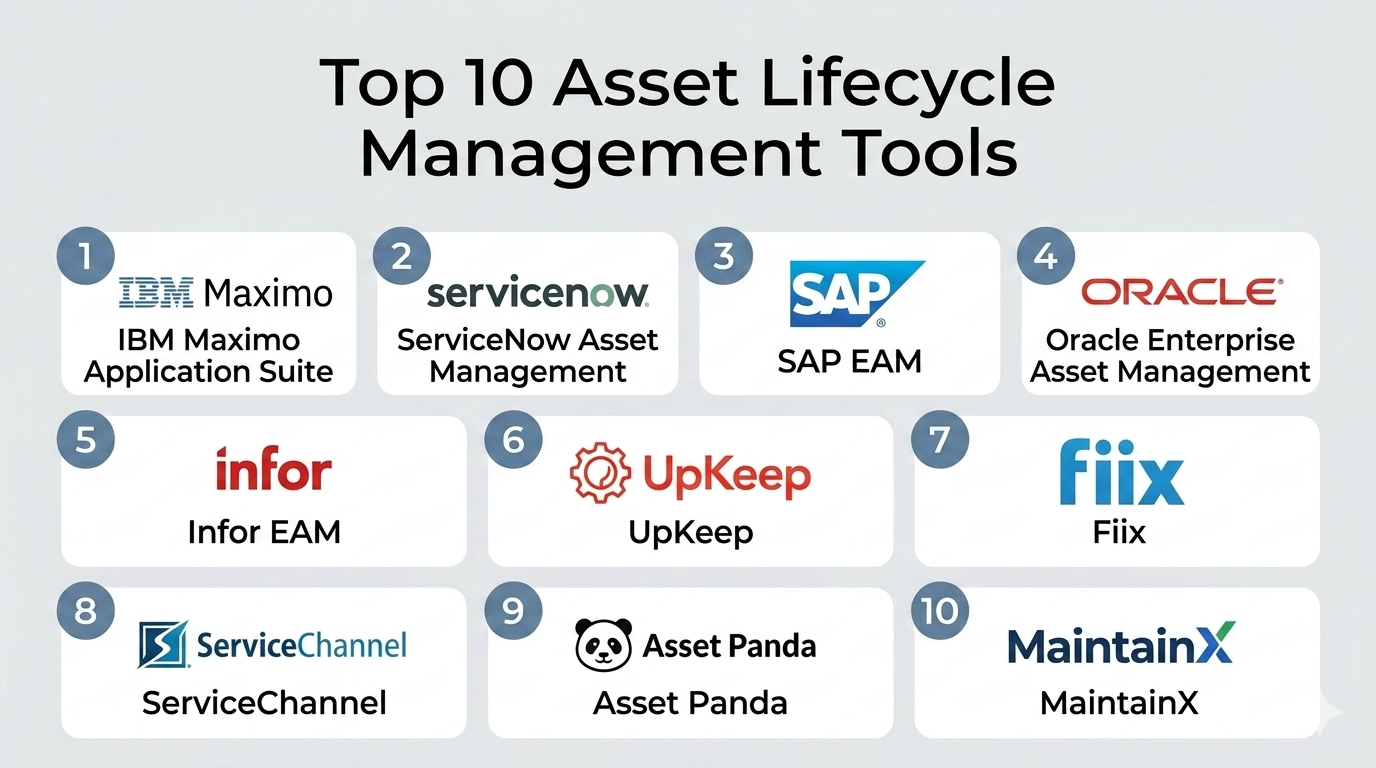
Top 10 Asset Lifecycle Management Tools
#1 — IBM Maximo Application Suite
Short description :
IBM Maximo Application Suite is one of the most comprehensive enterprise-grade asset lifecycle management platforms. It provides end-to-end capabilities across asset investment planning, maintenance management, and asset performance optimization. It is widely used in industries like utilities, transportation, manufacturing, and large-scale infrastructure where uptime and reliability are critical.
It combines AI-driven analytics with deep operational workflows to optimize asset performance and extend lifecycle value.
Key Features
- End-to-end asset lifecycle tracking
- Enterprise asset management (EAM)
- Asset performance management (APM)
- Predictive maintenance and AI insights
- Work order and maintenance automation
- Inventory and spare parts optimization
- Energy and condition monitoring
Pros
- Extremely powerful enterprise capabilities
- Strong AI-driven asset intelligence
- Proven scalability for large infrastructure
Cons
- High complexity for small organizations
- Requires significant implementation effort
- Premium enterprise pricing
Platforms / Deployment
- Web / Windows / Linux
- Cloud / Hybrid
Security & Compliance
- SSO/SAML
- MFA
- RBAC
- Audit logs
- Encryption
- Enterprise compliance support
Integrations & Ecosystem
- ERP systems (SAP, Oracle)
- ITSM platforms
- IoT sensor networks
- Cloud data platforms
- API-based integrations
Support & Community
Strong global enterprise support and extensive partner ecosystem.
#2 — ServiceNow Asset Management (HAM/SAM + Lifecycle Modules)
Short description :
ServiceNow provides a unified platform for IT asset lifecycle management integrated with IT service management (ITSM). It focuses on automating asset tracking, procurement, usage, and retirement within enterprise workflows.
Key Features
- IT hardware asset lifecycle tracking
- Software asset lifecycle management
- CMDB integration
- Procurement and procurement workflows
- Automated asset discovery
- Compliance and license tracking
- Workflow automation across IT operations
Pros
- Strong workflow automation capabilities
- Excellent integration with ITSM ecosystem
- High visibility across IT assets
Cons
- Expensive for smaller organizations
- Complex setup and configuration
- Requires platform expertise
Platforms / Deployment
- Web / Cloud
Security & Compliance
- SSO/SAML
- MFA
- RBAC
- Audit logs
- Enterprise compliance support
Integrations & Ecosystem
- ITSM/ITOM modules
- ERP systems
- Identity providers
- Monitoring tools
- API ecosystem
Support & Community
Large enterprise support network and strong knowledge base.
#3 — SAP EAM (Enterprise Asset Management)
Short description :
SAP Enterprise Asset Management integrates asset lifecycle processes directly into SAP’s ERP ecosystem. It is widely used in manufacturing, utilities, and large enterprises that require deep financial and operational integration.
Key Features
- Full asset lifecycle management
- Maintenance planning and execution
- Asset performance tracking
- Financial integration with ERP
- Work order management
- Spare parts and inventory control
- Compliance reporting
Pros
- Deep ERP integration
- Strong financial lifecycle alignment
- Highly scalable for global enterprises
Cons
- Complex implementation
- Requires SAP ecosystem dependency
- High operational overhead
Platforms / Deployment
- Web / Cloud / On-prem
Security & Compliance
- SSO/SAML
- MFA
- RBAC
- Audit logs
- Enterprise compliance support
Integrations & Ecosystem
- SAP ERP suite
- Manufacturing systems
- IoT platforms
- Supply chain tools
Support & Community
Extensive enterprise support and global consulting ecosystem.
#4 — Oracle Enterprise Asset Management
Short description :
Oracle EAM provides asset lifecycle tracking integrated with Oracle’s ERP and cloud platforms. It is designed for complex enterprises managing large-scale physical infrastructure and capital assets.
Key Features
- Asset lifecycle tracking and maintenance
- Work order management
- Asset performance monitoring
- Financial asset integration
- Predictive maintenance capabilities
- Compliance tracking
- Inventory optimization
Pros
- Strong enterprise financial integration
- Good scalability
- Reliable infrastructure support
Cons
- Complex deployment
- Best within Oracle ecosystem
- Requires skilled administration
Platforms / Deployment
- Web / Cloud / On-prem
Security & Compliance
- SSO/SAML
- MFA
- RBAC
- Audit logs
- Compliance support
Integrations & Ecosystem
- Oracle ERP Cloud
- IoT platforms
- ITSM tools
- Analytics systems
Support & Community
Strong enterprise-grade global support.
#5 — Infor EAM
Short description :
Infor EAM is a widely used enterprise asset lifecycle management solution for industries such as manufacturing, healthcare, and transportation. It focuses on operational efficiency and maintenance optimization.
Key Features
- Asset lifecycle tracking
- Maintenance and work order management
- Mobile asset tracking
- Predictive maintenance support
- Inventory and spare parts management
- Compliance reporting
- Asset performance analytics
Pros
- Strong industry-specific capabilities
- Good mobile support
- Flexible deployment options
Cons
- UI can feel traditional
- Requires configuration effort
- Not as modern as newer SaaS tools
Platforms / Deployment
- Web / Cloud / On-prem
Security & Compliance
- SSO/SAML
- MFA
- RBAC
- Audit logs
Integrations & Ecosystem
- ERP systems
- IoT platforms
- CMMS integrations
- API support
Support & Community
Strong enterprise support with industry specialization.
#6 — UpKeep
Short description :
UpKeep is a modern CMMS and asset lifecycle management tool focused on maintenance teams, small-to-mid enterprises, and field operations. It simplifies asset tracking and maintenance workflows.
Key Features
- Mobile-first asset tracking
- Work order management
- Preventive maintenance scheduling
- Asset history tracking
- Inventory management
- Reporting dashboards
- IoT integrations (limited)
Pros
- Easy to use and deploy
- Strong mobile experience
- Good for maintenance teams
Cons
- Limited enterprise lifecycle depth
- Less suitable for large-scale infrastructure
- Advanced analytics are limited
Platforms / Deployment
- Web / Mobile
- Cloud
Security & Compliance
- SSO/SAML
- RBAC
- Encryption
- Audit logs
Integrations & Ecosystem
- ERP tools
- IoT sensors
- API integrations
- Maintenance systems
Support & Community
Good SMB and mid-market support.
#7 — Fiix (by Rockwell Automation)
Short description :
Fiix is a cloud-based CMMS and asset lifecycle tool focused on maintenance optimization and industrial asset management.
Key Features
- Maintenance lifecycle tracking
- Work order automation
- Asset performance insights
- Predictive maintenance support
- Inventory tracking
- Reporting dashboards
- Mobile asset management
Pros
- Strong industrial integration
- Easy-to-use interface
- Good automation capabilities
Cons
- Limited deep enterprise modeling
- Advanced features require higher tiers
- Less customizable than large platforms
Platforms / Deployment
- Web / Mobile
- Cloud
Security & Compliance
- SSO/SAML
- MFA
- RBAC
- Audit logs
Integrations & Ecosystem
- Rockwell Automation ecosystem
- ERP systems
- IoT platforms
- API integrations
Support & Community
Strong industrial and manufacturing support base.
#8 — ServiceChannel
Short description :
ServiceChannel focuses on facilities and asset lifecycle management, particularly for distributed enterprises managing multiple physical locations.
Key Features
- Facilities asset lifecycle tracking
- Maintenance workflow automation
- Vendor and contractor management
- Work order tracking
- Compliance and audit reporting
- Asset performance visibility
- Cost tracking
Pros
- Strong for multi-site operations
- Good vendor management tools
- Useful for retail and facilities-heavy industries
Cons
- Not deep in industrial asset modeling
- Limited engineering-level analytics
- More facilities-focused than general ALM
Platforms / Deployment
- Web / Cloud
Security & Compliance
- SSO/SAML
- MFA
- RBAC
- Audit logs
Integrations & Ecosystem
- ERP systems
- Facilities management tools
- ITSM platforms
- API support
Support & Community
Strong enterprise support for facilities operations.
#9 — Asset Panda
Short description :
Asset Panda is a flexible cloud-based asset lifecycle tracking platform designed for organizations needing customizable asset management workflows.
Key Features
- Asset tracking and lifecycle management
- Barcode and QR code scanning
- Maintenance tracking
- Custom workflows
- Mobile asset management
- Reporting dashboards
- Role-based access control
Pros
- Highly flexible configuration
- Easy mobile usage
- Good for SMB and mid-market
Cons
- Limited advanced enterprise features
- Not ideal for complex industrial assets
- Analytics depth is moderate
Platforms / Deployment
- Web / Mobile
- Cloud
Security & Compliance
- SSO/SAML (varies)
- RBAC
- Encryption
- Audit logs
Integrations & Ecosystem
- ERP systems
- API integrations
- Barcode systems
- Cloud tools
Support & Community
Good SMB support and documentation.
#10 — MaintainX
Short description :
MaintainX is a modern CMMS and asset lifecycle platform focused on frontline teams managing maintenance and operations workflows.
Key Features
- Work order management
- Asset lifecycle tracking
- Preventive maintenance scheduling
- Digital procedures and SOPs
- Mobile-first operations
- Asset performance tracking
- Team collaboration tools
Pros
- Very easy to adopt
- Strong mobile-first design
- Good for operational teams
Cons
- Limited enterprise lifecycle depth
- Not ideal for complex ERP integration
- Less advanced forecasting features
Platforms / Deployment
- Web / Mobile
- Cloud
Security & Compliance
- SSO/SAML
- RBAC
- Audit logs
- Encryption
Integrations & Ecosystem
- ERP systems
- IoT tools
- API integrations
- Maintenance systems
Support & Community
Strong SMB and operations-focused support.
Comparison Table (Top 10)
| Tool Name | Best For | Platform(s) Supported | Deployment | Standout Feature | Public Rating |
|---|---|---|---|---|---|
| IBM Maximo | Enterprise infrastructure | Multi-platform | Cloud/Hybrid | AI-driven lifecycle optimization | N/A |
| ServiceNow | IT enterprises | Web | Cloud | ITSM-integrated lifecycle control | N/A |
| SAP EAM | ERP-heavy enterprises | Multi-platform | Cloud/On-prem | ERP integration | N/A |
| Oracle EAM | Large enterprises | Multi-platform | Cloud/On-prem | Financial integration | N/A |
| Infor EAM | Industrial sectors | Multi-platform | Hybrid | Industry specialization | N/A |
| UpKeep | SMB maintenance teams | Web/Mobile | Cloud | Mobile-first CMMS | N/A |
| Fiix | Manufacturing ops | Web/Mobile | Cloud | Industrial maintenance automation | N/A |
| ServiceChannel | Facilities-heavy orgs | Web | Cloud | Vendor + facilities management | N/A |
| Asset Panda | SMB/mid-market | Web/Mobile | Cloud | Flexible workflows | N/A |
| MaintainX | Frontline teams | Web/Mobile | Cloud | Simple maintenance execution | N/A |
Evaluation & Asset Lifecycle Management Tools
| Tool Name | Core (25%) | Ease (15%) | Integrations (15%) | Security (10%) | Performance (10%) | Support (10%) | Value (15%) | Weighted Total |
|---|---|---|---|---|---|---|---|---|
| IBM Maximo | 9 | 7 | 9 | 9 | 9 | 9 | 7 | 8.5 |
| ServiceNow | 9 | 7 | 9 | 9 | 9 | 9 | 6 | 8.3 |
| SAP EAM | 9 | 6 | 9 | 9 | 8 | 9 | 6 | 8.1 |
| Oracle EAM | 9 | 6 | 9 | 9 | 8 | 9 | 6 | 8.1 |
| Infor EAM | 8 | 7 | 8 | 8 | 8 | 8 | 7 | 7.9 |
| UpKeep | 7 | 9 | 7 | 7 | 8 | 8 | 9 | 7.9 |
| Fiix | 7 | 8 | 7 | 8 | 8 | 8 | 8 | 7.8 |
| ServiceChannel | 7 | 8 | 7 | 8 | 8 | 8 | 8 | 7.8 |
| Asset Panda | 7 | 9 | 7 | 7 | 8 | 7 | 9 | 7.7 |
| MaintainX | 7 | 9 | 7 | 7 | 8 | 8 | 9 | 7.8 |
These scores reflect comparative suitability across enterprise complexity, usability, integration depth, and lifecycle coverage. Large enterprises prioritize integration and lifecycle depth, while SMBs value ease of use and cost efficiency.
Which Asset Lifecycle Management Tools
Solo / Freelancer
ALM platforms are generally unnecessary unless managing equipment-heavy operations. Lightweight asset tracking tools or spreadsheets are often sufficient.
SMB
SMBs benefit from simple lifecycle tracking tools like Asset Panda, MaintainX, or UpKeep for maintenance and inventory control.
Mid-Market
Mid-market organizations benefit from Fiix, Infor EAM, and ServiceChannel depending on whether they are industrial or facilities-driven.
Enterprise
Large enterprises require robust lifecycle ecosystems such as IBM Maximo, SAP EAM, ServiceNow, and Oracle EAM.
Budget vs Premium
- Budget-friendly: MaintainX, Asset Panda, UpKeep
- Mid-tier: Fiix, ServiceChannel, Infor EAM
- Premium enterprise: IBM Maximo, SAP EAM, ServiceNow, Oracle EAM
Feature Depth vs Ease of Use
- Most powerful: IBM Maximo, SAP EAM, ServiceNow
- Easiest to use: MaintainX, UpKeep, Asset Panda
- Balanced tools: Fiix, Infor EAM
Integration & Scalability
- Enterprise ecosystems: SAP, Oracle, ServiceNow, IBM
- Industrial strength: Infor, Fiix
- SMB-friendly scaling: Asset Panda, MaintainX
Compliance & Lifecycle Governance Needs
Organizations requiring strict governance should prioritize:
- Audit-ready asset tracking
- End-of-life management workflows
- Financial lifecycle integration
- Predictive maintenance
- Role-based access control
IBM Maximo and SAP EAM are strongest in regulated and high-scale environments.
Frequently Asked Questions (FAQs)
1. What is Asset Lifecycle Management?
ALM is the process of managing an asset from procurement to disposal, including maintenance, tracking, optimization, and retirement.
2. How is ALM different from ITAM?
ITAM focuses on IT assets, while ALM covers all physical and operational assets across industries.
3. Why is ALM important?
It reduces costs, improves uptime, extends asset lifespan, and improves operational efficiency.
4. What industries use ALM tools?
Manufacturing, IT, utilities, transportation, healthcare, and government sectors heavily use ALM tools.
5. Does ALM include maintenance management?
Yes, maintenance is a core part of asset lifecycle management.
6. What is predictive maintenance in ALM?
It uses data and analytics to predict when an asset will fail and schedule maintenance proactively.
7. Can ALM tools integrate with ERP systems?
Yes, most enterprise ALM tools integrate with ERP platforms like SAP and Oracle.
8. What is asset depreciation in ALM?
It refers to tracking the decreasing value of an asset over time for financial reporting.
9. Do ALM tools support IoT?
Yes, modern ALM platforms integrate IoT sensors for real-time monitoring.
10. What is digital twin in ALM?
A digital twin is a virtual model of a physical asset used for simulation and performance optimization.
11. Are ALM tools cloud-based?
Many modern ALM tools are cloud or hybrid, though some enterprise systems still support on-prem deployments.
12. What is the biggest challenge in ALM adoption?
Common challenges include data accuracy, integration complexity, and organizational process alignment.
Conclusion
Asset Lifecycle Management tools are essential for organizations managing complex physical and IT infrastructure. As industries move toward AI-driven operations, sustainability targets, and hybrid environments, ALM platforms are evolving into intelligent systems that go beyond tracking—they now optimize performance, predict failures, and reduce operational costs. Enterprise platforms like IBM Maximo, SAP EAM, and ServiceNow dominate large-scale environments due to their depth and integration capabilities, while tools like MaintainX, UpKeep, and Asset Panda offer accessible entry points for SMBs and operational teams.
