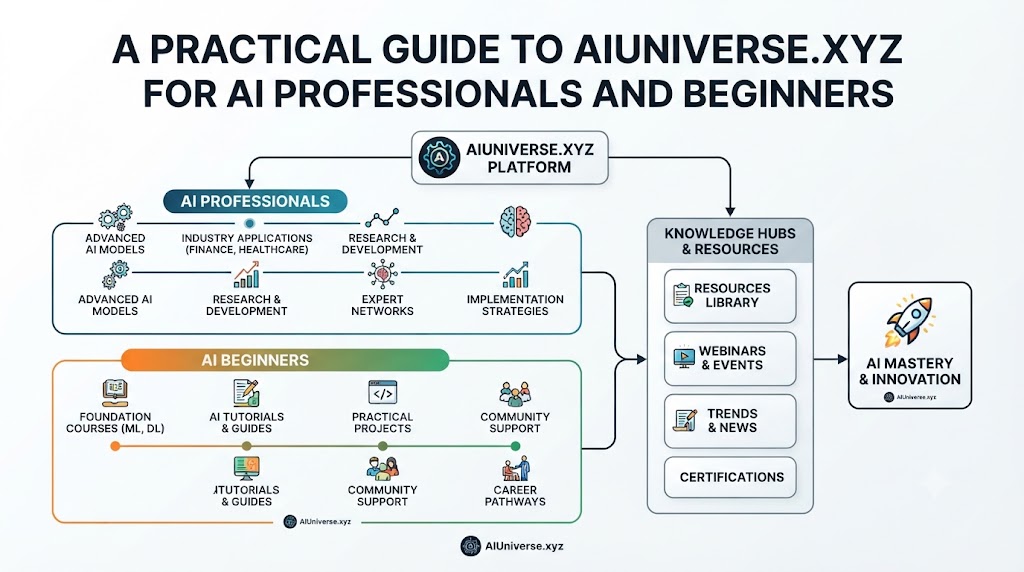
Introduction
Let’s be honest for a second: artificial intelligence has completely shifted from a cool tech showcase to the main engine running modern business. Look around—healthcare providers are parsing patient records with models, finance teams are running predictive risk checks in milliseconds, and software dev shops are auto-generating boilerplate code before engineers even finish their coffee. But here’s the sticky part: while AI tools are dropping left and right, finding people who actually know how to wire these systems up reliably is still surprisingly hard.
Most companies get stuck in “pilot hell.” They build a neat prototype, show it off in a slide deck, and then realize they have no idea how to make it secure, cost-effective, or scalable across thousands of users. On the flip side, engineers and IT pros are drowning in a sea of hype, short blog posts, and surface-level videos that don’t teach real-world system architecture. Bridging this canyon takes more than passive watching—it requires hands-on blueprints, operational certifications, and straight-shooting enterprise consulting.
That’s where AIUniverse steps into the picture. Built as an all-in-one educational platform, certification provider, and implementation partner, AIUniverse strips away the jargon to help professionals and businesses stop playing with AI tools and start building real enterprise value.
What is AIUniverse?
Think of AIUniverse as your grounded control center for everything related to modern AI implementation. It’s designed to hit the double-sided challenge facing today’s tech world: helping working pros level up their hands-on engineering skills while giving companies a clean, stress-free strategy for rolling out complex software stacks.
Historically, if you wanted to learn artificial intelligence, you were stuck choosing between hyper-academic math lectures or quick weekend tutorials that skipped crucial engineering steps. AIUniverse throws that broken model out the window. It grounds every piece of learning in daily operational reality, tying core machine learning theories directly to heavy-hitting engineering domains like Machine Learning Operations (MLOps), Artificial Intelligence for IT Operations (AIOps), prompt engineering, and autonomous agent design.
For individual engineers, developers, and tech managers, AIUniverse serves as a zero-fluff roadmap for real career mobility. For company executives and innovation heads, it works as a trusted technical partner that cuts through vendor fluff, aligns team skill sets, and keeps projects from turning into money pits.
Why AI Skills Matter Today
Knowing your way around AI isn’t just a neat line on a resume anymore—it’s fast becoming the baseline for staying relevant in technical and business roles. As generative workflows and automated agents sink deeper into standard enterprise software, the old lines separating coding, IT ops, and data science are blurring fast.
- Orchestration Over Raw Coding: Writing line-by-line boilerplate is taking a back seat. Modern dev work focuses heavily on prompt design, context retrieval (RAG), fine-tuning small models, and plumbing autonomous workflows together.
- Production Is Where the Real Work Starts: Training a small model inside a private Jupyter notebook takes an afternoon; keeping that model running smoothly in the cloud while watching latency, token costs, and data drift takes serious engineering.
- Unlocking Real Business ROI: Organizations spend massive budgets buying software seats, but projects stall because internal teams lack the muscle to build those tools directly into daily operational tasks.
- Keeping Guardrails Tight: Unchecked AI usage brings nasty surprises—like prompt injection hacks, confidential data leaks, and hallucinated answers. Well-trained teams know how to lock down these risks before shipping code.
- Future-Proofing Your Career: IT leads, DevOps pros, and developers who pick up practical operational skills position themselves directly for high-impact roles as AI architects, systems integrators, and engineering leads.
Traditional Learning vs. AIUniverse
Let’s do a quick side-by-side comparison to see how a practical, system-first approach stacks up against traditional, video-heavy learning platforms.
| Learning Criteria | Traditional Academic & Generic Platforms | AIUniverse Learning & Services Framework |
| Learning Method | Passive video watching, basic quizzes, and isolated textbook drills. | Real-world, project-based work focused on actual system architecture. |
| Practical Skills | Toy datasets (think clean CSV files) with zero production context. | Live pipeline setups, tool integration, and hands-on system debugging. |
| AI Certifications | Participation badges based on watching video progress bars hit 100%. | Role-focused skill validation that proves you can build real systems. |
| Business Readiness | Heavy on abstract math; minimal focus on cloud costs or execution speeds. | Immediate focus on deployment, prompt security, latency control, and ROI. |
| Corporate Training | Rigid, off-the-shelf video modules that ignore your company’s tech stack. | Custom team training built directly around your existing stack and data. |
| AI Consulting | Completely disconnected from learning hubs, requiring pricey external agencies. | Fully integrated consulting that connects training directly to implementation. |
| Industry Relevance | Outdated modules that take months or years to update. | Fast-moving insights covering Agentic systems, MLOps, AIOps, and prompt management. |
Comprehensive AI Certification Courses
Hiring managers are getting tired of seeing generic certificates of completion. What they really want to see is proof that you can architect pipelines, set up automated monitoring, and troubleshoot live production errors. AIUniverse offers dedicated certification tracks designed to validate those exact skill sets.
Agentic AI Certification Course
Autonomous agents are easily one of the most exciting shifts in tech today. Unlike basic chatbots that just react to simple text, agentic setups can reason through problems, break tasks into multi-step plans, hit external APIs, use tools, and fix their own errors when something breaks.
The Agentic AI certification course hands you the blueprint for designing, testing, and scaling these autonomous agent setups safely.
Key Curriculum Focus Areas:
- Agentic Architectures: Getting comfortable with ReAct patterns (Reasoning + Acting), Plan-and-Execute systems, and self-reflection loops.
- Tool Augmentation: Connecting LLMs directly to live corporate databases, external REST APIs, and vector search engines.
- Multi-Agent Systems: Setting up multi-agent frameworks (like AutoGen, CrewAI, or LangGraph) where different specialized agents pass work back and forth.
- Memory Architectures: Building short-term session tracking, long-term vector memory, and episodic recall systems.
- Safety & Guardrails: Implementing hard operational limits, execution loop breaker switches, and isolated sandboxes.
Real-World Practical Application:
Take a financial firm that needs market analysis done quickly. Instead of having a staff analyst manually pull stock quotes, skim earnings PDFs, and draft summary reports, an Agentic AI workflow handles the legwork:
- A Research Agent calls financial data APIs to grab live ticker metrics.
- A Document Parsing Agent scans recent earnings call transcripts for key figures.
- A Synthesis Agent pulls everything together into a clean draft report.
- A Reviewer Agent runs the draft against compliance rules, flagging missing disclaimers before sending it out.
MLOps Certification Course
Getting a machine learning model to predict accurately on your laptop is step one. Step two—and where most projects fall apart—is deploying that model into cloud infrastructure, keeping tabs on its health, and retraining it when real-world data shifts.
The MLOps certification course bridges the gap between machine learning engineering, data pipelines, and cloud DevOps work.
Key Curriculum Focus Areas:
- Data & Feature Pipelines: Managing dataset versions with tools like DVC and setting up shared feature stores.
- CI/CD for Machine Learning: Setting up automated training, evaluation, and container build pipelines with GitHub Actions or Kubeflow.
- Model Registries & Versioning: Logging, tagging, and managing model weights using tools like MLflow.
- Production Deployment: Mastering high-throughput REST serving, gRPC connections, and real-time streaming inference using Triton or TorchServe.
- Observability & Drift Tracking: Spotting concept drift, data drift, and latency spikes in live production systems before users complain.
Real-World Practical Application:
An e-commerce site uses a machine learning recommendation engine. During major holiday sales, user shopping habits shift rapidly, making older recommendation models less accurate. With strong MLOps practices, automated monitoring catches this drop in accuracy, kicks off a retraining run on live streaming data, runs safety checks, and deploys the updated model with zero site downtime.
AIOps Certification Course
Modern IT infrastructures run on complex web microservices, hybrid multi-cloud setups, and deep networking layers. They spew out massive oceans of logs, metrics, and network traces that can easily overwhelm human ops teams.
The AIOps certification course focuses on using machine learning algorithms and AI tools to streamline IT operations, incident handling, and system monitoring.
Key Curriculum Focus Areas:
- Telemetry Aggregation: Gathering messy, unstructured logs, trace flows, and metric data from systems like Datadog, Prometheus, and Splunk.
- Smart Anomaly Detection: Training algorithms to catch weird infrastructure behavior long before it turns into a total system outage.
- Noise Reduction: Bundling thousands of duplicate log alerts into a single, actionable incident ticket.
- Automated Remediation: Setting up self-healing scripts and automated playbooks to clear recurring system bottlenecks automatically.
- Predictive Capacity Planning: Using time-series data to forecast memory usage, server load, and storage needs.
Real-World Practical Application:
A online payment processing system runs into sudden database latency. Instead of spamming on-call engineers with hundreds of secondary server alerts, an AIOps engine groups the related errors, spots an unindexed database query as the root problem, provisions temporary read replicas, and sends a focused ticket right to the database team.
AI Certification Courses Online: Flexible Pathways
AIUniverse provides structured AI certification courses online built for different experience levels and career trajectories.
- Foundational AI Certified Professional: Perfect for beginners, software devs, and product managers who want a rock-solid understanding of core AI, generative tools, and effective prompting.
- Generative AI Application Developer: Built for software engineers ready to construct full applications using LLM APIs, vector search tools, LangChain frameworks, and model fine-tuning.
- Enterprise AI Architect: Designed for senior system architects and IT directors charged with selecting cloud infrastructure, establishing data policies, and building end-to-end tech stacks.
AIUniverse Services Overview
Here is how AIUniverse blends technical education, expert advisory, and direct implementation resources into a cohesive service matrix.
| Service | Primary Purpose | Core Benefit |
| AI Certification Courses | Provide clear, industry-aligned learning paths across Agentic systems, MLOps, AIOps, and Generative tech. | Proves your technical chops and equips you with real system-building experience. |
| Corporate AI Training | Upskill internal developer, IT ops, product, and analyst teams directly on their stack. | Accelerates tool adoption, cuts down reliance on pricey agencies, and aligns workflows. |
| AI Consulting Services | Offer strategic technical advisory, system architecture designs, and implementation plans. | Takes the guesswork out of AI investments, speeds up project delivery, and keeps security tight. |
| Prompt Management Guidance | Best practices for building, testing, versioning, and securing enterprise prompt libraries. | Boosts output quality, keeps token costs down, and blocks prompt injection threats. |
| MLOps Learning Tracks | Specialized instruction covering automated pipelines, feature stores, serving, and monitoring. | Helps you deploy models reliably and keeps production breakage to a minimum. |
| AIOps Learning Tracks | Targeted training on using AI algorithms for IT monitoring, log processing, and incident response. | Cuts downtime, stops alert fatigue, and automates tedious server maintenance tasks. |
| Enterprise AI Guidance | End-to-end guidance on model choices, privacy rules, cloud vendors, and data policy. | Keeps your business compliant while ensuring your tech investments pay off. |
Corporate AI Training Programs
Buying software licenses won’t magically transform a company—up-skilling your people will. Many enterprise AI projects fall flat not because the underlying tech is broken, but because internal teams haven’t been taught how to plug these new tools into their day-to-day work.
AIUniverse offers targeted corporate AI training programs built to close workforce skill gaps and align team outputs with real business strategy.
Custom Upskilling Designed Around Your Stack
Every enterprise runs on its own unique mix of legacy code, security policies, and technical tools. Off-the-shelf courses ignore these realities. AIUniverse partners directly with team leads to build custom training programs that work directly with your existing codebases, compliance rules, and internal tooling.
- Engineering Teams: Deep dives into fine-tuning open-source models, setting up Retrieval-Augmented Generation (RAG) architectures, building MLOps pipelines, and securing local APIs.
- IT Ops & DevOps Teams: Hands-on experience with AIOps integrations, automated log analysis, dynamic cloud resource tuning, and real-time anomaly tracking.
- Product & Business Leaders: Focused instruction on AI strategy, ROI tracking, spotting high-value automation opportunities, drafting usage policies, and managing vendor selection.
What You Get Out of It:
- Faster Project Delivery: Skilled teams move concepts from rough prototypes to production environments much faster.
- Unified Engineering Standards: Clear training ensures all developers stick to consistent prompt management habits, coding standards, and security controls.
- Better Team Retention: Giving your engineers real, high-value upskilling opportunities keeps them engaged and reduces team churn.
Strategic AI Consulting Services
Navigating enterprise artificial intelligence means making tough calls on cloud infrastructure, open-source choices, data privacy, and legacy software integration. A wrong decision early on can turn into expensive rewrite cycles and massive security holes down the road.
AIUniverse delivers hands-on AI consulting services that lead organizations step-by-step from initial technology reviews to full production rollouts.
1. Strategy Definition & AI Audits
Consultants work side-by-side with your leads to analyze existing systems, review data health, spot operational bottlenecks, and construct a practical roadmap. The core goal here is prioritizing high-ROI wins while keeping technical goals realistic.
2. Architecture & Tech Stack Selection
Deciding between big cloud APIs (like OpenAI, Anthropic, or Google) and self-hosted open-source models (like Llama or Mistral) comes down to latency budgets, running costs, and data privacy needs. AIUniverse helps you architect clean, flexible systems tailored specifically to your operational reality.
3. Security, Governance, and Compliance
Enterprise adoption requires strict adherence to security rules and privacy laws (such as GDPR, HIPAA, and SOC2). Consulting engagements set up secure prompt proxy layers, data sanitization flows, role-based access controls, and logging tools to keep your IP protected.
Best Prompt Management Tools & Strategies
As generative systems become deeply embedded in software applications, manageability challenges crop up quickly. System instructions, context windows, and prompt variables often end up hardcoded straight into application files, causing version control nightmares, zero visibility into costs, and obvious security risks.
Adopting the best prompt management tools is critical for keeping your AI applications consistent, fast, and secure.
Core Features of Enterprise Prompt Management:
- Central Prompt Repositories: Storing system instructions, model temperatures, and API configs in unified dashboards rather than hiding them in individual code files.
- Version Control & A/B Testing: Tracking prompt changes over time and running side-by-side performance tests across different AI models.
- Automated Prompt Evals: Running automated tests (for response relevance, answer accuracy, context quality, and toxicity) to check prompt changes before shipping to production.
- Security & Injection Guardrails: Filtering user inputs to block prompt injection hacks, instruction bypasses, and system prompt leaks.
Top Prompt Tools Worth Looking At:
- LangSmith: Excellent for tracing, debugging, and testing multi-step execution chains in LangChain applications.
- Helicone: A lightweight proxy platform focused on logging calls, caching common answers, and tracking API spending.
- PromptLayer: A dedicated prompt engineering hub built for visual editing, prompt versioning, and team collaboration.
- Arize Phoenix: A powerful open-source tool built for LLM tracing, evaluation checks, and RAG search diagnostics.
Federated Learning Platforms
Strict privacy rules often mean organizations simply cannot pool sensitive records onto central public cloud servers. Healthcare providers, banks, and mobile software developers face stringent regulatory hurdles that make sharing raw data a non-starter.
Federated learning platforms solve this problem by letting organizations train shared models across decentralized edge nodes or local servers without ever moving the raw data itself.
How Federated Learning Works:
- Model Delivery: A central server sends a base model out to scattered local nodes (such as private hospital servers or mobile devices).
- Local Training: Each node trains the model on its own private, isolated dataset.
- Sending Gradient Updates: Nodes send encrypted math updates (weights and gradients)—never actual underlying data—back to the central server.
- Global Updates: The central server averages the encrypted updates and distributes an improved global model back out to the nodes.
Notable Frameworks in the Space:
- TensorFlow Federated (TFF): An open-source framework built by Google for testing federated setups on decentralized data.
- PySyft (OpenMined): A popular Python ecosystem focused on privacy-preserving machine learning and differential privacy.
- Flower (flwr.ai): A friendly, flexible federated learning framework that plugs cleanly into PyTorch, TensorFlow, and Hugging Face stacks.
- NVFlare (NVIDIA): An enterprise SDK built specifically for collaborative model building in healthcare and financial research.
Best MLOps Tools for Production Systems
Building robust machine learning pipelines requires choosing the right software stack for tracking experiments, managing features, serving predictions, and monitoring health. Using the best MLOps tools allows dev teams to keep production systems reliable while shipping model updates fast.
Essential Categories & Top Tools:
1. Experiment Tracking & Model Registries
- MLflow: A go-to open-source tool for tracking experiment parameters, packaging code, and storing model artifacts.
- Weights & Biases (W&B): A highly visual developer platform built for tracking deep learning runs and collaborating with teams.
2. Feature Stores
- Feast: An open-source feature store designed to serve consistent feature data for both offline model training and real-time online inference.
- Hopsworks: An enterprise feature store platform with built-in data governance, lineage tracking, and auto-validation.
3. Serving Infrastructure
- Triton Inference Server: NVIDIA’s high-throughput serving engine built to handle deployments efficiently across GPUs and CPUs.
- KServe: A cloud-native model serving layer built on top of Kubernetes that handles auto-scaling and scale-to-zero workloads easily.
4. Model Observability & Drift Detection
- Evidently AI: An open-source testing library that tracks data drift, model quality metrics, and input distribution changes.
- Arize AI: An enterprise observability platform designed for deep root-cause analysis, latency tracking, and data quality checks.
Best AI Tools for Business Productivity
On top of developer tooling, modern organizations lean on specialized software applications to streamline daily administrative tasks, power customer support, and automate internal content pipelines. Picking the best AI tools for business helps teams cut out busywork across every business unit.
Leading Business Tools by Workload:
1. Software Engineering & Automation
- GitHub Copilot / Cursor: Smart coding assistants that auto-complete functions, write unit tests, and speed up code refactoring.
- Codeium: An enterprise code completion engine built to run securely inside private company environments.
2. Knowledge Retrieval & Workspaces
- Glean: An enterprise search layer that uses natural language processing to search across Slack, Google Drive, Jira, and Confluence instantly.
- Notion AI: An integrated workspace assistant that condenses long meeting logs, drafts docs, and creates task lists automatically.
3. Marketing & Content Workflows
- Jasper AI: A platform tailored for enterprise marketing groups to generate on-brand copy while managing style guidelines.
- Copy.ai: An automated workflow platform designed to streamline sales outreach and marketing pipelines.
4. Customer Support Automation
- Intercom Fin: A support bot capable of handling and resolving complex user support tickets by searching internal documentation directly.
- Sierra AI: An enterprise customer interaction platform built to handle multi-turn user requests smoothly.
Real-World AI Business Use Cases
Artificial intelligence shines brightest when it’s aimed directly at concrete operational headaches. Here are three practical enterprise scenarios showing how modern setups solve real problems.
1. Healthcare: Streamlining Patient Documentation
- The Problem: Doctors lose hours every day typing clinical notes into Electronic Health Record (EHR) platforms, causing serious staff burnout and taking time away from patients.
- The Solution: Combining speech recognition with specialized summarization models to listen in on patient visits (with consent) and format notes right into the EHR system automatically.
- The Result: Cuts documentation overhead by over 50%, giving medical staff valuable hours back for direct patient care.
2. Financial Services: Real-Time Fraud Prevention
- The Problem: Old-school, rule-based fraud systems trigger endless false alerts, annoying legitimate customers and burdening review teams.
- The Solution: Deploying real-time MLOps pipelines running streaming anomaly detection algorithms that cross-check incoming transactions against historic usage habits instantly.
- The Result: Slashes false alarm rates while catching complex, multi-account fraud patterns as they happen.
3. E-Commerce: Automated Inventory & Supply Forecasting
- The Problem: Unpredictable customer demand shifts lead to costly stockouts on popular items or extra storage fees on overstocked inventory.
- The Solution: Plugging predictive models directly into inventory systems to analyze regional shopping trends, weather shifts, supplier lead times, and economic factors.
- The Result: Balances warehouse stock levels and keeps popular products in stock during peak sales seasons.
Enterprise AI Adoption Roadmap
Taking a company from quick prototype tests to stable production rollouts requires a deliberate game plan. Rushing into building software without proper groundwork usually leads to mess software architectures, data leaks, and low staff adoption.
Step 1: Strategic Audits and Goal Setting
Start by identifying actual business bottlenecks where AI tools give you clear, measurable wins. Avoid forcing modern tech into workflows where basic traditional software scripts handle the job fine. Define clear metrics early on—like time saved, lowered support tickets, or direct cost reductions.
Step 2: Architecture Setup and Policy Definition
Establish clear data handling rules, access controls, and security policies before writing application code. Decide whether public cloud APIs or self-hosted models fit your risk tolerance, and set up central prompt management platforms to enforce usage guardrails.
Step 3: Pilot Building and Sandboxed Testing
Build focused proof-of-concept setups to verify latency, accuracy, and system stability in isolated sandboxes. Bring actual day-to-day users in early to test real workflows and uncover tricky edge cases before moving forward.
Step 4: Production Deployment and MLOps Setup
Roll applications out using clear MLOps processes with automated CI/CD runs, shared feature management, and live observability tools. Track performance live to spot latency spikes, model drift, and error spikes immediately.
Step 5: Team Training and Ongoing Tuning
Upskill internal teams with focused corporate training programs. Keep reviewing performance numbers, refresh model inputs as new data comes in, and roll successful setups out to adjacent departments.
Common AI Learning Mistakes to Avoid
Whether you are an engineer looking to future-proof your career or an executive steering a tech transformation, dodging these common pitfalls will save you massive amounts of wasted time and money.
- Obsessing Over Model Building While Ignoring Operations: Many developers spend weeks tuning hyperparameters but completely forget to plan for continuous pipeline checks, observability, and automated retraining. A model is only as good as the infrastructure holding it up.
- Treating AI Like Magic Dust for Every Problem: Throwing expensive generative models at simple data-lookup tasks that basic software scripts could do faster and cheaper just inflates your cloud bill.
- Ignoring Messy Data: Feeding low-quality, unstructured, or unverified data into your systems leads straight to hallucinated or unreliable answers. Garbage in, garbage out still applies.
- Hardcoding System Prompts Directly in Application Code: Embedding prompt strings right into your code repo makes it almost impossible to manage version histories, run evaluations, or update instructions cleanly.
- Skipping Security Guardrails: Pushing apps live without testing against prompt injection hacks, data leaks, and permission gaps opens your company up to serious operational risks.
Best Practices for AI Learning and Implementation
Sticking to proven engineering habits helps technical teams and leaders deliver stable, production-grade applications that last.
- Keep Your Architecture Modular: Build your software so components can be swapped out easily. That way, if a faster model or better vector search tool drops tomorrow, you can upgrade without rewriting your whole application.
- Run Automated Evals On Every Update: Set up evaluation pipelines that test new prompts or model configurations against real sample questions before pushing updates live.
- Keep Humans in the Loop for High-Stakes Decisions: For sensitive fields—like healthcare diagnostics, loan processing, or legal reviews—always require human sign-off before executing automated actions.
- Commit to Continuous Learning: Encourage your engineering team to earn certifications in MLOps, AIOps, and Agentic AI to keep pace with rapid tooling changes.
- Keep a Close Eye on API and Token Spend: Set up live dashboards tracking token consumption, API response speeds, and cloud compute costs to prevent surprise monthly bills.
The Future of AI Skills and Enterprise Infrastructure
The tech landscape is shifting rapidly away from simple, single-prompt answers toward multi-agent networks that execute complex business tasks on their own. Over the coming years, key technical shifts will change how systems are designed and maintained:
- Widespread Autonomous Agent Workflows: Applications will rely heavily on multi-agent setups that plan, call APIs, run commands, and auto-correct errors on the fly.
- MLOps Merging Deeply with DevSecOps: Machine learning pipeline management will blend into standard security and software frameworks, making automated model testing standard practice.
- Growth of Focused Small Models: Instead of relying exclusively on giant, expensive cloud models, companies will increasingly run smaller, fine-tuned open-source models locally for lower latency and better privacy.
- AIOps as Standard Infrastructure Practice: Self-healing IT environments powered by smart algorithms will handle routine server issues, auto-scaling, and log management without needing human intervention.
- Human Focus Shifting to Strategy and Guardrails: As technical execution becomes more automated, human expertise will center around architecture design, security policies, ethical oversight, and strategic direction.
Frequently Asked Questions (FAQs)
1. What is AIUniverse and who is it designed for?
AIUniverse is a unified learning platform, certification provider, and consulting hub designed for developers, software engineers, IT pros, data scientists, and business leaders looking to build and deploy practical AI solutions.
2. Why are MLOps and AIOps certifications worth getting?
MLOps and AIOps certifications prove that an engineer knows how to manage real-world model deployment pipelines, track system performance, automate IT operations, and run cloud infrastructure reliably.
3. What does an Agentic AI certification course cover?
An Agentic AI certification course teaches you how to design and build autonomous agent setups that plan multi-step workflows, hit software APIs, use external tools, and self-correct errors independently.
4. How does corporate AI training help enterprise teams?
Corporate AI training upskills internal development and operational teams directly on their company stack, unifies workflow practices, speeds up project rollouts, and keeps data security tight.
5. What is included in AIUniverse consulting services?
AIUniverse consulting covers initial tech readiness audits, architecture design, cloud model selection, security policy setup, and hands-on guidance during production rollouts.
6. What are prompt management tools and why should teams use them?
Prompt management tools offer central dashboards for storing, versioning, testing, and securing system prompts across software apps, replacing messy, hardcoded text strings in code files.
7. How do federated learning platforms keep data secure?
Federated learning platforms train models across decentralized local servers without ever transferring the underlying raw data, sharing only encrypted math updates back to a central server.
8. How does MLOps differ from traditional DevOps?
DevOps focuses on building and shipping static code. MLOps manages code along with shifting data streams, model artifacts, retraining pipelines, and performance drift in live environments.
9. How does AIOps improve daily IT operations?
AIOps uses machine learning algorithms to digest massive telemetry logs, pinpoint root causes for system errors, filter out alert spam, and trigger automated self-healing scripts.
10. Can non-technical team members take AIUniverse courses?
Yes, AIUniverse offers foundational learning paths and executive strategy courses built specifically for product managers, business analysts, and leaders navigating tech transformations.
11. What are the top AI tools for boosting business productivity?
Top productivity tools include GitHub Copilot and Cursor for writing code, Glean for searching enterprise data, Notion AI for documentation, and Intercom Fin for automating customer support.
12. Why are companies choosing small fine-tuned models over massive LLMs?
Smaller fine-tuned models offer faster execution speeds, significantly lower running costs, and total data privacy control when hosted on private infrastructure.
13. What is Retrieval-Augmented Generation (RAG) and why is it popular?
RAG connects generative AI models directly to external private vector databases, enabling models to give accurate answers using private corporate data without needing expensive model retraining.
14. How does AIUniverse help businesses pick the right tech stack?
Through hands-on technical consulting, AIUniverse evaluates your company’s latency targets, budget, and data privacy rules to recommend the right mix of open-source models, cloud APIs, and MLOps tools.
15. What are the main security risks with generative AI applications?
The biggest security headaches include prompt injection hacks, confidential business data leaks, hallucinated outputs in critical tasks, and unmonitored vendor API costs.
16. How long does it take to complete an online AI certification course?
Timeline lengths depend on the track: foundational tracks take a few weeks of self-paced study, while deep technical architecture programs run over several months of hands-on project work.
17. How do teams prevent concept drift in production models?
Teams stop model drift by setting up continuous observability tools (like Evidently AI or Arize) that monitor input data, catch drop-offs in output accuracy, and trigger automated retraining pipelines.
18. What is the very first step a company should take with AI?
An enterprise should start with a zero-fluff use case audit to find clear operational bottlenecks, evaluate data quality, and establish security rules before buying software seats or writing code.
Conclusion
The shift toward an AI-driven economy gives engineers and businesses massive opportunities to innovate. But moving past quick prototypes to construct secure, production-grade applications takes real practical skill, modular architecture, and clear governance. Success isn’t just about understanding core models—it’s about mastering the operational layers like MLOps, AIOps, Agentic AI, and prompt management that keep systems running smoothly at scale.
AIUniverse stands ready as your complete educational platform, certification guide, and technical consulting partner. By delivering project-based certification tracks, tailored corporate upskilling, and practical implementation guidance, AIUniverse equips individuals to build resilient technical careers and helps enterprises deploy high-impact AI systems safely. Taking advantage of these structured learning paths and implementation frameworks is the smartest way to turn modern AI tools into lasting operational results.
