Introduction
Managing modern cloud infrastructure requires far more than spinning up instances and building automated pipelines; it demands strict governance over cloud financial efficiency, clear cost allocation models, and seamless alignment between engineering output and company margins. The Certified FinOps Engineer credential offers a rigorous, hands-on path for technical practitioners looking to control multi-cloud expenditure, eliminate operational waste, and instill financial discipline across engineering workflows. This guide is crafted for software developers, DevOps practitioners, Site Reliability Engineers (SREs), system architects, and technical directors who want to drive measurable cost optimization without compromising system speed or operational stability. By connecting architectural decisions with business economics, this framework helps you navigate learning tracks, evaluate certification options, and make career-defining moves that deliver immediate value to enterprise tech teams worldwide.
What is the Certified FinOps Engineer?
The Certified FinOps Engineer designation is an industry-recognized benchmark that confirms an engineer’s capability to monitor, evaluate, and optimize cloud expenditures across complex environments. Moving away from abstract management concepts, this engineering-centered curriculum stresses production-grade implementation, continuous monitoring, automated cost guardrails, and sustainable architectural design. It addresses the realities of modern delivery cycles where autoscaling clusters, serverless computing, and microservice frameworks can quickly cause budget overruns if left unchecked. By incorporating financial awareness into daily engineering practices, professionals learn to embed budget parameters directly into CI/CD pipelines, Infrastructure as Code scripts, and continuous integration workflows.
Who Should Pursue Certified FinOps Engineer?
This certification program targets technical professionals who actively build, deploy, and maintain cloud workloads. Systems administrators, DevOps engineers, platform specialists, SREs, and enterprise cloud architects stand to gain the most from this training. In addition, DevSecOps and DataOps engineers who manage compute-heavy security platforms or big data storage clusters will discover actionable methods to streamline resource consumption. Technical managers, engineering leads, and cloud directors managing regional or international engineering hubs—including fast-scaling technology sectors across India, Europe, and North America—will also gain the technical clarity needed to manage infrastructure budgets while maintaining peak operational performance.
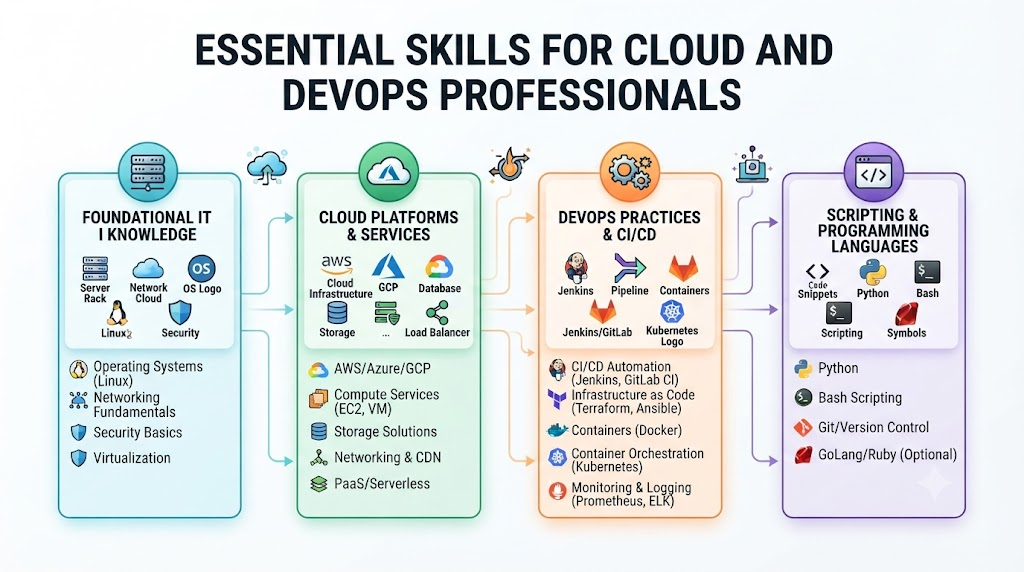
Why Certified FinOps Engineer Certified FinOps Engineer: Essential Skills for Cloud and DevOps Professionals
Cloud spending ranks among the largest line items for modern digital businesses, making financial optimization a core operational imperative. Mastering cloud financial engineering ensures long-term career resilience because resource optimization and financial stewardship remain critical regardless of which software stacks or cloud platforms gain prominence. As organizations mature from initial cloud adoption to long-term operational efficiency, demand shifts toward engineers who know how to maximize output at the lowest possible cost. Pursuing this certification provides an exceptional return on investment by establishing your ability to connect technical execution directly with financial sustainability.
Certified FinOps Engineer Certification Overview
The Certified FinOps Engineer certification offers a systematic learning structure designed to evaluate real-world competence in cloud financial management. Designed as a complete professional roadmap, the curriculum emphasizes scenario-driven testing and practical skill demonstration over simple theoretical recall. Candidates demonstrate their ability to dissect cloud billing datasets, discover hidden system inefficiencies, enforce universal tagging practices, and configure precise chargeback frameworks. The overall program structure ensures that participants develop immediate, practical capabilities that directly yield lower operational costs and improved resource usage in live environments.
Certified FinOps Engineer Certification Tracks & Levels
The certification pathway spans foundational, professional, and advanced practitioner tracks to accommodate professionals at every stage of their technical development. Foundational tracks teach basic cloud cost mechanics, cloud provider billing engines, tagging architectures, and basic alert thresholds. The professional tier dives deeper into complex topics like automated workload rightsizing, managing long-term discount instruments (Savings Plans and Reserved Instances), tracking anomaly spikes, and container-level cost tracking. Advanced and leadership tracks prepare candidates to lead multi-cloud governance strategies, design organizational FinOps cultures, automate policy enforcement, and establish real-time unit economics metrics across enterprise engineering teams.
Complete Certified FinOps Engineer Certification Table
| Track | Level | Who it’s for | Prerequisites | Skills Covered | Recommended Order |
| FinOps Foundations | Foundation | Tech Leads, Junior Engineers, IT Admin | Basic Cloud Fundamentals | Billing Concepts, Tag Enforcement, Cost Dashboards | 1 |
| Certified FinOps Engineer | Professional | DevOps, SREs, Systems Engineers | 1-2 Years Cloud Experience | Anomaly Detection, Rightsizing, RI/SP Strategy, K8s Costing | 2 |
| FinOps Architect | Advanced | Principal Engineers, System Architects | Advanced Technical Background | Multi-Cloud Governance, Policy-as-Code, Unit Economics | 3 |
| FinOps Leadership | Executive | Engineering Directors, VPs, Tech Leads | Engineering Leadership Background | Organizational Culture, Enterprise Budgeting, Unit Metrics | 4 |
Detailed Guide for Each Certified FinOps Engineer Certification
Certified FinOps Engineer – Foundation Level
What it is
This entry-level certification confirms a clear understanding of core cloud cost concepts, cloud billing structures, and cost-aware engineering habits. It verifies that a professional understands how cloud operating expenses differ from legacy data center capital expenditures.
Who should take it
Junior cloud specialists, systems administrators, technical managers, and procurement specialists who work alongside engineering units and need a common baseline in cloud cost terminology.
Skills you’ll gain
- Reading cloud invoice breakdown structures across major cloud providers.
- Establishing effective metadata tagging patterns across cloud assets.
- Configuring basic native cloud budgeting dashboards and threshold alerts.
- Identifying basic idle resources across cloud accounts.
Real-world projects you should be able to do
- Generate a unified cloud usage tracking report for a team project.
- Create and roll out a standard tagging policy for testing environments.
- Set up automated budget alerts via native cloud console tooling.
Preparation plan
- 7–14 Days: Learn core cloud billing models, FinOps terminology, and basic account structures.
- 30 Days: Practice generating cost visibility reports and analyzing cloud invoices.
- 60 Days: Build test dashboards, review pricing documentation, and complete mock practice exams.
Common mistakes
- Viewing cloud cost management as an accounting chore rather than an active engineering habit.
- Neglecting metadata tagging standards during early cloud setup phases.
Best next certification after this
- Same-track option: Certified FinOps Engineer – Professional Level
- Cross-track option: Certified DevOps Engineer
- Leadership option: Certified Technical Team Lead
Certified FinOps Engineer – Professional Level
What it is
This professional certification validates deep hands-on expertise in identifying cloud waste, executing automated rightsizing strategies, building cost allocation models, and handling commitment-based pricing options.
Who should take it
DevOps practitioners, SREs, cloud engineers, and platform developers who handle production-level cloud footprints across AWS, Azure, or Google Cloud.
Skills you’ll gain
- Allocating shared infrastructure and container costs down to namespace level.
- Automating rightsizing schedules and idle resource deletion scripts.
- Maximizing savings via Reserved Instances and Savings Plans commitments.
- Adding cost calculation gates to automated continuous integration pipelines.
Real-world projects you should be able to do
- Set up detailed container cost monitoring using open-source allocation tools.
- Implement automated cleanup policies for unattached disks and inactive load balancers.
- Design a commitment strategy that optimizes discounts without locking in unneeded capacity.
Preparation plan
- 7–14 Days: Review advanced cost export formats, container cost attribution models, and discount options.
- 30 Days: Work directly with billing APIs, Policy-as-Code rules, and CI/CD cost checks.
- 60 Days: Conduct a thorough cost audit on a staging environment and document savings achieved.
Common mistakes
- Purchasing long-term capacity commitments without accounting for future software architecture updates.
- Overlooking shared resources and microservice cluster costs in containerized setups.
Best next certification after this
- Same-track option: Certified FinOps Architect
- Cross-track option: Certified Site Reliability Engineer (SRE)
- Leadership option: Certified FinOps Manager
Certified FinOps Engineer – Advanced Architect Level
What it is
This advanced-level credential demonstrates expertise in designing cost-optimized cloud architectures, establishing enterprise governance guardrails, and leading company-wide FinOps adoption.
Who should take it
Principal engineers, enterprise architects, and senior technical leaders tasked with designing technical standards, policy guardrails, and cost management frameworks across global organizations.
Skills you’ll gain
- Designing resilient multi-region cloud systems tuned for cost efficiency.
- Building unit economics models tied directly to product usage metrics.
- Writing Policy-as-Code rules that enforce cost guardrails automatically.
- Managing enterprise-grade, multi-cloud cost aggregation setups.
Real-world projects you should be able to do
- Build an automated cost data pipeline using detailed cloud billing exports.
- Implement Policy-as-Code guardrails that block the provisioning of oversized cloud instances.
- Establish a unit-cost tracking dashboard tied to product subscription metrics.
Preparation plan
- 7–14 Days: Study enterprise cloud account structures, enterprise agreements, and unit cost formulas.
- 30 Days: Practice writing automated compliance policy guardrails and reviewing architectural specs.
- 60 Days: Architect an end-to-end FinOps framework complete with technical guardrails and governance workflows.
Common mistakes
- Implementing restrictive cost controls that slow down engineering deployment speeds.
- Failing to connect cloud spend to business KPIs and application transaction metrics.
Best next certification after this
- Same-track option: Certified FinOps Executive Director
- Cross-track option: Certified Enterprise Cloud Architect
- Leadership option: VP of Cloud Engineering
Choose Your Learning Path
DevOps Path
The DevOps path focuses on embedding financial awareness directly into continuous delivery workflows. Engineers learn to integrate cost estimation tools into pull request workflows, preventing over-provisioned infrastructure from reaching production and ensuring tag compliance automatically. This approach transforms cost management into a standard deployment check alongside automated unit testing and security validation.
DevSecOps Path
The DevSecOps track links cloud financial management with security standards, compliance requirements, and risk controls. Engineers on this path focus on eliminating shadow IT setups, tuning the storage costs of security event logging, and ensuring security monitoring tooling does not generate unnecessary infrastructure overhead.
SRE Path
Site Reliability Engineers approach cost management through the lens of system health, capacity planning, and resource efficiency. The SRE track focuses on optimizing autoscaling rules, balancing spot instances against reserved capacity for maximum resilience, and treating unexpected cloud spend as an operational defect.
AIOps Path
The AIOps path focuses on using intelligent algorithms and automated monitoring to handle cloud operations and costs. Engineers learn to deploy predictive anomaly detection systems, forecast compute demand dynamic shifts, and automatically adjust server capacity based on historical usage patterns.
MLOps Path
Machine Learning Operations requires specialized cost management strategies because training models and running inference clusters demand significant GPU/NPU compute resources. This track equips engineers to streamline data ingestion pipelines, utilize preemptible instances for fault-tolerant training runs, and rightsize AI endpoints without sacrificing latency.
DataOps Path
Data processing engines, data lakes, and analytics tools represent a significant share of modern cloud budgets. The DataOps path teaches engineers how to tune analytical queries, manage multi-tier storage lifecycles, rightsize serverless data clusters, and reduce data egress costs across enterprise data architectures.
FinOps Path
The dedicated FinOps track builds holistic expertise combining financial operations, cloud system design, and organizational culture. Engineers learn to build custom chargeback models, establish cross-departmental governance teams, and cultivate a company culture where cost awareness is a standard engineering metric.
Role to Recommended Certified FinOps Engineer Certifications
| Role | Recommended Certifications |
| DevOps Engineer | Certified FinOps Engineer – Professional, Certified DevOps Engineer |
| SRE | Certified FinOps Engineer – Professional, Certified SRE |
| Platform Engineer | Certified FinOps Architect, Certified Platform Engineer |
| Cloud Engineer | Certified FinOps Engineer – Foundation & Professional |
| Security Engineer | Certified FinOps Engineer – Professional, Certified DevSecOps Engineer |
| Data Engineer | Certified FinOps Engineer – Professional, Certified DataOps Engineer |
| FinOps Practitioner | Certified FinOps Engineer – All Levels, FinOps Practitioner |
| Engineering Manager | Certified FinOps Engineer – Foundation, Certified Engineering Manager |
Next Certifications to Take After Certified FinOps Engineer
Same Track Progression
After mastering the core engineering stages of the FinOps path, progressing toward FinOps Architect and Executive Leadership credentials is the logical next step. This path enhances your ability to direct enterprise-scale architecture, negotiate large cloud vendor agreements, and build operational frameworks that bring financial accountability to every engineering team.
Cross-Track Expansion
To broaden your technical versatility, expand into related domains like Site Reliability Engineering (SRE), Platform Engineering, or Cloud Architecture. Combining cost optimization skills with deep technical proficiency in Kubernetes, IaC, and observability transforms you into an indispensable technical lead capable of balancing system performance with operational costs.
Leadership & Management Track
For senior engineers aiming to move into management, director, or executive engineering roles, pairing FinOps skills with management certifications is highly effective. Mastering unit economics, budget oversight, and cloud efficiency positions you to communicate clearly with both executive leaders and hands-on technical teams.
Training & Certification Support Providers for Certified FinOps Engineer
The Core Platform Authority
The official platform authority maintains the underlying curriculum, examination standards, and practical frameworks for financial engineering credentials. It establishes global standards for cloud cost management, ensuring candidates receive training that reflects modern architectural developments. Through continuous curriculum enhancements, industry partnerships, and scenario-based labs, it supplies engineers with validated, practical skills aligned with global enterprise needs.
DevOpsSchool
DevOpsSchool is a prominent global training platform providing specialized education across DevOps, FinOps, SRE, Cloud, and Platform Engineering. Recognized for its interactive, instructor-led approach, it offers practical learning setups complete with real-world scenarios, enterprise projects, and dedicated lab environments. Candidates pursuing cost engineering receive expert mentorship and practical preparation designed for production-level execution. In addition to core course content, DevOpsSchool provides extensive post-training support, including access to career counseling, resume reviews, interview prep workshops, and a community network of senior engineers.
Cotocus
Cotocus offers specialized IT consulting services and enterprise workforce training programs designed for digital transformation projects. Their courses focus heavily on hands-on tooling, CI/CD automation, and cloud cost management frameworks, helping enterprise teams upskill efficiently.
Scmgalaxy
Scmgalaxy is a community-driven educational hub offering extensive technical resources, tutorials, and structured courses covering configuration management, cloud tools, and financial governance. It helps engineers implement efficient continuous delivery pipelines and operational management practices.
BestDevOps
BestDevOps provides targeted learning tracks, technical guides, and professional advice across cloud-native engineering disciplines. Their programs emphasize production deployment patterns, continuous integration, and built-in cost management for development teams.
devsecopsschool.com
devsecopsschool.com specializes in training programs that integrate security controls and automated policy guardrails into DevOps pipelines. Their courses cover cloud security architecture, risk management, and cost optimization for security operations.
sreschool.com
sreschool.com focuses on site reliability principles, system resilience, and operational performance tuning. Their curriculum guides engineers through balancing reliability targets like SLOs and SLAs against cloud cost considerations.
aiopsschool.com
aiopsschool.com offers training focused on artificial intelligence for IT operations, telemetry data analysis, and automated incident management. Their programs teach engineers to use predictive models to monitor system health and optimize resource usage dynamically.
dataopsschool.com
dataopsschool.com delivers targeted learning paths centered on real-time data pipelines, data architecture, and governance. Their curriculum includes specialized modules on controlling costs associated with large-scale storage, query engines, and analytics workloads.
finopsschool.com
finopsschool.com serves as a specialized educational platform dedicated to cloud financial management, unit economics, and cloud cost engineering. It offers structured courses, interactive labs, and certification preparation resources to help engineers become skilled FinOps professionals.
Frequently Asked Questions (General)
- What is the main objective of the Certified FinOps Engineer program?
The primary goal is to validate an engineer’s practical capability to control, optimize, and govern cloud infrastructure costs while maintaining system reliability and development velocity. - Is the Certified FinOps Engineer exam purely theoretical or scenario-based?
The exam features scenario-based evaluation questions and practical problems designed to test your ability to diagnose billing issues, eliminate waste, and build automated cost guardrails. - Do I need previous cloud experience before taking this exam?
While foundational tracks welcome beginners, professional and advanced levels require 1 to 2 years of practical experience working with cloud infrastructure and core DevOps concepts. - How does this credential differ from standard vendor cloud certifications?
Vendor cloud certifications focus primarily on resource provisioning and administration, whereas this program focuses specifically on cloud financial management, cost allocation, rightsizing, and unit economics across platforms. - How long does it take to prepare for the professional-level exam?
Most working engineers spend 30 to 60 days preparing, depending on their familiarity with billing APIs, tagging standards, container environments, and cost management tools. - Is this certification recognized internationally by tech companies?
Yes, enterprise organizations worldwide seek engineers with verified cloud cost management capabilities to help control multi-cloud operating expenses. - How does earning this certification advance my career as a DevOps engineer?
Adding cost engineering skills transforms you from a traditional deployment engineer into a business-aligned technical lead who can manage both delivery pipelines and operating budgets. - Which cloud platforms are covered in the training?
The curriculum covers multi-cloud principles and billing mechanics applicable across Amazon Web Services, Microsoft Azure, Google Cloud Platform, and hybrid Kubernetes setups. - Can non-technical team members take the entry-level certification?
Yes, project managers, technical finance leads, and cloud procurement specialists can take the foundational level to understand cloud billing mechanics and collaborate with engineering teams. - Which technical tools are emphasized during preparation?
Candidates work with native cloud cost portals, billing export datasets, open-source container allocation tools like Kubecost, and Infrastructure-as-Code platforms like Terraform. - How often should this certification be renewed?
Because cloud pricing options, billing structures, and serverless options evolve quickly, renewing your certification every two years ensures your skills remain current. - Does the course cover Kubernetes and container cost tracking?
Yes, modern FinOps engineering focuses heavily on container cost allocation, multi-tenant cluster tracking, namespace tagging, and rightsizing containerized applications.
FAQs on Certified FinOps Engineer
- How difficult is the Certified FinOps Engineer exam compared to standard DevOps exams?
The exam is moderately challenging because it requires both technical cloud architecture knowledge and a deep understanding of financial allocation models. You must know how technical decisions directly impact cloud spend. - Does this program teach automated policy enforcement for cloud cost control?
Yes, practical automation is a core element of the curriculum, including using Policy-as-Code to prevent non-compliant deployments, automatically turning off idle dev environments, and setting up automated alert triggers. - What is the financial return on investment of earning this certification?
Organizations often save substantial percentages on their cloud bills by employing certified cost engineers, making certified professionals highly valuable and well-compensated across enterprise settings. - Can I pursue this certification if my company operates in a single cloud environment?
Yes, while multi-cloud principles are taught, the underlying fundamentals of rightsizing, commitment strategy management, tagging, and architectural optimization apply directly to single-cloud setups. - How does this certification address microservices and serverless cost architectures?
The curriculum includes dedicated modules on tracking event-driven serverless costs, API gateway usage, and microservices shared infrastructure allocation to give you visibility into modern application architectures. - Is coding or scripting required for the advanced engineering exercises?
Yes, basic scripting skills in Python, Bash, or Infrastructure as Code tools like Terraform are helpful for creating automated reporting pipelines and cost guardrails. - How does unit economics factor into the Certified FinOps Engineer curriculum?
You will learn to translate raw cloud costs into business metrics, such as cost per active user, cost per API call, or cost per transaction, helping executives assess application profitability accurately. - What is the best sequence to follow if I want to master both DevOps and FinOps?
Start with a solid foundation in cloud infrastructure and DevOps automation, earn your DevOps certification, and then pursue the Certified FinOps Engineer path to build a balanced, high-value skill set.
Final Thoughts: Is Certified FinOps Engineer Worth It?
Earning the Certified FinOps Engineer credential is one of the most effective strategic moves a modern technical professional can make. As cloud environments expand, the ability to control infrastructure costs without slowing down software delivery velocity has become a crucial skill set. Achieving this certification proves that you understand both technical system execution and the financial metrics that drive business growth, making you an essential lead for any modern engineering team.
