Introduction
Mindfulness and meditation apps help people build healthier mental habits through guided meditation, breathing exercises, sleep stories, calming music, focus sessions, emotional check-ins, and stress management practices. In simple words, these apps make meditation easier for beginners and more consistent for regular users.
These tools are useful because many people struggle with stress, poor sleep, anxiety, overthinking, lack of focus, and digital fatigue. A good mindfulness app gives users a structured way to pause, breathe, reflect, and train attention. For individuals, these apps support personal well-being. For companies, schools, and wellness programs, they can support employee mental health, productivity, emotional balance, and healthier routines.
Real-world use cases include:
- Daily guided meditation for stress relief.
- Sleep stories, relaxing sounds, and bedtime routines.
- Breathing exercises for anxiety and emotional regulation.
- Focus sessions for work, study, and deep concentration.
- Mindfulness programs for beginners and advanced users.
- Workplace wellness and employee mental health support.
- Habit tracking for consistent meditation practice.
Key evaluation criteria for buyers:
- Quality of guided meditation content.
- Ease of use for beginners.
- Sleep, stress, anxiety, and focus programs.
- Personalization and progress tracking.
- Offline access and mobile experience.
- Variety of instructors, voices, and session lengths.
- Pricing and free plan value.
- Privacy and data handling.
- Corporate wellness features.
- Content quality for adults, students, families, and teams.
Best for: Individuals, students, working professionals, parents, wellness coaches, HR teams, therapists, educators, remote workers, and organizations that want to support mental wellness.
Not ideal for: People needing urgent mental health treatment, users expecting instant results without practice, or organizations that need clinical therapy tools instead of general wellness support.
Key Trends in Mindfulness & Meditation Apps
- Personalized meditation paths are becoming more common, helping users choose sessions based on mood, sleep, stress, focus, or daily goals.
- Sleep support is now a major feature, with sleep stories, soundscapes, wind-down routines, and calming bedtime exercises.
- Short meditation sessions are growing, especially for busy professionals who prefer quick 3-minute, 5-minute, or 10-minute practices.
- Workplace wellness programs are increasing, as companies use mindfulness apps to support employee well-being and reduce burnout.
- AI-assisted recommendations are emerging, helping users discover relevant sessions based on habits and preferences.
- Breathing and nervous system regulation tools are becoming popular, especially for stress, panic, and emotional reset moments.
- Family and kids’ mindfulness content is expanding, helping parents and educators introduce emotional awareness early.
- Offline meditation access matters more, especially for travel, low-connectivity areas, and distraction-free practice.
- Privacy expectations are rising, because wellness apps may collect sensitive mood, sleep, and usage data.
- Integration with wearables and health platforms is becoming useful, helping users connect mindfulness with sleep, heart rate, and daily wellness tracking.
How We Selected These Tools
The tools below were selected based on practical value for mindfulness, meditation, sleep, stress management, breathing, and daily mental wellness. The evaluation focused on:
- Market recognition and popularity among mindfulness users.
- Quality and variety of guided meditation content.
- Ease of use for beginners and casual users.
- Depth of programs for sleep, anxiety, stress, focus, and emotional balance.
- Fit for different users such as students, professionals, families, and workplaces.
- Mobile app quality and overall user experience.
- Personalization, streaks, reminders, and progress tracking.
- Availability of free and paid content.
- Privacy and security visibility where clearly known; otherwise marked as “Not publicly stated.”
- Overall value based on content depth, usability, and practical wellness impact.
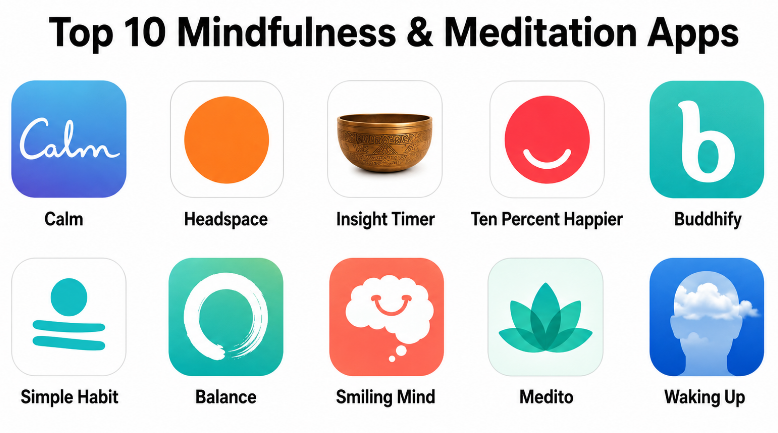
Top 10 Mindfulness & Meditation Apps
#1 — Calm
Short description :
Calm is one of the most recognized mindfulness and meditation apps, known for guided meditations, sleep stories, breathing exercises, relaxing music, and stress management content. It is useful for beginners, working professionals, students, and anyone looking to build a calmer daily routine. Calm is especially strong for sleep and relaxation because it offers bedtime stories, soundscapes, and wind-down sessions. The app is designed to make mindfulness easy, gentle, and accessible. It is best for users who want a polished meditation experience with strong sleep support.
Key Features
- Guided meditation for stress, sleep, focus, and anxiety.
- Sleep stories and bedtime relaxation content.
- Breathing exercises and calming soundscapes.
- Daily meditation sessions.
- Mindfulness programs for beginners and experienced users.
- Relaxing music and nature sounds.
- Content for families and workplace wellness.
Pros
- Strong sleep and relaxation content.
- Easy for beginners to start.
- Polished app experience with wide content variety.
Cons
- Most valuable content is behind paid plans.
- Some users may find the app more lifestyle-focused than meditation-deep.
- Content variety can feel overwhelming at first.
Platforms / Deployment
iOS / Android / Web
Cloud / Mobile app-based
Security & Compliance
Not publicly stated
Integrations & Ecosystem
Calm works well for personal wellness routines and workplace well-being programs. It can support daily stress management, better sleep habits, and short mindfulness breaks.
- Mobile meditation practice.
- Sleep and bedtime routines.
- Workplace wellness programs.
- Breathing and relaxation sessions.
- Audio-based mindfulness content.
Support & Community
Calm provides app support, help resources, and broad user adoption. Its strong brand presence makes it familiar to many users starting meditation for the first time.
#2 — Headspace
Short description :
Headspace is a popular meditation and mindfulness app designed to help users manage stress, improve focus, sleep better, and build emotional awareness. It is known for structured courses, beginner-friendly lessons, animations, and clear guidance. Headspace is useful for individuals, students, families, and workplace wellness programs. The app makes meditation approachable by explaining concepts in simple language. It is best for users who want a structured and educational path into mindfulness.
Key Features
- Guided meditation courses.
- Stress, sleep, focus, and anxiety programs.
- Beginner-friendly mindfulness lessons.
- Breathing exercises and quick reset sessions.
- Sleepcasts and relaxing audio.
- Content for kids and families.
- Workplace wellness solutions.
Pros
- Very beginner-friendly and structured.
- Strong educational approach to mindfulness.
- Good fit for both individuals and organizations.
Cons
- Premium plan is needed for full content access.
- Some users may prefer more spiritual or traditional meditation styles.
- Interface may feel too guided for advanced practitioners.
Platforms / Deployment
iOS / Android / Web
Cloud / Mobile app-based
Security & Compliance
Not publicly stated
Integrations & Ecosystem
Headspace supports mindfulness across personal, family, and workplace wellness environments.
- Guided meditation learning paths.
- Workplace wellness programs.
- Sleep support.
- Family mindfulness content.
- Short daily mindfulness practices.
Support & Community
Headspace provides help resources, support options, and a large global user community. Its beginner-focused design makes onboarding easier for new users.
#3 — Insight Timer
Short description :
Insight Timer is a meditation app known for its large library of free guided meditations, music, talks, courses, and timer-based practice tools. It is useful for beginners, experienced meditators, teachers, and users who want variety without depending only on premium content. Insight Timer includes meditation teachers from many styles, traditions, and approaches. It is especially strong for users who want choice and community. The app is best for people who prefer a large content library and flexible meditation practice.
Key Features
- Large library of guided meditations.
- Meditation timer with bells and intervals.
- Sleep music and relaxation tracks.
- Teacher-led talks and courses.
- Community groups and user activity.
- Content across many meditation styles.
- Free content availability is strong.
Pros
- Large amount of free meditation content.
- Good for both beginners and experienced users.
- Strong teacher and community ecosystem.
Cons
- Content quality can vary by teacher.
- Large library may feel overwhelming.
- Premium courses may require paid access.
Platforms / Deployment
iOS / Android / Web
Cloud / Mobile app-based
Security & Compliance
Not publicly stated
Integrations & Ecosystem
Insight Timer is useful for people who want many meditation styles, teachers, and practice options.
- Guided meditation library.
- Timer-based silent meditation.
- Sleep and relaxation audio.
- Teacher-led courses.
- Meditation community features.
Support & Community
Insight Timer has a strong community of users and teachers. Support resources are available, and the community experience is one of the platform’s major strengths.
#4 — Ten Percent Happier
Short description :
Ten Percent Happier is a mindfulness app focused on practical meditation for skeptics, busy professionals, and people who want clear, realistic guidance. It offers guided meditations, talks, courses, and teacher-led programs from respected meditation instructors. The app avoids overly mystical language and focuses on practical mental training. It is especially useful for users who want mindfulness explained in a grounded, modern way. The tool is best for people who want meditation for stress, focus, emotional balance, and self-awareness.
Key Features
- Practical guided meditation courses.
- Teacher-led mindfulness programs.
- Stress, focus, anxiety, and emotional balance content.
- Short sessions for busy schedules.
- Talks and lessons on meditation concepts.
- Beginner-friendly structure.
- Content designed for practical daily use.
Pros
- Good for meditation beginners and skeptics.
- Practical and grounded teaching style.
- Strong instructor-led learning experience.
Cons
- Less focused on sleep stories than some competitors.
- Premium access is needed for deeper content.
- May not suit users looking for spiritual or music-heavy meditation apps.
Platforms / Deployment
iOS / Android / Web
Cloud / Mobile app-based
Security & Compliance
Not publicly stated
Integrations & Ecosystem
Ten Percent Happier fits users who want practical mindfulness education and guided practice.
- Meditation courses.
- Teacher-led talks.
- Daily mindfulness practice.
- Stress and focus programs.
- Beginner meditation learning paths.
Support & Community
The app provides support resources and teacher-led content. Its community is strongest among users who prefer practical and modern meditation guidance.
#5 — Buddhify
Short description :
Buddhify is a meditation app designed around real-life situations, helping users practice mindfulness while traveling, working, resting, walking, feeling stressed, or preparing for sleep. It is useful for people who want meditation to fit into everyday moments instead of only formal sitting practice. Buddhify offers guided sessions organized by mood and activity. The app is especially practical for users who want short, situation-based meditation. It is best for people who prefer simple, flexible mindfulness support without too much complexity.
Key Features
- Situation-based guided meditations.
- Sessions for work, travel, stress, sleep, and rest.
- Short meditation practices.
- Simple app structure.
- Beginner-friendly guidance.
- Offline-friendly usage may vary by version.
- Practical mindfulness for daily life.
Pros
- Easy to use in real-world situations.
- Good for short and practical meditation.
- Less overwhelming than large content libraries.
Cons
- Smaller content library than larger apps.
- Fewer advanced wellness features.
- May not suit users wanting deep courses or workplace programs.
Platforms / Deployment
iOS / Android
Mobile app-based
Security & Compliance
Not publicly stated
Integrations & Ecosystem
Buddhify supports everyday mindfulness by matching meditations to real-life moments.
- Travel meditation.
- Work break mindfulness.
- Sleep preparation.
- Stress reset sessions.
- Short guided practices.
Support & Community
Buddhify offers app support and user guidance. Its strength is simplicity and practical use rather than large-scale community features.
#6 — Simple Habit
Short description :
Simple Habit is a meditation app designed for busy people who want short guided practices for stress, sleep, focus, anxiety, and daily calm. It is useful for working professionals, students, parents, and users who prefer quick sessions. The app focuses on making meditation fit into a tight schedule. Simple Habit is especially helpful for people who want short audio sessions before work, during breaks, or before bed. It is best for users who want practical mindfulness without long time commitments.
Key Features
- Short guided meditation sessions.
- Stress, sleep, anxiety, and focus content.
- Programs for busy schedules.
- Audio-based mindfulness guidance.
- Daily practice support.
- Quick reset sessions.
- Beginner-friendly experience.
Pros
- Good for busy professionals.
- Short sessions are easy to fit into daily routines.
- Useful for stress and sleep support.
Cons
- Advanced content may require paid access.
- May feel less deep for experienced meditators.
- Content structure may not suit users wanting long courses.
Platforms / Deployment
iOS / Android
Cloud / Mobile app-based
Security & Compliance
Not publicly stated
Integrations & Ecosystem
Simple Habit supports quick meditation routines for users who need calm during busy days.
- Work break meditation.
- Sleep and relaxation routines.
- Short anxiety reset practices.
- Focus sessions.
- Daily habit building.
Support & Community
Simple Habit offers support resources and app guidance. Its strongest appeal is for users who want short, accessible meditation sessions.
#7 — Balance
Short description :
Balance is a meditation app focused on personalized meditation plans. It asks users about their goals, experience, and preferences, then recommends sessions based on their needs. Balance is useful for beginners who want guidance and for users who prefer a more tailored mindfulness journey. The app includes meditation, breathing, sleep, and relaxation content. It is especially helpful for people who do not know where to start and want a structured path. Balance is best for users who value personalization and habit-building.
Key Features
- Personalized meditation plans.
- Guided meditation for stress, focus, and sleep.
- Breathing and relaxation exercises.
- Beginner-friendly onboarding.
- Progress-based recommendations.
- Short and structured sessions.
- Habit-building support.
Pros
- Strong personalization experience.
- Good for beginners who need direction.
- Simple and focused app design.
Cons
- Premium access may be needed for full value.
- Smaller content ecosystem than some large platforms.
- Less community-focused than teacher marketplace apps.
Platforms / Deployment
iOS / Android
Cloud / Mobile app-based
Security & Compliance
Not publicly stated
Integrations & Ecosystem
Balance supports personalized mindfulness routines and guided habit development.
- Personalized meditation paths.
- Stress management sessions.
- Sleep support.
- Breathing exercises.
- Beginner mindfulness programs.
Support & Community
Balance provides app support and guided onboarding. Its main strength is personalization rather than large community content.
#8 — Smiling Mind
Short description :
Smiling Mind is a mindfulness app designed with a strong focus on accessible mental well-being, education, and structured mindfulness programs. It is useful for individuals, families, schools, and young people. The app offers meditation and mindfulness practices for different age groups and life situations. Smiling Mind is especially valuable for parents, educators, and users looking for simple, accessible mindfulness training. It is best for users who want a practical and education-friendly mindfulness tool.
Key Features
- Guided mindfulness programs.
- Content for different age groups.
- School and education-friendly mindfulness support.
- Stress and emotional awareness practices.
- Simple meditation sessions.
- Family-friendly wellness content.
- Structured mindfulness learning paths.
Pros
- Strong for students, families, and educators.
- Accessible and beginner-friendly.
- Good for emotional awareness and daily mindfulness.
Cons
- May not offer as much premium-style content variety.
- Less focused on advanced meditation.
- Feature depth may be lighter than commercial wellness platforms.
Platforms / Deployment
iOS / Android / Web
Cloud / Mobile app-based
Security & Compliance
Not publicly stated
Integrations & Ecosystem
Smiling Mind is useful for educational and family mindfulness use cases.
- School mindfulness programs.
- Family meditation routines.
- Youth emotional awareness.
- Beginner mindfulness practice.
- Stress management sessions.
Support & Community
Smiling Mind provides support resources and structured programs. It is especially known for accessible mindfulness education.
#9 — Medito
Short description :
Medito is a mindfulness and meditation app focused on making meditation accessible without heavy cost barriers. It offers guided meditations, breathing exercises, sleep content, and beginner-friendly programs. Medito is useful for users who want simple meditation support without complicated pricing pressure. It is especially helpful for students, beginners, and budget-conscious users. The app is best for people who want a clean, practical, and accessible way to start mindfulness practice.
Key Features
- Guided meditation sessions.
- Beginner meditation courses.
- Breathing exercises.
- Sleep and relaxation content.
- Stress management practices.
- Simple user experience.
- Budget-friendly access model.
Pros
- Accessible for budget-conscious users.
- Good beginner meditation support.
- Simple and distraction-free experience.
Cons
- Smaller content library than major premium apps.
- Fewer advanced personalization features.
- Limited corporate wellness ecosystem.
Platforms / Deployment
iOS / Android
Cloud / Mobile app-based
Security & Compliance
Not publicly stated
Integrations & Ecosystem
Medito supports simple personal mindfulness practice for users who want accessible meditation content.
- Beginner meditation practice.
- Sleep support.
- Breathing exercises.
- Stress reduction sessions.
- Daily habit building.
Support & Community
Medito has user support resources and a mission-driven community style. Its value is strongest for users who want accessible mindfulness without complex plans.
#10 — Waking Up
Short description :
Waking Up is a meditation and mindfulness app focused on deeper practice, self-awareness, philosophy, and contemplative learning. It is useful for users who want more than relaxation and are interested in understanding the mind, attention, consciousness, and meditation theory. The app includes guided meditations, lessons, conversations, and practice paths. It may be especially helpful for users who already have some meditation interest and want a more reflective approach. It is best for people looking for depth, not only stress relief or sleep support.
Key Features
- Guided meditation practice.
- Lessons on mindfulness and self-awareness.
- Conversations and theory-based content.
- Structured practice paths.
- Content for deeper contemplative learning.
- Daily meditation support.
- Reflective and educational approach.
Pros
- Strong for deeper meditation learning.
- Good for users interested in mindfulness philosophy.
- Structured practice and theory combination.
Cons
- May feel too advanced for casual users.
- Less focused on sleep stories and lifestyle wellness.
- Not ideal for users wanting only quick relaxation.
Platforms / Deployment
iOS / Android / Web
Cloud / Mobile app-based
Security & Compliance
Not publicly stated
Integrations & Ecosystem
Waking Up supports users who want meditation practice plus deeper learning.
- Guided meditation paths.
- Mindfulness education.
- Self-awareness training.
- Daily practice sessions.
- Reflective audio content.
Support & Community
Waking Up provides support resources and structured learning content. Its community is strongest among users who want serious mindfulness practice and deeper reflection.
Comparison Table
| Tool Name | Best For | Platform(s) Supported | Deployment | Standout Feature | Public Rating |
|---|---|---|---|---|---|
| Calm | Sleep, relaxation, and daily calm | iOS / Android / Web | Cloud / Mobile app-based | Sleep stories and relaxation content | N/A |
| Headspace | Beginners and structured mindfulness learning | iOS / Android / Web | Cloud / Mobile app-based | Beginner-friendly guided courses | N/A |
| Insight Timer | Free meditation library and community | iOS / Android / Web | Cloud / Mobile app-based | Large guided meditation library | N/A |
| Ten Percent Happier | Practical meditation for busy professionals | iOS / Android / Web | Cloud / Mobile app-based | Grounded teacher-led mindfulness | N/A |
| Buddhify | Situation-based daily mindfulness | iOS / Android | Mobile app-based | Meditation for real-life moments | N/A |
| Simple Habit | Busy users needing short sessions | iOS / Android | Cloud / Mobile app-based | Quick guided meditation sessions | N/A |
| Balance | Personalized meditation plans | iOS / Android | Cloud / Mobile app-based | Personalized mindfulness path | N/A |
| Smiling Mind | Families, students, and educators | iOS / Android / Web | Cloud / Mobile app-based | Education-friendly mindfulness programs | N/A |
| Medito | Budget-conscious beginners | iOS / Android | Cloud / Mobile app-based | Accessible beginner meditation | N/A |
| Waking Up | Deeper mindfulness and self-awareness | iOS / Android / Web | Cloud / Mobile app-based | Meditation plus contemplative learning | N/A |
Evaluation & Mindfulness & Meditation Apps
| Tool Name | Core (25%) | Ease (15%) | Integrations (15%) | Security (10%) | Performance (10%) | Support (10%) | Value (15%) | Weighted Total (0–10) |
|---|---|---|---|---|---|---|---|---|
| Calm | 9 | 9 | 7 | 6 | 9 | 8 | 7 | 8.05 |
| Headspace | 9 | 9 | 7 | 6 | 9 | 8 | 7 | 8.05 |
| Insight Timer | 9 | 8 | 7 | 6 | 8 | 8 | 9 | 8.05 |
| Ten Percent Happier | 8 | 8 | 6 | 6 | 8 | 8 | 7 | 7.35 |
| Buddhify | 7 | 9 | 5 | 5 | 8 | 6 | 8 | 6.95 |
| Simple Habit | 7 | 9 | 6 | 5 | 8 | 7 | 7 | 7.05 |
| Balance | 8 | 9 | 6 | 6 | 8 | 7 | 7 | 7.45 |
| Smiling Mind | 7 | 8 | 6 | 6 | 8 | 7 | 8 | 7.20 |
| Medito | 7 | 8 | 5 | 5 | 8 | 6 | 9 | 7.00 |
| Waking Up | 8 | 7 | 6 | 6 | 8 | 7 | 7 | 7.20 |
These scores are comparative and should be used as a shortlist guide, not as a universal ranking. A higher score usually means broader content depth, better usability, or stronger fit for multiple users. A lower score does not mean the app is poor. For example, Waking Up may be excellent for deeper meditation, while Calm may be stronger for sleep and relaxation. The best app depends on the user’s goal, habit level, budget, and preferred meditation style.
Which Mindfulness & Meditation App Should You Choose?
Solo / Freelancer
Solo users, freelancers, and working professionals should choose an app based on their biggest need. If sleep and relaxation are the priority, Calm is a strong option. If structured beginner learning matters, Headspace is useful. If budget is important, Medito or Insight Timer may be practical.
For users who want short practices during work breaks, Simple Habit or Buddhify can fit daily routines well.
SMB
Small businesses can use mindfulness apps to support employee wellness, reduce stress, and encourage healthier work habits. Headspace, Calm, and Insight Timer can be useful depending on company goals.
SMBs should avoid forcing one app on every employee without understanding needs. Some employees may want sleep support, while others may prefer stress relief, focus sessions, or beginner meditation courses.
Mid-Market
Mid-market organizations should look for apps with workplace wellness support, easy onboarding, content variety, and employee-friendly design. Headspace, Calm, and Ten Percent Happier may fit well for structured wellness programs.
At this stage, HR and wellness teams should evaluate privacy, usage reporting, employee adoption, and whether the app supports different needs such as stress, sleep, focus, and emotional well-being.
Enterprise
Enterprises should prioritize security review, privacy policies, admin support, workplace wellness options, onboarding resources, and content quality. Headspace and Calm are commonly considered for broader employee wellness needs, while Ten Percent Happier may appeal to professional audiences seeking practical meditation.
Enterprise buyers should involve HR, legal, security, and wellness teams before rollout. Mental wellness tools should support employees without creating pressure or privacy concerns.
Budget vs Premium
Budget-conscious users can start with Insight Timer, Medito, or Smiling Mind because they offer accessible mindfulness content. These apps are useful for beginners, students, and users who want low-cost meditation support.
Premium apps like Calm, Headspace, Balance, and Ten Percent Happier may be better for users who want structured programs, polished content, personalization, and deeper guided experiences.
Feature Depth vs Ease of Use
If ease of use matters most, Calm, Headspace, Balance, and Buddhify are friendly for beginners. They offer guided sessions, simple navigation, and clear practice options.
If depth matters more, Insight Timer and Waking Up provide richer meditation variety or deeper learning paths. These may suit users who want more than basic relaxation.
Integrations & Scalability
For personal users, integrations may not matter much. For organizations, scalability matters more. Teams should evaluate admin features, workplace plans, onboarding, usage options, privacy policies, and employee engagement.
Wearable and health platform integrations can be useful, but content quality and user adoption are more important than technical integrations alone.
Security & Compliance Needs
Mindfulness apps may collect personal wellness data, mood check-ins, sleep habits, and usage patterns. Users and organizations should review privacy practices, data handling, account controls, and vendor policies before adopting any app at scale.
If security or compliance details are not clearly stated, treat them as “Not publicly stated” and ask the vendor directly before using the app in regulated or enterprise environments.
Frequently Asked Questions
1. What are mindfulness and meditation apps?
Mindfulness and meditation apps are digital tools that guide users through meditation, breathing exercises, sleep routines, stress relief practices, and emotional awareness sessions. They help users build calm, focus, and self-awareness through regular practice.
2. Are meditation apps good for beginners?
Yes, many apps are designed for beginners. Headspace, Calm, Balance, Medito, and Smiling Mind offer guided sessions that explain meditation in simple steps. Beginners should start with short sessions and build consistency gradually.
3. Can mindfulness apps help with stress?
Mindfulness apps may help users manage everyday stress by teaching breathing, body awareness, attention training, and relaxation techniques. However, they are not a replacement for professional mental health care when someone is facing serious distress.
4. Which app is best for sleep?
Calm is especially strong for sleep stories, soundscapes, and bedtime relaxation. Headspace, Insight Timer, and Simple Habit also offer sleep-focused content. The best choice depends on whether the user prefers stories, music, meditation, or breathing exercises.
5. Which app is best for free meditation content?
Insight Timer and Medito are strong choices for users looking for accessible meditation content. Insight Timer has a large library, while Medito offers a simple and beginner-friendly experience.
6. Are meditation apps suitable for children?
Some apps provide family or children-focused content. Smiling Mind and Headspace are useful options for families and educators. Parents should review content first and choose age-appropriate sessions.
7. Can companies use mindfulness apps for employee wellness?
Yes, many companies use mindfulness apps as part of workplace wellness programs. Apps can support stress management, focus, sleep habits, and emotional well-being. However, employee privacy and voluntary participation should always be respected.
8. Do meditation apps replace therapy?
No. Meditation apps can support general wellness, relaxation, and self-awareness, but they do not replace therapy, medical care, or crisis support. People facing serious anxiety, depression, trauma, or emotional distress should seek professional help.
9. How much time should beginners meditate daily?
Beginners can start with just a few minutes per day. A short and consistent routine is better than forcing long sessions. Over time, users can increase duration based on comfort, goals, and schedule.
10. What common mistakes should users avoid?
Common mistakes include expecting instant results, switching apps too often, judging every session, practicing only during crisis moments, and ignoring consistency. Mindfulness works best when practiced regularly in a gentle and patient way.
Conclusion
Mindfulness and meditation apps can be powerful tools for building calmer, healthier, and more focused daily routines. They help users practice guided meditation, breathing, sleep relaxation, emotional awareness, and stress management in a simple and accessible way. However, the best app depends on personal goals. Someone struggling with sleep may prefer Calm, while a beginner wanting structure may choose Headspace. A budget-conscious user may start with Medito or Insight Timer, while someone seeking deeper mindfulness learning may prefer Waking Up. Families and educators may find Smiling Mind especially useful.
