Introduction
Navigating urological health involves understanding a wide range of conditions that affect the urinary system and male reproductive organs. Whether individuals are researching symptoms related to the kidneys, bladder, or prostate, having access to clear, evidence-based information is essential. UrologyHospitals.com provides an educational platform designed to help patients understand urological healthcare, explore treatment options, and navigate the process of finding qualified specialists. This guide explores urological conditions, diagnostic methods, therapeutic approaches, and practical considerations for selecting appropriate hospital care.
Understanding Urological Health and Care
Urology is a surgical and medical specialty dedicated to the urinary tracts of men and women, as well as the male reproductive system. The organs within this domain include the kidneys, which filter waste from the blood; the ureters, which transport urine to the bladder; the bladder itself; and the urethra, through which urine exits the body. In men, the specialty also covers the prostate, testes, and associated structures. Because these organs perform essential filtration, storage, and excretory functions, disorders affecting them can significantly impact daily life. Seeking timely evaluation ensures that conditions are diagnosed accurately and managed through appropriate interventions, ranging from lifestyle modifications and medications to advanced surgical procedures.
Common Symptoms and Warning Signs
Urological disorders present through diverse physical indicators. Recognizing these signs helps facilitate early consultation with a healthcare professional. Common symptoms include:
- Dysuria: Experiencing pain, burning, or discomfort during urination.
- Urinary Frequency and Urgency: Needing to urinate unusually often or feeling a sudden, compelling need to pass urine immediately.
- Hematuria: The presence of blood in the urine, which may appear pink, red, or brownish.
- Obstructive Voiding: Struggling to initiate a urine stream, experiencing a weak stream, or feeling unable to empty the bladder completely.
- Pelvic or Flank Discomfort: Persistent aching or pressure in the lower abdomen, lower back, or groin region.
- Nocturia: Frequently waking up multiple times during the night to urinate.
Because these symptoms can overlap across various conditions, professional diagnostic assessment is necessary to determine the underlying cause.
Causes and Risk Factors
Urological conditions develop from a combination of anatomical, genetic, lifestyle, and age-related influences. Understanding these factors provides context for individual health risks:
- Age-Related Changes: Conditions such as benign prostatic enlargement become increasingly prevalent in older men, while structural and hormonal shifts affect urinary health across populations.
- Anatomical Differences: Shorter urethral length contributes to a higher statistical frequency of urinary tract infections in women compared to men.
- Genetic Predisposition: Family histories of kidney stones, urological cancers, or inherited renal disorders can elevate individual risk profiles.
- Lifestyle and Environmental Factors: Chronic dehydration, diets high in specific minerals or sodium, smoking, and sedentary habits can influence stone formation and bladder health.
Diagnosis and Medical Evaluation
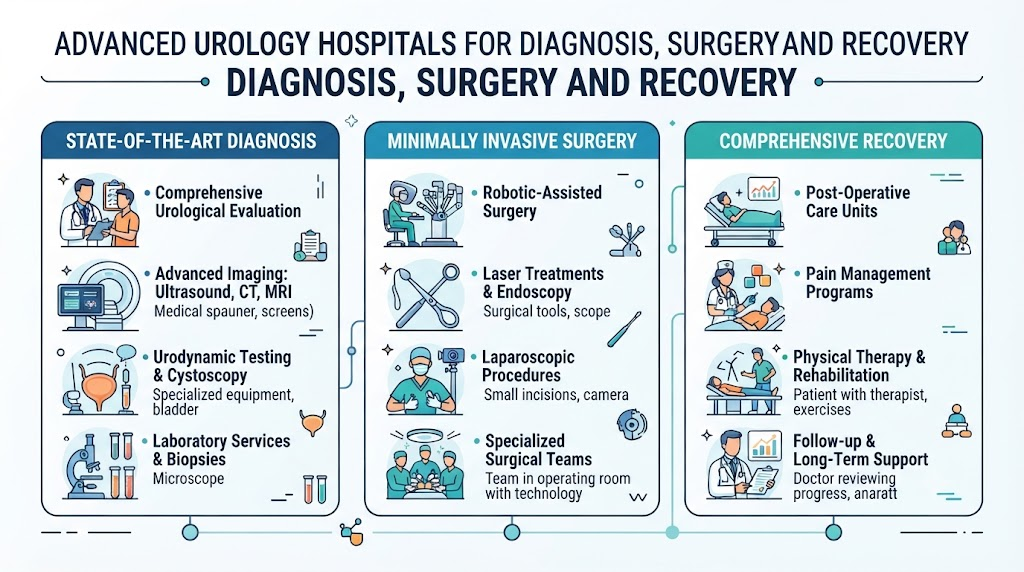
Establishing an accurate diagnosis requires a systematic clinical approach. Urologists utilize various diagnostic tools depending on the patient’s symptoms and presentation:
- Clinical History and Physical Assessment: Reviewing symptoms, medical background, and performing targeted examinations, such as a digital rectal exam when evaluating prostate status.
- Laboratory Investigations: Conducting urinalysis, urine cultures, blood urea nitrogen (BUN) and creatinine tests, and prostate-specific antigen (PSA) blood tests.
- Advanced Imaging: Utilizing ultrasound, CT scans, or MRI to visualize renal architecture, bladder wall thickness, and urinary tract obstructions.
- Cystoscopy: Employing a specialized thin scope to inspect the interior lining of the urethra and bladder directly.
- Urodynamic Studies: Evaluating bladder storage and emptying efficiency to diagnose functional voiding disorders.
Urology Treatment Options
Management strategies for urological conditions are tailored to the specific diagnosis, disease severity, overall health status, and patient preferences. Clinical approaches include:
- Active Surveillance: Monitoring stable or slow-progressing conditions closely through regular check-ups without immediate medical or surgical intervention.
- Conservative and Lifestyle Measures: Adjusting fluid intake, dietary patterns, and behavioral habits to manage symptoms and prevent recurrence.
- Pharmacotherapy: Utilizing prescription medications to relax smooth muscle, reduce inflammation, treat infections, or alter hormone levels.
- Minimally Invasive Procedures: Performing interventions via natural bodily orifices or tiny incisions to remove obstructions or stones without open incisions.
- Surgical Interventions: Executing open, laparoscopic, or robotic operations when structural repair or tissue removal is clinically indicated.
Appropriate Urology Treatment balances therapeutic goals with patient safety and recovery considerations.
Role of Urology Specialists in Patient Care
Urology Specialists complete rigorous residency and fellowship training focused entirely on medical and surgical management of the urinary system. Their expertise encompasses:
- Interpreting complex diagnostic tests to identify subtle urological abnormalities.
- Formulating individualized therapeutic plans that incorporate current medical guidelines.
- Performing delicate surgical procedures with high precision.
- Managing post-operative recovery, rehabilitation, and long-term surveillance.
- Collaborating closely with oncologists, nephrologists, and primary care physicians to ensure comprehensive multidisciplinary care.
Kidney Stone Treatment
Kidney stones develop when dissolved minerals in urine precipitate and form hard mineral deposits within the kidneys or ureters. They frequently cause intense flank pain, hematuria, and digestive upset. Kidney Stone Treatment depends heavily on stone size, chemical composition, and exact location:
- Medical Expulsive Therapy: Supporting the natural passage of small stones through hydration and targeted medications.
- Extracorporeal Shock Wave Lithotripsy (ESWL): Directing high-energy shock waves from outside the body to fracture stones into passable fragments.
- Ureteroscopy and Laser Lithotripsy: Advancing a fine scope through the urinary tract to break up stones using laser energy.
- Percutaneous Nephrolithotomy (PCNL): A minimally invasive surgical technique designed to remove large or staghorn stones through a small dorsal access tract.
Preventive guidance, including hydration optimization, plays a key role following stone management.
Prostate Cancer Treatment
Prostate cancer is one of the most frequently diagnosed malignancies among men. Management protocols depend on tumor staging, histological grade, patient age, general health status, and individual goals. Prostate Cancer Treatment strategies include:
- Active Surveillance: Periodic monitoring of low-risk tumors through blood tests and biopsies to avoid premature treatment side effects.
- Radical Prostatectomy: Surgical excision of the prostate gland, which can be accomplished via open, laparoscopic, or robotic-assisted methods.
- Radiation Therapy: Applying external beam radiation or internal brachytherapy sources to eradicate cancerous cells.
- Systemic Therapies: Administering hormone therapy, chemotherapy, or novel targeted agents for advanced disease stages.
Enlarged Prostate Treatment
Benign prostatic hyperplasia (BPH) involves non-malignant growth of the prostate gland that can compress the urethra and obstruct urine flow. Enlarged Prostate Treatment options span several tiers:
- Watchful Waiting: Observing mild symptoms that do not severely diminish quality of life.
- Drug Therapies: Utilizing alpha-blockers to ease muscular tension around the prostate or 5-alpha reductase inhibitors to gradually reduce gland volume.
- Minimally Invasive Technologies: Utilizing thermal ablation, water vapor therapy, or mechanical prostatic urethral lifts to open the urinary channel.
- Surgical Options: Performing procedures like transurethral resection of the prostate (TURP) or laser enucleation to clear obstructing tissue.
Urinary Tract Infection Treatment
Urinary tract infections (UTIs) occur when pathogenic bacteria colonize the urinary tract, triggering inflammatory responses and painful voiding symptoms. Urinary Tract Infection Treatment focuses on clearing the pathogen and preventing upper tract involvement:
- Antimicrobial Regimens: Prescribing targeted antibiotic courses determined by urine culture and sensitivity testing.
- Supportive Care: Utilizing adequate hydration and symptom-relief measures under medical advice.
- Recurrent Infection Evaluation: Investigating predisposing anatomical or functional anomalies in individuals who experience frequent infections.
Bladder Cancer Treatment
Bladder malignancies originate predominantly in the urothelial lining of the bladder. Bladder Cancer Treatment is dictated by whether the tumor has invaded the underlying muscular wall:
- Transurethral Resection of Bladder Tumor (TURBT): Endoscopic resection used for staging and initial treatment of non-muscle-invasive tumors.
- Intravesical Therapy: Instilling therapeutic agents directly into the bladder via catheter to reduce recurrence likelihood.
- Radical Cystectomy: Complete surgical removal of the urinary bladder, often coupled with urinary diversion construction for muscle-invasive disease.
- Systemic Options: Utilizing chemotherapy or immunotherapy protocols in coordination with surgical or radiation management.
Robotic Urology Surgery
Robotic Urology Surgery utilizes computer-enhanced console technology to assist urologists during complex minimally invasive operations. The system translates surgeon hand movements into micro-scale movements inside the patient’s body.
- Clinical Applications: Frequently employed during radical prostatectomies, partial nephrectomies, and pelvic reconstructive procedures.
- Potential Advantages: High-definition 3D visualization and enhanced instrument articulation facilitate dissection in confined pelvic spaces.
- Clinical Realities: The technical proficiency and experience of the operating surgeon remain the primary determinants of successful surgical outcomes.
Choosing the Right Urology Hospital
Identifying a capable medical facility requires careful evaluation of institutional capabilities. When assessing Urology Hospitals, patients and families may review:
- Specialist Credentials: The presence of board-certified urologists with specialized fellowships.
- Diagnostic Infrastructure: Access to advanced imaging, pathology, and laboratory services under one roof.
- Service Breadth: The capacity to deliver comprehensive care from outpatient management to complex surgical reconstruction.
- Quality Standards: Compliance with stringent infection control benchmarks and hospital accreditation standards.
- Supportive Care Resources: Availability of dedicated nursing staff, patient education programs, and structured follow-up pathways.
Finding a Urologist Near You
Securing a specialist close to home supports consistent long-term management and convenient follow-up consultations. When searching for a Urologist Near Me, individuals should evaluate professional qualifications, hospital affiliations, subspecialty focus areas, and communication style. Seeking a second opinion for major surgical decisions is a standard practice that provides additional perspective.
| Treatment Approach | Common Clinical Application | Primary Benefits | Important Clinical Considerations |
| Active Surveillance | Low-risk, localized conditions (e.g., early prostate findings) | Avoids or delays treatment-related side effects | Demands strict adherence to scheduled monitoring protocols |
| Minimally Invasive Interventions | Stones, BPH, select tumors | Reduced postoperative discomfort, shorter hospital stay | Eligibility depends on anatomical factors and disease stage |
| Open or Robotic Surgery | Advanced tumors, complex structural disease | Thorough anatomical excision and reconstruction | Associated with longer recovery intervals and standard surgical risks |
Questions to Ask a Urologist
Engaging actively during medical consultations helps patients understand their health status and treatment options. Recommended questions include:
- What is the precise diagnosis, and what are the contributing factors?
- What diagnostic tests are required, and what do they entail?
- What treatment options are available, and which do you recommend for my specific case?
- What are the expected benefits, potential risks, and side effects of the proposed treatment?
- What does the recovery timeline look like, and how will my progress be tracked?
- Are there specific lifestyle changes or preventive measures I should adopt?
- Would a second opinion be appropriate before moving forward?
When to Seek Medical Attention
Certain urological symptoms warrant prompt or emergency medical evaluation. Patients should seek immediate care if they experience:
- Sudden, complete inability to pass urine.
- Severe, debilitating flank or abdominal pain.
- Gross hematuria accompanied by large blood clots.
- High fever and chills occurring alongside urinary tract symptoms.
Practical Tips for Preparing for a Urology Consultation
Preparing effectively for a specialist appointment ensures a productive visit:
- Write down a chronological list of symptoms and when they started.
- Bring an accurate, complete list of all current medications, vitamins, and supplements.
- Collect all previous medical imaging discs, laboratory reports, and clinical notes.
- Draft a clear list of questions to discuss with the specialist.
- Consider bringing a trusted family member or advocate to help take notes.
Common Challenges in Urological Care
Navigating urological health can present several distinct hurdles for patients:
- Symptom Stigma: Hesitation to discuss intimate urinary or sexual symptoms can lead to delayed diagnoses.
- Navigating Terminology: Complex medical concepts and diverse therapeutic pathways can feel confusing without clear guidance.
- Specialist Coordination: Finding the appropriate facility and specialist equipped for specific conditions requires thorough research.
- Decision-Making Pressures: Weighing risks and benefits for chronic or oncological conditions demands careful deliberation and support.
Best Practices for Patients
Adopting constructive health habits promotes long-term urological wellness:
- Do not ignore persistent or worsening urinary symptoms.
- Seek timely professional evaluation rather than attempting self-diagnosis.
- Maintain an organized, accessible file of all medical records and test results.
- Adhere strictly to prescribed medication schedules and therapeutic instructions.
- Attend all scheduled post-treatment follow-up appointments.
Frequently Asked Questions
What medical conditions do urologists manage?
Urologists diagnose and treat disorders of the urinary tract across both genders—covering kidneys, ureters, bladder, and urethra—as well as the male reproductive system.
When should a patient schedule a urology appointment?
A consultation is advised when experiencing persistent symptoms such as blood in the urine, painful voiding, recurrent urinary infections, or obstructive urinary difficulties.
Are all kidney stones treated surgically?
No. Smaller stones frequently pass spontaneously with increased fluid intake and medication, whereas larger or obstructing stones often require specialized lithotripsy or endoscopic procedures.
How do an enlarged prostate and prostate cancer differ?
An enlarged prostate (BPH) is a non-cancerous growth of glandular tissue related to aging, whereas prostate cancer involves malignant cellular proliferation. They are separate clinical entities.
What is the mechanism of robotic urology surgery?
Robotic surgery utilizes an ergonomic console operated by the surgeon to manipulate micro-instruments with high precision and 3D visualization through small incisions.
How should a patient prepare for their first urology visit?
Patients should bring a detailed symptom log, a list of current medications, prior imaging and lab reports, and written questions for the specialist.
Can men develop urinary tract infections?
Yes. Although UTIs occur more frequently in women due to anatomical factors, men can also develop infections that typically prompt a thorough evaluation for underlying causes.
Why are follow-up visits necessary after treatment?
Follow-up appointments allow the clinical team to evaluate recovery, verify treatment efficacy, monitor for recurrence, and adjust care plans as necessary.
Conclusion
Understanding urological health, recognizing early warning signs, and knowing what to expect during clinical evaluation are fundamental steps toward maintaining long-term wellness. Whether managing common conditions like kidney stones or seeking specialized care for prostate and bladder health, informed decision-making supported by qualified professionals makes a meaningful difference. Resources such as UrologyHospitals.com assist patients by offering educational insights into treatment pathways and specialist care. Individuals experiencing persistent, severe, or concerning symptoms should always seek comprehensive evaluation from a qualified healthcare professional to ensure safe, accurate, and personalized medical management.
