Introduction
IT Financial Management (ITFM) Tools are software platforms that help organizations plan, track, allocate, optimize, and govern IT spending across cloud, on-prem infrastructure, SaaS, and enterprise systems. These tools connect financial data with IT operations to answer a critical business question: Where is our IT money going, and what value are we getting from it?
In ITFM has become central to enterprise strategy due to rising cloud complexity, AI workloads, SaaS sprawl, and FinOps-driven cost accountability. Organizations can no longer rely on spreadsheets or fragmented ERP reports. Instead, they need real-time, automated cost transparency and predictive financial modeling.
Modern ITFM tools are also converging with:
- FinOps platforms (cloud cost optimization)
- IT Service Management (ITSM) systems
- Enterprise Architecture and CMDB systems
- AI-driven forecasting and anomaly detection
Typical use cases include:
- IT budgeting and forecasting
- Cloud cost allocation and optimization
- Chargeback and showback models
- Application and service cost visibility
- SaaS portfolio cost governance
- Financial planning for hybrid IT environments
- Cost optimization for AI and GPU workloads
When evaluating ITFM tools, organizations should consider:
- Cost allocation accuracy and modeling depth
- Cloud + SaaS + on-prem cost coverage
- Integration with ERP, ITSM, and FinOps tools
- Forecasting and budgeting capabilities
- AI-driven insights and automation
- Chargeback/showback reporting flexibility
- Data ingestion from multiple sources
- Scalability for enterprise environments
- Compliance, audit, and governance features
- Ease of adoption for finance and IT teams
Best for: Large enterprises, cloud-heavy organizations, CIO/CFO teams, FinOps teams, and organizations with complex hybrid IT environments.
Not ideal for: Small businesses or teams with simple IT environments where basic accounting tools are sufficient.
Key Trends in IT Financial Management Tools
- Strong convergence of ITFM + FinOps + TBM (Technology Business Management)
- AI-powered cost forecasting and anomaly detection
- Real-time cloud cost allocation across multi-cloud environments
- Expansion of FinOps automation agents for optimization recommendations
- Increased demand for business unit-level chargeback transparency
- Integration with ERP systems like SAP and Oracle for financial alignment
- Growth of usage-based cost modeling instead of static budgeting
- Rising importance of SaaS spend governance and optimization
- Adoption of data fabric architectures for unified cost visibility
- Strong focus on AI workload cost governance (GPU/LLM infrastructure)
How We Selected These Tools (Methodology)
- Market adoption in enterprise ITFM and FinOps ecosystems
- Depth of cost allocation and financial modeling capabilities
- Integration strength with ERP, ITSM, and cloud platforms
- Ability to handle hybrid IT environments (cloud + on-prem + SaaS)
- Accuracy of forecasting, budgeting, and chargeback models
- Scalability for global enterprises
- Support for automation and AI-driven optimization
- Reporting, governance, and audit readiness
- Vendor maturity and enterprise trust signals
- Real-world applicability across finance and IT operations teams
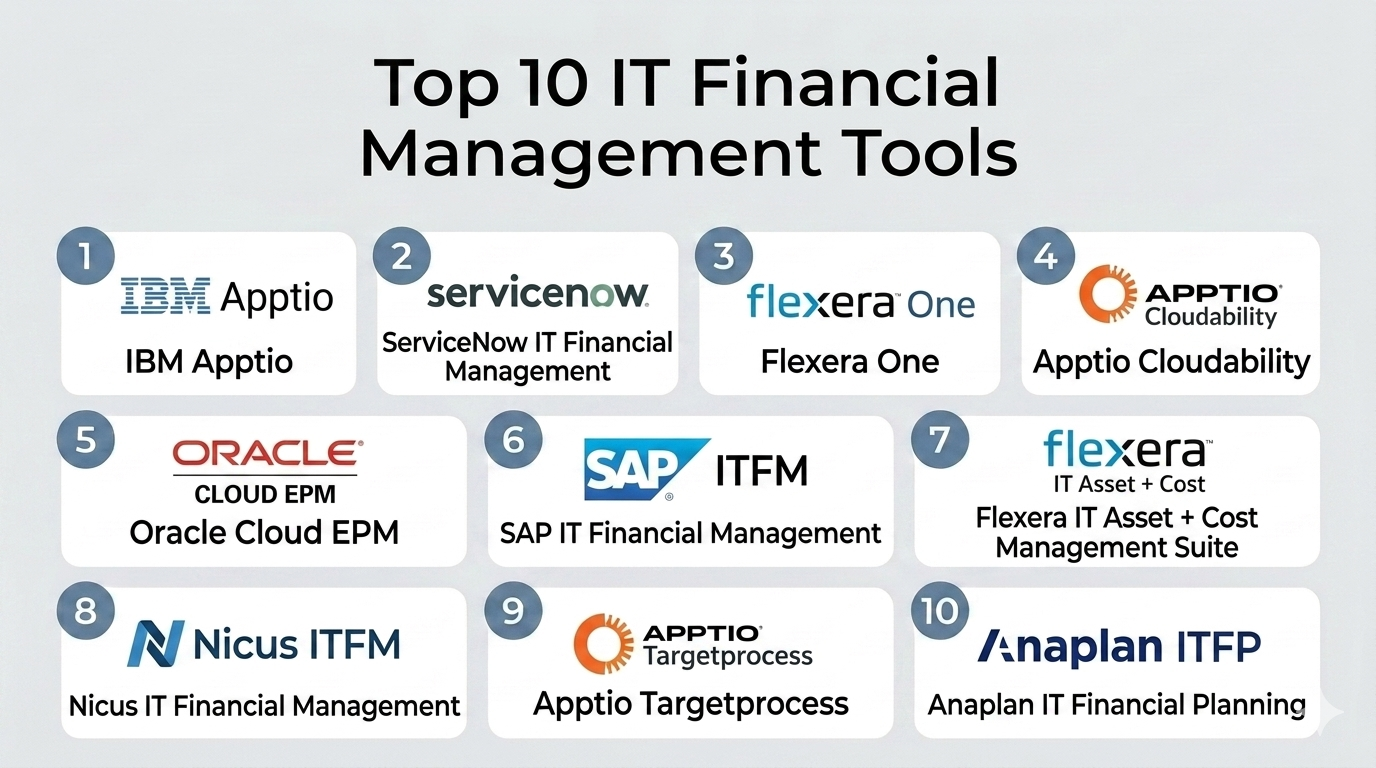
Top 10 IT Financial Management Tools
#1 — IBM Apptio
Short description :
IBM Apptio is widely recognized as the leading enterprise IT Financial Management platform. It provides deep visibility into IT spending, enabling organizations to model, allocate, and optimize costs across hybrid IT environments. It supports Technology Business Management (TBM) frameworks and is heavily used by large enterprises for financial transparency and cost optimization.
Key Features
- IT cost transparency and allocation modeling
- TBM (Technology Business Management) framework support
- Cloud and hybrid IT cost analysis
- Chargeback and showback reporting
- Budgeting and forecasting automation
- AI-driven cost optimization insights
- Integration with ERP and FinOps systems
Pros
- Industry-leading ITFM maturity
- Extremely powerful cost modeling capabilities
- Strong enterprise adoption and scalability
Cons
- High complexity and steep learning curve
- Expensive for small and mid-size organizations
- Requires significant implementation effort
Platforms / Deployment
- Web / Windows / Linux
- Cloud / Hybrid
Security & Compliance
- SSO/SAML
- MFA
- Encryption
- Audit logs
- RBAC
- Enterprise compliance support (varies by deployment)
Integrations & Ecosystem
Deep integration ecosystem across enterprise IT:
- ERP systems (SAP, Oracle)
- ITSM platforms (ServiceNow, etc.)
- Cloud providers (AWS, Azure, GCP)
- FinOps tools and data pipelines
- API-driven data ingestion
Support & Community
Strong enterprise-grade support with extensive documentation and partner ecosystem.
#2 — ServiceNow IT Financial Management
Short description :
ServiceNow ITFM is a financial management module embedded within the ServiceNow ecosystem. It connects IT spending directly to operational workflows, making it easier to align financial planning with IT service delivery. It is widely used by enterprises already invested in ServiceNow ITSM.
Key Features
- IT cost planning and budgeting workflows
- Service-based cost allocation models
- Chargeback and showback automation
- CMDB-integrated financial tracking
- Cloud and hybrid cost visibility
- Financial forecasting dashboards
- Workflow-driven approvals
Pros
- Strong ITSM + ITFM integration
- Highly automated workflow management
- Unified platform for IT operations and finance
Cons
- Expensive licensing model
- Requires ServiceNow ecosystem dependency
- Complex configuration for advanced use cases
Platforms / Deployment
- Web
- Cloud
Security & Compliance
- SSO/SAML
- MFA
- RBAC
- Audit logs
- Enterprise compliance support
Integrations & Ecosystem
- ServiceNow ITSM / ITOM
- ERP systems
- Cloud platforms
- Identity providers
- API ecosystem
Support & Community
Large enterprise ecosystem with strong knowledge base and global support.
#3 — Flexera One (ITFM + FinOps)
Short description :
Flexera One combines IT Financial Management with FinOps capabilities, focusing on cloud cost optimization, SaaS management, and hybrid IT visibility. It is widely used for organizations trying to unify IT asset and cloud cost governance.
Key Features
- Cloud cost allocation and optimization
- SaaS spend visibility and governance
- IT asset lifecycle cost tracking
- FinOps optimization recommendations
- Budgeting and forecasting tools
- License and software cost management
- Hybrid IT cost modeling
Pros
- Strong FinOps + ITFM combination
- Excellent multi-cloud cost visibility
- Strong SaaS optimization capabilities
Cons
- Can be complex to configure
- UI can feel dense for new users
- Requires clean tagging strategy for best results
Platforms / Deployment
- Web
- Cloud
Security & Compliance
- SSO/SAML
- MFA
- Encryption
- Audit logs
- RBAC
Integrations & Ecosystem
- AWS, Azure, GCP
- ERP systems
- ITSM platforms
- SaaS providers
- API integrations
Support & Community
Strong enterprise and FinOps community presence.
#4 — Apptio Cloudability (IBM)
Short description :
Cloudability is a FinOps-focused extension of IBM Apptio, designed specifically for cloud cost management and optimization across AWS, Azure, and Google Cloud.
Key Features
- Multi-cloud cost visibility
- Usage-based cost allocation
- RI/SP (commitment) optimization
- Kubernetes cost tracking
- Anomaly detection for cloud spend
- Forecasting and budgeting
- FinOps reporting dashboards
Pros
- Best-in-class FinOps capabilities
- Strong cloud optimization insights
- Deep integration with cloud providers
Cons
- Narrow focus on cloud (less ITFM breadth)
- Requires mature FinOps practice
- Premium pricing
Platforms / Deployment
- Web
- Cloud
Security & Compliance
- SSO/SAML
- MFA
- Encryption
- Audit logs
Integrations & Ecosystem
- Cloud providers
- Data warehouses
- FinOps tools
- ERP/ITFM integration via Apptio suite
Support & Community
Strong enterprise FinOps ecosystem support.
#5 — Oracle Cloud EPM (IT Financial Planning)
Short description :
Oracle Cloud EPM provides enterprise-grade financial planning and IT cost modeling capabilities integrated with Oracle’s broader ERP ecosystem.
Key Features
- IT budgeting and forecasting
- Financial consolidation and planning
- Cost allocation modeling
- Scenario planning for IT investments
- KPI dashboards for IT spend
- Workforce and resource planning
- ERP-integrated financial analytics
Pros
- Strong financial planning capabilities
- Deep ERP integration
- Scalable enterprise architecture
Cons
- Complex setup and configuration
- Best within Oracle ecosystem
- High learning curve
Platforms / Deployment
- Web
- Cloud / Hybrid
Security & Compliance
- SSO/SAML
- MFA
- RBAC
- Audit logs
Integrations & Ecosystem
- Oracle ERP Cloud
- Enterprise data platforms
- ITSM systems
- API integrations
Support & Community
Strong enterprise financial ecosystem support.
#6 — SAP IT Financial Management
Short description :
SAP ITFM integrates IT cost management directly into SAP ERP environments, making it ideal for organizations already standardized on SAP systems.
Key Features
- IT cost allocation and tracking
- Budgeting and financial planning
- Service-based costing models
- ERP-integrated reporting
- Asset and service cost mapping
- Chargeback/showback reporting
- Compliance-ready financial reporting
Pros
- Deep ERP alignment
- Strong financial governance capabilities
- Scalable for global enterprises
Cons
- Complex implementation
- Requires SAP ecosystem dependency
- Less flexible outside SAP environments
Platforms / Deployment
- Web
- Cloud / On-prem
Security & Compliance
- SSO/SAML
- MFA
- RBAC
- Audit logs
Integrations & Ecosystem
- SAP ERP suite
- Finance systems
- ITSM platforms
- Enterprise data tools
Support & Community
Extensive global enterprise support network.
#7 — Flexera IT Asset + Cost Management Suite
Short description :
Flexera’s broader ITFM suite extends beyond cloud into full IT asset lifecycle and cost governance across software, hardware, and SaaS environments.
Key Features
- IT asset inventory tracking
- Software license optimization
- SaaS spend governance
- Hybrid IT cost visibility
- Financial reporting dashboards
- Cost optimization recommendations
- Compliance tracking
Pros
- Strong asset + financial integration
- Good SaaS governance capabilities
- Flexible deployment model
Cons
- Requires structured data inputs
- Complexity in large deployments
- Not purely finance-focused
Platforms / Deployment
- Web
- Cloud
Security & Compliance
- SSO/SAML
- MFA
- Audit logs
- RBAC
Integrations & Ecosystem
- ERP systems
- SaaS platforms
- Cloud providers
- ITSM systems
Support & Community
Strong enterprise and ITAM community presence.
#8 — Nicus IT Financial Management
Short description :
Nicus ITFM is a dedicated IT financial management platform focused on cost transparency, budgeting, and service-level financial modeling.
Key Features
- IT cost allocation modeling
- Budget planning and forecasting
- Service costing and rate cards
- Chargeback/showback automation
- Financial analytics dashboards
- Scenario planning tools
- IT spend optimization insights
Pros
- Strong ITFM specialization
- Good modeling flexibility
- Focused financial transparency
Cons
- Smaller ecosystem
- Less cloud-native than competitors
- Limited FinOps depth
Platforms / Deployment
- Web
- Cloud / Hybrid
Security & Compliance
- SSO/SAML
- MFA
- RBAC
- Audit logs
Integrations & Ecosystem
- ERP systems
- ITSM tools
- Data warehouses
- API integrations
Support & Community
Mid-market to enterprise support structure.
#9 — Apptio Targetprocess (Planning Layer)
Short description :
Targetprocess focuses on strategic IT planning and portfolio financial management, often used alongside Apptio’s broader ITFM suite.
Key Features
- IT portfolio financial planning
- Budget allocation across initiatives
- Resource planning dashboards
- Agile financial alignment
- Scenario modeling
- Investment tracking
- Strategic roadmap planning
Pros
- Strong strategic planning capabilities
- Good visualization of IT investments
- Useful for portfolio governance
Cons
- Not full ITFM replacement
- Requires integration with other tools
- Less operational financial depth
Platforms / Deployment
- Web
- Cloud
Security & Compliance
- SSO/SAML
- MFA
- RBAC
- Audit logs
Integrations & Ecosystem
- Apptio ecosystem
- ERP systems
- ITSM tools
- Agile planning tools
Support & Community
Strong enterprise support via IBM ecosystem.
#10 — Anaplan IT Financial Planning
Short description :
Anaplan provides connected planning capabilities, including IT financial planning and forecasting across enterprise environments.
Key Features
- IT budgeting and forecasting
- Scenario-based financial modeling
- Workforce and resource planning
- Real-time financial dashboards
- Multi-dimensional cost modeling
- Collaboration workflows
- Planning automation
Pros
- Strong planning and forecasting engine
- Highly flexible modeling system
- Good enterprise collaboration features
Cons
- Not IT-specific (general planning tool)
- Requires modeling expertise
- Less built-in IT cost intelligence
Platforms / Deployment
- Web
- Cloud
Security & Compliance
- SSO/SAML
- MFA
- RBAC
- Audit logs
Integrations & Ecosystem
- ERP systems
- Data warehouses
- ITFM tools
- API integrations
Support & Community
Strong enterprise planning ecosystem support.
Comparison Table (Top 10)
| Tool Name | Best For | Platform(s) Supported | Deployment | Standout Feature | Public Rating |
|---|---|---|---|---|---|
| IBM Apptio | Enterprise ITFM | Multi-platform | Cloud/Hybrid | TBM cost modeling | N/A |
| ServiceNow ITFM | ITSM-driven orgs | Web | Cloud | Workflow-based ITFM | N/A |
| Flexera One | FinOps + ITFM | Multi-platform | Cloud | SaaS + cloud cost governance | N/A |
| Cloudability | Cloud FinOps | Multi-platform | Cloud | Cloud optimization | N/A |
| Oracle EPM | Financial planning | Multi-platform | Cloud/Hybrid | ERP financial modeling | N/A |
| SAP ITFM | SAP enterprises | Multi-platform | On-prem/Cloud | ERP integration | N/A |
| Flexera Suite | IT asset + SaaS | Multi-platform | Cloud | SaaS governance | N/A |
| Nicus ITFM | Pure ITFM | Web | Cloud/Hybrid | Cost allocation modeling | N/A |
| Targetprocess | Portfolio planning | Web | Cloud | IT investment planning | N/A |
| Anaplan | Enterprise planning | Web | Cloud | Scenario forecasting | N/A |
Evaluation & IT Financial Management Tools
| Tool Name | Core (25%) | Ease (15%) | Integrations (15%) | Security (10%) | Performance (10%) | Support (10%) | Value (15%) | Weighted Total |
|---|---|---|---|---|---|---|---|---|
| IBM Apptio | 9 | 7 | 9 | 9 | 9 | 9 | 6 | 8.4 |
| ServiceNow ITFM | 9 | 7 | 9 | 9 | 9 | 9 | 6 | 8.3 |
| Flexera One | 8 | 8 | 9 | 8 | 8 | 8 | 7 | 8.1 |
| Cloudability | 8 | 8 | 9 | 8 | 8 | 8 | 7 | 8.1 |
| Oracle EPM | 8 | 7 | 9 | 9 | 8 | 9 | 6 | 8.0 |
| SAP ITFM | 9 | 6 | 9 | 9 | 8 | 9 | 6 | 8.0 |
| Flexera Suite | 8 | 8 | 8 | 8 | 8 | 8 | 7 | 7.9 |
| Nicus ITFM | 8 | 8 | 7 | 8 | 8 | 8 | 7 | 7.8 |
| Targetprocess | 7 | 8 | 8 | 8 | 8 | 8 | 7 | 7.7 |
| Anaplan | 7 | 8 | 8 | 8 | 8 | 8 | 7 | 7.7 |
These scores reflect comparative enterprise suitability across cost transparency, planning depth, integration strength, and operational usability. In practice, ITFM success depends heavily on data quality, governance maturity, and cross-team alignment between IT and finance.
Which IT Financial Management Tools
Solo / Freelancer
ITFM tools are generally not required. Basic budgeting tools or cloud billing dashboards are sufficient.
SMB
SMBs may benefit from lightweight FinOps + cost tracking tools like Flexera or simplified SaaS spend platforms.
Mid-Market
Mid-market organizations benefit from Nicus, Flexera One, or Cloudability depending on cloud maturity.
Enterprise
Large enterprises require full ITFM ecosystems such as IBM Apptio, ServiceNow ITFM, SAP, or Oracle.
Budget vs Premium
- Budget-friendly: Nicus, Targetprocess (limited scope)
- Mid-tier: Flexera, Cloudability, Anaplan
- Premium enterprise: IBM Apptio, ServiceNow, SAP, Oracle
Feature Depth vs Ease of Use
- Deepest ITFM capabilities: IBM Apptio, SAP, ServiceNow
- Easiest to adopt: Flexera, Anaplan
- Balanced tools: Cloudability, Nicus
Integration & Scalability
- Enterprise ecosystems: SAP, Oracle, ServiceNow, IBM
- FinOps leaders: Cloudability, Flexera
- Planning-focused: Anaplan, Targetprocess
Financial Governance & Compliance Needs
Organizations requiring strict financial governance should prioritize:
- Cost allocation accuracy
- Chargeback/showback reporting
- Audit-ready financial models
- ERP integration
- Multi-cloud visibility
IBM Apptio, SAP, and ServiceNow lead in governance-heavy environments.
Frequently Asked Questions (FAQs)
1. What is IT Financial Management (ITFM)?
ITFM is the practice of managing, allocating, and optimizing IT costs across an organization using structured financial models.
2. How is ITFM different from FinOps?
ITFM focuses on enterprise IT cost management, while FinOps focuses primarily on cloud cost optimization.
3. Why are ITFM tools important?
They provide visibility into IT spending and help optimize budgets, improve accountability, and align IT with business value.
4. Who uses ITFM tools?
CIOs, CFOs, IT finance teams, FinOps teams, and enterprise architects.
5. Can ITFM tools manage cloud costs?
Yes, most modern ITFM platforms include cloud cost management features.
6. What is chargeback in ITFM?
Chargeback allocates IT costs to specific departments or business units based on usage.
7. What is showback?
Showback reports IT usage costs without charging departments directly.
8. Do ITFM tools integrate with ERP systems?
Yes, ERP integration is a core feature of enterprise ITFM platforms.
9. What is TBM in ITFM?
TBM (Technology Business Management) is a framework for standardizing IT cost classification and reporting.
10. Are ITFM tools cloud-based?
Most modern ITFM tools are cloud or hybrid, though some enterprise systems support on-prem deployments.
11. What are common challenges in ITFM?
Data quality, system integration, and organizational alignment between IT and finance teams.
12. What is the biggest trend in ITFM?
AI-driven cost forecasting and convergence with FinOps practices.
Conclusion
IT Financial Management tools have become essential for modern enterprises dealing with complex hybrid IT environments, rising cloud costs, and increasing pressure from leadership to demonstrate clear business value from technology investments. Platforms like IBM Apptio, ServiceNow ITFM, SAP, and Oracle dominate enterprise environments due to their depth, governance capabilities, and integration strength. Meanwhile, Flexera and Cloudability bridge the gap between ITFM and FinOps, helping organizations optimize cloud and SaaS spending more dynamically.
