Introduction
Blockchain Platforms are distributed digital infrastructure systems that enable secure, transparent, and decentralized applications, transactions, and data management without relying on centralized intermediaries. These platforms use cryptographic consensus mechanisms and distributed ledgers to maintain trust, immutability, and transparency across networks.
In blockchain platforms are evolving far beyond cryptocurrency use cases. Enterprises are increasingly adopting blockchain for supply chain visibility, decentralized finance (DeFi), digital identity, tokenization, AI governance, cross-border payments, smart contracts, and secure data sharing. Modern blockchain ecosystems are also integrating AI, confidential computing, privacy-preserving analytics, and scalable layer-2 architectures to support enterprise-grade workloads.
Common real-world use cases include:
- Decentralized applications (dApps)
- Smart contract automation
- Digital asset management
- Cross-border financial transactions
- Supply chain traceability
- Identity and access management
- Tokenization of real-world assets
When evaluating Blockchain Platforms, buyers should consider:
- Scalability and transaction throughput
- Smart contract capabilities
- Ecosystem maturity
- Security architecture
- Developer tooling
- Consensus mechanisms
- Interoperability support
- Enterprise adoption
- Governance models
- Deployment flexibility
Best for: Enterprises, fintech companies, AI and Web3 startups, supply chain operators, digital asset platforms, and organizations building decentralized applications or secure distributed systems.
Not ideal for: Simple internal databases, lightweight applications with minimal trust requirements, or organizations without distributed systems expertise.
Key Trends in Blockchain Platforms
- Layer-2 scaling adoption is accelerating rapidly.
- Enterprise blockchain interoperability is improving.
- AI and blockchain integration is becoming more common.
- Privacy-preserving blockchain architectures are gaining traction.
- Tokenization of real-world assets is expanding.
- Regulatory frameworks are influencing enterprise blockchain adoption.
- Decentralized identity systems are maturing.
- Hybrid blockchain deployments are becoming more enterprise-friendly.
- Energy-efficient consensus models are replacing older architectures.
- Blockchain analytics and governance tooling are improving significantly.
How We Selected These Tools (Methodology)
The blockchain platforms in this list were selected based on ecosystem maturity, scalability, enterprise adoption, smart contract capabilities, developer activity, and infrastructure relevance.
Selection criteria included:
- Smart contract functionality
- Network scalability and performance
- Enterprise ecosystem maturity
- Security architecture
- Developer tooling quality
- Interoperability support
- Governance flexibility
- Institutional adoption
- Open-source community activity
- Long-term infrastructure relevance
The final list includes public blockchain networks, enterprise blockchain ecosystems, smart contract platforms, and scalable decentralized infrastructure providers.
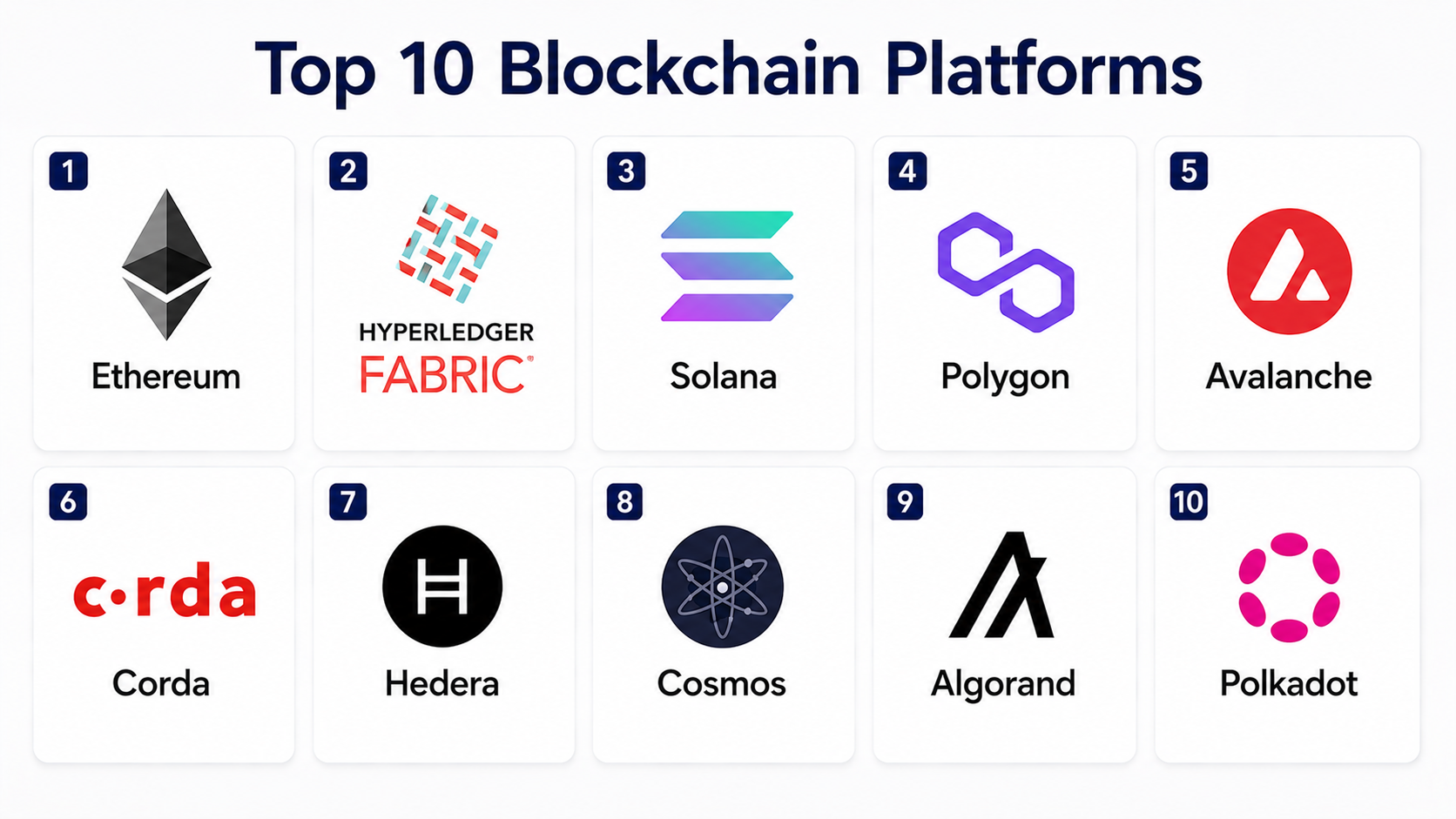
Blockchain Platforms
#1 — Ethereum
Short description :
Ethereum is the leading smart contract blockchain platform used for decentralized applications, decentralized finance, NFTs, tokenization, and enterprise blockchain innovation.
Key Features
- Smart contract execution
- Large decentralized application ecosystem
- Layer-2 scaling support
- Ethereum Virtual Machine (EVM)
- Decentralized governance
- Enterprise blockchain compatibility
- Broad developer ecosystem
Pros
- Largest smart contract ecosystem
- Strong developer community
- Broad enterprise and Web3 adoption
Cons
- Mainnet transaction costs can fluctuate
- Scalability challenges without layer-2 solutions
- Smart contract complexity risks
Platforms / Deployment
- Linux / Windows / macOS
- Cloud / Self-hosted / Hybrid
Security & Compliance
- Cryptographic consensus
- Smart contract security tooling
- Audit ecosystem support
Integrations & Ecosystem
Ethereum integrates with nearly every major Web3 and blockchain infrastructure ecosystem.
- MetaMask
- Layer-2 networks
- DeFi protocols
- APIs
- Cloud blockchain infrastructure
Support & Community
Ethereum has one of the largest global blockchain developer communities.
#2 — Hyperledger Fabric
Short description :
Hyperledger Fabric is an enterprise-focused blockchain framework designed for permissioned distributed ledger applications and secure business collaboration.
Key Features
- Permissioned blockchain architecture
- Modular consensus support
- Enterprise governance controls
- Private transaction channels
- Smart contract functionality
- Identity management
- Scalable enterprise workflows
Pros
- Strong enterprise governance
- Good privacy controls
- Flexible modular architecture
Cons
- More complex deployment process
- Smaller public ecosystem than Ethereum
- Less suited for open decentralized applications
Platforms / Deployment
- Linux
- Cloud / Self-hosted / Hybrid
Security & Compliance
- RBAC
- Identity management
- Encryption
- Audit support
Integrations & Ecosystem
Hyperledger Fabric integrates with enterprise IT and cloud infrastructure ecosystems.
- Kubernetes
- Cloud infrastructure
- Enterprise IAM systems
- APIs
- Analytics platforms
Support & Community
Hyperledger Fabric has strong enterprise and open-source ecosystem support.
#3 — Solana
Short description :
Solana is a high-performance blockchain platform focused on scalable decentralized applications, digital assets, and low-latency transaction processing.
Key Features
- High transaction throughput
- Low transaction costs
- Smart contract support
- Fast consensus architecture
- Web3 application ecosystem
- NFT infrastructure
- Developer tooling
Pros
- Excellent scalability performance
- Fast transaction finality
- Strong developer momentum
Cons
- Validator infrastructure complexity
- Network stability concerns historically
- Ecosystem maturity still evolving
Platforms / Deployment
- Linux
- Cloud / Self-hosted
Security & Compliance
- Cryptographic consensus
- Validator security architecture
Integrations & Ecosystem
Solana integrates with modern decentralized application ecosystems.
- Wallet platforms
- APIs
- NFT infrastructure
- DeFi protocols
- Web3 developer tools
Support & Community
Solana has a rapidly growing developer and startup ecosystem.
#4 — Polygon
Short description :
Polygon is a blockchain scaling platform that enhances Ethereum scalability through layer-2 and sidechain infrastructure for decentralized applications.
Key Features
- Ethereum scaling support
- Layer-2 infrastructure
- Fast transaction processing
- EVM compatibility
- Smart contract deployment
- Web3 interoperability
- Developer-friendly tooling
Pros
- Strong Ethereum compatibility
- Lower transaction costs
- Broad Web3 ecosystem support
Cons
- Dependence on Ethereum ecosystem
- Layer-2 complexity for some deployments
- Governance evolution ongoing
Platforms / Deployment
- Linux
- Cloud / Hybrid
Security & Compliance
- Cryptographic security
- Smart contract tooling
- Network validation controls
Integrations & Ecosystem
Polygon integrates deeply with Ethereum and decentralized infrastructure ecosystems.
- Ethereum tooling
- APIs
- Wallet platforms
- DeFi ecosystems
- NFT marketplaces
Support & Community
Polygon has strong Web3 and developer ecosystem momentum.
#5 — Avalanche
Short description :
Avalanche is a blockchain platform designed for scalable decentralized applications, custom blockchain networks, and enterprise digital asset workflows.
Key Features
- High-performance consensus
- Custom subnet support
- Smart contract execution
- Fast transaction finality
- EVM compatibility
- Enterprise blockchain flexibility
- Tokenization support
Pros
- Strong scalability architecture
- Flexible blockchain customization
- Good enterprise infrastructure potential
Cons
- Smaller ecosystem than Ethereum
- Advanced subnet configuration complexity
- Ecosystem fragmentation risks
Platforms / Deployment
- Linux
- Cloud / Hybrid
Security & Compliance
- Validator security architecture
- Cryptographic consensus
- Network governance controls
Integrations & Ecosystem
Avalanche integrates with decentralized finance and enterprise blockchain infrastructure.
- APIs
- Wallet ecosystems
- EVM tooling
- Cloud infrastructure
- DeFi platforms
Support & Community
Avalanche has growing enterprise and Web3 ecosystem support.
#6 — Corda
Short description :
Corda is an enterprise distributed ledger platform focused on regulated business workflows, financial services, and secure multi-party transactions.
Key Features
- Permissioned distributed ledger
- Financial transaction workflows
- Enterprise identity controls
- Privacy-preserving architecture
- Smart contract support
- Regulatory-focused design
- Secure business collaboration
Pros
- Strong financial industry relevance
- Good enterprise governance controls
- Privacy-oriented architecture
Cons
- Less suitable for public decentralized ecosystems
- Enterprise deployment complexity
- Smaller developer ecosystem
Platforms / Deployment
- Linux / Windows
- Cloud / Hybrid
Security & Compliance
- RBAC
- Identity management
- Encryption
- Audit capabilities
Integrations & Ecosystem
Corda integrates with enterprise banking and regulated IT systems.
- Banking infrastructure
- APIs
- Cloud environments
- Identity systems
- Analytics platforms
Support & Community
Corda provides enterprise support and regulated industry onboarding resources.
#7 — Hedera
Short description :
Hedera is a distributed ledger platform using hashgraph consensus technology for scalable, low-latency enterprise and decentralized applications.
Key Features
- Hashgraph consensus
- High transaction throughput
- Enterprise governance council
- Tokenization support
- Smart contract capabilities
- Low-latency transaction processing
- Sustainable infrastructure design
Pros
- Strong enterprise governance structure
- Good scalability performance
- Energy-efficient architecture
Cons
- Smaller decentralized ecosystem
- Governance model differs from traditional blockchains
- Developer adoption still growing
Platforms / Deployment
- Linux
- Cloud / Hybrid
Security & Compliance
- Cryptographic consensus
- Governance security controls
- Audit support
Integrations & Ecosystem
Hedera integrates with enterprise and Web3 ecosystems.
- APIs
- Wallet systems
- Enterprise applications
- Tokenization infrastructure
- Cloud services
Support & Community
Hedera has growing enterprise and developer ecosystem support.
#8 — Cosmos
Short description :
Cosmos is a blockchain ecosystem designed for interoperability and communication between independent blockchain networks.
Key Features
- Blockchain interoperability
- Cosmos SDK
- Cross-chain communication
- Scalable network architecture
- Custom blockchain support
- Decentralized governance
- Modular ecosystem design
Pros
- Strong interoperability capabilities
- Flexible blockchain customization
- Broad ecosystem expansion potential
Cons
- Cross-chain complexity
- Ecosystem fragmentation challenges
- Governance coordination complexity
Platforms / Deployment
- Linux
- Cloud / Hybrid
Security & Compliance
- Validator-based security
- Governance controls
- Cryptographic consensus
Integrations & Ecosystem
Cosmos integrates with interoperable blockchain ecosystems and decentralized infrastructure.
- APIs
- Wallet ecosystems
- Blockchain SDKs
- Cross-chain infrastructure
- Web3 applications
Support & Community
Cosmos has an active global blockchain developer community.
#9 — Algorand
Short description :
Algorand is a blockchain platform focused on scalable digital asset infrastructure, tokenization, and enterprise-grade decentralized applications.
Key Features
- Pure proof-of-stake consensus
- Fast transaction finality
- Tokenization support
- Smart contract capabilities
- Low transaction costs
- Enterprise blockchain workflows
- Sustainable infrastructure
Pros
- Strong scalability efficiency
- Energy-efficient consensus
- Good enterprise transaction support
Cons
- Smaller developer ecosystem
- Lower public visibility than Ethereum
- Ecosystem maturity still developing
Platforms / Deployment
- Linux
- Cloud / Hybrid
Security & Compliance
- Cryptographic security
- Validator architecture
- Governance controls
Integrations & Ecosystem
Algorand integrates with digital asset and enterprise blockchain ecosystems.
- APIs
- Wallet platforms
- Tokenization systems
- Cloud infrastructure
- Enterprise applications
Support & Community
Algorand has growing enterprise and developer ecosystem support.
#10 — Polkadot
Short description :
Polkadot is a multi-chain blockchain platform designed for interoperability, scalability, and secure communication across decentralized networks.
Key Features
- Multi-chain interoperability
- Shared security architecture
- Custom parachain support
- Cross-chain communication
- Decentralized governance
- Smart contract support
- Scalable infrastructure
Pros
- Strong interoperability design
- Flexible blockchain ecosystem
- Shared security advantages
Cons
- Ecosystem complexity
- Advanced governance mechanisms
- Steeper onboarding for developers
Platforms / Deployment
- Linux
- Cloud / Hybrid
Security & Compliance
- Shared validator security
- Cryptographic consensus
- Governance protections
Integrations & Ecosystem
Polkadot integrates with interoperable blockchain ecosystems and decentralized infrastructure.
- Wallet ecosystems
- APIs
- Cross-chain infrastructure
- Smart contract systems
- Web3 applications
Support & Community
Polkadot has a strong global blockchain developer community.
Comparison Table (Top 10)
| Tool Name | Best For | Platform(s) Supported | Deployment | Standout Feature | Public Rating |
|---|---|---|---|---|---|
| Ethereum | Smart contracts and dApps | Linux, Windows, macOS | Hybrid | Largest smart contract ecosystem | N/A |
| Hyperledger Fabric | Enterprise blockchain workflows | Linux | Hybrid | Permissioned enterprise governance | N/A |
| Solana | High-speed decentralized applications | Linux | Cloud | High transaction throughput | N/A |
| Polygon | Ethereum scaling | Linux | Hybrid | Layer-2 Ethereum scalability | N/A |
| Avalanche | Custom blockchain infrastructure | Linux | Hybrid | Subnet architecture | N/A |
| Corda | Regulated enterprise transactions | Linux, Windows | Hybrid | Financial workflow specialization | N/A |
| Hedera | Enterprise distributed ledger infrastructure | Linux | Hybrid | Hashgraph consensus | N/A |
| Cosmos | Blockchain interoperability | Linux | Hybrid | Cross-chain communication | N/A |
| Algorand | Enterprise digital asset infrastructure | Linux | Hybrid | Pure proof-of-stake consensus | N/A |
| Polkadot | Multi-chain blockchain ecosystems | Linux | Hybrid | Shared security interoperability | N/A |
Evaluation & Blockchain Platforms
| Tool Name | Core (25%) | Ease (15%) | Integrations (15%) | Security (10%) | Performance (10%) | Support (10%) | Value (15%) | Weighted Total |
|---|---|---|---|---|---|---|---|---|
| Ethereum | 10 | 8 | 10 | 9 | 7 | 10 | 8 | 8.9 |
| Hyperledger Fabric | 9 | 7 | 8 | 9 | 8 | 8 | 7 | 8.0 |
| Solana | 8 | 8 | 8 | 8 | 10 | 8 | 9 | 8.4 |
| Polygon | 9 | 8 | 9 | 8 | 8 | 8 | 9 | 8.5 |
| Avalanche | 8 | 7 | 8 | 8 | 9 | 8 | 8 | 8.0 |
| Corda | 8 | 7 | 8 | 9 | 8 | 8 | 7 | 7.9 |
| Hedera | 8 | 8 | 7 | 8 | 9 | 8 | 8 | 8.0 |
| Cosmos | 8 | 7 | 9 | 8 | 8 | 8 | 8 | 8.0 |
| Algorand | 8 | 8 | 7 | 8 | 9 | 7 | 8 | 7.9 |
| Polkadot | 8 | 7 | 9 | 8 | 8 | 8 | 8 | 8.0 |
These scores are comparative rather than absolute. Some blockchain platforms focus heavily on decentralized ecosystems and smart contracts, while others prioritize enterprise governance, interoperability, or scalability. Buyers should evaluate platforms based on infrastructure requirements, ecosystem maturity, regulatory obligations, and long-term application goals.
Which Blockchain Platforms
Solo / Freelancer
Independent developers and Web3 builders may prefer:
- Ethereum
- Polygon
- Solana
These platforms provide broad tooling ecosystems and strong decentralized application support.
SMB
Small and medium-sized businesses should prioritize developer accessibility and scalable infrastructure.
Recommended options:
- Polygon
- Solana
- Algorand
Mid-Market
Mid-sized organizations often require stronger governance and interoperability support.
Recommended options:
- Avalanche
- Cosmos
- Hedera
Enterprise
Large enterprises with advanced compliance and operational requirements should prioritize governance and deployment maturity.
Recommended options:
- Hyperledger Fabric
- Corda
- Ethereum
- Hedera
Budget vs Premium
- Budget-friendly: Polygon, Solana
- Premium enterprise: Hyperledger Fabric, Corda
- Balanced value: Avalanche, Algorand
Feature Depth vs Ease of Use
- Deepest smart contract ecosystem: Ethereum
- Best scalability: Solana
- Best interoperability: Cosmos and Polkadot
Integrations & Scalability
- Best enterprise integration: Hyperledger Fabric
- Best Web3 ecosystem integration: Ethereum
- Best scalable infrastructure: Avalanche
Security & Compliance Needs
Organizations with strong governance and regulatory requirements should prioritize:
- Hyperledger Fabric
- Corda
- Hedera
- Ethereum
Frequently Asked Questions (FAQs)
1. What is a blockchain platform?
A blockchain platform is distributed infrastructure that enables secure, decentralized applications, transactions, and digital asset operations using cryptographic consensus systems.
2. Why are blockchain platforms important?
They enable transparent, tamper-resistant, and decentralized systems without relying entirely on centralized intermediaries.
3. Which industries use blockchain most?
Finance, supply chain, healthcare, cybersecurity, gaming, logistics, and digital identity industries are major adopters.
4. What are smart contracts?
Smart contracts are programmable agreements that automatically execute actions when predefined conditions are met.
5. Are blockchain platforms secure?
Most leading platforms use strong cryptographic security, although application-level vulnerabilities and governance risks still exist.
6. What is blockchain interoperability?
Interoperability enables different blockchain networks to exchange information and assets securely.
7. Are enterprise blockchain platforms different from public blockchains?
Yes. Enterprise platforms often use permissioned access, governance controls, and private transaction models.
8. What should buyers prioritize when selecting a blockchain platform?
Buyers should evaluate scalability, governance, smart contract capabilities, ecosystem maturity, interoperability, and deployment flexibility.
9. Can blockchain support AI applications?
Yes. Blockchain is increasingly used for AI governance, secure data sharing, decentralized AI marketplaces, and model provenance tracking.
10. Is blockchain only used for cryptocurrency?
No. Modern blockchain platforms support enterprise workflows, digital identity, supply chain tracking, healthcare collaboration, and many other use cases.
Conclusion
Blockchain Platforms are evolving into foundational infrastructure for decentralized applications, digital assets, enterprise collaboration, AI governance, and secure distributed computing. As organizations increasingly prioritize transparency, interoperability, automation, and privacy-preserving digital operations, blockchain ecosystems are becoming significantly more enterprise-ready and scalable. Ethereum continues to dominate the smart contract ecosystem, while Polygon and Solana address scalability and developer accessibility challenges.
