Introduction
Recognition & Rewards Platforms help organizations appreciate employees, celebrate achievements, reward good performance, and build a stronger workplace culture. In simple words, these tools make it easier for managers and teammates to say “thank you,” recognize effort, give points, send rewards, celebrate milestones, and encourage positive behavior across the company.
Employee recognition is important because people want to feel valued for their work. When recognition is done consistently, it can improve morale, engagement, retention, teamwork, and performance. These platforms are especially useful for distributed, hybrid, and global teams where employees may not always receive appreciation face-to-face.
Common use cases include peer-to-peer recognition, manager recognition, service anniversary rewards, birthday celebrations, performance-based rewards, employee engagement campaigns, wellness incentives, sales rewards, and company value-based recognition.
Buyers should evaluate ease of use, reward catalog quality, global availability, budget controls, integrations, reporting, tax handling, customization, employee adoption, security, admin workflows, and scalability.
Best for: HR teams, people operations teams, employee experience leaders, department heads, managers, growing companies, enterprises, remote teams, sales teams, and organizations that want to improve employee engagement and culture.
Not ideal for: very small teams where recognition can be handled personally, companies without a clear recognition culture, or organizations that only need payroll-based bonuses instead of social recognition and flexible rewards.
Key Trends in Recognition & Rewards Platforms
- Peer-to-peer recognition is becoming more common, allowing employees to appreciate each other instead of waiting only for manager-led recognition.
- Company values-based recognition is growing, where employees are rewarded for behaviors that reflect teamwork, innovation, ownership, customer focus, or learning.
- Global reward catalogs are becoming important, especially for organizations with employees across different countries and currencies.
- Personalized rewards are replacing generic gifts, as employees prefer choosing rewards that match their interests, region, and lifestyle.
- Recognition is becoming part of employee experience strategy, not just an HR activity. It now connects with engagement, retention, performance, and culture.
- Integration with HRIS and collaboration tools is a key requirement, because recognition should fit into daily workflows instead of becoming another separate system.
- Analytics are becoming more important, helping HR teams understand recognition patterns, manager participation, engagement levels, and team culture gaps.
- Non-monetary recognition is gaining attention, including badges, shout-outs, social feeds, awards, leaderboards, and milestone celebrations.
- Budget control and governance matter more, especially for companies that need approval workflows, reward limits, tax reporting, and cost visibility.
- Mobile-friendly recognition is now expected, especially for frontline employees, distributed teams, and workers who do not spend all day on a desktop.
How We Selected These Tools
The tools below were selected using practical business-focused evaluation logic.
- Market recognition: Platforms commonly known in employee recognition, rewards, engagement, and people experience categories were prioritized.
- Feature completeness: Peer recognition, manager recognition, rewards, milestones, analytics, integrations, and admin controls were evaluated.
- Ease of use: Recognition platforms must be simple enough for employees and managers to use regularly.
- Reward flexibility: Gift cards, points, donations, merchandise, experiences, and global reward availability were considered.
- Employee engagement value: Tools that support culture, values, social recognition, and participation were given stronger consideration.
- Integrations and ecosystem: HRIS, Slack, Microsoft Teams, payroll, SSO, and employee directory integrations were reviewed.
- Security and governance: Admin controls, budget management, approval workflows, data privacy, and access controls were considered.
- Scalability: Platforms suitable for SMBs, mid-market companies, global organizations, and enterprise teams were included.
- Reporting and analytics: Recognition trends, budget usage, engagement reporting, and manager visibility were considered important.
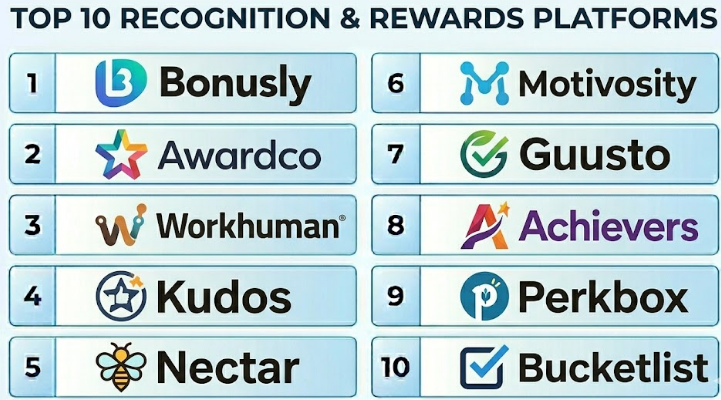
Top 10 Recognition & Rewards Platforms
#1 — Bonusly
Short description :
Bonusly is a recognition and rewards platform designed to make peer-to-peer appreciation easy and visible across the company. Employees can recognize each other using points, messages, hashtags, company values, and reward redemptions. It is useful for companies that want recognition to happen frequently instead of only during formal review cycles. Bonusly is especially popular with growing teams and mid-market organizations that want a lightweight, social, and easy-to-use recognition experience. It is best for teams that want recognition to become part of daily culture.
Key Features
- Peer-to-peer recognition.
- Points-based rewards system.
- Company values tagging.
- Social recognition feed.
- Reward catalog options.
- Manager and admin reporting.
- Integrations with workplace tools.
Pros
- Very easy for employees to use.
- Encourages frequent recognition across teams.
- Strong fit for remote and distributed teams.
Cons
- Reward budgets need clear governance.
- May not cover every advanced enterprise compensation workflow.
- Recognition quality depends on employee participation.
Platforms / Deployment
Web / iOS / Android
Cloud
Security & Compliance
Supports business access controls and admin management. Specific security certifications and compliance details should be validated directly with the vendor.
Integrations & Ecosystem
Bonusly fits well into everyday employee workflows and connects with common workplace systems.
- Slack.
- Microsoft Teams.
- HRIS systems.
- SSO providers.
- Employee directories.
- Reporting workflows.
Support & Community
Bonusly provides documentation, onboarding resources, and customer support. It is known for simple rollout and employee-friendly adoption.
#2 — Awardco
Short description :
Awardco is a recognition and rewards platform focused on employee appreciation, rewards, service awards, incentives, and company culture programs. It is often used by mid-market and enterprise organizations that need flexible reward options and scalable recognition workflows. Awardco supports points, celebrations, programs, service milestones, and reward marketplace access. It is useful for companies that want a structured reward program with strong admin controls. It is best for organizations that want recognition, rewards, and milestone programs in one platform.
Key Features
- Employee recognition programs.
- Points-based rewards.
- Service awards and milestones.
- Incentive programs.
- Reward marketplace options.
- Budget and program management.
- Reporting and analytics.
Pros
- Strong for structured rewards and recognition programs.
- Good fit for larger teams and enterprises.
- Useful for service awards and milestone celebrations.
Cons
- May require thoughtful setup for best results.
- More advanced than very small teams may need.
- Reward experience depends on region and catalog availability.
Platforms / Deployment
Web / iOS / Android
Cloud
Security & Compliance
Supports enterprise administration and access controls. Specific security and compliance certifications should be verified directly with the vendor.
Integrations & Ecosystem
Awardco connects recognition programs with HR and workplace systems.
- HRIS platforms.
- Payroll-related workflows.
- Slack.
- Microsoft Teams.
- SSO providers.
- Employee directory systems.
Support & Community
Awardco provides onboarding, documentation, customer support, and program guidance. It is suitable for companies with formal recognition and rewards strategies.
#3 — Workhuman
Short description :
Workhuman is an employee recognition and human connection platform built for large organizations that want to improve culture, belonging, engagement, and appreciation. It supports social recognition, rewards, service milestones, performance connection, and employee experience programs. Workhuman is especially suitable for enterprise companies that want recognition to be part of a broader culture strategy. It helps leaders and HR teams understand recognition patterns and build stronger employee connection. It is best for large organizations with mature people and culture programs.
Key Features
- Social recognition.
- Rewards and recognition programs.
- Service milestone celebrations.
- Employee connection features.
- Culture and engagement analytics.
- Manager visibility.
- Enterprise program management.
Pros
- Strong enterprise recognition capabilities.
- Good for culture and belonging programs.
- Useful analytics for HR and leadership teams.
Cons
- May be more than small teams need.
- Implementation requires strong HR ownership.
- Pricing and configuration may be enterprise-oriented.
Platforms / Deployment
Web / iOS / Android
Cloud
Security & Compliance
Supports enterprise-grade access control and governance features depending on plan. Specific certifications and compliance details should be validated directly with the vendor.
Integrations & Ecosystem
Workhuman connects recognition with broader people and HR systems.
- HRIS systems.
- Identity providers.
- Employee experience workflows.
- Performance management workflows.
- Reporting tools.
- Workplace collaboration systems.
Support & Community
Workhuman provides enterprise onboarding, customer success resources, documentation, and program strategy support. It is best suited for organizations treating recognition as a strategic culture initiative.
#4 — Kudos
Short description :
Kudos is an employee recognition and engagement platform designed to help teams celebrate values, achievements, milestones, and positive behaviors. It supports peer recognition, manager recognition, points, awards, analytics, and culture-focused programs. Kudos is useful for organizations that want recognition to connect with company values and employee engagement. It is suitable for SMBs, mid-market companies, and enterprises depending on program needs. It is best for companies that want structured recognition with a strong culture-building focus.
Key Features
- Peer and manager recognition.
- Company values-based recognition.
- Points and rewards.
- Employee milestones.
- Social recognition feed.
- Engagement and culture analytics.
- Custom recognition programs.
Pros
- Strong focus on culture and values.
- Useful for social recognition and engagement.
- Good reporting for HR and managers.
Cons
- Success depends on consistent leadership participation.
- Reward catalog depth may vary by region.
- Requires thoughtful program design for long-term adoption.
Platforms / Deployment
Web / iOS / Android
Cloud
Security & Compliance
Supports business access controls and admin management. Specific security certifications should be validated directly with the vendor.
Integrations & Ecosystem
Kudos integrates with workplace and HR systems to support daily recognition workflows.
- HRIS systems.
- Slack.
- Microsoft Teams.
- SSO providers.
- Employee directories.
- Reporting workflows.
Support & Community
Kudos provides customer support, documentation, onboarding guidance, and recognition program resources. It is useful for HR teams building culture-driven recognition.
#5 — Nectar
Short description :
Nectar is a recognition and rewards platform designed for companies that want simple peer recognition, rewards, challenges, and employee engagement features. It allows employees to give points, recognize teammates, celebrate values, and redeem rewards. Nectar is often attractive to small and mid-sized companies that want an affordable and easy-to-launch recognition system. It supports reward catalogs, company swag, and integration with workplace tools. It is best for teams that want recognition without unnecessary complexity.
Key Features
- Peer-to-peer recognition.
- Points-based rewards.
- Company values recognition.
- Employee challenges.
- Reward catalog.
- Company swag rewards.
- Basic analytics and reporting.
Pros
- Simple and easy to adopt.
- Good fit for SMBs and growing teams.
- Practical recognition and rewards features without heavy complexity.
Cons
- May not fit very complex enterprise governance needs.
- Advanced analytics may be limited compared with enterprise platforms.
- Recognition culture still needs manager support.
Platforms / Deployment
Web / iOS / Android
Cloud
Security & Compliance
Supports standard business access and administration features. Specific security and compliance details should be validated directly with the vendor.
Integrations & Ecosystem
Nectar connects with tools that employees already use for daily work.
- Slack.
- Microsoft Teams.
- HRIS systems.
- Employee directories.
- SSO options.
- Reward and swag workflows.
Support & Community
Nectar provides documentation, onboarding resources, and customer support. It is a practical option for teams that want quick recognition program setup.
#6 — Motivosity
Short description :
Motivosity is an employee recognition and engagement platform focused on appreciation, manager connection, rewards, feedback, and workplace relationships. It helps employees recognize each other, build stronger team connection, and improve morale. Motivosity is useful for companies that want recognition to feel human and social rather than only transactional. It supports peer recognition, rewards, leadership visibility, and employee engagement insights. It is best for organizations that want recognition tied to team connection and manager effectiveness.
Key Features
- Peer-to-peer appreciation.
- Rewards and points.
- Manager recognition tools.
- Employee engagement insights.
- Social recognition feed.
- Team connection features.
- Culture and relationship-building tools.
Pros
- Strong focus on human connection.
- Good for improving team morale and visibility.
- Useful for manager-led engagement.
Cons
- May not be ideal for companies wanting only a simple reward catalog.
- Requires active participation to deliver value.
- Some advanced enterprise needs may require higher-tier options.
Platforms / Deployment
Web / iOS / Android
Cloud
Security & Compliance
Supports business access controls and admin settings. Specific security certifications should be verified directly with the vendor.
Integrations & Ecosystem
Motivosity connects recognition with HR and workplace collaboration tools.
- HRIS systems.
- Slack.
- Microsoft Teams.
- SSO providers.
- Employee directories.
- Engagement reporting workflows.
Support & Community
Motivosity provides onboarding, documentation, customer support, and guidance for recognition and engagement programs. It is a strong fit for people-focused organizations.
#7 — Guusto
Short description :
Guusto is an employee recognition and rewards platform that helps companies send rewards, recognize employees, and manage appreciation programs. It is especially useful for frontline, deskless, and distributed teams because rewards can be simple to send and redeem. Guusto supports recognition, service awards, customer-facing rewards, and flexible gift options. It is practical for organizations that want rewards without overly complex setup. It is best for companies that need easy reward delivery across different employee groups.
Key Features
- Employee recognition.
- Digital rewards and gift cards.
- Service award programs.
- Frontline employee recognition.
- Team and manager reward programs.
- Budget controls.
- Reporting and tracking.
Pros
- Simple reward delivery experience.
- Good for frontline and distributed teams.
- Practical for companies that want quick recognition workflows.
Cons
- May be less culture-platform focused than some competitors.
- Advanced engagement analytics may be limited.
- Reward availability can vary by region.
Platforms / Deployment
Web / iOS / Android
Cloud
Security & Compliance
Supports business administration and access controls. Specific security and compliance details should be validated directly with the vendor.
Integrations & Ecosystem
Guusto supports reward and recognition workflows across employee groups.
- HR systems.
- Employee directories.
- Slack.
- Microsoft Teams.
- Reward workflows.
- Budget reporting.
Support & Community
Guusto provides customer support, documentation, and onboarding resources. It is useful for organizations that want a practical and accessible rewards program.
#8 — Achievers
Short description :
Achievers is an employee recognition and engagement platform designed for organizations that want to increase participation, reinforce culture, and improve employee experience. It supports social recognition, rewards, employee listening, analytics, and engagement programs. Achievers is often used by larger companies that need scalable recognition and engagement capabilities. It helps leaders and HR teams understand recognition behavior and employee sentiment. It is best for organizations that want recognition connected with engagement strategy and measurable culture outcomes.
Key Features
- Social recognition.
- Rewards marketplace.
- Employee engagement tools.
- Recognition analytics.
- Manager dashboards.
- Employee listening features.
- Enterprise program management.
Pros
- Strong recognition and engagement platform.
- Good fit for larger organizations.
- Useful analytics for HR and leadership teams.
Cons
- May be more advanced than small teams need.
- Implementation requires strong internal ownership.
- Pricing and program design may be enterprise-oriented.
Platforms / Deployment
Web / iOS / Android
Cloud
Security & Compliance
Supports enterprise access control, admin management, and governance features depending on plan. Specific security certifications should be verified directly with the vendor.
Integrations & Ecosystem
Achievers connects recognition and engagement with HR and workplace systems.
- HRIS systems.
- Identity providers.
- Slack.
- Microsoft Teams.
- Engagement reporting tools.
- Employee experience workflows.
Support & Community
Achievers provides enterprise onboarding, customer success, documentation, and program guidance. It is strong for companies with mature employee engagement programs.
#9 — Perkbox
Short description :
Perkbox is an employee experience platform that includes rewards, benefits, recognition, wellbeing, and employee perks. It is suitable for organizations that want to combine employee appreciation with broader benefits and engagement offerings. Perkbox helps employees access perks, receive recognition, and engage with wellbeing-related programs. It is useful for companies that want to improve employee satisfaction and provide flexible benefits beyond traditional compensation. It is best for organizations that want recognition and perks in one employee experience platform.
Key Features
- Employee rewards and perks.
- Recognition features.
- Benefits and discounts.
- Wellbeing tools.
- Employee engagement features.
- Flexible reward options.
- Usage and engagement reporting.
Pros
- Strong for perks and benefits-led employee experience.
- Useful for improving employee satisfaction.
- Good fit for companies that want rewards beyond cash bonuses.
Cons
- Recognition features may not be as deep as dedicated recognition platforms.
- Perk availability can vary by region.
- Best value depends on employee usage.
Platforms / Deployment
Web / iOS / Android
Cloud
Security & Compliance
Supports business access controls and platform administration. Specific security and compliance details should be validated directly with the vendor.
Integrations & Ecosystem
Perkbox connects employee perks and recognition with people experience workflows.
- HR systems.
- Employee directories.
- Benefits workflows.
- Reward catalogs.
- Wellbeing programs.
- Engagement reporting.
Support & Community
Perkbox provides customer support, documentation, onboarding help, and employee experience resources. It is useful for companies that want recognition, perks, and wellbeing together.
#10 — Bucketlist
Short description :
Bucketlist is an employee recognition and rewards platform designed to help companies celebrate achievements, reward performance, and build a positive workplace culture. It supports peer recognition, rewards, milestones, employee incentives, and culture programs. Bucketlist is useful for growing companies and mid-market teams that want flexible recognition without excessive complexity. It helps employees feel appreciated through both social recognition and meaningful rewards. It is best for organizations that want a practical and easy-to-launch recognition platform.
Key Features
- Peer recognition.
- Rewards and incentives.
- Milestone celebrations.
- Company values recognition.
- Employee reward marketplace.
- Program reporting.
- Admin controls and budget management.
Pros
- Easy to understand and launch.
- Good balance of recognition and rewards.
- Useful for growing teams that want stronger appreciation culture.
Cons
- May not have the deepest enterprise analytics.
- Reward availability may vary by location.
- Program success depends on manager and employee participation.
Platforms / Deployment
Web / iOS / Android
Cloud
Security & Compliance
Supports business administration and access controls. Specific security and compliance claims should be validated directly with the vendor.
Integrations & Ecosystem
Bucketlist supports recognition and reward workflows with common workplace tools.
- HRIS systems.
- Slack.
- Microsoft Teams.
- Employee directories.
- Reward workflows.
- Reporting tools.
Support & Community
Bucketlist provides onboarding, customer support, documentation, and recognition program guidance. It is practical for teams that want a balanced recognition and rewards solution.
Comparison Table
| Tool Name | Best For | Platform(s) Supported | Deployment | Standout Feature | Public Rating |
|---|---|---|---|---|---|
| Bonusly | Peer-to-peer recognition | Web / iOS / Android | Cloud | Social recognition with points and values | N/A |
| Awardco | Structured rewards and service awards | Web / iOS / Android | Cloud | Rewards and milestone programs | N/A |
| Workhuman | Enterprise culture and recognition | Web / iOS / Android | Cloud | Large-scale social recognition and human connection | N/A |
| Kudos | Values-based recognition | Web / iOS / Android | Cloud | Culture-focused recognition and analytics | N/A |
| Nectar | SMB recognition and rewards | Web / iOS / Android | Cloud | Simple peer recognition and rewards | N/A |
| Motivosity | Team connection and appreciation | Web / iOS / Android | Cloud | Recognition tied to employee connection | N/A |
| Guusto | Frontline and distributed rewards | Web / iOS / Android | Cloud | Easy reward delivery for diverse teams | N/A |
| Achievers | Recognition plus engagement strategy | Web / iOS / Android | Cloud | Enterprise recognition and engagement analytics | N/A |
| Perkbox | Perks, benefits, and recognition | Web / iOS / Android | Cloud | Employee perks with recognition features | N/A |
| Bucketlist | Practical recognition and incentives | Web / iOS / Android | Cloud | Flexible rewards and milestone recognition | N/A |
Evaluation & Recognition & Rewards Platforms
| Tool Name | Core (25%) | Ease (15%) | Integrations (15%) | Security (10%) | Performance (10%) | Support (10%) | Value (15%) | Weighted Total (0–10) |
|---|---|---|---|---|---|---|---|---|
| Bonusly | 9 | 9 | 8 | 8 | 8 | 8 | 8 | 8.35 |
| Awardco | 9 | 8 | 8 | 8 | 8 | 8 | 8 | 8.25 |
| Workhuman | 9 | 8 | 8 | 9 | 8 | 9 | 7 | 8.25 |
| Kudos | 8 | 8 | 8 | 8 | 8 | 8 | 8 | 8.00 |
| Nectar | 8 | 9 | 7 | 7 | 8 | 8 | 9 | 8.10 |
| Motivosity | 8 | 8 | 7 | 8 | 8 | 8 | 8 | 7.85 |
| Guusto | 8 | 8 | 7 | 7 | 8 | 8 | 8 | 7.70 |
| Achievers | 9 | 8 | 8 | 9 | 8 | 9 | 7 | 8.25 |
| Perkbox | 8 | 8 | 7 | 8 | 8 | 8 | 8 | 7.85 |
| Bucketlist | 8 | 8 | 7 | 7 | 8 | 8 | 8 | 7.70 |
These scores are comparative and should be used as a practical guide, not a final ranking. A platform with a higher score may be stronger overall, but the best choice depends on company size, reward budget, employee location, culture goals, and integration needs. Bonusly and Nectar are strong for easy peer recognition, Workhuman and Achievers are strong for enterprise culture programs, Awardco is strong for structured rewards, and Guusto can be practical for frontline and distributed teams.
Which Recognition & Rewards Platforms
Solo / Freelancer
Solo professionals usually do not need a recognition and rewards platform. Appreciation can be handled personally through direct messages, thank-you notes, small gifts, or client relationship management.
However, freelancers who manage small teams or contractors may use simple reward tools, gift cards, or lightweight recognition workflows. A full platform usually becomes useful only when recognition needs to be consistent, trackable, and scalable.
SMB
Small and medium businesses should look for tools that are simple, affordable, and easy to launch. Bonusly, Nectar, Bucketlist, Guusto, and Motivosity can be practical options for SMBs.
The main goal for SMBs should be habit-building. If employees do not use the platform regularly, the reward catalog will not matter. Choose a tool that makes recognition quick, visible, and connected to company values.
Mid-Market
Mid-market companies usually need stronger reporting, manager visibility, budget controls, HRIS integrations, and reward program structure. Awardco, Bonusly, Kudos, Motivosity, Nectar, and Bucketlist are strong candidates.
At this stage, companies should define recognition categories, reward budgets, approval rules, and reporting needs before selecting a platform. The best tool should support both employee-led recognition and manager-led programs.
Enterprise
Enterprises should prioritize scalability, governance, analytics, global reward availability, security, admin controls, and integration with HR systems. Workhuman, Achievers, Awardco, Kudos, and Bonusly are strong options depending on culture and program complexity.
Large organizations should include HR, finance, legal, tax, IT, and department leaders in the selection process. Recognition platforms may involve rewards, employee data, budgets, and regional compliance needs, so governance is important.
Budget vs Premium
Budget-conscious teams may prefer tools like Nectar, Bonusly, Guusto, or Bucketlist, especially when the goal is simple peer recognition and flexible rewards.
Premium platforms such as Workhuman, Achievers, and Awardco are better when organizations need enterprise analytics, complex reward programs, service milestones, global scalability, and deeper HR alignment.
Feature Depth vs Ease of Use
If ease of use matters most, Bonusly, Nectar, Guusto, and Bucketlist are practical choices. These tools focus on making recognition quick and easy.
If feature depth matters more, Workhuman, Achievers, Awardco, and Kudos may be stronger because they support broader culture programs, analytics, service awards, and enterprise recognition strategies.
Integrations & Scalability
For growing companies, HRIS and collaboration integrations are very important. Recognition should fit into tools employees already use, such as Slack, Microsoft Teams, HR systems, and employee directories.
For global organizations, scalability also includes reward availability, currency support, local redemption options, user segmentation, budget controls, and reporting across regions and departments.
Security & Compliance Needs
Recognition platforms handle employee profiles, messages, reward history, budgets, and sometimes tax-relevant reward data. Security-conscious organizations should validate SSO, MFA, RBAC, audit logs, data retention, privacy controls, and vendor security documentation.
Companies with global employees should also review reward taxation, regional gift rules, privacy requirements, and internal approval workflows before launch.
Frequently Asked Questions
1. What is a Recognition & Rewards Platform?
A Recognition & Rewards Platform helps companies appreciate employees through peer recognition, manager recognition, points, rewards, milestones, awards, and engagement programs. It gives employees a structured way to celebrate good work. It also gives HR teams visibility into recognition patterns and culture health.
2. How is recognition different from rewards?
Recognition is the act of appreciating someone for their contribution, behavior, or achievement. Rewards are the tangible benefits given with or after recognition, such as points, gift cards, merchandise, donations, or experiences. A strong platform usually supports both.
3. What pricing models are common for Recognition & Rewards Platforms?
Most platforms use per-user pricing, monthly or annual subscriptions, reward budgets, or custom enterprise pricing. Some may also charge for premium features, integrations, service awards, or reward marketplace usage. Buyers should calculate both software cost and reward budget.
4. What are common mistakes when launching a recognition platform?
Common mistakes include launching without manager training, setting unclear reward budgets, ignoring company values, and treating recognition as only an HR activity. Another mistake is focusing too much on rewards and not enough on meaningful appreciation.
5. Which platform is best for small businesses?
Small businesses may prefer Bonusly, Nectar, Guusto, Bucketlist, or Motivosity because they are easy to understand and launch. The best choice depends on budget, reward needs, team size, and whether the company wants social recognition, gift rewards, or culture-focused appreciation.
6. Which platform is best for enterprises?
Enterprises often evaluate Workhuman, Achievers, Awardco, Kudos, and Bonusly because they support larger programs, analytics, integrations, and governance needs. The final choice should depend on global reward requirements, HRIS integration, security, and program complexity.
7. Can recognition platforms improve employee engagement?
Yes, they can support engagement when used consistently and meaningfully. Recognition helps employees feel seen and valued. However, software alone will not fix poor culture. Leaders and managers must actively participate and encourage authentic appreciation.
8. Are rewards taxable?
Rewards may have tax implications depending on country, reward type, value, and company policy. Organizations should review reward taxation with finance, payroll, or legal teams. A recognition platform may support reporting, but the company is still responsible for proper handling.
9. What integrations should buyers check?
Buyers should check HRIS, Slack, Microsoft Teams, SSO, employee directories, payroll-related workflows, and reporting integrations. Good integrations reduce admin work and make recognition part of daily work. Poor integrations can lead to manual updates and low adoption.
10. How can companies increase platform adoption?
Adoption improves when recognition is easy, visible, connected to company values, and supported by managers. HR teams should launch with clear examples, recognition guidelines, manager training, and regular reminders. Employees should understand both how to recognize and why it matters.
Conclusion
Recognition & Rewards Platforms help organizations build a more appreciative, connected, and motivated workplace. They make it easier for employees and managers to celebrate good work, reinforce company values, and create a culture where people feel valued. However, the best platform depends on the size of the company, reward budget, workforce location, culture goals, and HR technology stack. Bonusly and Nectar are strong for simple peer recognition, Awardco is useful for structured rewards and service awards, Workhuman and Achievers are strong for enterprise culture programs, Guusto is practical for frontline rewards, and Perkbox is useful when perks and benefits are part of the employee experience strategy.
