Introduction
Text-to-Speech (TTS) platforms are software solutions that convert written text into natural-sounding audio using AI and speech synthesis technologies. In 2026+, TTS has become essential for content accessibility, e-learning, customer engagement, and media production. High-quality TTS allows creators and enterprises to produce scalable audio content quickly while maintaining clarity, tone, and emotion.
Real-world use cases include:
- E-learning – generating narrated lessons, tutorials, and courses.
- Marketing content – producing audio ads, podcasts, and social media clips.
- Accessibility – enabling visually impaired users to access content.
- Customer service – powering IVR, chatbots, and automated voice responses.
- Audiobooks – creating scalable voice versions of written content.
When evaluating TTS platforms, buyers should consider:
- Voice quality, realism, and natural intonation
- Multi-language and accent support
- Custom voice creation and brand consistency
- Integration with video, audio, or web platforms
- Cloud vs on-premises deployment
- Editing, control, and voice styling options
- Pricing and licensing models
- Batch processing and scalability
- Security and compliance standards
Best for: E-learning providers, marketers, content creators, broadcasters, enterprises producing multilingual content, and accessibility-focused organizations.
Not ideal for: Small-scale content creators or individuals who only occasionally need TTS.
Key Trends in TTS Platforms
- AI-driven natural voice synthesis with human-like intonation
- Multi-language and accent support
- Cloud-based platforms with collaborative editing
- Custom voice cloning for brand voice consistency
- Real-time TTS for live events and interactive apps
- Integration with LMS, CMS, and video editing tools
- Accessibility compliance (WCAG, FCC)
- Scalable batch processing
- Subscription and pay-per-use pricing models
- Hybrid deployment models for enterprise flexibility
How We Selected These Tools (Methodology)
- Market adoption and recognition across content creators, enterprises, and accessibility projects
- Voice realism, pronunciation accuracy, and natural intonation
- Multi-language, accent, and custom voice support
- Integration with video, audio, and web platforms
- Batch processing speed and real-time capabilities
- Security and compliance posture
- Customer satisfaction, onboarding, and ease of use
- Scalability for large content libraries or live events
- Cost-to-value assessment for different user segments
- Flexibility between cloud, desktop, and hybrid deployment
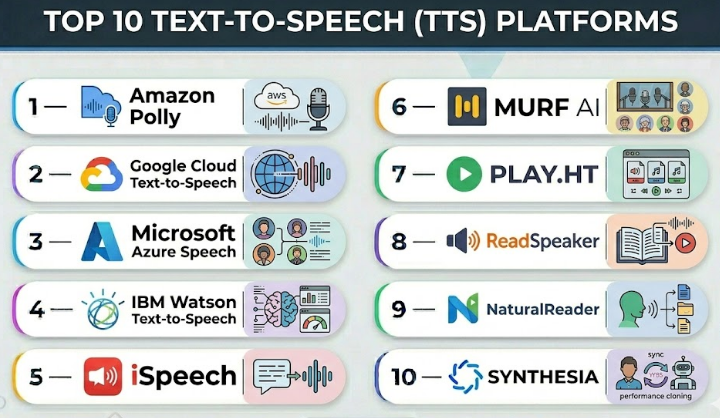
Top 10 Text-to-Speech (TTS) Platforms
#1 — Amazon Polly
Short description :
Amazon Polly is a cloud-based TTS platform offering lifelike speech synthesis for enterprise and developer applications, supporting multiple languages and voices.
Key Features
- Wide range of natural-sounding voices
- Multi-language and accent support
- Real-time streaming for applications
- SSML for voice control and emphasis
- Batch conversion for large text files
- API access for automation
Pros
- High-quality AI voices
- Scalable for enterprise use
Cons
- Cost scales with usage
- Limited offline capabilities
Platforms / Deployment
- Web / Cloud
Security & Compliance
- Not publicly stated
Integrations & Ecosystem
- Integrates with mobile apps, websites, and CMS
- Supports cloud-based audio workflows
- Compatible with APIs and automation scripts
Support & Community
- Extensive documentation
- Developer support
- Active user forums
#2 — Google Cloud Text-to-Speech
Short description :
Google Cloud TTS provides AI-powered speech synthesis for applications, including e-learning, accessibility, and media production, with multi-language support.
Key Features
- Neural network-based natural voices
- Multi-language and dialects
- SSML support for voice styling
- Real-time streaming
- Cloud-based batch processing
- Custom voice options
Pros
- Industry-leading voice realism
- Scalable for large applications
Cons
- Requires cloud dependency
- Subscription-based pricing
Platforms / Deployment
- Web / Cloud
Security & Compliance
- Not publicly stated
Integrations & Ecosystem
- Integrates with apps, websites, and content platforms
- API-driven workflow automation
- Supports multiple audio formats
Support & Community
- Documentation and tutorials
- Developer support
- Active forums
#3 — Microsoft Azure Speech
Short description :
Microsoft Azure Speech provides TTS capabilities as part of its speech services, emphasizing enterprise-level integration and customization.
Key Features
- Neural TTS voices with natural intonation
- Multi-language support
- Custom voice cloning
- SSML for voice modulation
- Real-time and batch processing
- API access for automation
Pros
- Enterprise-grade platform
- High-quality, customizable voices
Cons
- Subscription cost for enterprise usage
- Learning curve for SSML features
Platforms / Deployment
- Web / Cloud
Security & Compliance
- Not publicly stated
Integrations & Ecosystem
- Integrates with Microsoft 365, apps, and web platforms
- API-driven workflow automation
- Multiple export formats
Support & Community
- Documentation and training
- Enterprise support tiers
- Active developer community
#4 — IBM Watson Text-to-Speech
Short description :
IBM Watson TTS converts text to natural-sounding audio for accessibility, customer service, and content applications, supporting multiple voices and languages.
Key Features
- AI-generated expressive voices
- Multi-language support
- SSML for voice customization
- Real-time and batch conversion
- Cloud-based processing
- API access for automation
Pros
- High-quality, expressive voices
- Suitable for enterprise and accessibility use
Cons
- Subscription-based pricing
- Requires cloud connection
Platforms / Deployment
- Web / Cloud
Security & Compliance
- Not publicly stated
Integrations & Ecosystem
- Integrates with IVR, apps, and websites
- API automation workflows
- Multiple export formats
Support & Community
- Documentation and tutorials
- Email and enterprise support
- Active developer forums
#5 — iSpeech
Short description :
iSpeech provides TTS services for developers, enterprises, and content creators, offering multi-language voice synthesis and real-time streaming.
Key Features
- Multi-language and accent support
- Custom voice generation
- API for integration
- Real-time streaming
- Batch processing
- Cloud deployment
Pros
- Scalable for enterprise projects
- Multi-platform support
Cons
- AI voice may sound robotic for some languages
- Subscription cost for premium services
Platforms / Deployment
- Web / Cloud / Mobile
Security & Compliance
- Not publicly stated
Integrations & Ecosystem
- Works with apps, websites, and audio/video platforms
- API workflows for automation
- Supports multiple audio formats
Support & Community
- Online tutorials and documentation
- Customer support
- Moderate user community
#6 — Murf AI
Short description :
Murf AI offers TTS voiceovers for marketing, e-learning, and corporate content, providing natural-sounding AI voices with customizable tone.
Key Features
- Multi-language support
- Custom AI voice cloning
- Voice styling and modulation
- Batch processing
- Cloud collaboration
- API access
Pros
- High-quality AI voices
- User-friendly interface
Cons
- Subscription pricing
- Limited offline capabilities
Platforms / Deployment
- Web / Cloud / Windows / macOS
Security & Compliance
- Not publicly stated
Integrations & Ecosystem
- Integrates with LMS, video editors, and marketing platforms
- API support for automation
- Multiple export formats
Support & Community
- Tutorials and documentation
- Customer support tiers
- Moderate community presence
#7 — Play.ht
Short description :
Play.ht converts text into human-like speech for e-learning, podcasts, marketing, and accessibility purposes, with multi-language support.
Key Features
- Natural-sounding AI voices
- Multi-language support
- Realistic intonation
- Batch processing
- API integration
- Cloud-based editing
Pros
- Easy to use
- High-quality TTS
Cons
- Subscription pricing
- Limited offline features
Platforms / Deployment
- Web / Cloud
Security & Compliance
- Not publicly stated
Integrations & Ecosystem
- Integrates with video platforms, LMS, and apps
- API-driven automation
- Multiple audio export formats
Support & Community
- Documentation and tutorials
- Email support
- Moderate community
#8 — ReadSpeaker
Short description :
ReadSpeaker provides TTS solutions for enterprises, education, and media, focusing on accessibility and natural-sounding voices.
Key Features
- AI-driven voice synthesis
- Multi-language and accent support
- Real-time streaming
- Custom voice creation
- Batch processing
- Cloud deployment
Pros
- Accessibility-focused platform
- Enterprise-grade TTS
Cons
- Premium pricing
- Limited offline usage
Platforms / Deployment
- Web / Cloud
Security & Compliance
- Not publicly stated
Integrations & Ecosystem
- Integrates with LMS, websites, and media platforms
- API for automation
- Supports multiple audio formats
Support & Community
- Enterprise support
- Documentation and training
- Moderate user community
#9 — NaturalReader
Short description :
NaturalReader provides TTS solutions for education, marketing, and accessibility, emphasizing easy-to-use interfaces and high-quality voices.
Key Features
- AI-powered voice synthesis
- Multi-language support
- Real-time and batch processing
- Customizable voice speed and pitch
- Cloud and desktop options
- Audio export in multiple formats
Pros
- User-friendly for non-technical users
- Supports diverse content types
Cons
- Subscription cost
- Limited advanced voice customization
Platforms / Deployment
- Windows / macOS / Web / Cloud
Security & Compliance
- Not publicly stated
Integrations & Ecosystem
- Works with video editors, LMS, and websites
- Supports batch export
- Basic API access
Support & Community
- Documentation and tutorials
- Email support
- Moderate community
#10 — Synthesia
Short description :
Synthesia combines AI voice generation with avatar video creation, enabling enterprises to produce engaging TTS content for training and marketing.
Key Features
- AI-generated TTS
- Multi-language support
- Avatar video integration
- Real-time editing
- Batch processing
- Cloud collaboration
Pros
- Combines visual and audio content
- Scalable for enterprise production
Cons
- Premium pricing
- Limited offline functionality
Platforms / Deployment
- Web / Cloud
Security & Compliance
- Not publicly stated
Integrations & Ecosystem
- Integrates with LMS, marketing, and video platforms
- API-driven workflows
- Multiple export formats
Support & Community
- Customer support available
- Documentation provided
- Moderate user community
Comparison Table (Top 10)
| Tool Name | Best For | Platform(s) Supported | Deployment | Standout Feature | Public Rating |
|---|---|---|---|---|---|
| Amazon Polly | Enterprise, Developers | Web/Cloud | Cloud | Real-time neural voices | N/A |
| Google Cloud TTS | Enterprise, Apps | Web/Cloud | Cloud | Neural TTS voices | N/A |
| Microsoft Azure Speech | Enterprise, Developers | Web/Cloud | Cloud | Custom voice cloning | N/A |
| IBM Watson TTS | Enterprise, Accessibility | Web/Cloud | Cloud | Expressive AI voices | N/A |
| iSpeech | Apps, Enterprise | Web/Cloud/Mobile | Cloud | Real-time streaming | N/A |
| Murf AI | Marketing, E-learning | Web/Cloud | Cloud | Multi-language AI voices | N/A |
| Play.ht | E-learning, Podcasts | Web/Cloud | Cloud | Human-like TTS | N/A |
| ReadSpeaker | Education, Enterprise | Web/Cloud | Cloud | Accessibility-focused TTS | N/A |
| NaturalReader | Education, Marketing | Windows/macOS/Web | Cloud | Easy-to-use interface | N/A |
| Synthesia | Corporate, Marketing | Web/Cloud | Cloud | Avatar video + TTS | N/A |
Evaluation & Text-to-Speech Platforms
| Tool Name | Core (25%) | Ease (15%) | Integrations (15%) | Security (10%) | Performance (10%) | Support (10%) | Value (15%) | Weighted Total (0–10) |
|---|---|---|---|---|---|---|---|---|
| Amazon Polly | 9 | 8 | 8 | 6 | 8 | 7 | 6 | 7.9 |
| Google Cloud TTS | 9 | 8 | 7 | 6 | 8 | 7 | 6 | 7.8 |
| Microsoft Azure Speech | 9 | 7 | 7 | 6 | 8 | 7 | 5 | 7.5 |
| IBM Watson TTS | 8 | 8 | 7 | 6 | 7 | 7 | 6 | 7.3 |
| iSpeech | 8 | 7 | 7 | 5 | 7 | 6 | 6 | 7.0 |
| Murf AI | 8 | 8 | 7 | 5 | 7 | 7 | 6 | 7.3 |
| Play.ht | 8 | 8 | 6 | 5 | 7 | 6 | 6 | 7.0 |
| ReadSpeaker | 8 | 7 | 6 | 5 | 7 | 6 | 5 | 6.7 |
| NaturalReader | 7 | 8 | 6 | 5 | 6 | 6 | 6 | 6.6 |
| Synthesia | 9 | 7 | 7 | 5 | 8 | 7 | 5 | 7.2 |
Interpretation: Weighted totals show comparative performance across TTS platforms, balancing voice quality, integrations, and scalability.
Which Text-to-Speech Platforms
Solo / Freelancer
Murf AI, Play.ht, NaturalReader – easy-to-use and cost-effective.
SMB
Amazon Polly, Google Cloud TTS, Murf AI – quality TTS for marketing and training content.
Mid-Market
Microsoft Azure Speech, IBM Watson TTS, Synthesia – scalable multi-language solutions.
Enterprise
Amazon Polly, Google Cloud TTS, Microsoft Azure Speech – high-quality, enterprise-ready, multi-language TTS.
Budget vs Premium
Free/low-cost: NaturalReader, Murf AI
Premium: Amazon Polly, Microsoft Azure Speech, Synthesia
Feature Depth vs Ease of Use
Synthesia and Microsoft Azure Speech provide depth; Murf AI and Play.ht prioritize ease of use.
Integrations & Scalability
Enterprise platforms integrate with APIs, LMS, video editors, and cloud pipelines for large-scale deployments.
Security & Compliance Needs
Enterprise platforms ensure secure cloud deployments; freelancers rely on platform security.
Frequently Asked Questions (FAQs)
1. How natural are AI voices?
Modern TTS platforms use neural networks to produce human-like intonation, pitch, and pacing.
2. Do TTS platforms support multiple languages?
Yes, most top platforms support 20–50 languages with regional accents.
3. Are TTS platforms suitable for live applications?
Yes. Cloud platforms like Amazon Polly and Microsoft Azure Speech support real-time streaming.
4. Can custom voices be created?
Yes. Platforms like Microsoft Azure Speech and Murf AI allow custom or branded voices.
5. How do TTS platforms integrate with video workflows?
APIs and export options allow seamless integration with LMS, video editors, and CMS platforms.
6. Are TTS platforms cost-effective?
They reduce time and cost compared to manual recording; enterprise usage may increase subscription costs.
7. What deployment options exist?
Most platforms are cloud-based; some provide hybrid or desktop options for offline usage.
8. Can TTS improve accessibility?
Yes. TTS enables content for visually impaired users and compliance with accessibility standards.
9. How scalable are TTS platforms?
Enterprise TTS platforms can handle batch processing for large libraries or real-time applications.
10. What common mistakes do users make?
Skipping human review for critical content, ignoring voice modulation, and neglecting integration workflows.
Conclusion
Text-to-Speech platforms empower content creators, educators, marketers, and enterprises to produce scalable, high-quality audio content. Freelancers and SMBs can leverage Murf AI, Play.ht, and NaturalReader for cost-effective, natural-sounding TTS, while mid-market and enterprise users benefit from Amazon Polly, Google Cloud TTS, and Microsoft Azure Speech for large-scale, multilingual projects. When selecting a platform, consider voice realism, language coverage, integration capabilities, and scalability.
