Introduction
Influencer Marketing Platforms help brands discover, manage, and collaborate with influencers across social media channels. These tools streamline the entire influencer lifecycle—from identifying the right creators to managing campaigns, tracking performance, and measuring ROI.
As influencer marketing continues to mature, businesses are shifting from one-off collaborations to long-term partnerships driven by data and performance insights. With increasing demand for authenticity and measurable results, these platforms now offer AI-powered discovery, fraud detection, audience analytics, and campaign automation.
Common use cases include:
- Discovering relevant influencers based on niche, audience, and engagement
- Managing influencer outreach and communication
- Running and tracking campaigns
- Measuring ROI and performance metrics
- Detecting fake followers and engagement fraud
What buyers should evaluate:
- Influencer discovery and database size
- Audience analytics and demographics
- Campaign management features
- Fraud detection and authenticity checks
- Integration with social platforms
- Reporting and ROI measurement
- Pricing and scalability
- Ease of use and onboarding
- Collaboration and workflow tools
- Compliance and contract management
Best for: Brands, agencies, eCommerce businesses, and marketing teams running influencer campaigns at scale.
Not ideal for: Businesses with minimal influencer marketing needs or those relying on manual outreach with small creator networks.
Key Trends in Influencer Marketing Platforms
- AI-powered influencer discovery: Platforms use machine learning to match brands with relevant creators.
- Micro and nano influencer focus: Smaller creators with niche audiences are gaining importance.
- Fraud detection tools: Identifying fake followers and engagement is a priority.
- Performance-based campaigns: Shift toward measurable ROI and conversions.
- Long-term creator partnerships: Brands prefer ongoing collaborations over one-off campaigns.
- Cross-platform influencer management: Support for Instagram, YouTube, TikTok, and more.
- Integrated payments and contracts: Platforms now handle payments and agreements.
- First-party data usage: Reduced reliance on third-party tracking.
- Content repurposing workflows: Influencer content reused across marketing channels.
- Compliance and disclosure tracking: Ensuring adherence to advertising guidelines.
How We Selected These Tools (Methodology)
The tools listed below were selected based on:
- Market recognition and adoption
- Size and quality of influencer database
- Campaign management capabilities
- Analytics and reporting depth
- Fraud detection and audience insights
- Integration capabilities
- Scalability across SMB and enterprise
- Ease of use and onboarding
- Support and documentation quality
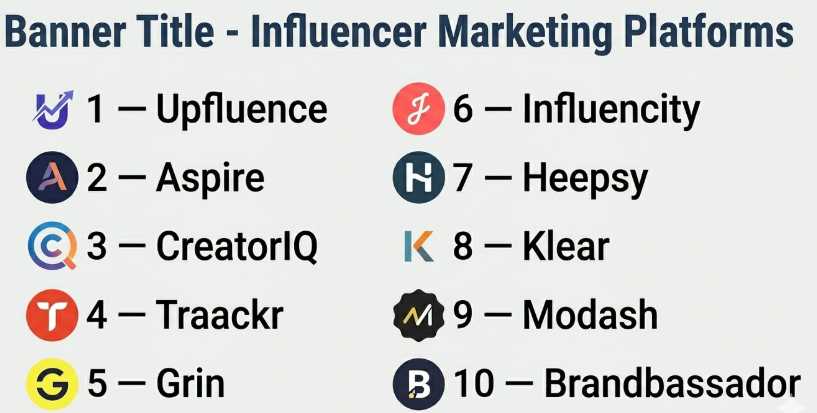
Top 10 Influencer Marketing Platforms Tools
#1 — Upfluence
Short description: A comprehensive influencer marketing platform focused on eCommerce brands, offering discovery, campaign management, and analytics.
Key Features
- Influencer discovery database
- Campaign management tools
- eCommerce integrations
- Affiliate tracking
- Analytics and reporting
- Influencer relationship management
Pros
- Strong eCommerce focus
- All-in-one platform
- Good analytics
Cons
- Expensive for small teams
- Learning curve
Platforms / Deployment
- Web
- Cloud
Security & Compliance
- Not publicly stated
Integrations & Ecosystem
Upfluence integrates with major eCommerce and marketing tools.
- Shopify
- CRM tools
- APIs
Support & Community
Good onboarding and customer support.
#2 — Aspire (AspireIQ)
Short description: A creator marketing platform designed for building long-term influencer relationships and campaigns.
Key Features
- Influencer discovery
- Campaign management
- Relationship management
- Content tracking
- Analytics
Pros
- Strong relationship management
- Easy to use
- Good campaign workflows
Cons
- Pricing may be high
- Limited advanced analytics
Platforms / Deployment
- Web
- Cloud
Security & Compliance
- Not publicly stated
Integrations & Ecosystem
- Social platforms
- APIs
Support & Community
Strong support and onboarding.
#3 — CreatorIQ
Short description: An enterprise-grade influencer marketing platform with deep analytics and global creator database.
Key Features
- Influencer discovery
- AI-powered insights
- Campaign management
- Fraud detection
- Analytics dashboards
Pros
- Enterprise-ready
- Strong analytics
- Large database
Cons
- Expensive
- Complex setup
Platforms / Deployment
- Web
- Cloud
Security & Compliance
- Not publicly stated
Integrations & Ecosystem
- CRM tools
- APIs
Support & Community
Enterprise-level support.
#4 — Traackr
Short description: A data-driven influencer marketing platform focused on performance measurement and ROI tracking.
Key Features
- Influencer discovery
- Campaign tracking
- ROI measurement
- Competitive benchmarking
- Analytics
Pros
- Strong analytics
- Performance focus
- Enterprise capabilities
Cons
- High cost
- Learning curve
Platforms / Deployment
- Web
- Cloud
Security & Compliance
- Not publicly stated
Integrations & Ecosystem
- APIs
- Marketing tools
Support & Community
Enterprise support available.
#5 — Grin
Short description: An influencer marketing platform tailored for direct-to-consumer (DTC) brands.
Key Features
- Creator discovery
- Relationship management
- Campaign tracking
- eCommerce integrations
- Content management
Pros
- Great for DTC brands
- Strong integrations
- Easy workflow
Cons
- Expensive
- Limited outside eCommerce
Platforms / Deployment
- Web
- Cloud
Security & Compliance
- Not publicly stated
Integrations & Ecosystem
- Shopify
- eCommerce platforms
- APIs
Support & Community
Good support and onboarding.
#6 — Influencity
Short description: A data-driven influencer marketing platform with strong analytics and audience insights.
Key Features
- Influencer discovery
- Audience analysis
- Campaign management
- Reporting tools
- Fraud detection
Pros
- Strong analytics
- Affordable compared to enterprise tools
- Easy to use
Cons
- Smaller database
- Limited enterprise features
Platforms / Deployment
- Web
- Cloud
Security & Compliance
- Not publicly stated
Integrations & Ecosystem
- APIs
- Social platforms
Support & Community
Good documentation and support.
#7 — Heepsy
Short description: A simple influencer discovery tool focused on finding creators based on niche and audience.
Key Features
- Influencer search
- Audience demographics
- Engagement metrics
- Fraud detection
- Filters and search tools
Pros
- Easy to use
- Affordable
- Good for discovery
Cons
- Limited campaign management
- Basic features
Platforms / Deployment
- Web
- Cloud
Security & Compliance
- Not publicly stated
Integrations & Ecosystem
- APIs
Support & Community
Basic support and resources.
#8 — Klear
Short description: An influencer marketing platform offering analytics, campaign management, and influencer discovery.
Key Features
- Influencer discovery
- Campaign management
- Analytics
- Relationship tracking
- Reporting
Pros
- Balanced feature set
- Good analytics
- Easy to use
Cons
- Pricing not transparent
- Limited advanced features
Platforms / Deployment
- Web
- Cloud
Security & Compliance
- Not publicly stated
Integrations & Ecosystem
- APIs
- CRM tools
Support & Community
Good support and onboarding.
#9 — Modash
Short description: A modern influencer marketing platform with a focus on creator discovery and audience insights.
Key Features
- Influencer database
- Audience analytics
- Campaign tracking
- Reporting
- Filters and search
Pros
- Strong discovery features
- Clean interface
- Good analytics
Cons
- Limited campaign management
- Smaller ecosystem
Platforms / Deployment
- Web
- Cloud
Security & Compliance
- Not publicly stated
Integrations & Ecosystem
- APIs
Support & Community
Good documentation and support.
#10 — Brandbassador
Short description: A platform focused on ambassador programs and influencer campaigns for brand advocacy.
Key Features
- Ambassador management
- Campaign workflows
- Content tracking
- Analytics
- Rewards and incentives
Pros
- Great for ambassador programs
- Easy to use
- Good engagement tools
Cons
- Limited advanced analytics
- Niche use case
Platforms / Deployment
- Web
- Cloud
Security & Compliance
- Not publicly stated
Integrations & Ecosystem
- eCommerce tools
- APIs
Support & Community
Good support and onboarding.
Comparison Table (Top 10)
| Tool Name | Best For | Platform(s) Supported | Deployment | Standout Feature | Public Rating |
|---|---|---|---|---|---|
| Upfluence | eCommerce brands | Web | Cloud | Affiliate tracking | N/A |
| Aspire | Creator relationships | Web | Cloud | Relationship management | N/A |
| CreatorIQ | Enterprise | Web | Cloud | AI analytics | N/A |
| Traackr | ROI tracking | Web | Cloud | Performance measurement | N/A |
| Grin | DTC brands | Web | Cloud | eCommerce integrations | N/A |
| Influencity | SMB analytics | Web | Cloud | Audience insights | N/A |
| Heepsy | Discovery | Web | Cloud | Influencer search | N/A |
| Klear | Balanced use | Web | Cloud | Campaign management | N/A |
| Modash | Discovery | Web | Cloud | Creator database | N/A |
| Brandbassador | Ambassador programs | Web | Cloud | Advocacy tools | N/A |
Evaluation & Scoring of Influencer Marketing Platforms
| Tool Name | Core (25%) | Ease (15%) | Integrations (15%) | Security (10%) | Performance (10%) | Support (10%) | Value (15%) | Weighted Total |
|---|---|---|---|---|---|---|---|---|
| Upfluence | 9 | 7 | 8 | 6 | 8 | 8 | 7 | 7.9 |
| Aspire | 8 | 9 | 7 | 6 | 8 | 8 | 7 | 7.9 |
| CreatorIQ | 10 | 6 | 9 | 7 | 9 | 9 | 6 | 8.5 |
| Traackr | 9 | 6 | 8 | 7 | 9 | 9 | 6 | 8.2 |
| Grin | 9 | 8 | 8 | 6 | 8 | 8 | 7 | 8.0 |
| Influencity | 8 | 8 | 7 | 6 | 8 | 7 | 8 | 7.7 |
| Heepsy | 7 | 9 | 6 | 6 | 7 | 7 | 9 | 7.6 |
| Klear | 8 | 8 | 7 | 6 | 8 | 7 | 7 | 7.6 |
| Modash | 8 | 8 | 7 | 6 | 8 | 7 | 8 | 7.7 |
| Brandbassador | 7 | 8 | 6 | 6 | 7 | 7 | 8 | 7.3 |
How to interpret scores:
- Scores are comparative across tools, not absolute benchmarks.
- Enterprise tools score higher in analytics and scalability.
- SMB tools perform better in ease of use and value.
- Choose based on campaign complexity and scale.
Which Influencer Marketing Platform Is Right for You?
Solo / Freelancer
- Best choices: Heepsy, Modash
- Focus on influencer discovery and affordability
SMB
- Best choices: Influencity, Aspire
- Need campaign management and analytics
Mid-Market
- Best choices: Upfluence, Grin
- Require integrations and scalability
Enterprise
- Best choices: CreatorIQ, Traackr
- Focus on analytics, compliance, and global campaigns
Budget vs Premium
- Budget: Heepsy, Influencity
- Premium: CreatorIQ, Traackr
Feature Depth vs Ease of Use
- Easy: Aspire, Heepsy
- Advanced: CreatorIQ, Traackr
Integrations & Scalability
- Strong: Upfluence, Grin
- Moderate: Modash, Klear
Security & Compliance Needs
- Stronger: Enterprise tools
- Basic: SMB tools
Frequently Asked Questions (FAQs)
What is an influencer marketing platform?
It is software that helps brands find, manage, and analyze influencer campaigns.
How do these platforms find influencers?
They use databases, social media data, and AI-driven search tools.
Are they suitable for small businesses?
Yes, many platforms offer affordable plans for SMBs.
Can I track campaign ROI?
Yes, most platforms provide analytics and performance tracking.
What is influencer fraud?
Fake followers or engagement used to inflate influence metrics.
Do these tools support multiple platforms?
Yes, most support Instagram, YouTube, TikTok, and more.
How much do they cost?
Pricing varies based on features and scale.
Can I manage contracts and payments?
Some platforms include payment and contract management features.
Are integrations available?
Yes, APIs and integrations are common.
What are common mistakes?
Choosing influencers based only on follower count and ignoring engagement quality.
Conclusion
Influencer Marketing Platforms are essential for brands looking to scale creator collaborations and measure campaign performance effectively. From enterprise solutions like CreatorIQ and Traackr to SMB-friendly tools like Heepsy and Influencity, the right choice depends on your campaign goals, budget, and scale.
