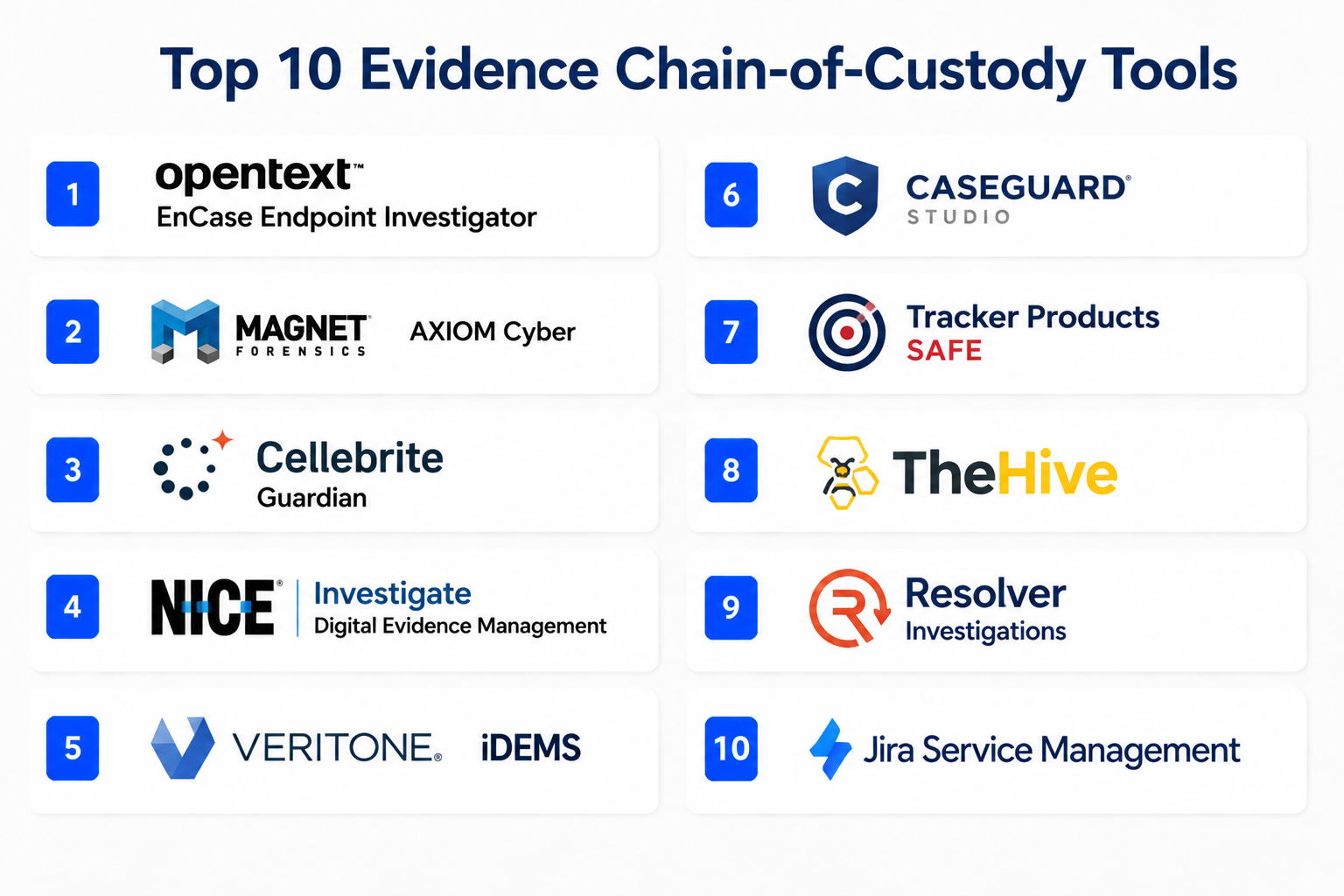
Introduction
Evidence Chain-of-Custody Tools are specialized platforms designed to track, document, secure, and manage evidence throughout its lifecycle during investigations, legal proceedings, cybersecurity incidents, forensic analysis, compliance reviews, and law enforcement operations. These tools help organizations maintain evidence integrity, accountability, auditability, and legal defensibility by recording every action, transfer, access event, and modification related to evidence handling.
In chain-of-custody management has become increasingly critical as organizations face stricter regulatory requirements, growing cybercrime investigations, cloud-based evidence collection challenges, remote investigative workflows, and digital evidence complexity. Modern environments generate evidence across endpoints, cloud systems, SaaS applications, mobile devices, network telemetry, and IoT infrastructure. Manual evidence tracking through spreadsheets and disconnected documentation systems introduces operational risk, compliance issues, and legal exposure.
Common real-world use cases include:
- Digital forensic investigations
- Cybersecurity incident response
- Law enforcement evidence handling
- Insider threat investigations
- Compliance and legal investigations
When evaluating Evidence Chain-of-Custody Tools, buyers should consider:
- Evidence integrity protections
- Audit logging capabilities
- Access control and RBAC support
- Evidence lifecycle tracking
- Secure evidence storage options
- Reporting and documentation workflows
- Integration with DFIR and SIEM tools
- Cloud and hybrid environment support
- Compliance and legal defensibility features
- Scalability across distributed teams
Best for: DFIR teams, SOC teams, law enforcement agencies, compliance departments, legal operations teams, financial institutions, healthcare organizations, and government agencies.
Not ideal for: Small organizations with limited investigative workflows or teams needing only lightweight file-sharing and documentation solutions.
Key Trends in Evidence Chain-of-Custody Tools
- Cloud-native evidence management is becoming standard.
- AI-assisted evidence classification is emerging.
- Blockchain-inspired evidence integrity models are gaining attention.
- Automated audit trail generation is expanding.
- Mobile and remote evidence collection support is improving.
- Zero Trust access controls are becoming core requirements.
- Integration with SIEM, EDR, and DFIR platforms is deepening.
- Evidence encryption and secure storage capabilities are advancing.
- Compliance automation and legal reporting workflows are increasing.
- Digital evidence governance is becoming a major enterprise focus.
How We Selected These Tools (Methodology)
The tools in this list were selected using a balanced evaluation framework focused on evidence governance, operational reliability, integration capabilities, and security maturity.
Selection criteria included:
- Market recognition and operational adoption
- Evidence lifecycle management capabilities
- Audit logging and accountability controls
- Security and encryption features
- Workflow automation and reporting
- Integration ecosystem breadth
- Compliance and governance support
- Scalability across enterprise environments
- Documentation and support quality
- Suitability for DFIR, legal, and investigative workflows
Evidence Chain-of-Custody Tools
#1 — OpenText EnCase Endpoint Investigator
Short description :
OpenText EnCase Endpoint Investigator is a digital forensic investigation platform designed for enterprise evidence collection, forensic analysis, chain-of-custody tracking, and legal-grade investigations. The platform is widely used in law enforcement, DFIR operations, insider threat investigations, and compliance workflows.
Key Features
- Evidence tracking
- Chain-of-custody management
- Endpoint evidence collection
- Audit logging
- Legal-grade forensic workflows
- Secure evidence handling
- Investigation reporting
Pros
- Strong forensic evidence integrity controls
- Widely recognized investigative workflows
- Mature legal evidence support
Cons
- Specialized training required
- Enterprise-focused pricing
- Complex advanced workflows
Platforms / Deployment
- Windows
- Self-hosted / Hybrid
Security & Compliance
- RBAC
- Audit logs
- Encryption support
- Evidence integrity controls
- Chain-of-custody tracking
Integrations & Ecosystem
EnCase integrates into enterprise forensic and investigation ecosystems.
- SIEM platforms
- DFIR tools
- Threat intelligence systems
- Endpoint management tools
- Investigation workflows
- Legal compliance systems
Support & Community
OpenText provides enterprise support, certifications, onboarding programs, and forensic training resources.
#2 — Magnet AXIOM Cyber
Short description :
Magnet AXIOM Cyber is a forensic investigation platform designed for evidence collection, artifact analysis, timeline reconstruction, and secure evidence management workflows.
Key Features
- Digital evidence tracking
- Artifact collection
- Timeline analysis
- Evidence reporting
- Audit trails
- Investigation workflows
- Remote acquisition
Pros
- Strong evidence visualization
- Good forensic workflow support
- Effective investigative reporting
Cons
- DFIR learning curve
- Enterprise-oriented pricing
- Advanced scaling may require planning
Platforms / Deployment
- Windows
- Self-hosted
Security & Compliance
- RBAC
- Audit logs
- Encryption support
- Evidence integrity protections
Integrations & Ecosystem
Magnet integrates into modern DFIR ecosystems.
- Endpoint forensic tools
- Security analytics systems
- Cloud evidence sources
- Threat intelligence feeds
- Investigation platforms
- Evidence repositories
Support & Community
Magnet provides enterprise support, certifications, DFIR training, and extensive documentation.
#3 — Cellebrite Guardian
Short description :
Cellebrite Guardian is a digital evidence management and chain-of-custody platform focused on secure evidence sharing, mobile evidence collection, and investigation collaboration workflows.
Key Features
- Digital evidence management
- Secure evidence sharing
- Chain-of-custody tracking
- Audit logging
- Mobile evidence workflows
- Cloud evidence storage
- Access governance
Pros
- Strong mobile evidence workflows
- Good evidence sharing controls
- Effective collaboration capabilities
Cons
- Specialized investigative focus
- Enterprise pricing structure
- Advanced integrations may vary
Platforms / Deployment
- Web / Windows
- Cloud / Hybrid
Security & Compliance
- RBAC
- MFA
- Audit logs
- Encryption support
- Access controls
Integrations & Ecosystem
Cellebrite integrates into digital investigation ecosystems.
- Mobile forensic tools
- Investigation platforms
- Evidence repositories
- Compliance systems
- DFIR workflows
- Law enforcement systems
Support & Community
Cellebrite provides onboarding assistance, technical support, certifications, and investigation training resources.
#4 — NICE Investigate Digital Evidence Management
Short description :
NICE Investigate Digital Evidence Management is an enterprise evidence management platform focused on secure evidence handling, investigation workflows, chain-of-custody controls, and digital evidence governance.
Key Features
- Evidence lifecycle management
- Chain-of-custody workflows
- Secure evidence storage
- Investigation analytics
- Audit trails
- Compliance reporting
- Collaboration workflows
Pros
- Strong enterprise governance features
- Good compliance support
- Effective evidence organization
Cons
- Enterprise deployment complexity
- Specialized onboarding required
- Premium pricing structure
Platforms / Deployment
- Web
- Cloud / Hybrid
Security & Compliance
- RBAC
- MFA
- Audit logging
- Encryption support
- Compliance visibility
Integrations & Ecosystem
NICE integrates into enterprise investigation ecosystems.
- Law enforcement systems
- Compliance platforms
- Evidence repositories
- Analytics tools
- Security operations workflows
- Investigation management systems
Support & Community
NICE provides enterprise onboarding, operational consulting, and technical support services.
#5 — Veritone iDEMS
Short description :
Veritone iDEMS is a digital evidence management platform designed for evidence governance, secure storage, investigative collaboration, and multimedia evidence analysis.
Key Features
- Digital evidence management
- AI-assisted evidence tagging
- Secure evidence storage
- Audit tracking
- Multimedia evidence workflows
- Collaboration tools
- Reporting automation
Pros
- Strong multimedia evidence handling
- AI-assisted organizational workflows
- Good cloud-native scalability
Cons
- Specialized evidence management focus
- Advanced governance setup may require planning
- Enterprise-oriented pricing
Platforms / Deployment
- Web
- Cloud
Security & Compliance
- RBAC
- MFA
- Audit logs
- Encryption support
Integrations & Ecosystem
Veritone integrates into investigative and analytics ecosystems.
- Law enforcement workflows
- Security platforms
- Media analysis systems
- Evidence repositories
- Cloud environments
- Investigation workflows
Support & Community
Veritone provides onboarding assistance, documentation, and enterprise support programs.
#6 — CaseGuard Studio
Short description :
CaseGuard Studio is an investigation and evidence management platform focused on evidence redaction, secure documentation, chain-of-custody workflows, and compliance-focused investigation operations.
Key Features
- Evidence management
- Chain-of-custody tracking
- Audio and video redaction
- Investigation documentation
- Audit trails
- Secure collaboration
- Compliance workflows
Pros
- Strong multimedia redaction support
- Good compliance workflows
- Effective evidence organization
Cons
- Specialized workflow focus
- Advanced customization varies
- Smaller ecosystem than larger vendors
Platforms / Deployment
- Windows / Web
- Cloud / Self-hosted
Security & Compliance
- RBAC
- Audit logging
- Encryption support
- Access controls
Integrations & Ecosystem
CaseGuard integrates into investigative and compliance environments.
- Investigation systems
- Evidence repositories
- Legal workflows
- Compliance systems
- Multimedia analysis tools
- Security operations workflows
Support & Community
CaseGuard provides onboarding resources, support services, and documentation guidance.
#7 — Tracker Products SAFE
Short description :
Tracker Products SAFE is an evidence and property management platform designed for law enforcement agencies and investigative teams managing physical and digital evidence workflows.
Key Features
- Evidence inventory management
- Chain-of-custody controls
- Barcode tracking
- Audit reporting
- Property management
- Secure evidence workflows
- Compliance tracking
Pros
- Strong evidence inventory controls
- Good operational accountability
- Effective audit reporting
Cons
- Primarily law enforcement-focused
- UI modernization varies
- Advanced integrations may be limited
Platforms / Deployment
- Web / Windows
- Cloud / Self-hosted
Security & Compliance
- RBAC
- Audit logs
- Encryption support
- Evidence accountability workflows
Integrations & Ecosystem
SAFE integrates into investigative and evidence management ecosystems.
- Law enforcement systems
- Reporting tools
- Compliance workflows
- Barcode systems
- Inventory systems
- Investigation platforms
Support & Community
Tracker Products provides onboarding, training programs, and technical support services.
#8 — TheHive
Short description :
TheHive is an open-source incident response and investigation platform that includes case tracking, evidence management, auditability, and collaborative investigative workflows.
Key Features
- Investigation case management
- Evidence tracking
- Audit trails
- Workflow automation
- Collaboration workflows
- Alert triage
- Threat intelligence integration
Pros
- Strong SOC-focused workflows
- Open-source flexibility
- Good integration ecosystem
Cons
- Requires operational expertise
- Enterprise scaling may require tuning
- UI complexity for some teams
Platforms / Deployment
- Web / Linux
- Self-hosted / Hybrid
Security & Compliance
- RBAC
- Audit logging
- SSO/SAML support
- Encryption support
Integrations & Ecosystem
TheHive integrates into modern DFIR and SOC ecosystems.
- SIEM systems
- Cortex analyzers
- Threat intelligence feeds
- EDR platforms
- SOAR tools
- Investigation workflows
Support & Community
TheHive benefits from strong open-source community support and commercial support ecosystems.
#9 — Resolver Investigations
Short description :
Resolver Investigations is a corporate investigation management platform designed for compliance investigations, insider threat workflows, evidence tracking, and governance operations.
Key Features
- Case management
- Evidence tracking
- Audit workflows
- Investigation reporting
- Compliance analytics
- Workflow automation
- Collaboration tools
Pros
- Strong compliance-focused workflows
- Good enterprise governance features
- Effective centralized investigations
Cons
- Enterprise pricing model
- Specialized onboarding requirements
- Advanced customization varies
Platforms / Deployment
- Web
- Cloud
Security & Compliance
- RBAC
- MFA
- Audit logs
- Encryption support
Integrations & Ecosystem
Resolver integrates into enterprise governance and investigation ecosystems.
- SIEM systems
- HR platforms
- Compliance tools
- Identity systems
- Risk management platforms
- Investigation workflows
Support & Community
Resolver provides onboarding programs, enterprise support, and documentation resources.
#10 — Jira Service Management (Evidence Workflows)
Short description :
Jira Service Management is widely adapted for evidence tracking, investigation documentation, operational governance, and collaborative chain-of-custody workflows.
Key Features
- Workflow management
- Audit trails
- Evidence documentation
- Collaboration workflows
- Automation capabilities
- Reporting dashboards
- Access controls
Pros
- Highly customizable workflows
- Large integration marketplace
- Strong operational collaboration
Cons
- Not purpose-built for forensic evidence management
- Advanced governance requires customization
- Complex environments may require administration expertise
Platforms / Deployment
- Web / Windows / macOS / Linux
- Cloud / Self-hosted / Hybrid
Security & Compliance
- RBAC
- MFA
- Audit logs
- SSO/SAML
- Encryption support
Integrations & Ecosystem
Jira integrates into enterprise operational ecosystems.
- SIEM systems
- DevOps tools
- Compliance workflows
- Cloud providers
- Collaboration platforms
- Automation systems
Support & Community
Jira benefits from extensive documentation, enterprise support, and large community ecosystems.
Comparison Table (Top 10)
| Tool Name | Best For | Platform(s) Supported | Deployment | Standout Feature | Public Rating |
|---|---|---|---|---|---|
| OpenText EnCase Endpoint Investigator | Legal-grade evidence handling | Windows | Hybrid | Chain-of-custody tracking | N/A |
| Magnet AXIOM Cyber | Digital forensic workflows | Windows | Self-hosted | Timeline reconstruction | N/A |
| Cellebrite Guardian | Mobile evidence management | Web/Windows | Hybrid | Secure evidence sharing | N/A |
| NICE Investigate Digital Evidence Management | Enterprise evidence governance | Web | Hybrid | Evidence lifecycle management | N/A |
| Veritone iDEMS | Multimedia evidence workflows | Web | Cloud | AI-assisted evidence tagging | N/A |
| CaseGuard Studio | Redaction and compliance workflows | Windows/Web | Hybrid | Multimedia redaction | N/A |
| Tracker Products SAFE | Evidence inventory management | Web/Windows | Hybrid | Barcode-based tracking | N/A |
| TheHive | SOC investigation evidence tracking | Web/Linux | Hybrid | Open-source investigation workflows | N/A |
| Resolver Investigations | Compliance investigations | Web | Cloud | Governance-focused workflows | N/A |
| Jira Service Management | Flexible evidence workflows | Multi-platform | Hybrid | Workflow customization | N/A |
Evaluation & Evidence Chain-of-Custody Tools
| Tool Name | Core (25%) | Ease (15%) | Integrations (15%) | Security (10%) | Performance (10%) | Support (10%) | Value (15%) | Weighted Total (0–10) |
|---|---|---|---|---|---|---|---|---|
| OpenText EnCase Endpoint Investigator | 9 | 6 | 7 | 9 | 8 | 8 | 6 | 7.7 |
| Magnet AXIOM Cyber | 8 | 6 | 7 | 8 | 8 | 8 | 7 | 7.4 |
| Cellebrite Guardian | 8 | 7 | 7 | 9 | 8 | 8 | 7 | 7.7 |
| NICE Investigate Digital Evidence Management | 9 | 7 | 8 | 9 | 8 | 8 | 6 | 8.0 |
| Veritone iDEMS | 8 | 8 | 7 | 8 | 8 | 7 | 7 | 7.6 |
| CaseGuard Studio | 7 | 7 | 6 | 8 | 7 | 7 | 8 | 7.1 |
| Tracker Products SAFE | 7 | 7 | 6 | 8 | 7 | 7 | 8 | 7.1 |
| TheHive | 8 | 7 | 9 | 8 | 8 | 8 | 9 | 8.2 |
| Resolver Investigations | 8 | 7 | 8 | 8 | 8 | 8 | 7 | 7.7 |
| Jira Service Management | 7 | 8 | 10 | 8 | 8 | 8 | 8 | 8.0 |
These scores are comparative and intended to help organizations evaluate evidence governance depth, workflow flexibility, integration maturity, operational usability, and security controls. Purpose-built forensic platforms generally provide stronger evidence integrity workflows, while flexible operational platforms emphasize collaboration and customization capabilities.
Which Evidence Chain-of-Custody Tools
Solo / Freelancer
Independent investigators and smaller DFIR teams may benefit from TheHive or Jira Service Management for flexible workflows and operational affordability.
SMB
SMBs commonly benefit from Jira Service Management and Resolver Investigations because of easier collaboration workflows and scalable deployment models.
Mid-Market
Mid-market organizations should evaluate NICE Investigate, Cellebrite Guardian, and TheHive for balanced governance, operational scalability, and investigation workflows.
Enterprise
Large enterprises often require strict evidence governance, auditability, legal defensibility, and centralized evidence lifecycle management. EnCase, NICE Investigate, and Resolver are strong enterprise-focused choices.
Budget vs Premium
Open-source and customizable workflow platforms provide operational flexibility, while premium enterprise evidence suites justify pricing through governance automation and legal-grade evidence controls.
Feature Depth vs Ease of Use
EnCase and Magnet AXIOM provide deeper forensic evidence workflows, while Jira Service Management and Resolver emphasize operational simplicity and collaboration.
Integrations & Scalability
Organizations operating distributed investigations should prioritize SIEM integrations, cloud evidence support, API ecosystems, automation workflows, and centralized governance capabilities.
Security & Compliance Needs
Regulated industries should prioritize encryption support, audit logging, RBAC, MFA, evidence integrity protections, and chain-of-custody validation controls.
Frequently Asked Questions (FAQs)
1. What are Evidence Chain-of-Custody Tools?
These platforms help organizations securely track, manage, document, and preserve evidence throughout investigative and legal workflows.
2. Why are chain-of-custody workflows important?
They help preserve evidence integrity, accountability, auditability, and legal defensibility during investigations and compliance reviews.
3. What types of evidence can these tools manage?
Most modern platforms support digital evidence, forensic artifacts, multimedia evidence, cloud evidence, endpoint data, and investigation documentation.
4. How are these tools different from standard document management systems?
Chain-of-custody tools include evidence tracking, audit trails, integrity validation, access governance, and investigative workflow controls.
5. Can these tools support cybersecurity investigations?
Yes. Many platforms are widely used in DFIR, SOC operations, insider threat investigations, and incident response workflows.
6. What is evidence integrity validation?
Evidence integrity validation ensures that evidence has not been modified, corrupted, or tampered with during storage or investigation workflows.
7. What integrations are most important?
Important integrations include SIEM platforms, EDR tools, DFIR systems, cloud storage providers, compliance systems, and identity platforms.
8. What security features should buyers prioritize?
Organizations should prioritize RBAC, MFA, audit logging, encryption support, evidence integrity protections, and secure access governance.
9. Is cloud-based evidence management secure?
Modern cloud-native evidence platforms can provide strong encryption, access controls, auditability, and governance when properly configured.
10. Are open-source evidence management tools viable?
Yes. Open-source platforms like TheHive remain widely used for investigation workflows and evidence tracking in security operations environments.
Conclusion
Evidence Chain-of-Custody Tools have become essential operational platforms for organizations managing digital investigations, cybersecurity incidents, legal workflows, compliance reviews, and forensic evidence governance. Modern investigations involve increasingly complex evidence sources spanning endpoints, cloud platforms, SaaS applications, mobile devices, network telemetry, and distributed operational environments. Traditional spreadsheets and disconnected evidence tracking systems are no longer sufficient for maintaining evidence integrity, accountability, auditability, and legal defensibility.
