Introduction
Root Cause Analysis (RCA) Tools help organizations identify the underlying causes of incidents, outages, failures, security events, application performance issues, and operational disruptions. Instead of only detecting symptoms, these platforms analyze logs, metrics, traces, dependencies, workflows, and infrastructure relationships to determine why an issue occurred and how to prevent it from happening again.
In RCA tools have become essential for organizations managing cloud-native infrastructure, distributed applications, hybrid environments, Kubernetes clusters, AI-driven systems, and complex digital operations. Modern IT environments generate enormous telemetry volumes, making manual troubleshooting increasingly difficult. RCA platforms now use machine learning, AIOps, dependency mapping, event correlation, and observability analytics to accelerate incident resolution and reduce downtime.
Common real-world use cases include:
- Application outage investigation
- Infrastructure incident troubleshooting
- Security event analysis
- Cloud service dependency analysis
- Network and performance bottleneck detection
When evaluating RCA tools, buyers should consider:
- Root cause detection accuracy
- AIOps and machine learning capabilities
- Event correlation and dependency mapping
- Observability and telemetry ingestion
- Integration ecosystem breadth
- Real-time analytics performance
- Automation and remediation support
- Scalability across distributed environments
- Security and access controls
- Ease of investigation workflows
Best for: Enterprises, DevOps teams, Site Reliability Engineering (SRE) teams, cloud operations teams, NOCs, security operations teams, and organizations operating large-scale digital infrastructure.
Not ideal for: Very small environments with simple monitoring requirements or organizations without centralized observability practices.
Key Trends in Root Cause Analysis (RCA) Tools
- AI-assisted root cause detection is becoming more accurate.
- AIOps automation is reducing manual troubleshooting workloads.
- Distributed tracing adoption is improving dependency visibility.
- Unified observability and RCA workflows are converging.
- OpenTelemetry support is becoming increasingly important.
- Real-time anomaly correlation is replacing static alerting.
- Automated remediation workflows are growing rapidly.
- Cloud-native RCA capabilities are expanding for Kubernetes environments.
- Natural language operational analysis interfaces are emerging.
- Security analytics and operational RCA are becoming more integrated.
How We Selected These Tools (Methodology)
The platforms in this list were selected using a balanced evaluation framework focused on analytics depth, observability integration, automation capabilities, and operational reliability.
Selection criteria included:
- Market adoption and enterprise usage
- Root cause analysis capabilities
- AIOps and automation functionality
- Event correlation and anomaly detection
- Infrastructure and application observability
- Integration ecosystem breadth
- Scalability across hybrid environments
- Operational reliability and performance
- Security and compliance controls
- Documentation, onboarding, and support quality
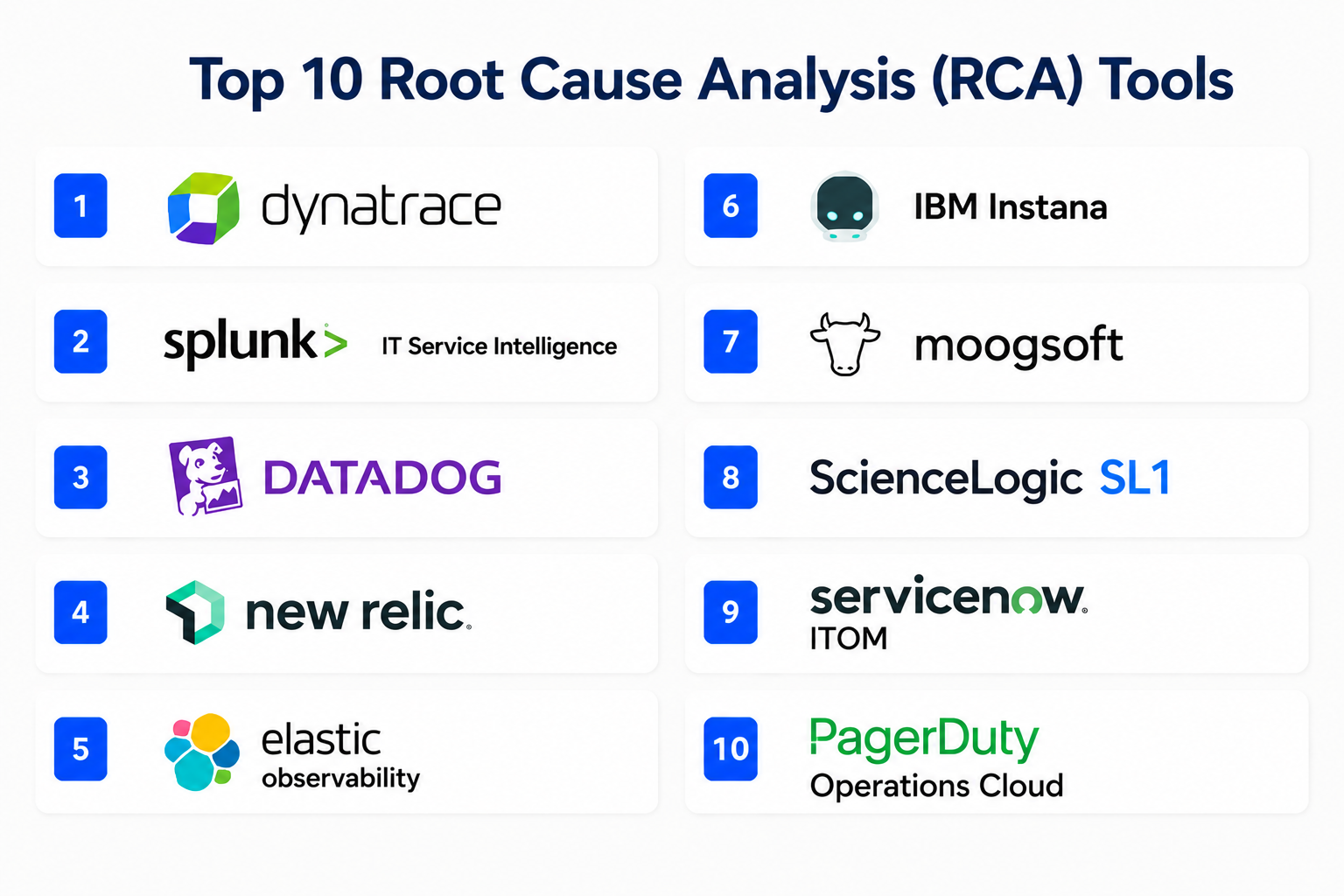
Root Cause Analysis (RCA) Tools
#1 — Dynatrace
Short description :
Dynatrace is an AI-powered observability and RCA platform designed for automated root cause detection, full-stack monitoring, dependency mapping, and operational intelligence. Its AI engine continuously analyzes telemetry data to identify infrastructure, application, and service issues across hybrid and cloud-native environments.
Key Features
- AI-driven root cause analysis
- Full-stack observability
- Dependency mapping
- Distributed tracing
- Infrastructure monitoring
- Automated anomaly detection
- Cloud-native analytics
Pros
- Strong AI-powered automation
- Excellent cloud-native visibility
- Advanced dependency analysis
Cons
- Premium pricing structure
- Complex enterprise configurations
- Large-scale governance planning may be required
Platforms / Deployment
- Web / Windows / Linux / macOS
- Cloud / Hybrid
Security & Compliance
- RBAC
- MFA
- Audit logs
- SSO/SAML
- Encryption support
Integrations & Ecosystem
Dynatrace integrates deeply into enterprise cloud and DevOps ecosystems.
- Kubernetes
- AWS
- Azure
- Google Cloud
- CI/CD systems
- ITSM platforms
Support & Community
Dynatrace provides enterprise onboarding, certifications, technical support, and operational consulting services.
#2 — Splunk IT Service Intelligence (ITSI)
Short description :
Splunk ITSI is an enterprise IT operations analytics platform focused on event correlation, operational intelligence, anomaly detection, and root cause investigation across distributed infrastructure environments.
Key Features
- Event correlation
- Predictive analytics
- Service dependency mapping
- AIOps workflows
- Machine learning insights
- Operational dashboards
- Incident investigation tools
Pros
- Strong enterprise analytics
- Mature operational intelligence ecosystem
- Advanced event analysis capabilities
Cons
- Enterprise pricing model
- Steeper learning curve
- Large deployments may require optimization
Platforms / Deployment
- Web / Windows / Linux
- Cloud / Self-hosted / Hybrid
Security & Compliance
- RBAC
- MFA
- Audit logs
- SSO/SAML
- Encryption support
Integrations & Ecosystem
Splunk integrates into enterprise observability and security ecosystems.
- Kubernetes
- SIEM platforms
- Cloud providers
- ITSM systems
- Monitoring tools
- CI/CD pipelines
Support & Community
Splunk offers enterprise support programs, certifications, training, and large community ecosystems.
#3 — Datadog
Short description :
Datadog is a cloud-native observability and RCA platform that provides centralized monitoring, distributed tracing, infrastructure analytics, and operational intelligence across multi-cloud environments.
Key Features
- Distributed tracing
- Infrastructure analytics
- Real-time observability
- Root cause workflows
- AI-powered alerting
- Cloud monitoring
- Centralized dashboards
Pros
- Strong cloud-native observability
- Extensive integration ecosystem
- Scalable telemetry analytics
Cons
- Pricing may increase at scale
- Advanced analytics tuning may require expertise
- Large telemetry volumes can increase operational costs
Platforms / Deployment
- Web / Windows / Linux / macOS
- Cloud
Security & Compliance
- RBAC
- MFA
- Audit logs
- SSO/SAML
- Encryption support
Integrations & Ecosystem
Datadog integrates into cloud and DevOps ecosystems.
- Kubernetes
- AWS
- Azure
- Google Cloud
- CI/CD tools
- Incident management systems
Support & Community
Datadog provides documentation, onboarding assistance, enterprise support, and operational guidance.
#4 — New Relic
Short description :
New Relic is a full-stack observability and RCA platform focused on distributed tracing, application monitoring, infrastructure analytics, and operational troubleshooting.
Key Features
- Full-stack monitoring
- Distributed tracing
- Application analytics
- Infrastructure visibility
- AI-powered insights
- Operational dashboards
- Incident analytics
Pros
- Strong developer-focused workflows
- Good distributed application visibility
- Flexible dashboard customization
Cons
- Pricing complexity
- Large telemetry ingestion can increase costs
- Advanced configuration may require expertise
Platforms / Deployment
- Web / Windows / Linux / macOS
- Cloud
Security & Compliance
- RBAC
- MFA
- Audit logs
- SSO/SAML
- Encryption support
Integrations & Ecosystem
New Relic integrates into modern cloud and observability ecosystems.
- Kubernetes
- Cloud providers
- Databases
- CI/CD pipelines
- Incident management tools
- DevOps platforms
Support & Community
New Relic provides onboarding resources, community ecosystems, and enterprise support programs.
#5 — Elastic Observability
Short description :
Elastic Observability is an analytics and RCA platform built on the Elastic Stack for centralized log analysis, infrastructure observability, distributed tracing, and operational troubleshooting.
Key Features
- Log analytics
- Distributed tracing
- Infrastructure monitoring
- Search-driven RCA workflows
- Dashboard visualization
- OpenTelemetry support
- Real-time analytics
Pros
- Strong search and analytics engine
- Flexible deployment models
- Good observability scalability
Cons
- Advanced deployments require expertise
- Operational complexity at scale
- Resource-intensive environments may require tuning
Platforms / Deployment
- Web / Windows / Linux / macOS
- Cloud / Self-hosted / Hybrid
Security & Compliance
- RBAC
- Audit logging
- Encryption support
- SSO/SAML integration
Integrations & Ecosystem
Elastic integrates into modern observability ecosystems.
- Kubernetes
- OpenTelemetry
- Cloud providers
- Databases
- SIEM platforms
- DevOps pipelines
Support & Community
Elastic offers enterprise support options, certifications, and strong open-source community ecosystems.
#6 — IBM Instana
Short description :
IBM Instana is an automated observability and RCA platform designed for real-time application monitoring, dependency mapping, operational analytics, and root cause investigation in cloud-native environments.
Key Features
- Automated observability
- Dependency mapping
- Real-time analytics
- Distributed tracing
- Infrastructure monitoring
- Root cause analysis
- Kubernetes monitoring
Pros
- Strong automation workflows
- Good Kubernetes visibility
- Real-time dependency analysis
Cons
- Enterprise-focused pricing
- Governance planning required for large deployments
- Advanced customization varies
Platforms / Deployment
- Web / Windows / Linux / macOS
- Cloud / Hybrid
Security & Compliance
- RBAC
- MFA
- Audit logs
- Encryption support
- Compliance visibility
Integrations & Ecosystem
IBM Instana integrates into enterprise cloud and DevOps ecosystems.
- Kubernetes
- AWS
- Azure
- Google Cloud
- ITSM systems
- CI/CD tools
Support & Community
IBM provides enterprise onboarding, documentation, and technical support services.
#7 — Moogsoft
Short description :
Moogsoft is an AIOps-focused RCA platform designed for event correlation, anomaly detection, alert reduction, and operational automation across enterprise IT environments.
Key Features
- Event correlation
- AIOps automation
- Anomaly detection
- Incident reduction
- Alert deduplication
- Operational analytics
- Workflow automation
Pros
- Strong alert reduction capabilities
- Good AIOps automation
- Effective operational correlation workflows
Cons
- Enterprise-focused complexity
- Smaller ecosystem than larger competitors
- Advanced integrations may require customization
Platforms / Deployment
- Web / Linux
- Cloud / Hybrid
Security & Compliance
- RBAC
- Audit logs
- MFA support
- Encryption support
Integrations & Ecosystem
Moogsoft integrates into enterprise operational ecosystems.
- Monitoring platforms
- ITSM systems
- Observability tools
- Cloud providers
- Incident management systems
- Automation workflows
Support & Community
Moogsoft provides enterprise onboarding, documentation, and technical support services.
#8 — ScienceLogic SL1
Short description :
ScienceLogic SL1 is an enterprise IT operations analytics and RCA platform focused on hybrid infrastructure visibility, service dependency analysis, operational automation, and incident investigation.
Key Features
- Dependency mapping
- Event correlation
- Operational dashboards
- Infrastructure discovery
- Service analytics
- Workflow automation
- Hybrid visibility
Pros
- Strong hybrid infrastructure support
- Good automation workflows
- Mature enterprise monitoring capabilities
Cons
- Enterprise-focused deployment complexity
- UI modernization varies
- Learning curve for advanced workflows
Platforms / Deployment
- Web / Linux
- Cloud / Hybrid
Security & Compliance
- RBAC
- Audit logs
- MFA support
- Encryption support
Integrations & Ecosystem
ScienceLogic integrates into enterprise operations ecosystems.
- VMware
- Cloud providers
- ITSM tools
- Monitoring systems
- Automation platforms
- Network infrastructure
Support & Community
ScienceLogic offers onboarding programs, documentation resources, and enterprise technical support.
#9 — ServiceNow ITOM
Short description :
ServiceNow ITOM is an enterprise operations management and RCA platform focused on event management, service mapping, infrastructure discovery, and workflow automation.
Key Features
- Event management
- Service mapping
- Infrastructure discovery
- AIOps workflows
- Operational dashboards
- Workflow automation
- Incident analytics
Pros
- Strong workflow automation
- Deep ITSM ecosystem integration
- Mature enterprise governance capabilities
Cons
- Enterprise pricing model
- Complex deployment planning
- Advanced customization may require specialists
Platforms / Deployment
- Web
- Cloud
Security & Compliance
- RBAC
- MFA
- Audit logs
- SSO/SAML
- Compliance support
Integrations & Ecosystem
ServiceNow integrates deeply into enterprise IT ecosystems.
- ITSM systems
- CMDB platforms
- Cloud providers
- Security tools
- Monitoring platforms
- Automation systems
Support & Community
ServiceNow provides enterprise onboarding, professional services, certifications, and extensive documentation.
#10 — PagerDuty Operations Cloud
Short description :
PagerDuty Operations Cloud is an incident response and operational intelligence platform designed for event correlation, operational visibility, alert reduction, and RCA workflows.
Key Features
- Incident response workflows
- Event intelligence
- Alert correlation
- Operational analytics
- Automation capabilities
- Service visibility
- Incident investigation
Pros
- Strong incident response workflows
- Good operational automation
- Effective alert management
Cons
- Primarily operations-focused
- Advanced observability depth varies
- Enterprise pricing can increase with scale
Platforms / Deployment
- Web / iOS / Android
- Cloud
Security & Compliance
- RBAC
- MFA
- Audit logs
- SSO/SAML
- Encryption support
Integrations & Ecosystem
PagerDuty integrates into operational and DevOps ecosystems.
- Monitoring platforms
- Cloud providers
- CI/CD systems
- ITSM tools
- Incident management platforms
- Collaboration tools
Support & Community
PagerDuty provides onboarding resources, enterprise support programs, and strong documentation.
Comparison Table (Top 10)
| Tool Name | Best For | Platform(s) Supported | Deployment | Standout Feature | Public Rating |
|---|---|---|---|---|---|
| Dynatrace | AI-powered RCA | Multi-platform | Hybrid | Automated root cause analysis | N/A |
| Splunk ITSI | Enterprise operational intelligence | Windows/Linux | Hybrid | Advanced event correlation | N/A |
| Datadog | Cloud-native RCA workflows | Multi-platform | Cloud | Unified observability | N/A |
| New Relic | Developer troubleshooting | Multi-platform | Cloud | Full-stack tracing | N/A |
| Elastic Observability | Search-driven analytics | Multi-platform | Hybrid | Search-based RCA workflows | N/A |
| IBM Instana | Automated observability | Multi-platform | Hybrid | Real-time dependency mapping | N/A |
| Moogsoft | AIOps alert reduction | Linux/Web | Hybrid | Event deduplication | N/A |
| ScienceLogic SL1 | Hybrid infrastructure RCA | Linux/Web | Hybrid | Infrastructure discovery | N/A |
| ServiceNow ITOM | Enterprise operational workflows | Web | Cloud | Service mapping | N/A |
| PagerDuty Operations Cloud | Incident operations workflows | Web/iOS/Android | Cloud | Event intelligence | N/A |
Evaluation & Root Cause Analysis (RCA) Tools
| Tool Name | Core (25%) | Ease (15%) | Integrations (15%) | Security (10%) | Performance (10%) | Support (10%) | Value (15%) | Weighted Total (0–10) |
|---|---|---|---|---|---|---|---|---|
| Dynatrace | 10 | 7 | 9 | 9 | 9 | 8 | 6 | 8.4 |
| Splunk ITSI | 10 | 7 | 9 | 9 | 9 | 8 | 6 | 8.3 |
| Datadog | 9 | 8 | 10 | 9 | 9 | 8 | 7 | 8.6 |
| New Relic | 8 | 8 | 9 | 8 | 8 | 8 | 7 | 8.0 |
| Elastic Observability | 8 | 6 | 9 | 8 | 8 | 7 | 8 | 7.8 |
| IBM Instana | 9 | 7 | 8 | 8 | 8 | 8 | 7 | 7.9 |
| Moogsoft | 8 | 6 | 7 | 8 | 8 | 7 | 7 | 7.3 |
| ScienceLogic SL1 | 8 | 6 | 8 | 8 | 8 | 7 | 7 | 7.4 |
| ServiceNow ITOM | 9 | 6 | 9 | 9 | 9 | 8 | 6 | 8.0 |
| PagerDuty Operations Cloud | 8 | 8 | 8 | 8 | 8 | 8 | 7 | 7.9 |
These scores are comparative and designed to help organizations evaluate RCA depth, automation maturity, observability capabilities, integration flexibility, and operational usability. Enterprise-focused platforms generally provide stronger analytics and governance capabilities, while cloud-native solutions often emphasize deployment simplicity and observability flexibility. Buyers should prioritize platforms aligned with infrastructure complexity, incident response maturity, and operational automation goals.
Which Root Cause Analysis (RCA) Tools
Solo / Freelancer
Smaller environments and independent developers may benefit from New Relic or Elastic Observability for lightweight troubleshooting and centralized observability.
SMB
SMBs commonly benefit from Datadog, PagerDuty Operations Cloud, and New Relic because of easier deployment and scalable cloud-native workflows.
Mid-Market
Mid-market organizations should evaluate Datadog, Dynatrace, and IBM Instana for balanced automation, observability, and operational intelligence.
Enterprise
Large enterprises often require advanced event correlation, dependency mapping, and AIOps automation. Splunk ITSI, Dynatrace, ServiceNow ITOM, and ScienceLogic SL1 are strong enterprise-focused choices.
Budget vs Premium
Flexible observability platforms may provide cost efficiency for growing organizations, while enterprise AIOps platforms justify premium pricing through automation, analytics depth, and governance features.
Feature Depth vs Ease of Use
Splunk ITSI and Dynatrace provide deeper analytics and operational automation, while Datadog and New Relic balance usability with strong cloud-native visibility.
Integrations & Scalability
Organizations operating hybrid and multi-cloud environments should prioritize strong API ecosystems, OpenTelemetry support, distributed tracing, and infrastructure discovery capabilities.
Security & Compliance Needs
Regulated industries should prioritize audit logging, RBAC, MFA, encryption support, operational governance, and centralized incident visibility.
Frequently Asked Questions (FAQs)
1. What are Root Cause Analysis (RCA) tools?
RCA tools help organizations identify the underlying causes of incidents, outages, and operational failures instead of only identifying symptoms.
2. Why are RCA tools important in 2026?
Modern IT environments generate enormous telemetry volumes, making manual troubleshooting difficult. RCA tools improve operational efficiency and reduce downtime.
3. What is AIOps in RCA platforms?
AIOps uses machine learning and automation to correlate events, detect anomalies, reduce alert noise, and automate incident investigation workflows.
4. How are RCA tools different from monitoring platforms?
Monitoring tools primarily detect issues, while RCA platforms focus on identifying the underlying causes and operational relationships behind incidents.
5. Can RCA tools support Kubernetes environments?
Yes. Most modern RCA platforms support Kubernetes observability, distributed tracing, dependency mapping, and cloud-native analytics.
6. What integrations are most important?
Important integrations include cloud providers, CI/CD systems, ITSM tools, SIEM platforms, observability frameworks, and incident response platforms.
7. Are RCA tools suitable for SMBs?
Yes. Many vendors now provide cloud-native deployment models that simplify onboarding for SMB and mid-market organizations.
8. What security features should buyers prioritize?
Organizations should prioritize RBAC, MFA, audit logs, SSO integration, encryption support, and operational governance controls.
9. Is implementation difficult?
Implementation complexity depends on infrastructure scale, telemetry ingestion volume, integration requirements, and automation workflows.
10. What is distributed tracing?
Distributed tracing tracks requests across multiple services and applications to help teams identify bottlenecks and service dependencies during troubleshooting.
Conclusion
Root Cause Analysis (RCA) Tools have evolved into essential operational intelligence platforms that help organizations troubleshoot increasingly complex hybrid infrastructure, cloud-native applications, distributed services, and large-scale digital operations. Traditional monitoring alone is no longer sufficient in environments generating massive telemetry volumes across multiple clouds, Kubernetes clusters, SaaS platforms, APIs, and interconnected services. Modern RCA platforms now combine observability, AIOps, dependency mapping, distributed tracing, and machine learning to accelerate incident investigation and reduce operational downtime.
