Introduction
Route Optimization Tools are software platforms that help businesses plan the most efficient routes for deliveries, field service operations, and transportation logistics. In simple terms, they analyze variables like distance, traffic, delivery windows, vehicle capacity, and driver schedules to create optimized routes that reduce time and cost.
In today’s fast-moving logistics environment, efficient routing is no longer optional. Rising fuel costs, customer expectations for faster delivery, and increasing operational complexity make route optimization essential. Modern tools now use AI, real-time data, and predictive analytics to continuously improve routing decisions.
Real-world use cases include:
- Delivery companies optimizing last-mile delivery routes
- Field service teams scheduling technician visits
- E-commerce businesses managing multi-stop deliveries
- Logistics firms reducing fuel consumption and delays
- Transportation companies improving fleet utilization
What buyers should evaluate:
- Route optimization algorithms and accuracy
- Real-time traffic and weather integration
- Multi-stop and multi-vehicle planning
- Delivery time window management
- Driver and vehicle constraints handling
- Mobile app usability for drivers
- Integration with CRM, ERP, and dispatch systems
- Scalability for growing operations
- Reporting and analytics capabilities
Best for: Logistics companies, delivery startups, field service teams, e-commerce businesses, and enterprises managing multi-stop routing operations.
Not ideal for: Very small teams with only 1–2 deliveries per day or businesses that rely on static routes with minimal variation.
Key Trends in Warehouse Route Optimization Tools
- AI-driven route optimization with predictive traffic analysis
- Real-time route recalculations based on live conditions
- Integration with IoT and telematics for dynamic routing
- Shift toward mobile-first driver applications
- Cloud-native platforms enabling global scalability
- Sustainability tracking (fuel savings and emissions reduction)
- Automated dispatch and scheduling systems
- Integration with last-mile delivery platforms
- Usage-based pricing models aligned with deliveries or routes
- Enhanced customer visibility with live tracking links
How We Selected These Tools (Methodology)
- Strong adoption across logistics and delivery industries
- Proven efficiency in multi-stop route optimization
- Advanced features like AI routing and real-time updates
- Ease of use for dispatchers and drivers
- Integration capabilities with logistics and business systems
- Reliability in handling large-scale routing scenarios
- Security posture and access control features
- Flexibility for SMBs to enterprise-scale operations
- Vendor reputation and ongoing innovation
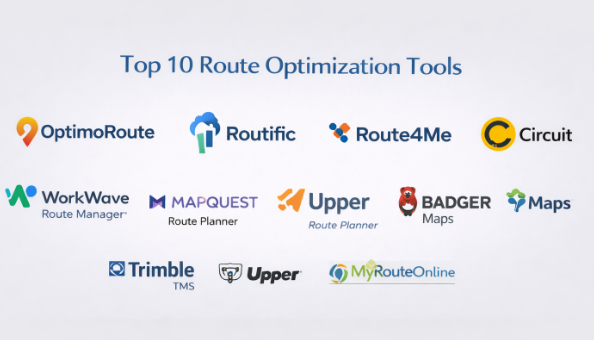
Top 10 Warehouse Route Optimization Tools
#1 — OptimoRoute
Short description: A powerful route planning and optimization platform designed for delivery and field service businesses with complex routing needs.
Key Features
- Multi-stop route optimization
- Time window constraints
- Real-time tracking
- Driver workload balancing
- Proof of delivery
- Mobile driver app
- Automated scheduling
Pros
- Excellent for complex routing scenarios
- Strong automation features
Cons
- Pricing may increase with scale
- Learning curve for advanced features
Platforms / Deployment
Web / iOS / Android
Cloud
Security & Compliance
Not publicly stated
Integrations & Ecosystem
Integrates with CRM and order management systems
- APIs available
- Delivery tracking tools
- Business workflow integrations
Support & Community
Good documentation and onboarding support
#2 — Routific
Short description: A user-friendly route optimization tool focused on simplicity and efficiency for delivery businesses.
Key Features
- Route planning with time windows
- Driver tracking
- Delivery notifications
- Route balancing
- Mobile driver support
Pros
- Easy to use
- Quick setup
Cons
- Limited advanced customization
- Not ideal for highly complex operations
Platforms / Deployment
Web / Mobile
Cloud
Security & Compliance
Not publicly stated
Integrations & Ecosystem
Supports integrations with delivery platforms
- APIs
- Notification systems
Support & Community
Responsive support for SMB users
#3 — Route4Me
Short description: A scalable route optimization platform with strong API capabilities for enterprises and developers.
Key Features
- Advanced route optimization
- Real-time updates
- Route planning APIs
- Territory mapping
- Analytics dashboards
Pros
- Highly scalable
- Strong API ecosystem
Cons
- Interface can feel complex
- Pricing varies
Platforms / Deployment
Web / Mobile
Cloud
Security & Compliance
Not publicly stated
Integrations & Ecosystem
Extensive API ecosystem
- CRM integrations
- Delivery platforms
- Custom workflows
Support & Community
Strong developer documentation
#4 — Onfleet
Short description: A modern last-mile delivery platform focused on real-time tracking and customer experience.
Key Features
- Real-time driver tracking
- Automated dispatch
- Delivery notifications
- Route optimization
- Driver performance tracking
Pros
- Excellent UI and UX
- Strong customer communication features
Cons
- Premium pricing
- Limited offline capabilities
Platforms / Deployment
Web / iOS / Android
Cloud
Security & Compliance
Not publicly stated
Integrations & Ecosystem
Integrates with e-commerce and delivery platforms
- APIs
- Notification systems
- Logistics tools
Support & Community
High-quality support and onboarding
#5 — Circuit
Short description: A simple route optimization tool designed for small to medium delivery teams.
Key Features
- Route planning
- Delivery sequencing
- Driver mobile app
- Proof of delivery
- Route sharing
Pros
- Very easy to use
- Affordable for SMBs
Cons
- Limited enterprise features
- Basic analytics
Platforms / Deployment
Web / Mobile
Cloud
Security & Compliance
Not publicly stated
Integrations & Ecosystem
Basic integrations available
- APIs
- Delivery tracking tools
Support & Community
Good SMB-focused support
#6 — WorkWave Route Manager
Short description: A route optimization solution tailored for field service and distribution businesses.
Key Features
- Route planning and optimization
- Scheduling automation
- Driver tracking
- Reporting tools
- Customer notifications
Pros
- Strong scheduling capabilities
- Good for service businesses
Cons
- UI can feel outdated
- Limited AI features
Platforms / Deployment
Web / Mobile
Cloud
Security & Compliance
Not publicly stated
Integrations & Ecosystem
Supports business system integrations
- APIs
- CRM tools
- Service platforms
Support & Community
Reliable support services
#7 — MapQuest Route Planner
Short description: A simple route planning tool for basic routing needs and small teams.
Key Features
- Multi-stop route planning
- Map-based navigation
- Basic optimization
- Route sharing
Pros
- Simple and accessible
- Low cost
Cons
- Limited advanced features
- Not suitable for large fleets
Platforms / Deployment
Web
Cloud
Security & Compliance
Not publicly stated
Integrations & Ecosystem
Limited integrations
- Basic APIs
Support & Community
Basic support
#8 — Upper Route Planner
Short description: A route optimization tool designed for delivery businesses with Shopify and e-commerce integrations.
Key Features
- Route optimization
- Delivery scheduling
- Proof of delivery
- Customer notifications
- Driver tracking
Pros
- Strong e-commerce integrations
- Easy to deploy
Cons
- Limited enterprise features
- Not highly customizable
Platforms / Deployment
Web / Mobile
Cloud
Security & Compliance
Not publicly stated
Integrations & Ecosystem
Focus on e-commerce ecosystem
- Shopify integrations
- APIs
- Delivery tools
Support & Community
Good onboarding for SMBs
#9 — Badger Maps
Short description: A route optimization and mapping tool focused on sales teams and field representatives.
Key Features
- Route planning
- Territory management
- CRM integration
- Customer mapping
- Mobile app
Pros
- Great for sales teams
- Easy CRM integration
Cons
- Not ideal for logistics-heavy operations
- Limited fleet features
Platforms / Deployment
Web / Mobile
Cloud
Security & Compliance
Not publicly stated
Integrations & Ecosystem
CRM-focused integrations
- APIs
- Sales tools
- Mapping tools
Support & Community
Strong support for sales use cases
#10 — MyRouteOnline
Short description: A simple route optimization solution for small delivery businesses and independent operators.
Key Features
- Multi-stop routing
- Route export
- Address management
- Map visualization
- Route sharing
Pros
- Easy to use
- Affordable
Cons
- Limited automation
- Basic analytics
Platforms / Deployment
Web
Cloud
Security & Compliance
Not publicly stated
Integrations & Ecosystem
Limited integrations
- Basic APIs
Support & Community
Basic support
Comparison Table (Top 10)
| Tool Name | Best For | Platform(s) Supported | Deployment | Standout Feature | Public Rating |
|---|---|---|---|---|---|
| OptimoRoute | Complex routing | Web, Mobile | Cloud | Advanced scheduling | N/A |
| Routific | SMB deliveries | Web, Mobile | Cloud | Ease of use | N/A |
| Route4Me | Enterprise APIs | Web, Mobile | Cloud | API ecosystem | N/A |
| Onfleet | Last-mile delivery | Web, Mobile | Cloud | Real-time tracking | N/A |
| Circuit | Small teams | Web, Mobile | Cloud | Simplicity | N/A |
| WorkWave | Field services | Web, Mobile | Cloud | Scheduling tools | N/A |
| MapQuest | Basic routing | Web | Cloud | Simplicity | N/A |
| Upper Route Planner | E-commerce | Web, Mobile | Cloud | Shopify integration | N/A |
| Badger Maps | Sales teams | Web, Mobile | Cloud | Territory mapping | N/A |
| MyRouteOnline | Small businesses | Web | Cloud | Easy routing | N/A |
Evaluation & Scoring of Route Optimization Tools
| Tool Name | Core (25%) | Ease (15%) | Integrations (15%) | Security (10%) | Performance (10%) | Support (10%) | Value (15%) | Weighted Total |
|---|---|---|---|---|---|---|---|---|
| OptimoRoute | 9 | 8 | 8 | 7 | 9 | 8 | 7 | 8.3 |
| Routific | 7 | 9 | 7 | 6 | 8 | 8 | 9 | 7.8 |
| Route4Me | 9 | 7 | 9 | 7 | 9 | 8 | 7 | 8.4 |
| Onfleet | 9 | 8 | 8 | 7 | 9 | 8 | 7 | 8.3 |
| Circuit | 7 | 9 | 6 | 6 | 7 | 7 | 9 | 7.6 |
| WorkWave | 8 | 7 | 7 | 6 | 8 | 7 | 7 | 7.5 |
| MapQuest | 6 | 9 | 5 | 6 | 7 | 6 | 9 | 7.0 |
| Upper Route Planner | 7 | 8 | 7 | 6 | 7 | 7 | 8 | 7.5 |
| Badger Maps | 7 | 8 | 8 | 6 | 7 | 7 | 8 | 7.6 |
| MyRouteOnline | 6 | 9 | 5 | 6 | 7 | 6 | 9 | 7.0 |
How to interpret scores:
- Scores are comparative within this category
- Higher scores indicate stronger overall capability
- Ease reflects usability and onboarding
- Value balances cost vs features
- Choose based on your operational needs
Which Route Optimization Tools
Solo / Freelancer
- Circuit or MyRouteOnline
- Focus on simplicity and affordability
SMB
- Routific or Upper Route Planner
- Balance ease and functionality
Mid-Market
- OptimoRoute or WorkWave
- Strong scheduling and optimization
Enterprise
- Route4Me or Onfleet
- Focus on scalability and integrations
Budget vs Premium
- Budget: Circuit, MapQuest
- Premium: Onfleet, OptimoRoute
Feature Depth vs Ease of Use
- Feature-rich: Route4Me, OptimoRoute
- Easy: Routific, Circuit
Integrations & Scalability
- Strong: Route4Me, Onfleet
- Limited: MapQuest
Security & Compliance Needs
- Enterprise tools provide better controls
- SMB tools offer basic security
Frequently Asked Questions (FAQs)
1. What is route optimization software?
It is a tool that calculates the most efficient routes for deliveries or field operations by considering distance, time, and constraints.
2. How does route optimization reduce costs?
It reduces fuel consumption, travel time, and operational inefficiencies, leading to significant cost savings.
3. Can these tools handle multiple vehicles?
Yes, most tools support multi-vehicle and multi-stop route planning.
4. Do they work in real time?
Many modern tools provide real-time route updates based on traffic and conditions.
5. Are they suitable for small businesses?
Yes, lightweight tools are available specifically for SMBs and startups.
6. Can I integrate route optimization tools with my CRM?
Most tools offer APIs or direct integrations with CRM and logistics platforms.
7. What are common mistakes when choosing a tool?
Choosing based only on price, ignoring integration needs, and underestimating scalability.
8. Do these tools require training?
Basic tools require minimal training, while advanced platforms may need onboarding sessions.
9. How secure are these tools?
Security varies; most provide encryption and access control, but certifications differ.
10. Can I switch tools later?
Yes, but switching can require data migration and operational adjustments.
Conclusion
Route optimization tools have become a critical component of modern logistics and delivery operations. They go far beyond simple navigation by enabling businesses to automate planning, reduce operational costs, and deliver better customer experiences. However, the right tool depends on your specific needs—small businesses may prioritize ease of use and affordability, while enterprises focus on scalability, integrations, and advanced analytics. There is no one-size-fits-all solution. The most effective approach is to shortlist two or three tools, test them with real operational scenarios, and evaluate how well they integrate into your existing systems before making a final decision.
