Introduction
Retail pricing optimization tools are software platforms that help businesses determine the best price for products based on demand, competition, inventory levels, and customer behavior. In simple terms, these tools use data and algorithms to ensure retailers maximize profit while staying competitive in the market.
In today’s dynamic retail environment, pricing is no longer static. With the rise of eCommerce, dynamic pricing, and real-time competitor tracking, pricing decisions must be fast, data-driven, and scalable. Modern tools leverage AI and machine learning to continuously adjust prices, forecast demand, and optimize margins.
Real-world use cases include:
- Dynamic pricing for online and offline channels
- Competitor price monitoring and adjustment
- Markdown optimization for seasonal inventory
- Promotion effectiveness analysis
- Margin optimization across product categories
What buyers should evaluate:
- Pricing algorithm sophistication (AI/ML capabilities)
- Real-time data processing and responsiveness
- Integration with POS, ERP, and eCommerce systems
- Scalability across SKUs and locations
- Ease of use and automation level
- Reporting and analytics capabilities
- Customization of pricing rules
- Security and compliance features
Best for: Retail chains, eCommerce platforms, grocery stores, fashion retailers, and businesses managing large product catalogs with frequent price changes.
Not ideal for: Small retailers with static pricing models or low SKU counts where manual pricing is sufficient.
Key Trends in Retail Pricing Optimization Tools
- AI-driven dynamic pricing engines
- Real-time competitor price monitoring
- Integration with customer behavior analytics
- Automated markdown and promotion optimization
- Cloud-native SaaS pricing models
- Personalization of pricing strategies
- API-first architectures for flexibility
- Increased focus on margin intelligence
- Use of predictive analytics for demand elasticity
- Compliance-aware pricing for regulated markets
How We Selected These Tools (Methodology)
- Strong market presence and adoption in retail
- Comprehensive pricing optimization capabilities
- Proven scalability across industries and regions
- Availability of AI/ML-driven features
- Integration with enterprise retail systems
- Vendor reputation and innovation track record
- Flexibility across SMB, mid-market, and enterprise segments
- Usability and onboarding experience
- Support for omnichannel pricing strategies
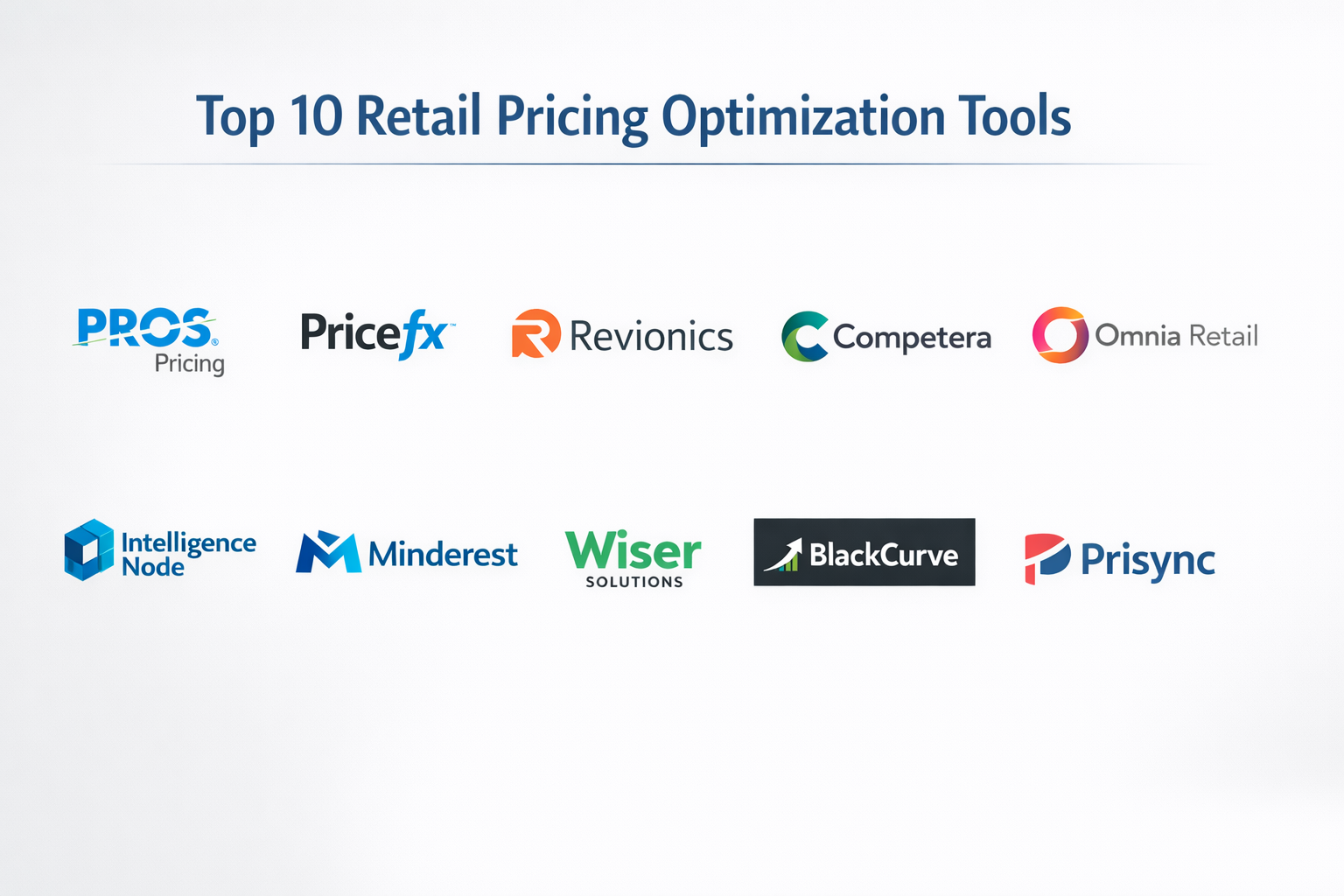
Top 10 Retail Pricing Optimization Tools
#1 — PROS Pricing
Short description (5-6 lines): PROS Pricing is an AI-powered pricing optimization platform designed for large enterprises. It helps retailers optimize pricing strategies using advanced analytics, demand forecasting, and price elasticity modeling. The platform supports real-time price adjustments and integrates deeply with enterprise systems. It is widely used in industries where pricing complexity is high. Best suited for enterprises looking for advanced pricing intelligence.
Key Features
- AI-driven price optimization
- Price elasticity modeling
- Dynamic pricing engine
- Real-time analytics
- Scenario simulation tools
- Margin optimization
Pros
- Highly advanced pricing algorithms
- Scalable for enterprise needs
Cons
- Complex implementation
- Premium pricing
Platforms / Deployment
Cloud
Security & Compliance
SSO, RBAC, encryption. Other certifications: Not publicly stated
Integrations & Ecosystem
PROS integrates with ERP, CRM, and eCommerce platforms to provide a unified pricing environment.
- ERP systems
- CRM platforms
- Data analytics tools
- APIs for customization
Support & Community
Enterprise-grade support with onboarding and consulting services
#2 — Pricefx
Short description (5-6 lines): Pricefx is a cloud-native pricing platform offering dynamic pricing, rebate management, and margin optimization. It is known for its flexibility and ease of integration. The platform supports AI-based recommendations and allows businesses to configure pricing strategies without heavy coding. It is suitable for mid-market and enterprise organizations.
Key Features
- Dynamic pricing engine
- Price management workflows
- Margin analysis tools
- AI recommendations
- Rebate and discount management
Pros
- Flexible and customizable
- Strong cloud capabilities
Cons
- Requires training
- Can be complex for beginners
Platforms / Deployment
Cloud
Security & Compliance
SSO, MFA. Other certifications: Not publicly stated
Integrations & Ecosystem
Pricefx integrates with a wide range of business systems for seamless pricing workflows.
- ERP platforms
- CRM tools
- BI systems
- APIs
Support & Community
Strong customer support and active user community
#3 — Revionics
Short description (5-6 lines): Revionics, part of Aptos, provides AI-driven pricing optimization specifically for retail. It focuses on price, promotion, and markdown optimization using predictive analytics. The platform helps retailers improve margins while maintaining competitiveness. It is widely used in grocery and general retail sectors.
Key Features
- Price optimization algorithms
- Promotion planning
- Markdown optimization
- Demand forecasting
- Competitive pricing insights
Pros
- Retail-focused solution
- Strong AI capabilities
Cons
- Limited outside retail
- Requires data maturity
Platforms / Deployment
Cloud
Security & Compliance
Not publicly stated
Integrations & Ecosystem
Revionics connects with retail systems to enable end-to-end pricing optimization.
- POS systems
- ERP platforms
- Analytics tools
Support & Community
Strong onboarding and support
#4 — Competera
Short description (5-6 lines): Competera is a pricing optimization platform focused on AI-based competitor pricing and demand forecasting. It helps retailers automate pricing decisions based on real-time data. The platform is known for its ease of use and quick deployment. It is ideal for mid-market and enterprise retailers.
Key Features
- Competitor price tracking
- AI pricing recommendations
- Demand forecasting
- Pricing rules engine
- Real-time analytics
Pros
- Easy to deploy
- Strong competitor insights
Cons
- Limited enterprise depth
- Customization constraints
Platforms / Deployment
Cloud
Security & Compliance
Not publicly stated
Integrations & Ecosystem
Competera integrates with retail systems to automate pricing workflows.
- eCommerce platforms
- ERP systems
- APIs
Support & Community
Responsive support with onboarding assistance
#5 — Omnia Retail
Short description (5-6 lines): Omnia Retail provides dynamic pricing and market intelligence tools for retailers. It focuses on competitor monitoring, pricing automation, and promotional strategies. The platform is widely used in eCommerce and omnichannel retail environments.
Key Features
- Dynamic pricing automation
- Competitor monitoring
- Price rules configuration
- Promotion management
- Analytics dashboards
Pros
- Strong eCommerce focus
- Easy to use
Cons
- Limited enterprise features
- Smaller ecosystem
Platforms / Deployment
Cloud
Security & Compliance
Not publicly stated
Integrations & Ecosystem
Omnia integrates with online retail platforms and data sources.
- eCommerce platforms
- APIs
- Data analytics tools
Support & Community
Moderate support availability
#6 — Intelligence Node
Short description (5-6 lines): Intelligence Node offers AI-driven retail analytics and pricing optimization tools. It helps retailers track competitors, optimize pricing, and improve assortment strategies. The platform is data-heavy and designed for advanced analytics use cases.
Key Features
- Competitive intelligence
- Price optimization
- Assortment analytics
- Market trend analysis
- AI insights
Pros
- Data-rich platform
- Strong analytics
Cons
- Requires data expertise
- Complex UI
Platforms / Deployment
Cloud
Security & Compliance
Not publicly stated
Integrations & Ecosystem
- Data platforms
- APIs
- Retail systems
Support & Community
Varies / Not publicly stated
#7 — Minderest
Short description (5-6 lines): Minderest focuses on price intelligence and monitoring for retailers. It provides insights into competitor pricing and helps optimize pricing strategies. It is suitable for eCommerce businesses and digital retailers.
Key Features
- Competitor price tracking
- Market analysis
- Pricing alerts
- Data visualization
- API access
Pros
- Strong price monitoring
- Easy to use
Cons
- Limited full optimization features
- Less enterprise scalability
Platforms / Deployment
Cloud
Security & Compliance
Not publicly stated
Integrations & Ecosystem
- eCommerce platforms
- APIs
Support & Community
Moderate support
#8 — Wiser Solutions
Short description (5-6 lines): Wiser Solutions offers retail pricing intelligence and dynamic pricing tools. It focuses on price monitoring, promotions, and assortment analytics. It is widely used by retailers looking to improve competitive positioning.
Key Features
- Price intelligence
- Promotion optimization
- Competitive insights
- Analytics dashboards
- Real-time monitoring
Pros
- Strong insights
- Good reporting
Cons
- Limited customization
- Mid-market focus
Platforms / Deployment
Cloud
Security & Compliance
Not publicly stated
Integrations & Ecosystem
- Retail systems
- APIs
Support & Community
Varies / Not publicly stated
#9 — BlackCurve
Short description (5-6 lines): BlackCurve is a pricing optimization platform focused on SMB and mid-market retailers. It offers automated pricing recommendations and integrates with eCommerce platforms. It is known for ease of use and affordability.
Key Features
- Automated pricing
- Demand-based pricing
- Competitor tracking
- Integration with online stores
- Reporting tools
Pros
- Affordable
- Easy to implement
Cons
- Limited enterprise features
- Smaller ecosystem
Platforms / Deployment
Cloud
Security & Compliance
Not publicly stated
Integrations & Ecosystem
- eCommerce platforms
- APIs
Support & Community
Good SMB support
#10 — Prisync
Short description (5-6 lines): Prisync is a competitor price tracking and dynamic pricing tool designed for eCommerce businesses. It helps retailers monitor competitors and adjust pricing strategies accordingly. It is simple, lightweight, and easy to deploy.
Key Features
- Competitor price tracking
- Dynamic pricing automation
- Alerts and notifications
- Reporting dashboards
- Integration APIs
Pros
- Easy to use
- Quick setup
Cons
- Limited advanced features
- Not enterprise-grade
Platforms / Deployment
Cloud
Security & Compliance
Not publicly stated
Integrations & Ecosystem
- eCommerce platforms
- APIs
Support & Community
Moderate support
Comparison Table (Top 10)
| Tool Name | Best For | Platform(s) Supported | Deployment | Standout Feature | Public Rating |
|---|---|---|---|---|---|
| PROS Pricing | Enterprise pricing | Web | Cloud | AI price optimization | N/A |
| Pricefx | Flexible pricing | Web | Cloud | Configurable pricing workflows | N/A |
| Revionics | Retail AI pricing | Web | Cloud | Promotion optimization | N/A |
| Competera | Competitor pricing | Web | Cloud | AI recommendations | N/A |
| Omnia Retail | eCommerce pricing | Web | Cloud | Dynamic pricing automation | N/A |
| Intelligence Node | Analytics-heavy retail | Web | Cloud | Competitive intelligence | N/A |
| Minderest | Price monitoring | Web | Cloud | Market insights | N/A |
| Wiser Solutions | Retail insights | Web | Cloud | Price intelligence | N/A |
| BlackCurve | SMB pricing | Web | Cloud | Automated pricing | N/A |
| Prisync | eCommerce SMB | Web | Cloud | Competitor tracking | N/A |
Evaluation & Scoring of Retail Pricing Optimization Tools
| Tool Name | Core (25%) | Ease (15%) | Integrations (15%) | Security (10%) | Performance (10%) | Support (10%) | Value (15%) | Weighted Total |
|---|---|---|---|---|---|---|---|---|
| PROS | 9 | 6 | 9 | 8 | 9 | 9 | 6 | 8.1 |
| Pricefx | 8 | 7 | 8 | 7 | 8 | 8 | 7 | 7.8 |
| Revionics | 9 | 7 | 8 | 7 | 9 | 8 | 7 | 8.1 |
| Competera | 8 | 8 | 7 | 6 | 8 | 7 | 8 | 7.8 |
| Omnia | 7 | 8 | 7 | 6 | 7 | 7 | 8 | 7.3 |
| Intelligence Node | 8 | 6 | 7 | 6 | 8 | 7 | 7 | 7.3 |
| Minderest | 7 | 8 | 6 | 6 | 7 | 6 | 8 | 7.1 |
| Wiser | 7 | 7 | 7 | 6 | 7 | 6 | 7 | 7.0 |
| BlackCurve | 6 | 8 | 6 | 6 | 7 | 6 | 8 | 6.9 |
| Prisync | 6 | 9 | 6 | 6 | 7 | 6 | 8 | 7.0 |
How to interpret scores:
These scores are relative and meant to compare tools within this category. Enterprise tools score higher on features and integrations, while SMB tools perform better in ease of use and affordability. Always align scores with your business needs.
Which Retail Pricing Optimization Tools
Solo / Freelancer
Simple tools like Prisync or BlackCurve are sufficient for basic pricing automation.
SMB
BlackCurve, Prisync, and Omnia Retail provide affordability and ease of use.
Mid-Market
Competera, Pricefx, and Wiser Solutions offer a balance of features and scalability.
Enterprise
PROS Pricing, Revionics, and Intelligence Node are best suited for large-scale operations.
Budget vs Premium
- Budget: Prisync, BlackCurve
- Premium: PROS, Revionics
Feature Depth vs Ease of Use
- Deep features: PROS, Revionics
- Easy tools: Prisync, Omnia
Integrations & Scalability
- Strong integration: Pricefx, PROS
- Moderate: SMB tools
Security & Compliance Needs
- Enterprise-grade: PROS, Pricefx
- Basic: SMB tools
Frequently Asked Questions (FAQs)
1. What is pricing optimization in retail?
It is the process of using data and algorithms to set prices that maximize profit and competitiveness.
2. Are these tools suitable for small businesses?
Yes, but only certain tools are designed for SMBs; enterprise tools may be too complex.
3. How do AI pricing tools work?
They analyze demand, competition, and historical data to recommend optimal pricing strategies.
4. What is dynamic pricing?
Dynamic pricing adjusts prices in real time based on market conditions and demand.
5. Do these tools integrate with eCommerce platforms?
Yes, most tools integrate with eCommerce, ERP, and POS systems.
6. How long does implementation take?
Implementation can take from a few days to several months depending on complexity.
7. Are these tools secure?
Most tools include security features, but specifics vary by vendor.
8. Can pricing tools handle promotions?
Yes, many tools support promotion planning and optimization.
9. What are common mistakes when using pricing tools?
Ignoring data quality and not aligning pricing strategies with business goals.
10. Can businesses switch pricing tools later?
Yes, but switching requires careful data migration and planning.
Conclusion
Retail pricing optimization tools are essential for businesses navigating competitive and fast-changing markets. These platforms bring intelligence, automation, and scalability to pricing decisions, helping retailers improve margins while staying competitive. However, the right choice depends heavily on your business size, data maturity, and operational complexity. Enterprise retailers may benefit from advanced platforms like PROS or Revionics, while SMBs can achieve strong outcomes with tools like Prisync or BlackCurve. Instead of searching for a universal “best” tool, focus on alignment with your goals. Start by shortlisting two or three tools, run a controlled pilot, evaluate integration with your existing systems, and validate pricing outcomes before committing to full deployment.
