Introduction
Patient Portal Platforms are digital systems that allow patients to securely access their health information, communicate with healthcare providers, book appointments, view lab results, and manage their care online. In simple terms, they act as a bridge between patients and healthcare providers—making healthcare more transparent, accessible, and efficient.
In today’s digital-first healthcare environment, especially moving into 2026 and beyond, patient portals are no longer optional. Patients expect real-time access to their medical data, digital communication, and self-service options. At the same time, providers need to reduce administrative burden and improve patient engagement.
Common real-world use cases include:
- Booking and managing appointments online
- Accessing lab reports and medical history
- Secure messaging with doctors
- Online bill payment and insurance tracking
- Remote patient monitoring integration
Key evaluation criteria for buyers:
- Ease of use (for both patients and staff)
- Integration with EHR/EMR systems
- Security and compliance capabilities
- Mobile accessibility
- Customization and branding
- Automation features (reminders, notifications)
- Scalability for growing patient bases
- Support and onboarding experience
Best for: Hospitals, clinics, telehealth providers, and healthcare networks looking to improve patient engagement, streamline operations, and digitize patient interactions.
Not ideal for: Very small practices with minimal patient volume or those relying entirely on offline/manual workflows where digital transformation is not a priority.
Key Trends in Patient Portal Platforms
- AI-powered patient engagement: Chatbots, symptom checkers, and automated triage are becoming standard.
- Mobile-first design: Patients increasingly prefer apps over web portals.
- Interoperability focus: Seamless integration with EHR, insurance, and pharmacy systems is critical.
- Telehealth integration: Video consultations are now built directly into portals.
- Personalized patient dashboards: AI-driven insights and health recommendations.
- Automation of workflows: Appointment reminders, follow-ups, and billing automation.
- Stronger security expectations: MFA, encryption, and compliance with healthcare regulations.
- API-first platforms: Allowing custom integrations and extensions.
- Cloud-native deployments: Faster scalability and reduced infrastructure overhead.
How We Selected These Tools (Methodology)
- Evaluated market adoption and brand recognition
- Assessed feature completeness and innovation
- Reviewed integration capabilities with major EHR systems
- Considered performance and reliability indicators
- Examined security posture and compliance readiness
- Analyzed ease of use for both patients and providers
- Evaluated support quality and onboarding experience
- Considered fit across SMB, mid-market, and enterprise segments
- Reviewed platform flexibility (mobile, web, API support)
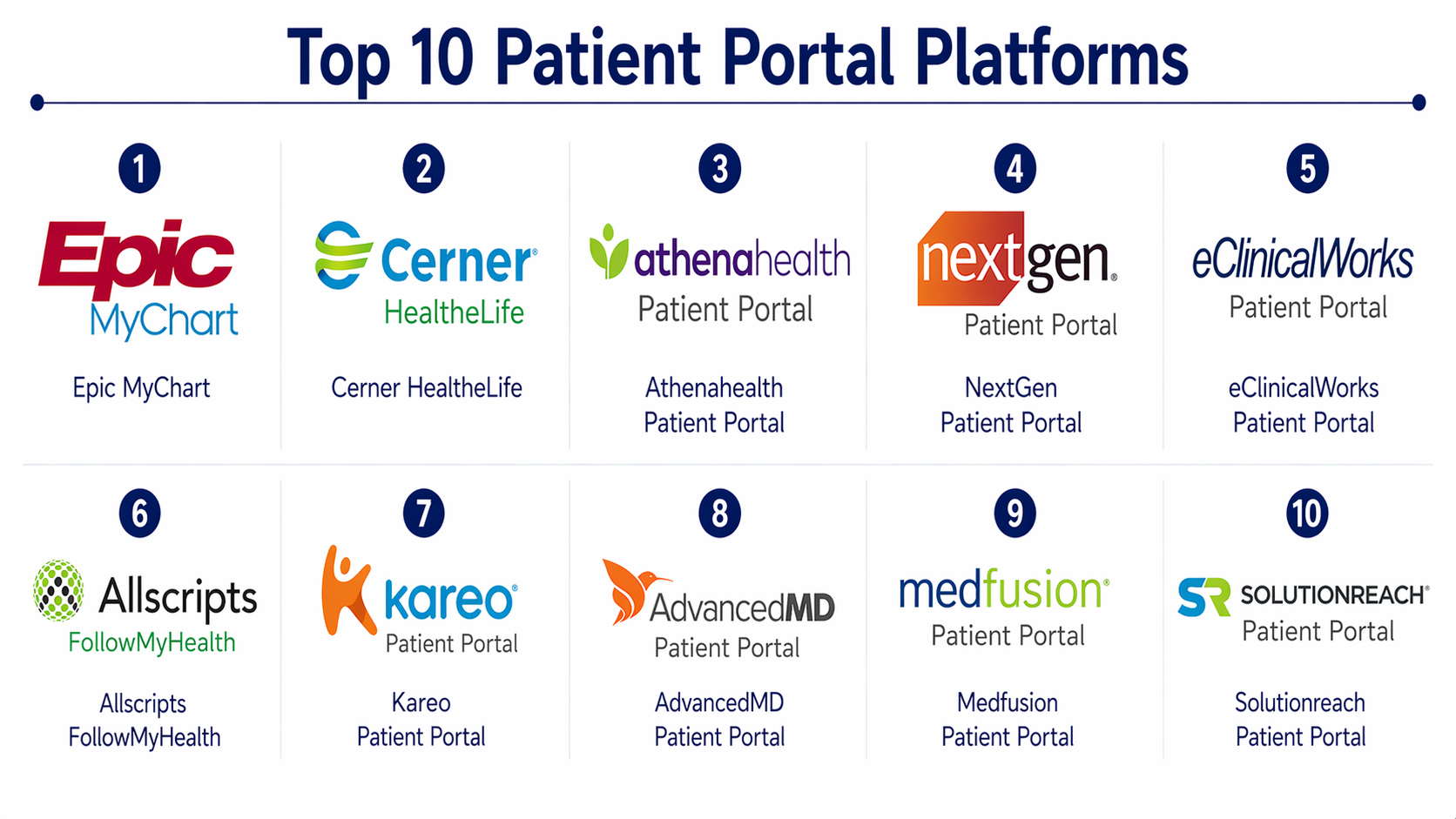
Top 10 Patient Portal Platforms
#1 — Epic MyChart
Short description :
Epic MyChart is one of the most widely used patient portal platforms, tightly integrated with the Epic EHR ecosystem. It enables patients to access records, communicate with providers, schedule appointments, and manage billing. It is primarily designed for large healthcare systems and hospitals. Its strong integration and reliability make it a top enterprise choice. However, it requires Epic infrastructure to fully function.
Key Features
- Appointment scheduling and reminders
- Secure messaging with providers
- Access to medical records and lab results
- Telehealth video visits
- Billing and payment management
- Mobile app support
Pros
- Deep integration with Epic EHR
- Highly reliable and scalable
Cons
- Limited use outside Epic ecosystem
- Complex implementation
Platforms / Deployment
- Web / iOS / Android
- Cloud / Hybrid
Security & Compliance
- HIPAA-ready features, encryption, MFA (details not fully publicly stated)
Integrations & Ecosystem
Strong integration within Epic ecosystem and healthcare networks.
- EHR systems (Epic-native)
- Telehealth tools
- Billing systems
Support & Community
Enterprise-level support with strong documentation; onboarding can be complex.
#2 — Cerner HealtheLife
Short description:
Cerner HealtheLife provides patient engagement tools connected to Oracle Cerner systems. It enables patients to view records, communicate with providers, and manage appointments. It is commonly used in large healthcare organizations. Its strength lies in enterprise integration and scalability.
Key Features
- Health record access
- Appointment scheduling
- Secure messaging
- Medication tracking
- Notifications and alerts
Pros
- Strong enterprise capabilities
- Good integration with Cerner ecosystem
Cons
- UI can feel outdated
- Customization limitations
Platforms / Deployment
- Web / Mobile
- Cloud
Security & Compliance
- Not publicly stated
Integrations & Ecosystem
Integrated with Cerner EHR and healthcare systems.
- EHR integration
- Lab systems
- Billing tools
Support & Community
Enterprise support available; documentation varies.
#3 — Athenahealth Patient Portal
Short description:
Athenahealth’s portal focuses on cloud-based healthcare providers. It offers a modern UI and strong patient engagement features. It is suitable for mid-sized clinics and practices.
Key Features
- Online scheduling
- Patient messaging
- Billing and payments
- Mobile-friendly interface
- Notifications
Pros
- Easy to use
- Cloud-native
Cons
- Limited deep customization
- Pricing varies
Platforms / Deployment
- Web / Mobile
- Cloud
Security & Compliance
- Not publicly stated
Integrations & Ecosystem
- EHR integration
- Billing systems
- APIs available
Support & Community
Strong onboarding and support for mid-market users.
#4 — NextGen Patient Portal
Short description:
NextGen offers a comprehensive patient portal designed for ambulatory practices. It focuses on improving patient communication and workflow efficiency.
Key Features
- Appointment booking
- Secure messaging
- Document sharing
- Patient forms
- Notifications
Pros
- Good for ambulatory care
- Flexible workflows
Cons
- UI can be complex
- Setup effort required
Platforms / Deployment
- Web / Mobile
- Cloud / Hybrid
Security & Compliance
- Not publicly stated
Integrations & Ecosystem
- EHR systems
- Practice management tools
Support & Community
Standard enterprise support.
#5 — eClinicalWorks Patient Portal
Short description:
eClinicalWorks provides a patient engagement platform integrated with its EHR. It supports telehealth and patient communication.
Key Features
- Telehealth support
- Messaging
- Appointment scheduling
- Health records access
Pros
- Strong telehealth integration
- Scalable
Cons
- Interface complexity
- Learning curve
Platforms / Deployment
- Web / Mobile
- Cloud
Security & Compliance
- Not publicly stated
Integrations & Ecosystem
- EHR integration
- Billing systems
Support & Community
Moderate support ecosystem.
#6 — Allscripts FollowMyHealth
Short description:
FollowMyHealth offers a patient-centric experience with a focus on usability. It supports multiple providers and health systems.
Key Features
- Unified health records
- Messaging
- Appointment management
- Health tracking
Pros
- User-friendly
- Multi-provider support
Cons
- Integration limitations
- Performance issues reported
Platforms / Deployment
- Web / Mobile
- Cloud
Security & Compliance
- Not publicly stated
Integrations & Ecosystem
- EHR integrations
- Wearable integrations
Support & Community
Varies / Not publicly stated.
#7 — Kareo Patient Portal
Short description:
Kareo targets small practices with a simple, easy-to-use portal. It focuses on affordability and usability.
Key Features
- Appointment scheduling
- Messaging
- Billing access
- Patient forms
Pros
- Affordable
- Easy setup
Cons
- Limited advanced features
- Not ideal for large systems
Platforms / Deployment
- Web
- Cloud
Security & Compliance
- Not publicly stated
Integrations & Ecosystem
- Basic integrations
- Practice management tools
Support & Community
Good SMB-level support.
#8 — AdvancedMD Patient Portal
Short description:
AdvancedMD offers a comprehensive solution combining EHR, billing, and patient engagement.
Key Features
- Scheduling
- Messaging
- Billing
- Mobile support
Pros
- All-in-one solution
- Strong automation
Cons
- Pricing complexity
- Setup effort
Platforms / Deployment
- Web / Mobile
- Cloud
Security & Compliance
- Not publicly stated
Integrations & Ecosystem
- EHR integration
- Billing tools
Support & Community
Strong support for mid-sized practices.
#9 — Medfusion Patient Portal
Short description:
Medfusion focuses on improving patient communication and digital engagement for healthcare providers.
Key Features
- Messaging
- Appointment scheduling
- Payment tools
- Patient forms
Pros
- Good communication tools
- Flexible
Cons
- Limited scalability
- UI improvements needed
Platforms / Deployment
- Web
- Cloud
Security & Compliance
- Not publicly stated
Integrations & Ecosystem
- EHR integrations
- Payment systems
Support & Community
Varies / Not publicly stated.
#10 — Solutionreach Patient Portal
Short description:
Solutionreach focuses on patient engagement, communication, and retention.
Key Features
- Automated reminders
- Messaging
- Feedback tools
- Surveys
Pros
- Strong engagement tools
- Automation-focused
Cons
- Limited full portal features
- Less clinical depth
Platforms / Deployment
- Web / Mobile
- Cloud
Security & Compliance
- Not publicly stated
Integrations & Ecosystem
- EHR integrations
- Communication tools
Support & Community
Good customer support.
Comparison Table (Top 10)
| Tool Name | Best For | Platform(s) Supported | Deployment | Standout Feature | Public Rating |
|---|---|---|---|---|---|
| Epic MyChart | Enterprise hospitals | Web, Mobile | Cloud/Hybrid | Deep EHR integration | N/A |
| Cerner HealtheLife | Large health systems | Web, Mobile | Cloud | Enterprise scalability | N/A |
| Athenahealth | Mid-sized clinics | Web, Mobile | Cloud | Easy UI | N/A |
| NextGen | Ambulatory care | Web, Mobile | Cloud/Hybrid | Workflow flexibility | N/A |
| eClinicalWorks | Telehealth providers | Web, Mobile | Cloud | Telehealth integration | N/A |
| FollowMyHealth | Multi-provider systems | Web, Mobile | Cloud | Unified records | N/A |
| Kareo | Small practices | Web | Cloud | Simplicity | N/A |
| AdvancedMD | Mid-market | Web, Mobile | Cloud | All-in-one solution | N/A |
| Medfusion | Patient communication | Web | Cloud | Messaging tools | N/A |
| Solutionreach | Engagement-focused | Web, Mobile | Cloud | Automation | N/A |
Evaluation & Patient Portal Platforms
| Tool Name | Core | Ease | Integrations | Security | Performance | Support | Value | Weighted Total |
|---|---|---|---|---|---|---|---|---|
| Epic MyChart | 9 | 7 | 9 | 8 | 9 | 8 | 7 | 8.3 |
| Cerner HealtheLife | 8 | 7 | 8 | 8 | 8 | 7 | 7 | 7.8 |
| Athenahealth | 8 | 8 | 7 | 7 | 8 | 8 | 8 | 7.9 |
| NextGen | 7 | 7 | 8 | 7 | 7 | 7 | 7 | 7.2 |
| eClinicalWorks | 8 | 7 | 8 | 7 | 8 | 7 | 7 | 7.6 |
| FollowMyHealth | 7 | 8 | 7 | 7 | 7 | 7 | 7 | 7.2 |
| Kareo | 6 | 9 | 6 | 6 | 7 | 8 | 9 | 7.3 |
| AdvancedMD | 8 | 7 | 8 | 7 | 8 | 8 | 7 | 7.7 |
| Medfusion | 6 | 7 | 6 | 6 | 6 | 6 | 7 | 6.3 |
| Solutionreach | 7 | 8 | 7 | 6 | 7 | 8 | 7 | 7.2 |
How to interpret scores:
These scores are comparative and based on feature depth, usability, and ecosystem strength. Higher scores indicate better overall capability, but the best choice depends on your organization’s size, budget, and integration needs.
Which Patient Portal Platforms
Solo / Freelancer
Simple tools like Kareo are best due to ease of use and affordability.
SMB
Athenahealth or AdvancedMD offer a balance of features and cost.
Mid-Market
NextGen and eClinicalWorks provide scalability and workflow flexibility.
Enterprise
Epic MyChart and Cerner HealtheLife dominate due to deep integrations and reliability.
Budget vs Premium
- Budget: Kareo, Medfusion
- Premium: Epic, Cerner
Feature Depth vs Ease of Use
- Feature-rich: Epic, Cerner
- Easy to use: Athenahealth, Kareo
Integrations & Scalability
Choose Epic or Cerner for large ecosystems.
Security & Compliance Needs
Enterprise-grade platforms are better suited for strict compliance.
Frequently Asked Questions (FAQs)
1. What is a patient portal platform?
A patient portal platform is a digital tool that allows patients to access healthcare information and interact with providers online.
2. How much do patient portals cost?
Pricing varies widely depending on features and organization size. It can range from subscription-based to bundled EHR pricing.
3. Are patient portals secure?
Most platforms offer encryption and authentication, but specific compliance details may vary.
4. Can patient portals integrate with EHR systems?
Yes, integration with EHR systems is a core feature for most platforms.
5. How long does implementation take?
Implementation can take weeks to months depending on complexity.
6. Do patient portals support mobile apps?
Many platforms offer mobile apps for better accessibility.
7. What are common mistakes when choosing a portal?
Ignoring integration needs and underestimating training requirements.
8. Can small clinics use patient portals?
Yes, there are solutions specifically designed for small practices.
9. How scalable are these platforms?
Enterprise platforms are highly scalable, while SMB tools have limits.
10. Can you switch patient portal providers?
Yes, but data migration and integration must be carefully planned.
Conclusion
Patient portal platforms have become a critical component of modern healthcare delivery. They improve patient engagement, streamline operations, and enable better communication between patients and providers. However, there is no single “best” solution for everyone. Enterprise organizations may benefit from robust platforms like Epic or Cerner, while smaller clinics may prefer simpler and more affordable tools like Kareo or Athenahealth.
