Introduction
Last-mile delivery platforms are software systems that help businesses manage the final step of delivery—getting goods from a warehouse, store, or hub to the customer’s doorstep. This stage is often the most complex and expensive part of logistics, involving route planning, driver coordination, real-time tracking, and customer communication.
As of today, last-mile delivery has become a competitive differentiator. With rising customer expectations for same-day or even instant delivery, businesses need tools that optimize routes, reduce delays, and improve transparency. E-commerce growth, quick commerce models, and on-demand services are driving rapid innovation in this space.
Common use cases include:
- E-commerce order delivery and fulfillment
- Food and grocery delivery operations
- Field service scheduling and dispatch
- Courier and logistics fleet management
- Retail store-to-home delivery operations
What buyers should evaluate:
- Route optimization capabilities (AI-driven vs static)
- Real-time tracking and visibility
- Driver management and mobile apps
- Integration with ERP, CRM, and e-commerce platforms
- Scalability for high delivery volumes
- Customer communication features (notifications, ETA updates)
- Pricing model and cost efficiency
- Security and compliance capabilities
Best for: Logistics managers, operations leaders, e-commerce businesses, fleet operators, and enterprises managing high-volume deliveries.
Not ideal for: Small businesses with minimal delivery needs or companies that rely entirely on third-party logistics providers where internal optimization is not required.
Key Trends in Last-mile Delivery Platforms
- AI-powered route optimization: Platforms now use machine learning to dynamically adjust routes based on traffic, weather, and delivery priority.
- Real-time visibility and predictive ETAs: Customers expect live tracking and accurate delivery predictions.
- Hyperlocal delivery models: Growth of micro-fulfillment centers and dark stores.
- Sustainability optimization: Electric vehicle routing and carbon footprint tracking.
- Integration-first architecture: APIs and plug-and-play integrations with e-commerce, CRM, and warehouse systems.
- Automation in dispatching: Reduced manual planning through intelligent dispatch engines.
- Driver experience focus: Mobile-first apps for navigation, proof of delivery, and communication.
- Compliance and security: Data privacy regulations and secure tracking systems are becoming standard.
- Subscription-based pricing models: Flexible pricing aligned with delivery volumes.
- Omnichannel fulfillment support: Managing deliveries from stores, warehouses, and third-party providers.
How We Selected These Tools (Methodology)
- Evaluated market adoption and industry presence across logistics, retail, and e-commerce sectors.
- Assessed feature completeness, including routing, dispatch, tracking, and analytics.
- Considered performance and reliability signals, such as scalability and uptime expectations.
- Reviewed security posture indicators, including authentication and data protection features.
- Analyzed integration capabilities with common enterprise systems.
- Included tools suitable for different business sizes (SMB to enterprise).
- Balanced ease of use vs feature depth.
- Considered innovation trends, including AI and automation capabilities.
- Evaluated customer fit across industries, including logistics, food delivery, and field services.
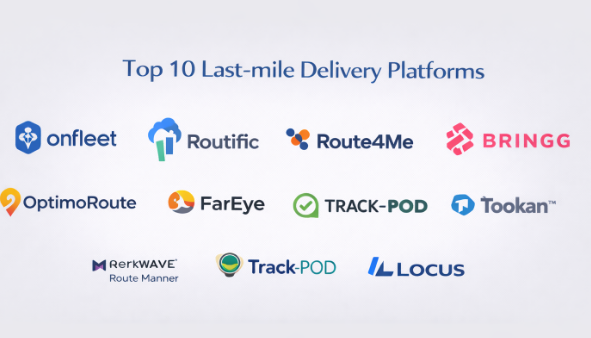
Top 10 Last-mile Delivery Platforms
#1 — Onfleet
Short description: A cloud-based delivery management platform designed for businesses needing efficient route planning and real-time tracking, especially in food, retail, and logistics sectors.
Key Features
- Real-time delivery tracking
- Route optimization engine
- Driver mobile app
- Proof of delivery (signature, photo)
- Customer notifications
- Analytics dashboard
Pros
- Easy to deploy and use
- Strong real-time tracking capabilities
Cons
- Limited customization for enterprise needs
- Pricing can scale quickly with volume
Platforms / Deployment
- Web / iOS / Android
- Cloud
Security & Compliance
- Encryption, RBAC
- Other certifications: Not publicly stated
Integrations & Ecosystem
Offers API access and integrates with e-commerce and logistics platforms.
- Shopify
- Zapier
- Custom APIs
- CRM tools
Support & Community
Good documentation and onboarding support; community presence is moderate.
#2 — Routific
Short description: A route optimization and delivery scheduling platform focused on SMBs and growing delivery businesses.
Key Features
- AI route optimization
- Delivery scheduling
- Driver tracking
- Customer notifications
- Bulk order import
Pros
- Cost-effective for small teams
- Strong optimization algorithms
Cons
- Limited enterprise features
- Fewer integrations
Platforms / Deployment
- Web
- Cloud
Security & Compliance
- Not publicly stated
Integrations & Ecosystem
Basic integrations and API support.
- CSV import/export
- API access
- E-commerce tools
Support & Community
Responsive support; smaller ecosystem compared to larger platforms.
#3 — Route4Me
Short description: A widely used route planning and optimization platform for logistics and field service teams.
Key Features
- Multi-stop route optimization
- GPS tracking
- Route analytics
- Mobile driver app
- Territory planning
Pros
- Highly scalable
- Rich analytics features
Cons
- Interface can feel complex
- Pricing tiers can be confusing
Platforms / Deployment
- Web / iOS / Android
- Cloud
Security & Compliance
- Not publicly stated
Integrations & Ecosystem
Strong integration ecosystem with enterprise tools.
- Salesforce
- Shopify
- APIs
- Telematics systems
Support & Community
Strong documentation and enterprise support options.
#4 — Bringg
Short description: An enterprise-grade delivery orchestration platform designed for large-scale logistics operations.
Key Features
- Delivery orchestration
- Real-time visibility
- Multi-carrier support
- AI-based optimization
- Customer experience tools
Pros
- Enterprise-ready
- Strong orchestration capabilities
Cons
- Complex setup
- Higher cost
Platforms / Deployment
- Web
- Cloud
Security & Compliance
- SSO, encryption
- Other certifications: Not publicly stated
Integrations & Ecosystem
Extensive enterprise integrations.
- SAP
- Oracle
- APIs
- E-commerce platforms
Support & Community
Enterprise-grade support with onboarding programs.
#5 — Tookan
Short description: A delivery and workforce management platform suited for SMBs and service businesses.
Key Features
- Task management
- Route optimization
- Driver tracking
- Customer notifications
- Delivery analytics
Pros
- Flexible use cases
- Affordable pricing
Cons
- UI can feel dated
- Limited advanced analytics
Platforms / Deployment
- Web / iOS / Android
- Cloud
Security & Compliance
- Not publicly stated
Integrations & Ecosystem
Moderate integration support.
- APIs
- CRM tools
- E-commerce integrations
Support & Community
Good support for SMB users.
#6 — OptimoRoute
Short description: A route planning and scheduling platform focused on optimizing delivery efficiency.
Key Features
- Advanced route optimization
- Capacity planning
- Delivery time windows
- Driver scheduling
- Analytics
Pros
- Highly accurate routing
- Strong scheduling capabilities
Cons
- Limited real-time tracking features
- UI may require training
Platforms / Deployment
- Web
- Cloud
Security & Compliance
- Not publicly stated
Integrations & Ecosystem
API-driven integrations.
- CSV import
- APIs
- CRM tools
Support & Community
Helpful documentation and responsive support.
#7 — FarEye
Short description: A predictive logistics platform focused on enterprise delivery operations with AI capabilities.
Key Features
- Predictive delivery analytics
- Real-time tracking
- AI optimization
- Workflow automation
- Customer engagement tools
Pros
- Strong AI capabilities
- Enterprise scalability
Cons
- Implementation complexity
- Requires training
Platforms / Deployment
- Web
- Cloud
Security & Compliance
- Not publicly stated
Integrations & Ecosystem
Enterprise integration ecosystem.
- ERP systems
- APIs
- Logistics platforms
Support & Community
Enterprise-level support and onboarding.
#8 — Track-POD
Short description: A delivery management solution with strong proof-of-delivery and route planning capabilities.
Key Features
- Proof of delivery
- Route optimization
- Real-time tracking
- Delivery reports
- Mobile driver app
Pros
- Strong delivery confirmation features
- Easy to use
Cons
- Limited enterprise integrations
- Basic analytics
Platforms / Deployment
- Web / Android
- Cloud
Security & Compliance
- Not publicly stated
Integrations & Ecosystem
Basic integrations.
- APIs
- CSV tools
Support & Community
Good support for small teams.
#9 — Locus
Short description: An AI-driven logistics optimization platform used by enterprises for large-scale delivery operations.
Key Features
- AI route optimization
- Real-time tracking
- Demand forecasting
- Dispatch automation
- Analytics
Pros
- Strong AI and analytics
- Scalable architecture
Cons
- Higher cost
- Requires integration effort
Platforms / Deployment
- Web
- Cloud
Security & Compliance
- Not publicly stated
Integrations & Ecosystem
Enterprise integrations.
- ERP systems
- APIs
- Logistics tools
Support & Community
Enterprise support and consulting services.
#10 — Shipsy
Short description: A logistics SaaS platform offering end-to-end delivery visibility and automation.
Key Features
- Shipment tracking
- Route optimization
- Delivery orchestration
- Analytics
- Automation workflows
Pros
- End-to-end logistics visibility
- Strong automation features
Cons
- Setup complexity
- Learning curve
Platforms / Deployment
- Web
- Cloud
Security & Compliance
- Not publicly stated
Integrations & Ecosystem
Strong API ecosystem.
- ERP systems
- APIs
- E-commerce platforms
Support & Community
Enterprise-grade support.
Comparison Table (Top 10)
| Tool Name | Best For | Platform(s) Supported | Deployment | Standout Feature | Public Rating |
|---|---|---|---|---|---|
| Onfleet | SMB logistics | Web, iOS, Android | Cloud | Real-time tracking | N/A |
| Routific | Small teams | Web | Cloud | Cost-effective routing | N/A |
| Route4Me | Large fleets | Web, iOS, Android | Cloud | Advanced analytics | N/A |
| Bringg | Enterprise | Web | Cloud | Delivery orchestration | N/A |
| Tookan | SMB/service teams | Web, iOS, Android | Cloud | Workforce management | N/A |
| OptimoRoute | Route planning | Web | Cloud | Scheduling optimization | N/A |
| FarEye | Enterprise AI logistics | Web | Cloud | Predictive analytics | N/A |
| Track-POD | Delivery tracking | Web, Android | Cloud | Proof of delivery | N/A |
| Locus | Enterprise AI | Web | Cloud | AI optimization | N/A |
| Shipsy | Logistics automation | Web | Cloud | End-to-end visibility | N/A |
Evaluation & Scoring of Last-mile Delivery Platforms
| Tool Name | Core (25%) | Ease (15%) | Integrations (15%) | Security (10%) | Performance (10%) | Support (10%) | Value (15%) | Weighted Total |
|---|---|---|---|---|---|---|---|---|
| Onfleet | 8 | 9 | 7 | 7 | 8 | 8 | 7 | 7.9 |
| Routific | 7 | 9 | 6 | 6 | 7 | 7 | 8 | 7.3 |
| Route4Me | 9 | 7 | 8 | 7 | 9 | 8 | 7 | 8.1 |
| Bringg | 9 | 6 | 9 | 8 | 9 | 9 | 6 | 8.3 |
| Tookan | 7 | 8 | 7 | 6 | 7 | 7 | 8 | 7.4 |
| OptimoRoute | 8 | 7 | 6 | 6 | 8 | 7 | 7 | 7.3 |
| FarEye | 9 | 6 | 8 | 7 | 9 | 8 | 6 | 8.0 |
| Track-POD | 7 | 8 | 6 | 6 | 7 | 7 | 7 | 7.2 |
| Locus | 9 | 6 | 9 | 8 | 9 | 9 | 6 | 8.4 |
| Shipsy | 8 | 7 | 8 | 7 | 8 | 8 | 7 | 7.8 |
How to interpret:
- Scores are relative comparisons, not absolute performance measures.
- Higher scores indicate better balance across features, usability, and scalability.
- Enterprise tools score higher in core features and integrations, while SMB tools often score higher in ease of use and value.
- Use this table to shortlist tools based on your priorities, not to pick a single winner.
Which Last-mile Delivery Platforms
Solo / Freelancer
Simple tools like Routific or Track-POD are sufficient due to ease of use and lower cost.
SMB
Onfleet and Tookan provide a good balance of usability and functionality.
Mid-Market
Route4Me and OptimoRoute offer better scalability and analytics.
Enterprise
Bringg, Locus, FarEye, and Shipsy are better suited for complex operations.
Budget vs Premium
- Budget: Routific, Tookan
- Premium: Bringg, Locus
Feature Depth vs Ease of Use
- Easy: Onfleet, Routific
- Feature-rich: Bringg, Locus
Integrations & Scalability
- Strong: Bringg, Locus, Shipsy
- Moderate: Onfleet, Route4Me
Security & Compliance Needs
- Enterprise tools provide stronger security capabilities.
- SMB tools may require additional configuration or external controls.
Frequently Asked Questions (FAQs)
1. What is a last-mile delivery platform?
It is software that helps manage the final stage of delivery from a distribution center to the customer, including routing, tracking, and communication.
2. How much do these platforms cost?
Pricing varies based on delivery volume, features, and deployment model. Many use subscription or usage-based pricing.
3. Are these tools suitable for small businesses?
Yes, tools like Routific and Tookan are designed specifically for smaller teams.
4. How long does implementation take?
It can range from a few days for SMB tools to several weeks for enterprise platforms.
5. Do these platforms integrate with e-commerce systems?
Most platforms offer APIs or integrations with common e-commerce and ERP systems.
6. What are common mistakes when choosing a platform?
Ignoring scalability, underestimating integration needs, and focusing only on cost.
7. Are these platforms secure?
Most offer basic security features, but enterprise-grade compliance varies by vendor.
8. Can I switch platforms later?
Yes, but data migration and retraining can require effort.
9. Do they support real-time tracking?
Yes, real-time tracking is a core feature of most platforms.
10. What alternatives exist?
Third-party logistics providers or manual route planning tools can be alternatives for smaller operations.
Conclusion
Last-mile delivery platforms have become essential for businesses aiming to meet modern customer expectations for speed, accuracy, and transparency. While SMB-focused tools provide ease of use and quick deployment, enterprise-grade platforms offer advanced orchestration, AI-driven optimization, and deeper integration capabilities. The right choice depends on your delivery scale, operational complexity, and integration requirements. Rather than searching for a universal “best” solution, businesses should shortlist two to three platforms that align with their needs, test them through pilot programs, and validate performance across routing, tracking, and customer experience. This practical approach ensures that the selected platform delivers measurable improvements in efficiency and customer satisfaction.
