Introduction
Airline Reservation Systems are specialized software platforms that help airlines manage flight bookings, inventory, pricing, ticketing, and passenger data. In simple terms, these systems act as the backbone of airline operations—ensuring that seats are sold correctly, prices are optimized, and customers can book flights seamlessly across websites, mobile apps, and travel agencies.
digital ecosystem, these systems are more critical than ever. Airlines now operate in a highly competitive, data-driven environment where real-time pricing, AI-based demand forecasting, and omnichannel booking experiences are expected. Modern travelers demand instant booking confirmations, personalized offers, and smooth check-in experiences. At the same time, airlines need high reliability, scalability, and compliance with global aviation standards.
Real-world use cases include:
- Managing seat inventory and ticket sales for airlines
- Integrating with travel agencies and online booking platforms
- Dynamic pricing based on demand and seasonality
- Supporting multi-leg journeys and complex itineraries
- Enabling customer self-service for booking and check-in
What buyers should evaluate:
- Inventory and seat management capabilities
- Pricing and revenue management features
- Integration with Global Distribution Systems (GDS)
- Scalability and performance
- API capabilities and extensibility
- Security and compliance standards
- User experience for agents and customers
- Reporting and analytics
- Support for multi-channel bookings
- Cost structure and flexibility
Best for: Airlines (low-cost to full-service), travel companies, ticketing platforms, and aviation startups building booking systems.
Not ideal for: Businesses that only need simple booking systems without aviation-specific requirements. For those, general booking or travel software may be sufficient.
Key Trends in Airline Reservation Systems
- AI-driven pricing and revenue optimization
- Real-time seat inventory synchronization across channels
- API-first architectures for integration with travel ecosystems
- Cloud-native systems replacing legacy mainframes
- Personalized booking experiences using customer data
- Integration with mobile apps and self-service kiosks
- Enhanced fraud detection and payment security
- NDC (New Distribution Capability) adoption for modern distribution
- Automation of ticketing and rebooking processes
- Subscription and bundled travel services
How We Selected These Tools (Methodology)
- Evaluated global adoption among airlines and travel platforms
- Assessed core booking and inventory management capabilities
- Considered system reliability and uptime requirements
- Reviewed security and compliance readiness
- Analyzed integration with GDS and APIs
- Evaluated scalability across regions and passenger volumes
- Considered usability for airline staff and agents
- Assessed vendor ecosystem and innovation track record
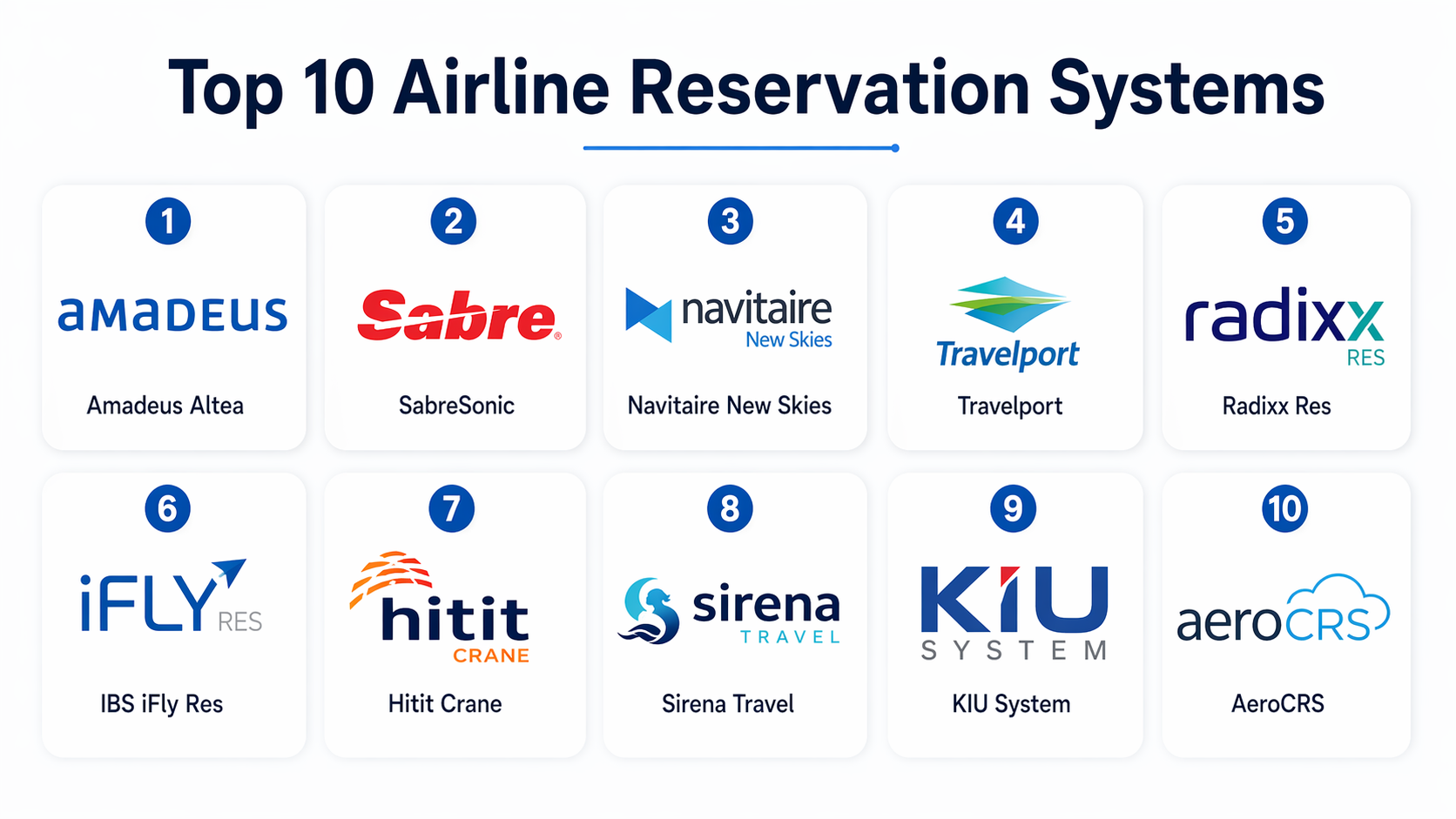
Top 10 Airline Reservation Systems
#1 — Amadeus Altea
Short description:
A leading airline reservation platform widely used by global carriers. It provides end-to-end passenger service solutions including reservations, inventory, and departure control systems.
Key Features
- Central reservation system
- Inventory and seat control
- Departure control system
- Revenue management tools
- Multi-channel booking support
- Customer data management
Pros
- Industry-leading platform
- Strong global ecosystem
Cons
- Expensive
- Complex implementation
Platforms / Deployment
Web / Cloud
Security & Compliance
Not publicly stated
Integrations & Ecosystem
Highly integrated within global airline and travel ecosystem.
- GDS integrations
- APIs
- Travel agency systems
Support & Community
Enterprise-grade support with global reach
#2 — SabreSonic
Short description:
A comprehensive airline reservation system offering advanced booking, pricing, and customer management features for airlines of all sizes.
Key Features
- Reservation management
- Dynamic pricing
- Customer profiles
- Inventory management
- Revenue optimization
Pros
- Strong pricing engine
- Wide adoption
Cons
- Complex interface
- High cost
Platforms / Deployment
Web / Cloud
Security & Compliance
Not publicly stated
Integrations & Ecosystem
Integrates with airline and travel systems globally.
- GDS
- Payment gateways
- APIs
Support & Community
Strong enterprise support
#3 — Navitaire New Skies
Short description:
A modern reservation system tailored for low-cost carriers with focus on simplicity, scalability, and digital customer experience.
Key Features
- Reservation system
- Ancillary revenue management
- Mobile booking
- Customer self-service
- Dynamic pricing
Pros
- Ideal for low-cost airlines
- Scalable
Cons
- Limited enterprise customization
- Focused feature set
Platforms / Deployment
Web / Cloud
Security & Compliance
Not publicly stated
Integrations & Ecosystem
Supports API integrations and travel platforms.
- APIs
- Payment systems
- Mobile apps
Support & Community
Strong vendor support
#4 — Travelport
Short description:
A global distribution and reservation platform connecting airlines with travel agencies and online booking systems.
Key Features
- Booking and ticketing
- Inventory distribution
- Travel agency integration
- Pricing tools
- Reporting
Pros
- Wide network
- Strong integrations
Cons
- Not airline-focused alone
- Pricing complexity
Platforms / Deployment
Web / Cloud
Security & Compliance
Not publicly stated
Integrations & Ecosystem
Large ecosystem of travel integrations.
- GDS
- APIs
- Agency systems
Support & Community
Global support network
#5 — Radixx Res
Short description:
A cloud-based reservation platform designed for airlines focusing on retailing and distribution capabilities.
Key Features
- Reservation system
- Ancillary services management
- Retailing tools
- Pricing management
- Analytics
Pros
- Retail-focused features
- Cloud-native
Cons
- Limited enterprise features
- Smaller ecosystem
Platforms / Deployment
Web / Cloud
Security & Compliance
Not publicly stated
Integrations & Ecosystem
Supports integrations via APIs.
- Payment systems
- APIs
Support & Community
Vendor-supported ecosystem
#6 — IBS iFly Res
Short description:
A full-service airline reservation system offering robust capabilities for scheduling, inventory, and passenger management.
Key Features
- Reservation and ticketing
- Inventory management
- Scheduling
- Customer management
- Reporting
Pros
- Strong airline focus
- Reliable
Cons
- Complex setup
- Limited UI modernization
Platforms / Deployment
Web / Cloud
Security & Compliance
Not publicly stated
Integrations & Ecosystem
Supports enterprise integrations.
- APIs
- Payment systems
Support & Community
Enterprise support available
#7 — Hitit Crane
Short description:
A modern passenger service system offering reservation, inventory, and departure control features for airlines.
Key Features
- Reservation system
- Inventory management
- Departure control
- Revenue management
- Reporting
Pros
- Balanced feature set
- Competitive pricing
Cons
- Less global adoption
- Limited ecosystem
Platforms / Deployment
Web / Cloud
Security & Compliance
Not publicly stated
Integrations & Ecosystem
API-based integrations supported.
- APIs
- Travel systems
Support & Community
Moderate support availability
#8 — Sirena Travel
Short description:
A reservation and distribution system widely used in certain regions for airline booking and ticketing.
Key Features
- Booking system
- Inventory control
- Ticketing
- Reporting
- Distribution
Pros
- Reliable regional presence
- Stable system
Cons
- Limited global reach
- Outdated interface
Platforms / Deployment
Web / Cloud
Security & Compliance
Not publicly stated
Integrations & Ecosystem
Supports regional integrations.
- APIs
- Travel systems
Support & Community
Regional support availability
#9 — KIU System
Short description:
A cost-effective airline reservation platform designed for small and mid-sized airlines.
Key Features
- Reservation system
- Inventory management
- Pricing tools
- Customer management
- Reporting
Pros
- Affordable
- Easy to deploy
Cons
- Limited advanced features
- Smaller ecosystem
Platforms / Deployment
Web / Cloud
Security & Compliance
Not publicly stated
Integrations & Ecosystem
Supports basic integrations.
- APIs
- Payment systems
Support & Community
Good SMB support
#10 — AeroCRS
Short description:
A cloud-based reservation system designed for small airlines and travel companies looking for a flexible and modern solution.
Key Features
- Booking engine
- Inventory management
- Pricing tools
- Reporting
- API access
Pros
- Modern interface
- Affordable
Cons
- Limited enterprise capabilities
- Smaller market presence
Platforms / Deployment
Web / Cloud
Security & Compliance
Not publicly stated
Integrations & Ecosystem
API-driven integrations supported.
- APIs
- Payment gateways
Support & Community
Decent vendor support
Comparison Table (Top 10)
| Tool Name | Best For | Platform(s) Supported | Deployment | Standout Feature | Public Rating |
|---|---|---|---|---|---|
| Amadeus Altea | Enterprises | Web | Cloud | Full passenger service system | N/A |
| SabreSonic | Large airlines | Web | Cloud | Pricing engine | N/A |
| Navitaire New Skies | Low-cost carriers | Web | Cloud | Ancillary revenue tools | N/A |
| Travelport | Distribution | Web | Cloud | Global connectivity | N/A |
| Radixx Res | Retail-focused airlines | Web | Cloud | Retailing capabilities | N/A |
| IBS iFly Res | Full-service airlines | Web | Cloud | End-to-end system | N/A |
| Hitit Crane | Mid-market airlines | Web | Cloud | Balanced features | N/A |
| Sirena Travel | Regional airlines | Web | Cloud | Regional strength | N/A |
| KIU System | SMB airlines | Web | Cloud | Cost efficiency | N/A |
| AeroCRS | Small airlines | Web | Cloud | Modern flexibility | N/A |
Evaluation & Scoring of Airline Reservation Systems
| Tool Name | Core | Ease | Integrations | Security | Performance | Support | Value | Weighted Total |
|---|---|---|---|---|---|---|---|---|
| Amadeus Altea | 10 | 6 | 9 | 8 | 9 | 9 | 6 | 8.5 |
| SabreSonic | 9 | 6 | 9 | 8 | 9 | 9 | 6 | 8.3 |
| Navitaire New Skies | 8 | 7 | 8 | 7 | 8 | 8 | 7 | 7.9 |
| Travelport | 8 | 7 | 9 | 7 | 8 | 8 | 7 | 8.0 |
| Radixx Res | 8 | 7 | 7 | 7 | 8 | 7 | 7 | 7.5 |
| IBS iFly Res | 9 | 6 | 8 | 7 | 8 | 8 | 6 | 7.8 |
| Hitit Crane | 8 | 7 | 7 | 7 | 8 | 7 | 8 | 7.6 |
| Sirena Travel | 7 | 6 | 6 | 6 | 7 | 7 | 7 | 6.6 |
| KIU System | 7 | 8 | 6 | 6 | 7 | 7 | 8 | 7.3 |
| AeroCRS | 7 | 8 | 7 | 6 | 7 | 7 | 8 | 7.4 |
How to interpret scores:
These scores are comparative across the listed tools and reflect relative strengths. Core features and integrations carry higher weight due to their importance in airline operations. Use these scores as guidance rather than absolute rankings.
Which Airline Reservation System
Solo / Freelancer
Not applicable; airline systems are enterprise-focused.
SMB
KIU System and AeroCRS are suitable for smaller airlines and startups.
Mid-Market
Navitaire New Skies and Hitit Crane offer a good balance of features and cost.
Enterprise
Amadeus Altea and SabreSonic are industry leaders for large airlines.
Budget vs Premium
Budget: KIU System, AeroCRS
Premium: Amadeus, Sabre
Feature Depth vs Ease of Use
Deep features: Amadeus, Sabre
Ease of use: AeroCRS, KIU
Integrations & Scalability
Choose Amadeus or Travelport for global integrations.
Security & Compliance Needs
Enterprise-grade systems provide better compliance readiness.
Frequently Asked Questions (FAQs)
1. What is an airline reservation system?
It is a platform used by airlines to manage bookings, inventory, and ticketing operations.
2. How do these systems generate revenue?
Through ticket sales, dynamic pricing, and ancillary services like baggage and seat selection.
3. Are these systems cloud-based?
Most modern systems are cloud-based, though some legacy systems still exist.
4. How long does implementation take?
Implementation can take months depending on system complexity.
5. What is GDS integration?
Global Distribution Systems connect airlines with travel agencies and booking platforms.
6. Are these systems secure?
Security varies by provider; enterprise systems generally offer stronger protection.
7. Can small airlines use these tools?
Yes, tools like KIU and AeroCRS are designed for smaller operators.
8. What are ancillary services?
Additional services like baggage, meals, and seat upgrades.
9. Can systems handle global operations?
Yes, enterprise tools are designed for global scalability.
10. What should I evaluate before choosing?
Focus on scalability, integrations, cost, and ease of use.
Conclusion
Airline reservation systems are the foundation of modern airline operations, enabling seamless booking, inventory control, and revenue management. As the aviation industry continues to evolve with AI, cloud computing, and customer-centric services, choosing the right platform becomes a strategic decision. Large airlines benefit from enterprise-grade solutions like Amadeus and Sabre, while smaller operators can leverage flexible and cost-effective platforms such as AeroCRS or KIU. The best approach is to clearly define your operational needs, shortlist a few platforms, and conduct pilot testing to validate performance, integrations, and usability before making a long-term investment.
