Introduction
Shopping online is easy. Finding the right product can be hard. Most people read reviews before they buy. Good reviews help you choose the best item. Bad reviews can save you from wasting money. Yet, not every review tells the truth. Some feedback is fake or misleading. This can cause confusion for everyday shoppers. Knowing what makes a product review trustworthy helps you make better choices. A few simple checks can guide you through the process.
Why Trustworthy Product Reviews Matter
Shoppers read reviews to learn about products before buying. Honest feedback helps you understand quality and value. It shows you if an item is easy to use. It also warns you about common problems.
One review does not tell the whole story. Imagine you want to buy new headphones. One person might love the sound. Another person might hate the fit. Reading many opinions gives you a clear picture.
What Makes a Product Review Trustworthy?
A useful review has clear signs of honesty. It gives helpful facts rather than simple praise.
The Review Shares Real Experience
A good review describes how someone used a product. It may explain what worked well. It might also explain what failed. Look for clear details rather than broad praise. Keep in mind that detailed writing does not always prove real use.
The Review Gives Specific Details
Useful details help you judge a product. A review might discuss battery life and comfort. It might talk about size and build quality. These details help you decide if the item fits your needs.
The Review Includes Both Benefits and Limits
Honest reviews mention good and bad points. A balanced review explains who may like the product. It also shows who may not like it. A negative review is not always more honest than a positive one. Focus on useful details over star ratings.
The Review Matches the Product
Check the product name, model, size, and version. Beware of reviews that describe a different item. Old reviews may not reflect a newer model.
The Review Gives Clear Reasons for Its Rating
A rating should match the details in the text. A low score might mention weak build quality. Check whether the review explains its score. Do not assume every high or low rating is false.
How to Spot Fake or Suspicious Product Reviews
Some reviews are not honest. Look for common warning signs.
- Many similar reviews appear within a short time.
- Several reviews use nearly the same words.
- Reviews give strong praise without useful details.
- A review describes the wrong product or model.
- A reviewer claims results without explaining their experience.
- A review includes unnatural promotional language.
- A reviewer may have a close connection to the seller.
These signs are clues, not proof of fraud. Look at the full picture before you decide. Spelling errors, short reviews, or five-star ratings alone do not prove a review is fake.
How Verified Purchases Can Help Readers
A verified purchase label has a specific meaning. It usually shows that a platform linked the review to a purchase. Each platform uses different checks.
A verified purchase does not prove the review is fair. It does not mean the review is accurate or complete. Always check the platform rules for verified reviews.
How Paid and Sponsored Reviews Affect Trust
Some reviewers receive free products or money. Readers should know about these connections. Clear disclosures help people judge the review.
Receiving a free product does not mean a review is dishonest. The key is whether the reviewer shares an honest opinion. Clear disclosures matter. Rules can vary by country, according to official guidance from groups like the US Federal Trade Commission.
Why Negative Reviews Deserve Attention
Negative reviews reveal hidden problems. They can show poor durability or difficult setup. They might mention weak support.
Look for repeated problems across different reviews. One bad experience may not reflect every buyer’s journey. Separate personal taste from actual product faults.
How to Compare Reviews From Different Sources
Do not depend on a single review or website. Compare feedback from different review platforms and product pages.
Check the review date and product version. Repeated patterns matter more than one strong opinion. Some websites share the same source material. Check whether reviews offer independent details.
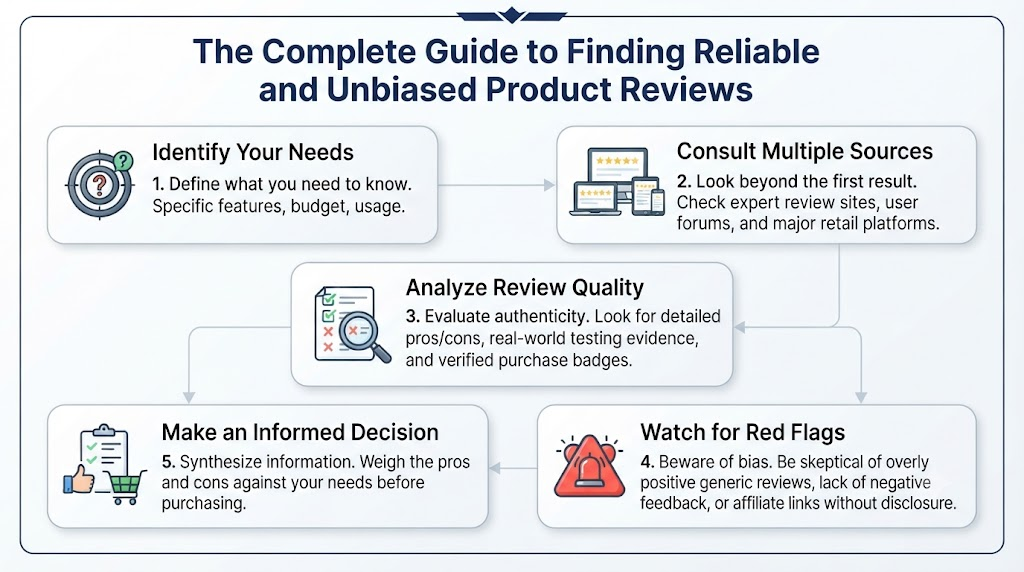
How to Judge a Product Review Before Buying
Follow these simple steps before you buy an item:
- Check the exact product and model.
- Read both positive and negative reviews.
- Look for details from real use.
- Check the dates of the reviews.
- Look for repeated problems or benefits.
- Check whether the reviewer disclosed a benefit.
- Compare feedback from other sources.
- Match the review details to your own needs.
These steps will not catch every fake review. They still reduce confusion.
Common Mistakes People Make When Reading Reviews
People often make simple errors when reading feedback. They may trust only star ratings. They might read only positive feedback. Some ignore old reviews or treat every complaint as proof of poor quality. Checking product details and comparing opinions helps you avoid these traps.
What Makes a Product Review Trustworthy? (Platform View)
A trustworthy review website values reader trust. It has clear review policies and honest disclosures. It handles feedback fairly and explains ratings clearly.
Readers should understand how a website collects reviews. Clear rules for suspicious reviews are important. A website can still host inaccurate reviews even with good rules.
How TrueReviewNow Can Help Readers
TrueReviewNow helps online shoppers find clear feedback. You can explore product reviews and compare relevant details on TrueReviewNow.com. Review policies help users understand how feedback is displayed.
TrueReviewNow does not verify every review or test every product independently. Compare reviews carefully and check important claims before buying.
A Simple Checklist for Trustworthy Product Reviews
Use this quick guide before you make a purchase:
- The review matches the correct product.
- The reviewer shares useful details.
- The rating has clear reasons.
- The review mentions relevant limits.
- The review date is useful.
- Any paid connection is disclosed.
- Other sources support the main points.
- Repeated feedback shows a clear pattern.
Use this checklist as a guide, not as absolute proof.
Frequently Asked Questions
1. What makes a product review trustworthy?
A trustworthy review shares specific details, real use, and a balanced view of benefits and limits. It explains why the user likes or dislikes the item without using hidden promotional language.
2. How can I spot fake product reviews?
Look for rushed praise, repeated wording, and missing details, while remembering these are only clues. Genuine reviews usually describe specific personal experiences rather than broad statements.
3. Are verified purchase reviews always reliable?
No, a verified purchase label shows a platform link to a buy, but it does not guarantee fairness. A buyer can still leave a biased opinion even if they actually bought the item.
4. Can a paid product review be honest?
Yes, if the reviewer shares a real opinion and clearly discloses the connection. Receiving a free item does not automatically make feedback false if the review is balanced.
5. Why should I read negative product reviews?
Negative reviews highlight potential flaws, durability issues, and hidden limits. They help you see if a product weakness will affect your daily use.
6. How many reviews should I read before buying?
Read several reviews across different sources to find consistent patterns. Looking at multiple opinions prevents you from relying on a single isolated experience.
7. Can star ratings be misleading?
Yes, high or low ratings can lack context without the review text. A five-star rating with no words tells you very little about actual performance.
8. How can I check whether a review is genuine?
Check for specific details, real-use stories, and matched product versions. Authentic feedback usually connects features to everyday situations.
9. Why should I compare reviews from different websites?
Comparing sources prevents you from relying on a single biased opinion. Different platforms often attract different types of buyers and feedback styles.
10. What should I check before trusting a product review on TrueReviewNow?
Check the review details, date, and whether it matches your specific needs. Look for balanced arguments and clear explanations behind the reviewer’s score.
11. Do short reviews have any value?
Short reviews can confirm basic satisfaction, but they rarely provide enough detail to judge quality. You should combine them with more thorough reviews before making a purchase.
12. How do product versions affect old reviews?
Manufacturers often update features, software, or build quality in newer models. Old reviews might describe an older version that no longer matches what is currently sold.
Conclusion
Trustworthy product reviews help you make smart buying choices. Look for real-use details, balanced feedback, clear dates, and transparent disclosures. Comparing consistent patterns across different sources ensures you see the full picture before spending your money.
Remember that reviews serve as a helpful guide to direct your research, but they should never replace your own careful evaluation. To explore structured insights and compare helpful product details, visit TrueReviewNow.com today and shop with greater confidence.
