Introduction
Before buying a new product, booking a service, visiting a local restaurant, choosing a hotel, or trying out a new mobile app, many people look for one specific thing: what other customers have to say. Finding the right item or service can sometimes feel difficult because there are so many options available online. With just a few clicks, shoppers can view dozens of choices, each claiming to be the best. Because of this large amount of information, looking at other people’s experiences helps consumers make sense of their choices and feel more confident before spending their hard-earned money. Other customers’ experiences provide useful insights that advertisements cannot always offer. Ads are created to sell a product, so they naturally highlight only the best features. Customer reviews, on the other hand, share real-life usage, unexpected problems, and genuine satisfaction. This exchange of information has changed how people shop and make choices. Ratings and reviews now form a major part of the everyday buying process, helping everyday shoppers separate helpful products from disappointing ones.
What Are Online Reviews?
Online reviews are customer opinions, feedback, and experiences shared on digital platforms. They come in many different forms and cover almost everything you can buy or use online and offline.
- Product Reviews: Feedback shared by people who bought items like electronics, clothing, books, or household goods.
- Service Reviews: Comments left by clients who used professional services, home repairs, online courses, or digital subscriptions.
- Ratings: Quick scores, usually shown as stars on a scale of one to five, giving a fast summary of overall satisfaction.
- Written Feedback: Detailed paragraphs where customers explain what they liked, what they disliked, and how the product or service performed in real life.
- Customer Experiences: Personal stories about delivery times, customer support interactions, and product quality.
These reviews can be found on dedicated review websites, online stores, social media pages, search engine listings, and independent discussion boards. It is important to remember that not every review is completely accurate or unbiased. People share reviews based on their own personal situations, expectations, and sometimes unique experiences. Understanding this helps consumers read feedback with a balanced mindset.
Why Do Consumers Read Online Reviews?
People read online reviews for several practical reasons. When someone is about to spend money, they want to reduce uncertainty and avoid making a poor choice. Reading what others have experienced acts as a helpful guide.
- Wanting to Know About Other Customers’ Experiences: Shoppers want to know if a product actually works the way the seller claims it does.
- Comparing Products: When two items look similar, reviews help highlight which one performs better over time.
- Comparing Services: Service providers can look identical on paper, but reviews show how reliable, polite, and efficient they are.
- Checking Possible Problems: Reading feedback helps buyers spot common flaws, durability issues, or hidden costs.
- Understanding Quality: Reviews give a clearer picture of build quality, material durability, or software stability.
- Looking for Useful Information: Customers often share tips, sizing advice, or setup instructions that are not mentioned in the official description.
- Reducing Uncertainty: Knowing that hundreds of other people have bought and enjoyed an item brings peace of mind.
For example, imagine someone buying a new smartphone. The official page highlights the camera megapixels and battery size. However, customer reviews will tell you if the battery actually lasts through a full workday or if the phone gets too warm during gaming. Similarly, choosing a hotel or a restaurant based on reviews helps travelers avoid unpleasant surprises and find places that genuinely match their expectations.
How Online Reviews Affect Consumer Decisions
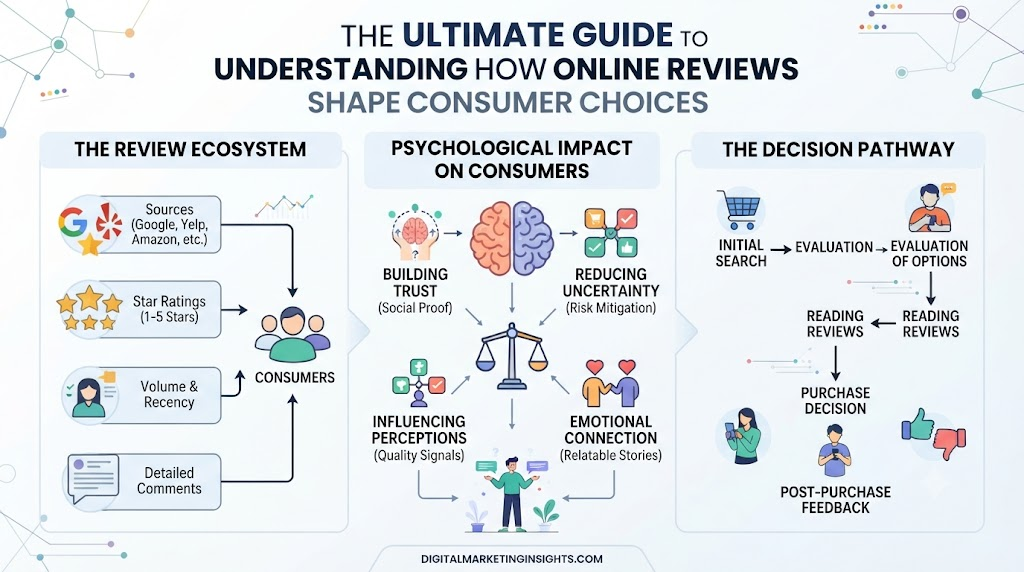
Online reviews influence decisions at different stages of the buying journey. Consumer behavior researchers often break down the path to a purchase into several steps, and reviews play a role in almost all of them.
- Awareness: A consumer realizes they need a solution, such as a new vacuum cleaner or a reliable web hosting service.
- Interest: They start searching and reading reviews to discover which brands or models stand out.
- Comparison: They read multiple reviews to weigh the pros and cons of different options against their budget.
- Trust: Positive feedback, clear details, and balanced opinions help build trust in a specific brand or product.
- Final Decision: The consumer feels confident enough to click the buy button or book the service.
People may read reviews casually weeks before a purchase or browse them quickly on their phone while standing in a store aisle. In either case, reviews act as a bridge between marketing promises and real-world reality.
The Role of Positive Reviews
Positive reviews are often the first thing people notice when exploring a new product or service. They play an important part in shaping consumer perceptions.
- Building Confidence: Seeing that many people are happy with their purchase makes a buyer feel secure about spending money.
- Showing Positive Customer Experiences: Real accounts of fast shipping, helpful support, or great build quality validate the brand’s claims.
- Helping People Understand Useful Features: Customers often point out specific features they love, helping new buyers discover useful functions.
- Giving Examples of Customer Satisfaction: Consistent praise shows that a business reliably delivers on its promises.
- Encouraging Exploration: Positive feedback gives hesitant shoppers the push they need to try a new brand or product.
Despite these benefits, consumers should never make a decision based solely on positive reviews. Sometimes, high ratings come from excitement right after unboxing an item, before any long-term flaws appear. A balanced view that looks at both good and bad points is always safer. Furthermore, positive reviews do not automatically guarantee that every single customer will have the exact same great experience.
How Negative Reviews Influence Decisions
While positive reviews build confidence, negative reviews provide a healthy dose of caution. Many shoppers actually seek out negative feedback first to understand the worst-case scenario.
- Helping Consumers Identify Possible Problems: Negative reviews reveal structural flaws, poor materials, or unreliable performance.
- Showing Common Complaints: If multiple people mention that a product stops working after a month, buyers know to avoid it.
- Helping People Understand Limitations: A product might be great for casual use but terrible for professional work, and negative reviews often clarify this distinction.
- Allowing Balanced Comparison: Seeing what went wrong for other customers helps buyers decide if those specific flaws matter to them.
One negative review does not always mean a product or service is bad. Every business can make a mistake, or a customer might have had unrealistic expectations. Smart shoppers look for patterns. If ten people complain about the exact same shipping delay or broken part, it is a clear warning sign. If only one person complains about a minor issue while hundreds of others are happy, it may just be an isolated incident.
Why Star Ratings Matter
Star ratings are the most visible form of online feedback. Almost every review platform uses a one-to-five star system. These ratings matter because they offer a quick way to process information.
- Quick First Impression: In less than a second, a four-star or five-star rating tells a shopper that most people liked the item.
- Easy Comparison: When browsing a list of twenty different hotel options, ratings let users instantly filter out poorly rated choices.
- General Idea of Feedback: Ratings summarize hundreds of opinions into a single score, saving time for busy shoppers.
- Attracting Attention: Products with high ratings naturally draw more clicks and views from potential buyers.
However, a rating alone never tells the complete story. A product with a 4.5-star rating might only have four total reviews, which is not enough reliable data to form a strong conclusion. Conversely, a product with a 3.8-star rating might have thousands of reviews, meaning it is widely tested and generally reliable despite a few flaws. This is why looking beyond the stars is essential.
Written Reviews vs. Star Ratings
Understanding the difference between star ratings and written reviews helps consumers make better choices. Both serve different purposes during the research process.
| Feature | Star Ratings | Written Reviews |
| Format | A simple numeric score or visual symbol (e.g., 4 out of 5 stars). | Detailed text explaining the customer’s personal experience. |
| Speed | Extremely fast to read and process at a glance. | Takes time to read, but provides deep context. |
| Information Level | Gives a general feeling of satisfaction without reasons. | Explains why the customer liked or disliked the item. |
| Usefulness | Best for quick filtering and shortlisting options. | Best for understanding specific features, flaws, and use cases. |
Reading both together gives the best results. A star rating shows general sentiment, while a written review explains the context behind that score.
Why Detailed Reviews Can Be More Helpful
Short reviews that simply say “great product” or “terrible service” do not offer much practical value. Detailed reviews, on the other hand, provide a wealth of useful information.
- Real Situations: Detailed reviews often explain how and where the product was used, such as hiking in heavy rain or typing on a laptop all day.
- Specific Product Details: Writers might mention battery longevity, fabric texture, or software interface quirks.
- Service Experience: Detailed feedback on services explains how staff handled special requests or solved problems.
- Customer Support Experience: Reviewers often share how the company responded when something went wrong or needed a return.
- Quality Concerns: Long-form reviews frequently update readers on how an item holds up after several months of regular use.
- Ease of Use: Clear explanations help beginners know if a product is easy to set up or requires advanced technical knowledge.
Detailed reviews help consumers understand the reasons behind a positive or negative opinion. However, readers should remember that longer reviews are not automatically more trustworthy; they simply offer more context to evaluate.
Why Consumers Compare Multiple Reviews
Reading only a single review is like asking one person for directions in a foreign city; their experience might be unique, but it does not represent the whole picture. Consumers benefit greatly from comparing multiple reviews.
Different customers have different expectations, budgets, and technical skill levels. One person might expect a budget camera to perform like a professional studio device and leave a harsh review, while another buyer with realistic expectations finds it fantastic for family photos. By reading a wide range of opinions, shoppers can see past extreme outliers—both overly glowing praise and angry complaints—and find the true average experience. Comparing multiple perspectives ensures that your final decision is based on balanced data rather than a single biased opinion.
How Reviews Help Consumers Compare Products
When shopping for items like home appliances, electronics, or fitness gear, reviews act as a powerful comparison tool. They highlight everyday factors that spec sheets often leave out.
- Features: Discovering which functions users actually use and which ones turn out to be gimmicks.
- Quality: Learning whether materials feel durable or cheap after regular handling.
- Ease of Use: Finding out if an item is simple to assemble and operate out of the box.
- Value: Assessing whether the price matches the performance and longevity of the product.
- Common Problems: Identifying recurring design flaws before committing cash.
Using reviews for product comparison allows consumers to rank options based on real user satisfaction rather than clever advertising campaigns.
How Reviews Influence Service Decisions
Reviews are not just for physical products. Choosing a service provider—whether it is a local restaurant, a hotel, a software subscription, a home repair contractor, or a travel agency—carries a different kind of risk because you cannot return a bad experience as easily as a pair of shoes.
When choosing a service, consumers rely on customer stories to gauge reliability, punctuality, cleanliness, and communication. A hotel guest’s review about noisy hallways or friendly staff gives future travelers a clear mental image of what to expect. Similarly, software reviews help business owners choose tools that will not crash or lose important data. Customer experiences take the guesswork out of intangible services.
The Role of Trust in Consumer Decisions
Trust is the foundation of every buying decision. Before anyone hands over their money, they need to trust that the seller will deliver what was promised, on time and in good condition.
Online reviews help build this trust by offering transparent insights from everyday people. When consumers see a mix of honest feedback, detailed use cases, and polite business responses, confidence grows. However, trust should never rest on a single source. Wise shoppers combine review data with independent research, return policy checks, and personal judgment to make secure financial choices.
Why Consumers Look for Recent Reviews
The date of a review matters just as much as its content. Products, companies, and services change over time, and older feedback may no longer reflect the current reality.
- Products Change: A manufacturer might release a software update that fixes bugs mentioned in reviews from two years ago.
- Service Quality Changes: A restaurant might change its head chef, leading to a completely different dining experience than what reviewers described last year.
- Business Improvements: Companies that pay attention to feedback often upgrade their customer support or shipping methods, making recent reviews much more positive than old ones.
- New Problems Emerge: A service provider might lower its standards over time, meaning recent reviews will warn buyers about new issues.
While older reviews can still show long-term durability, recent feedback ensures you are judging a product or service based on its current state.
How Negative Reviews Can Help Consumers
Negative feedback is often viewed as harmful to businesses, but for consumers, it is an invaluable tool. It helps set realistic expectations and prevents costly mistakes.
Through negative reviews, shoppers learn about potential delivery delays, hidden fees, poor customer support responsiveness, or technical limitations. For instance, knowing that a particular vacuum cleaner struggles with thick carpets lets a pet owner avoid buying the wrong model. Instead of fearing negative reviews, savvy consumers look at them to see if the reported flaws affect their personal needs. Repeated complaints about a serious defect are a clear stop sign, while complaints about personal preference can often be safely ignored.
How Businesses Respond to Online Reviews
The way a business handles customer feedback heavily influences consumer trust. When shoppers read through reviews, they often pay attention to how companies reply to both praise and complaints.
- Responding Politely: Professional, calm replies show that a business respects its customers.
- Addressing Customer Concerns: Offering solutions or apologies in public review threads demonstrates accountability.
- Providing Useful Information: Companies often use replies to clarify misunderstandings or share helpful tips for future buyers.
- Learning from Feedback: Businesses that take criticism seriously use it to upgrade their offerings and fix recurring problems.
A polite and helpful response to a negative review can actually make a brand look better in the eyes of potential buyers, proving that the company stands behind its work and cares about customer satisfaction.
The Problem of Fake or Misleading Reviews
The internet is open to everyone, which means review systems can sometimes be manipulated. Being aware of misleading feedback protects consumers from making poor choices.
- Fake Positive Reviews: Paid or automated reviews written to artificially boost a low-quality product.
- Fake Negative Reviews: Malicious posts written by competitors to harm a business’s reputation.
- Unidentified Sponsored Reviews: Promotional posts where the reviewer received free items without disclosing it clearly.
- Copied or Repeated Reviews: Generic text posted across multiple unrelated products by automated accounts.
- Vague Feedback: Short, empty praise or complaints that provide zero details about actual usage.
Consumers should look past emotional extremes and search for balanced, detailed reviews written by verified buyers to ensure they are relying on trustworthy data.
How to Identify Useful Reviews
Sorting through hundreds of comments is an art. Knowing what to look for makes it easier to spot genuine and helpful feedback.
- Describe a Real Experience: Look for reviews that mention specific details, such as how long shipping took or how a product performed during a specific task.
- Include Relevant Details: Helpful reviews mention pros, cons, and context about the buyer’s situation.
- Show Balance: Genuine reviews usually acknowledge both the good aspects and the minor flaws of an item.
- Match the Product: Ensure the review is actually discussing the product or service in question and not a different model or brand.
- Help Understand the Situation: Clear reviews help readers decide if the item fits their personal lifestyle and budget.
Never assume a review is genuine just because it is long or has a high star rating; always evaluate the overall tone and context.
Common Mistakes Consumers Make When Reading Reviews
Even smart shoppers can fall into traps when browsing customer feedback. Avoiding these common mistakes leads to better purchasing outcomes:
- Reading Only One Review: Making up your mind based on a single glowing or angry comment.
- Looking Only at Star Ratings: Ignoring written details and relying solely on a number.
- Ignoring Negative Feedback: Buying a product blindly while dismissing valid warnings from other users.
- Trusting Unrealistic Claims: Believing that a product has zero flaws despite costing very little.
- Not Checking Recent Reviews: Relying on outdated feedback from years ago.
- Making Decisions Too Quickly: Rushing through reviews without comparing alternative options.
- Assuming Universal Needs: Believing that another customer’s priorities match your own.
Keeping these pitfalls in mind helps you maintain a clear and objective perspective during your research.
Why Personal Needs Still Matter
Two people can buy the exact same product and walk away with completely different opinions. Personal needs, preferences, and budgets shape how we experience items and services.
For example, a budget-conscious traveler might leave a five-star review for a basic motel because it was cheap and clean. A luxury traveler staying at the same motel might leave a one-star review because it lacked room service and premium toiletries. Neither reviewer is wrong; their needs are simply different. Reviews are incredibly useful guides, but consumers should always weigh feedback against their own personal requirements, lifestyle, and goals.
How Online Reviews Affect Small Businesses and Brands
Reviews do not just influence shoppers; they also have a massive impact on businesses, especially small local companies and independent brands.
Customer feedback builds or breaks online reputation, influences search visibility, and drives customer trust. Small businesses rely heavily on positive word-of-mouth in digital spaces to compete with massive corporations. At the same time, constructive feedback gives business owners direct insights into what needs improvement, helping them refine their services and better serve their local community.
The Importance of Balanced Reviews
Balanced reviews are often the most valuable kind. A truly helpful review does not pretend a product is magical, nor does it tear it down completely.
Instead, a balanced review highlights what the product does exceptionally well, where its limits lie, and who it is best suited for. Knowing that a jacket is great for autumn strolls but not for extreme mountain climbing helps the buyer make an informed choice. Balanced information prevents disappointment and ensures high satisfaction after purchase.
How TRUEREVIEWNOW.COM Can Help Readers Explore Reviews
Navigating the vast digital landscape of consumer feedback can feel overwhelming. Platforms like TRUEREVIEWNOW.COM aim to make this process simpler by organizing reviews and feedback across various categories, including everyday products, professional services, websites, local businesses, and travel destinations.
Readers can use the platform to explore structured reviews, read genuine customer experiences, compare different options side by side, and gather useful information before making important purchasing decisions. Keeping an eye on well-organized review resources helps consumers cut through marketing noise and focus on what real users have to say.
How Consumers Can Use Reviews More Wisely
Making the most of online feedback involves a simple, step-by-step approach. Following these practical guidelines ensures your research is thorough and effective:
- Step 1: Read More Than One Review: Never rely on a single opinion; look across multiple accounts to spot trends.
- Step 2: Check the Details: Look for specifics about how the product was used and what results were achieved.
- Step 3: Look for Common Patterns: Pay attention when multiple reviewers mention the exact same strength or flaw.
- Step 4: Check Recent Feedback: Look for up-to-date reviews that reflect current product quality or service standards.
- Step 5: Consider Your Own Needs: Match the reviewer’s feedback against your own budget, preferences, and lifestyle.
- Step 6: Use Reviews as One Source: Combine review research with independent product specs and your own common sense before buying.
The Future of Online Reviews and Consumer Decisions
As online shopping and digital services continue to grow, customer feedback will only become more central to how people make decisions. Consumers increasingly demand transparency, authenticity, and clear information from the brands they support. Review platforms are constantly evolving to better organize feedback, filter out misleading content, and highlight genuine user experiences. The future of consumer decision-making rests on building a transparent digital environment where honest feedback empowers everyday shoppers.
Why Online Reviews Will Continue to Matter
Online reviews have fundamentally transformed how people make purchasing decisions. They bridge the gap between corporate advertising and real-world performance. By reading reviews, consumers can learn from others, compare options, spot potential problems, and feel confident before spending their money.
At the same time, reviews should always be read carefully, balanced against personal needs, and treated as one helpful tool among many. No review should ever completely replace personal research and individual judgment. By combining smart reading habits with reliable review exploration, every consumer can make better, more informed choices every single day.
Frequently Asked Questions
- How do online reviews influence consumer decisions?Online reviews provide real-world insights from other buyers, helping consumers evaluate product quality, spot potential flaws, build trust, and reduce uncertainty before making a purchase.
- Why do people read reviews before buying a product?Shoppers read reviews to find out if a product performs as advertised, check for hidden defects, compare options, and learn from the actual experiences of previous customers.
- Do positive reviews increase consumer trust?Yes, consistent positive feedback builds confidence by showing that other buyers were satisfied, though consumers should still look for balanced opinions rather than relying on praise alone.
- How can negative reviews affect buying decisions?Negative reviews help consumers identify common product flaws, poor customer service, or unsuitable features, allowing them to avoid disappointing purchases and set realistic expectations.
- Are star ratings enough to choose a product or service?Star ratings offer a fast general score, but they do not explain the reasons behind customer satisfaction. Reading written reviews alongside star ratings provides much more useful context.
- Why should consumers read multiple reviews?Reading multiple reviews accounts for different personal preferences and expectations, helping shoppers filter out extreme outliers and find the true average experience.
- How can I identify a useful online review?A useful review describes a real-life situation, includes specific details about product performance, and acknowledges both positive points and limitations in a balanced manner.
- Should consumers trust every online review?No, consumers should remain cautious because some reviews can be fake, biased, or overly emotional. Looking for common patterns across multiple detailed reviews is much safer.
- Why do recent reviews matter?Products, manufacturing quality, and business services change over time. Recent reviews provide accurate information about the current state of a product or service.
- How can TRUEREVIEWNOW.COM help readers explore reviews and feedback?TRUEREVIEWNOW.COM publishes structured feedback and reviews across various categories, helping readers explore customer experiences, compare options, and gather useful information before making decisions.
Conclusion
Online reviews have fundamentally transformed how people make purchasing decisions. They bridge the gap between corporate advertising and real-world performance. By reading reviews, consumers can learn from others, compare options, spot potential problems, and feel confident before spending their money. At the same time, reviews should always be read carefully, balanced against personal needs, and treated as one helpful tool among many. No review should ever completely replace personal research and individual judgment. If you want to make more informed choices before your next purchase or service booking, exploring platforms like TRUEREVIEWNOW.COM can help you discover honest customer feedback, compare options, and navigate your buying decisions with clarity and confidence.
