Introduction
Ever wonder why rolling out a simple software update feels like pulling teeth? If your developers and IT crew live in separate worlds, you already know the pain. One team writes code, throws it over the fence, and hopes for the best, while the other team scrambles when things inevitably break.
Companies across the Netherlands face these exact roadblocks every single day. Slow releases, angry customers, and burnt-out engineers do not have to be your normal. This guide walks through how modern DevOps consulting can smooth out your engineering pipeline and get everyone working together.
What Is DevOps, Really?
Think of DevOps as a bridge between the people who write code and the people who keep servers running. In the past, these groups rarely talked to each other. Developers wanted new features out fast, while operations teams wanted stability and zero changes.
DevOps smashes that wall down. Instead of finger-pointing when a bug pops up, both sides share the responsibility.
Teams use smart automation tools to test, build, and push code safely without losing their minds. It is all about teamwork, clear communication, and making software delivery boringly predictable.
Why This Matters For Your Business
Let us be honest—software drives almost every modern business. When your apps crash or features take six months to launch, you lose money and customers walk away to competitors.
Behind the scenes, your engineers are probably drowning in manual tasks, messy deployments, and unpredictable cloud bills. That constant firefighting leads straight to burnout and high staff turnover.
Fixing these issues means you can ship updates faster, lock down security early, and sleep better at night knowing your systems will stay online.
Key Services That Make A Real Difference
Tackling modern tech challenges takes more than just good intentions. Organisations usually lean on a mix of expert services and practical tools to get back on track:
- Expert Consulting: Bringing in outside pros helps you spot hidden bottlenecks and build smarter workflows.
- Hands-on Training: Equipping your staff with modern automation skills keeps your internal talent sharp.
- Security First: Baking security checks into your daily coding habits stops vulnerabilities before they hit production.
- Smart Infrastructure: Setting up automated servers means your team never has to configure things manually again.
A Simple Roadmap To Get Started
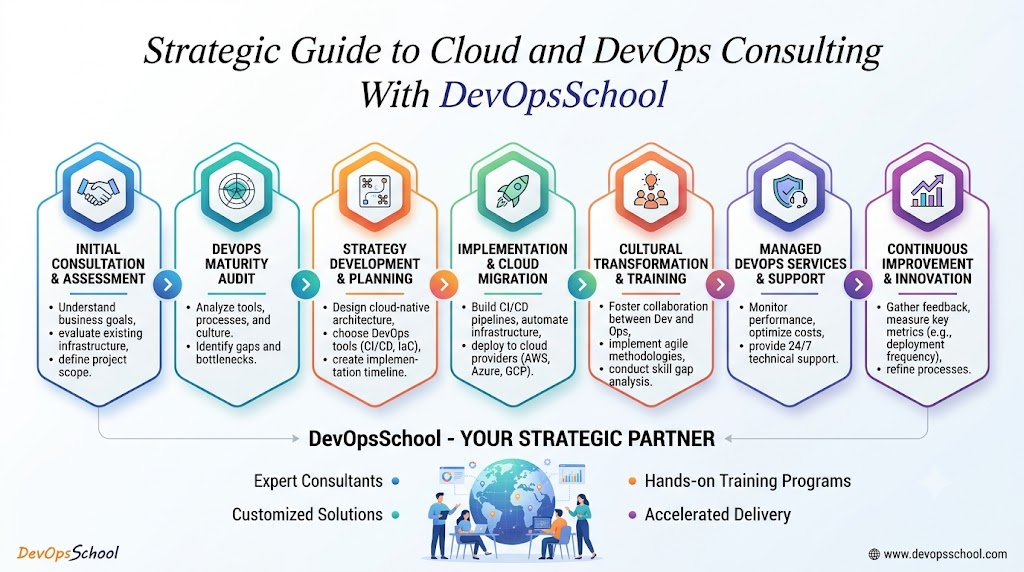
Fixing your workflow does not mean turning your whole company upside down overnight. Taking a steady, step-by-step approach keeps things manageable.
First, take a hard look at where your team loses the most time. Are builds failing? Are deployments entirely manual?
Next, set realistic goals. Do not try to fix everything at once; pick one target, like cutting your release time in half.
After that, pick the right automation tools that actually fit your team’s daily habits. Roll out changes in small chunks so people can adjust comfortably.
Finally, check your results, listen to what your engineers are saying, and keep tweaking the process as you grow.
The Good, The Bad, And The Common Traps
Adopting a modern engineering culture brings massive perks. Your team ships features faster, catches bugs before users see them, and responds to market changes on a dime.
Even so, you will likely hit a few speed bumps along the way. People naturally resist change, and old habits die hard.
A classic mistake is buying expensive, shiny software tools and expecting them to fix a broken culture automatically. Tools are only as good as the people using them.
Be patient, communicate openly, and make sure your team has the time and support they need to learn.
Habits Of Highly Reliable Engineering Teams
Success comes down to building healthy daily routines. Start by documenting your processes so everyone knows how things work if someone takes a vacation.
Let computers handle the boring stuff, like running repetitive tests and pushing routine updates. Freeing humans from grunt work lets them focus on actual problem-solving.
Set up clear monitoring so you catch small glitches before they turn into full-blown website outages. Most importantly, keep developers and ops folks talking to each other daily.
In-House Staff Versus External Experts
Deciding whether to hire full-time staff or bring in outside consultants is always tricky. The breakdown below highlights how these two paths compare:
| Comparison Factor | Internal Team Approach | External Consulting Approach |
| Getting Started | Slower because you have to recruit and train | Much faster with ready-to-go experts |
| Budget Control | Predictable monthly salaries | Project-based pricing or retainers |
| Skill Range | Limited to what your current crew knows | Deep exposure across dozens of industries |
| Long-Term Control | High internal ownership | Requires a handover period for your staff |
Many growing businesses find that combining both worlds works best. You get the fast start of outside expertise while building lasting skills inside your own team.
How DevOpsSchool Supports Your Journey
When your team needs extra muscle or guidance, having the right partner makes all the difference. DevOpsSchool provides practical, no-nonsense support to help tech organisations modernize their operations:
- DevOps Consulting Netherlands: Helps local companies clean up messy pipelines and speed up delivery.
- DevOps Training Netherlands: Trains engineers on modern automation and deployment workflows.
- Corporate DevOps Training: Customizes learning programs directly for your company’s specific tech stack.
- DevSecOps Consulting Services: Embeds strong security practices straight into your daily development routine.
- Kubernetes Consulting Services: Guides your crew through setting up and scaling container environments smoothly.
- Kubernetes Training Netherlands: Teaches engineers how to orchestrate containers without the headache.
- Site Reliability Engineering Consulting: Boosts your system uptime and fixes messy incident response plans.
- Cloud Migration Consulting Netherlands: Makes moving your apps to the cloud safe and painless.
- Hire Freelance DevOps Engineers: Bridges sudden talent gaps when you have tight project deadlines.
- FinOps Consulting Services: Tracks down wasted cloud spending and slashes unnecessary monthly bills.
Frequently Asked Questions
What does a DevOps consultant actually do for my company? A consultant looks at how your team builds and ships software, finds where things are jamming up, and helps you set up automated workflows to save time and prevent outages.
Why should we invest in corporate training for our IT staff? Training your entire department together ensures everyone is on the same page. It stops people from using different tools and builds a shared language for solving tech problems.
How does DevSecOps make applications safer? Instead of treating security as a final checkbox right before launch, DevSecOps runs security checks automatically while code is being written, catching flaws early.
Why is Kubernetes so popular among modern developers? Kubernetes makes it easy to run and scale software containers across different servers, meaning your apps stay online even when traffic spikes massively.
How do SRE practices keep websites from crashing? Site Reliability Engineering focuses on setting up smart alerts, tracking system health, and learning from past outages so the same crash never happens twice.
What is the hardest part of moving to the cloud? Planning for unexpected costs and avoiding downtime are usually the biggest hurdles, which is why having an experienced guide helps keep the migration on track.
When does it make sense to hire a freelancer? Freelancers are great when you have a temporary project surge, need a niche skill set for a few months, or need to cover for an open position while you search for a permanent hire.
How can FinOps lower my monthly cloud bill? FinOps experts review your cloud usage to find idle servers, oversized databases, and wasted resources, helping you cut costs without slowing down your apps.
What kind of background do DevOpsSchool trainers have? Trainers come with years of hands-on, real-world engineering experience in the trenches, meaning they teach practical skills rather than just reading from a textbook.
How do we take the first step with DevOpsSchool? You can simply drop them a message through their site to chat about your current tech hurdles and figure out a practical plan that fits your team.
Final Thoughts
Fixing your software delivery pipeline does not require a magic wand. It just takes a willingness to tear down old silos, automate the boring chores, and lean on expert help when things get complicated. Taking small, intentional steps today will save your team countless headaches tomorrow. Whether you need a quick consulting session or hands-on team training, DevOpsSchool is ready to help your engineering crew thrive.
