Introduction
Third-Party Risk Management (TPRM) tools help organizations identify, assess, monitor, and mitigate risks associated with vendors, suppliers, and external partners. In simple terms, these platforms ensure that the companies you work with do not introduce security, compliance, financial, or operational risks into your business.
In the modern digital ecosystem, organizations depend heavily on third parties for cloud services, software, logistics, and outsourcing. This dependency increases exposure to cyber threats, regulatory penalties, and operational disruptions. In 2026 and beyond, TPRM tools are critical due to rising cyberattacks, stricter compliance frameworks, and the growing need for continuous vendor monitoring.
Real-world use cases include:
- Assessing vendor cybersecurity posture before onboarding
- Monitoring third-party compliance with regulations like GDPR
- Managing risk across global supply chains
- Automating vendor risk scoring and audits
- Tracking ongoing vendor performance and security incidents
What buyers should evaluate:
- Vendor risk assessment frameworks
- Continuous monitoring capabilities
- Integration with GRC, SIEM, and procurement systems
- Automation of workflows and alerts
- Reporting and audit readiness
- Scalability for large vendor ecosystems
- Data security and access control
- Ease of onboarding vendors
- AI-driven insights and predictive analytics
Best for: Security teams, compliance officers, risk managers, procurement leaders, and enterprises dealing with multiple vendors across industries like finance, healthcare, IT, and manufacturing.
Not ideal for: Very small businesses with minimal vendor exposure or low regulatory requirements; spreadsheets or lightweight tools may suffice.
Key Trends in Third-Party Risk Management (TPRM)
- AI-driven risk scoring: Tools now predict vendor risks using behavioral and historical data
- Continuous monitoring: Real-time alerts for vendor security incidents
- Cyber risk intelligence integration: External threat data feeds enhance assessments
- Automation of assessments: Questionnaires and audits are increasingly automated
- Regulatory compliance focus: Built-in frameworks for GDPR, SOC, ISO standards
- Cloud-first architecture: SaaS adoption dominates the TPRM landscape
- Vendor self-assessment portals: Vendors can update risk profiles independently
- API-first integrations: Seamless connections with security and procurement systems
- Risk quantification models: Financial impact of vendor risk is now measurable
- Third-party ecosystem mapping: Visualization of vendor dependencies
How We Selected These Tools (Methodology)
- Evaluated market presence and enterprise adoption
- Assessed depth of risk assessment and monitoring features
- Considered security and compliance capabilities
- Reviewed integration with cybersecurity and GRC tools
- Analyzed scalability across vendor ecosystems
- Included tools for different organization sizes
- Prioritized automation and AI-driven insights
- Evaluated user experience and reporting capabilities
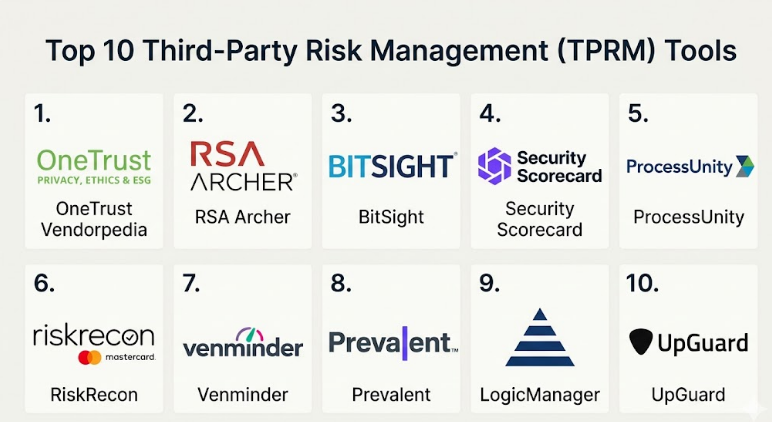
Top 10 Third-Party Risk Management (TPRM) Tools
#1 — OneTrust Vendorpedia
Short description: A leading TPRM platform focused on vendor risk assessments and compliance management, widely used by enterprises.
Key Features
- Vendor risk assessment workflows
- Third-party risk scoring
- Compliance tracking (GDPR, etc.)
- Automated questionnaires
- Continuous monitoring
- Vendor lifecycle management
Pros
- Strong compliance capabilities
- Scalable for large enterprises
Cons
- Complex setup
- Pricing not SMB-friendly
Platforms / Deployment
Cloud
Security & Compliance
SSO, RBAC, encryption, audit logs; GDPR support
Integrations & Ecosystem
OneTrust integrates with privacy, compliance, and security tools to create a unified risk management environment.
- GRC platforms
- Security tools
- APIs
Support & Community
Enterprise-grade support with onboarding assistance.
#2 — RSA Archer
Short description: A comprehensive GRC platform with strong TPRM capabilities for risk and compliance management.
Key Features
- Third-party risk assessments
- Risk scoring and reporting
- Compliance workflows
- Incident management
- Vendor lifecycle tracking
Pros
- Highly customizable
- Strong GRC integration
Cons
- Complex implementation
- Requires expertise
Platforms / Deployment
Cloud / On-premise
Security & Compliance
RBAC, encryption, audit logs; compliance frameworks supported
Integrations & Ecosystem
- SIEM tools
- ERP systems
- APIs
Support & Community
Enterprise support with detailed documentation.
#3 — BitSight
Short description: A cybersecurity risk rating platform focused on continuous monitoring of third-party security posture.
Key Features
- Security ratings for vendors
- Continuous monitoring
- Risk dashboards
- Threat intelligence
- Benchmarking
Pros
- Real-time visibility
- Easy-to-understand scoring
Cons
- Limited non-cyber risk features
- Pricing may be high
Platforms / Deployment
Cloud
Security & Compliance
Not publicly stated
Integrations & Ecosystem
- Security tools
- Risk platforms
- APIs
Support & Community
Good documentation and enterprise support.
#4 — SecurityScorecard
Short description: A widely used platform for assessing vendor cybersecurity risks using external data.
Key Features
- Vendor security ratings
- Continuous monitoring
- Risk alerts
- Reporting dashboards
- Threat intelligence
Pros
- Easy to use
- Strong cyber risk focus
Cons
- Limited operational risk coverage
- Depends on external data
Platforms / Deployment
Cloud
Security & Compliance
Not publicly stated
Integrations & Ecosystem
- SIEM tools
- Security platforms
- APIs
Support & Community
Strong enterprise support.
#5 — ProcessUnity
Short description: A dedicated TPRM platform focused on vendor risk lifecycle management.
Key Features
- Risk assessments
- Vendor onboarding workflows
- Continuous monitoring
- Reporting tools
- Compliance tracking
Pros
- Purpose-built for TPRM
- Good automation
Cons
- UI could improve
- Customization required
Platforms / Deployment
Cloud
Security & Compliance
RBAC, encryption; compliance varies
Integrations & Ecosystem
- GRC tools
- ERP systems
- APIs
Support & Community
Strong onboarding and support services.
#6 — RiskRecon
Short description: A vendor risk monitoring platform focused on cybersecurity posture analysis.
Key Features
- Continuous monitoring
- Risk scoring
- Asset analysis
- Reporting dashboards
- Risk prioritization
Pros
- Accurate risk insights
- Easy to interpret
Cons
- Limited vendor lifecycle features
- Focused on cyber risk only
Platforms / Deployment
Cloud
Security & Compliance
Not publicly stated
Integrations & Ecosystem
- Security tools
- APIs
Support & Community
Documentation available; enterprise support.
#7 — Venminder
Short description: A vendor risk management platform tailored for regulated industries.
Key Features
- Vendor risk assessments
- Compliance tracking
- Document management
- Vendor performance tracking
- Risk monitoring
Pros
- Strong compliance focus
- Industry-specific features
Cons
- Limited flexibility
- UI improvements needed
Platforms / Deployment
Cloud
Security & Compliance
Encryption, RBAC; compliance frameworks supported
Integrations & Ecosystem
- Compliance tools
- APIs
Support & Community
Good customer support; niche focus.
#8 — Prevalent
Short description: A TPRM platform that provides vendor risk visibility and continuous monitoring.
Key Features
- Vendor assessments
- Risk dashboards
- Continuous monitoring
- Compliance tracking
- Workflow automation
Pros
- Strong reporting
- Good vendor insights
Cons
- Pricing not transparent
- Setup complexity
Platforms / Deployment
Cloud
Security & Compliance
RBAC, encryption; compliance varies
Integrations & Ecosystem
- Security tools
- GRC platforms
- APIs
Support & Community
Enterprise-level support.
#9 — LogicManager
Short description: A risk management platform with TPRM capabilities focused on enterprise risk management.
Key Features
- Risk assessments
- Vendor risk tracking
- Reporting dashboards
- Compliance workflows
- Risk analytics
Pros
- Easy to use
- Good reporting
Cons
- Limited advanced automation
- Not TPRM-focused only
Platforms / Deployment
Cloud
Security & Compliance
Not publicly stated
Integrations & Ecosystem
- ERP tools
- APIs
Support & Community
Strong support and onboarding.
#10 — UpGuard
Short description: A cybersecurity and vendor risk management platform focused on external risk monitoring.
Key Features
- Vendor risk scoring
- Continuous monitoring
- Security assessments
- Alerts and reporting
- Risk dashboards
Pros
- Strong cybersecurity focus
- Easy to use
Cons
- Limited operational risk coverage
- May require additional tools
Platforms / Deployment
Cloud
Security & Compliance
Not publicly stated
Integrations & Ecosystem
- Security tools
- APIs
Support & Community
Good documentation and support.
Comparison Table (Top 10)
| Tool Name | Best For | Platform(s) Supported | Deployment | Standout Feature | Public Rating |
|---|---|---|---|---|---|
| OneTrust Vendorpedia | Compliance-focused TPRM | Web | Cloud | Compliance workflows | N/A |
| RSA Archer | Enterprise GRC | Web | Cloud/On-premise | Customization | N/A |
| BitSight | Cyber risk monitoring | Web | Cloud | Security ratings | N/A |
| SecurityScorecard | External risk visibility | Web | Cloud | Real-time alerts | N/A |
| ProcessUnity | TPRM lifecycle | Web | Cloud | Automation | N/A |
| RiskRecon | Cyber posture analysis | Web | Cloud | Accurate insights | N/A |
| Venminder | Regulated industries | Web | Cloud | Compliance focus | N/A |
| Prevalent | Vendor monitoring | Web | Cloud | Reporting | N/A |
| LogicManager | Enterprise risk | Web | Cloud | Ease of use | N/A |
| UpGuard | Cyber risk management | Web | Cloud | Risk scoring | N/A |
Evaluation & Scoring of Third-Party Risk Management (TPRM)
| Tool Name | Core (25%) | Ease (15%) | Integrations (15%) | Security (10%) | Performance (10%) | Support (10%) | Value (15%) | Weighted Total |
|---|---|---|---|---|---|---|---|---|
| OneTrust Vendorpedia | 9 | 7 | 9 | 9 | 9 | 8 | 7 | 8.4 |
| RSA Archer | 9 | 6 | 9 | 9 | 9 | 8 | 6 | 8.1 |
| BitSight | 8 | 8 | 7 | 8 | 9 | 8 | 7 | 8.0 |
| SecurityScorecard | 8 | 8 | 7 | 8 | 9 | 8 | 7 | 8.0 |
| ProcessUnity | 8 | 7 | 8 | 8 | 8 | 7 | 7 | 7.8 |
| RiskRecon | 7 | 8 | 7 | 8 | 8 | 7 | 7 | 7.6 |
| Venminder | 8 | 7 | 7 | 8 | 8 | 7 | 7 | 7.7 |
| Prevalent | 8 | 7 | 8 | 8 | 8 | 7 | 7 | 7.8 |
| LogicManager | 7 | 8 | 7 | 7 | 8 | 8 | 8 | 7.7 |
| UpGuard | 8 | 8 | 7 | 8 | 8 | 7 | 8 | 7.9 |
How to interpret:
- Scores reflect comparative strengths across the category
- Higher “Core” indicates deeper TPRM capabilities
- “Ease” shows usability and onboarding speed
- “Value” reflects cost efficiency vs features
- Choose based on your risk profile, not just total score
Which Third-Party Risk Management (TPRM)
Solo / Freelancer
Not typically required; basic vendor tracking tools are sufficient.
SMB
UpGuard or SecurityScorecard offer easy deployment and quick insights.
Mid-Market
ProcessUnity or Prevalent provide a balance of automation and scalability.
Enterprise
OneTrust Vendorpedia, RSA Archer, and BitSight are ideal for complex ecosystems.
Budget vs Premium
- Budget: UpGuard, SecurityScorecard
- Premium: OneTrust, RSA Archer
Feature Depth vs Ease of Use
- Deep features: RSA Archer, OneTrust
- Easy to use: UpGuard, SecurityScorecard
Integrations & Scalability
- Best integrations: OneTrust, RSA Archer
- Scalable: BitSight, Prevalent
Security & Compliance Needs
- High compliance: OneTrust, Venminder
- Cyber-focused: BitSight, RiskRecon
Frequently Asked Questions (FAQs)
1. What is Third-Party Risk Management (TPRM)?
TPRM is the process of identifying and mitigating risks introduced by vendors and external partners.
2. Why is TPRM important?
It helps prevent data breaches, compliance violations, and operational disruptions caused by third parties.
3. How much do TPRM tools cost?
Costs vary widely depending on features and organization size, ranging from SMB-friendly pricing to enterprise-level subscriptions.
4. Can TPRM tools integrate with security systems?
Yes, most platforms integrate with SIEM, GRC, and cybersecurity tools.
5. How long does implementation take?
Implementation can range from weeks to several months depending on complexity.
6. Are TPRM tools secure?
Most offer encryption, access controls, and compliance features, but specifics vary.
7. What industries need TPRM the most?
Finance, healthcare, IT, and manufacturing industries benefit the most.
8. Can small businesses use TPRM tools?
Yes, but they should choose simpler, cost-effective solutions.
9. What are common mistakes in TPRM?
Ignoring continuous monitoring and focusing only on initial assessments.
10. Are TPRM tools only for cybersecurity?
No, they also cover operational, financial, and compliance risks.
Conclusion
Third-Party Risk Management tools have become essential for organizations navigating increasingly complex vendor ecosystems. As cyber threats rise and regulatory pressures intensify, businesses must move beyond manual processes and adopt automated, scalable, and intelligent platforms to manage vendor risks effectively. While enterprise-grade solutions like OneTrust Vendorpedia and RSA Archer provide deep customization and compliance capabilities, they may require significant investment and expertise. On the other hand, tools like UpGuard and SecurityScorecard offer faster deployment and ease of use, especially for organizations prioritizing cybersecurity risk visibility.
