Introduction
Procurement software helps organizations manage the process of sourcing, purchasing, and paying for goods and services. It brings structure to procurement workflows such as vendor selection, purchase order creation, contract management, invoice processing, and spend tracking. Instead of relying on spreadsheets and emails, businesses use procurement platforms to centralize and automate these operations.
In the current business landscape, procurement has moved from a back-office function to a strategic driver of cost efficiency and supplier resilience. Organizations are focusing on real-time spend visibility, supplier risk management, and compliance. With increasing complexity in global supply chains, procurement software plays a key role in improving control, reducing leakage, and enabling data-driven decisions.
Common use cases include:
- Vendor onboarding and supplier lifecycle management
- Purchase requisition and approval workflows
- Contract and compliance management
- Invoice automation and payment reconciliation
- Spend analytics and cost optimization
What buyers should evaluate:
- End-to-end procurement lifecycle coverage
- Supplier management and onboarding capabilities
- Approval workflows and automation flexibility
- Integration with ERP, finance, and accounting systems
- Reporting and spend analytics
- Scalability for growing procurement volume
- User experience and adoption
- Compliance and audit capabilities
- Pricing transparency and ROI
Best for: Finance teams, procurement managers, operations leaders, mid-to-large enterprises, and growing companies looking to control spend and improve supplier relationships.
Not ideal for: Very small businesses with minimal procurement needs or companies that outsource procurement entirely to third-party agencies.
Key Trends in Procurement Software
- AI-driven spend analytics: Advanced tools now identify cost-saving opportunities and anomalies automatically.
- Supplier risk intelligence: Platforms are integrating risk scoring, compliance checks, and ESG tracking.
- End-to-end automation: From requisition to payment, reducing manual approvals and delays.
- Cloud-first adoption: Most procurement tools are now SaaS-based with rapid deployment.
- Integration with finance ecosystems: Tight coupling with ERP, accounting, and payment systems.
- Self-service procurement: Employees can request purchases through guided workflows.
- Contract lifecycle management (CLM): Increasing importance of contract visibility and compliance tracking.
- Mobile procurement: Approvals and tracking on mobile devices.
- Subscription-based pricing models: Flexible pricing aligned with company size and usage.
- Focus on compliance and audit readiness: Strong emphasis on governance and regulatory reporting.
How We Selected These Tools (Methodology)
- Considered market presence and adoption across industries.
- Evaluated feature depth across procurement lifecycle.
- Assessed automation and workflow flexibility.
- Reviewed integration capabilities with ERP and finance systems.
- Analyzed scalability for SMB to enterprise use cases.
- Considered ease of implementation and user adoption.
- Evaluated security and compliance indicators.
- Included tools with strong vendor and supplier ecosystem support.
- Balanced cost efficiency and enterprise-grade functionality.
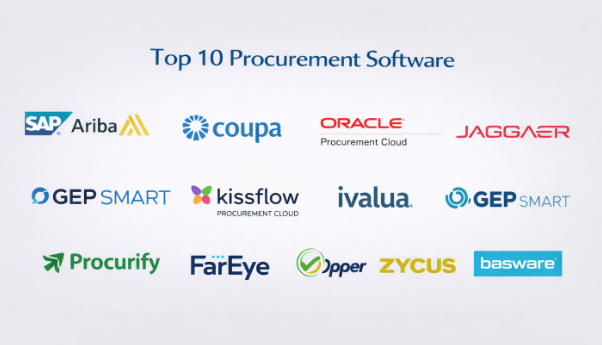
Top 10 Procurement Software
#1 — SAP Ariba
Short description: A leading enterprise procurement platform offering end-to-end sourcing, supplier management, and spend visibility.
Key Features
- Supplier lifecycle management
- Strategic sourcing tools
- Contract management
- Spend analysis
- Invoice automation
- Global supplier network
Pros
- Enterprise-grade capabilities
- Strong supplier network ecosystem
Cons
- Complex implementation
- Higher cost for smaller businesses
Platforms / Deployment
- Web
- Cloud
Security & Compliance
- SSO, RBAC, encryption
- Other certifications: Not publicly stated
Integrations & Ecosystem
Deep integration with enterprise systems and finance platforms.
- SAP ERP systems
- APIs
- Financial systems
- Supplier networks
Support & Community
Enterprise support with structured onboarding and global presence.
#2 — Coupa
Short description: A cloud-based spend management platform focused on procurement, expense management, and supplier collaboration.
Key Features
- Spend visibility dashboard
- Supplier management
- Procurement workflows
- Expense tracking
- AI-driven insights
- Contract management
Pros
- Strong analytics capabilities
- User-friendly interface
Cons
- Pricing may be high
- Customization limitations
Platforms / Deployment
- Web / Mobile
- Cloud
Security & Compliance
- SSO, MFA, encryption
- Other certifications: Not publicly stated
Integrations & Ecosystem
Wide integration ecosystem with enterprise systems.
- ERP platforms
- APIs
- Finance tools
Support & Community
Strong documentation and enterprise-level support.
#3 — Oracle Procurement Cloud
Short description: A comprehensive procurement solution integrated within Oracle’s cloud ecosystem.
Key Features
- Supplier qualification
- Strategic sourcing
- Procurement contracts
- Spend analytics
- Procurement automation
- Risk management
Pros
- Strong enterprise integration
- Comprehensive feature set
Cons
- Complex UI
- Requires Oracle ecosystem familiarity
Platforms / Deployment
- Web
- Cloud
Security & Compliance
- SSO, encryption
- Other certifications: Not publicly stated
Integrations & Ecosystem
Native integration within Oracle ecosystem.
- Oracle ERP
- APIs
- Financial systems
Support & Community
Enterprise-grade support and documentation.
#4 — Jaggaer
Short description: A procurement platform focused on spend management, sourcing, and supplier collaboration.
Key Features
- Strategic sourcing
- Supplier management
- Spend analytics
- Procurement workflows
- Contract management
Pros
- Strong sourcing capabilities
- Flexible workflows
Cons
- Learning curve
- UI may feel complex
Platforms / Deployment
- Web
- Cloud
Security & Compliance
- Not publicly stated
Integrations & Ecosystem
Supports enterprise integrations.
- ERP systems
- APIs
- Supplier networks
Support & Community
Professional support with onboarding assistance.
#5 — GEP SMART
Short description: An AI-powered procurement and supply chain platform designed for enterprises.
Key Features
- AI-driven spend analysis
- Supplier management
- Contract lifecycle management
- Procurement automation
- Analytics dashboards
Pros
- Strong AI capabilities
- Unified platform
Cons
- Implementation effort
- Higher cost
Platforms / Deployment
- Web
- Cloud
Security & Compliance
- Not publicly stated
Integrations & Ecosystem
Enterprise integration capabilities.
- ERP systems
- APIs
- Supply chain tools
Support & Community
Enterprise-level support and consulting.
#6 — Procurify
Short description: A user-friendly procurement platform designed for SMBs and mid-sized companies.
Key Features
- Purchase order management
- Approval workflows
- Budget tracking
- Spend visibility
- Mobile approvals
Pros
- Easy to use
- Quick implementation
Cons
- Limited enterprise features
- Basic analytics
Platforms / Deployment
- Web / Mobile
- Cloud
Security & Compliance
- Not publicly stated
Integrations & Ecosystem
Supports integrations with accounting tools.
- QuickBooks
- APIs
- Financial tools
Support & Community
Good onboarding and responsive support.
#7 — Kissflow Procurement Cloud
Short description: A workflow-driven procurement solution focused on automation and ease of use.
Key Features
- Workflow automation
- Purchase requisitions
- Vendor management
- Approval workflows
- Reporting tools
Pros
- Simple interface
- Flexible workflows
Cons
- Limited advanced analytics
- Not ideal for large enterprises
Platforms / Deployment
- Web
- Cloud
Security & Compliance
- Not publicly stated
Integrations & Ecosystem
Moderate integration capabilities.
- APIs
- CRM tools
- Finance systems
Support & Community
Strong onboarding support for SMB users.
#8 — Ivalua
Short description: A comprehensive procurement platform offering sourcing, supplier management, and analytics.
Key Features
- Supplier lifecycle management
- Spend analysis
- Contract management
- Risk management
- Procurement workflows
Pros
- Strong customization
- Enterprise scalability
Cons
- Complex implementation
- Requires training
Platforms / Deployment
- Web
- Cloud
Security & Compliance
- Not publicly stated
Integrations & Ecosystem
Enterprise integrations supported.
- ERP systems
- APIs
- Supply chain tools
Support & Community
Enterprise-level support services.
#9 — Zycus
Short description: A procurement and spend management platform with strong AI-driven capabilities.
Key Features
- AI-powered sourcing
- Spend analytics
- Supplier management
- Contract lifecycle management
- Procurement automation
Pros
- Advanced AI features
- Strong analytics
Cons
- Implementation complexity
- Cost considerations
Platforms / Deployment
- Web
- Cloud
Security & Compliance
- Not publicly stated
Integrations & Ecosystem
Enterprise ecosystem support.
- ERP systems
- APIs
- Financial tools
Support & Community
Enterprise-grade support and services.
#10 — Basware
Short description: A procurement and invoicing platform focused on financial automation and compliance.
Key Features
- Invoice automation
- Purchase order management
- Spend visibility
- Supplier management
- Compliance tools
Pros
- Strong invoicing capabilities
- Good compliance support
Cons
- Limited sourcing features
- UI may feel outdated
Platforms / Deployment
- Web
- Cloud
Security & Compliance
- Not publicly stated
Integrations & Ecosystem
Supports integration with finance systems.
- ERP systems
- APIs
- Accounting tools
Support & Community
Reliable support and documentation.
Comparison Table (Top 10)
| Tool Name | Best For | Platform(s) Supported | Deployment | Standout Feature | Public Rating |
|---|---|---|---|---|---|
| SAP Ariba | Enterprise procurement | Web | Cloud | Global supplier network | N/A |
| Coupa | Spend management | Web, Mobile | Cloud | AI analytics | N/A |
| Oracle Procurement Cloud | Oracle users | Web | Cloud | Deep ERP integration | N/A |
| Jaggaer | Strategic sourcing | Web | Cloud | Flexible workflows | N/A |
| GEP SMART | AI procurement | Web | Cloud | AI-driven insights | N/A |
| Procurify | SMBs | Web, Mobile | Cloud | Easy adoption | N/A |
| Kissflow Procurement Cloud | Workflow automation | Web | Cloud | Simple workflows | N/A |
| Ivalua | Custom enterprise | Web | Cloud | High customization | N/A |
| Zycus | AI sourcing | Web | Cloud | Advanced analytics | N/A |
| Basware | Invoice automation | Web | Cloud | Financial automation | N/A |
Evaluation & Scoring of Procurement Software
| Tool Name | Core (25%) | Ease (15%) | Integrations (15%) | Security (10%) | Performance (10%) | Support (10%) | Value (15%) | Weighted Total |
|---|---|---|---|---|---|---|---|---|
| SAP Ariba | 9 | 6 | 9 | 8 | 9 | 9 | 6 | 8.2 |
| Coupa | 9 | 8 | 8 | 8 | 8 | 8 | 7 | 8.1 |
| Oracle Procurement Cloud | 9 | 6 | 9 | 8 | 9 | 8 | 6 | 8.0 |
| Jaggaer | 8 | 7 | 8 | 7 | 8 | 7 | 7 | 7.7 |
| GEP SMART | 9 | 7 | 8 | 7 | 9 | 8 | 6 | 8.0 |
| Procurify | 7 | 9 | 6 | 6 | 7 | 7 | 8 | 7.4 |
| Kissflow Procurement Cloud | 7 | 9 | 6 | 6 | 7 | 7 | 8 | 7.4 |
| Ivalua | 9 | 6 | 8 | 7 | 9 | 8 | 6 | 8.0 |
| Zycus | 9 | 6 | 8 | 7 | 9 | 8 | 6 | 8.0 |
| Basware | 8 | 7 | 7 | 7 | 8 | 7 | 7 | 7.6 |
How to interpret:
- Scores are comparative and reflect overall capability across criteria.
- Enterprise tools score higher in features and integrations, while SMB tools score higher in usability.
- Weighted totals help identify balanced tools but should not replace real-world testing.
- Use this as a shortlist guide rather than a final decision.
Which Procurement Software
Solo / Freelancer
Basic tools like Procurify or Kissflow are sufficient for simple procurement workflows.
SMB
Coupa (entry-level), Procurify, and Kissflow offer ease of use and affordability.
Mid-Market
Jaggaer and GEP SMART provide better scalability and analytics.
Enterprise
SAP Ariba, Oracle Procurement Cloud, Ivalua, and Zycus are best suited for complex operations.
Budget vs Premium
- Budget: Procurify, Kissflow
- Premium: SAP Ariba, Coupa, GEP SMART
Feature Depth vs Ease of Use
- Easy: Procurify, Kissflow
- Feature-rich: SAP Ariba, Ivalua
Integrations & Scalability
- Strong: SAP Ariba, Oracle, Coupa
- Moderate: Procurify, Kissflow
Security & Compliance Needs
- Enterprises should prioritize platforms with strong governance and audit capabilities.
- SMB tools may require additional controls depending on regulatory needs.
Frequently Asked Questions (FAQs)
1. What is procurement software?
Procurement software helps businesses manage purchasing processes, suppliers, contracts, and payments in a centralized system.
2. How much does procurement software cost?
Pricing varies widely based on features, users, and company size. Most tools use subscription-based pricing.
3. Is procurement software suitable for small businesses?
Yes, many tools like Procurify and Kissflow are designed for SMBs with simple workflows.
4. How long does implementation take?
SMB tools may take days, while enterprise platforms can take weeks or months.
5. Can procurement software integrate with ERP systems?
Yes, most enterprise tools offer integrations with ERP and finance systems.
6. What are common mistakes when choosing a tool?
Ignoring scalability, underestimating integration needs, and focusing only on cost.
7. Is procurement software secure?
Most tools offer basic security features, but compliance levels vary by vendor.
8. Can I switch tools later?
Yes, but migration requires effort in data transfer and process adjustments.
9. Does procurement software support automation?
Yes, automation is a key feature for approvals, invoicing, and workflows.
10. What alternatives exist?
Manual procurement processes or outsourcing to procurement service providers.
Conclusion
Procurement software has evolved into a strategic business tool that drives cost savings, improves supplier relationships, and enhances operational efficiency. While enterprise platforms offer comprehensive capabilities and deep integrations, SMB-focused tools prioritize simplicity and quick adoption. The right choice depends on your organization’s size, procurement complexity, and integration needs. instead of selecting a tool based solely on features or brand, businesses should evaluate how well it fits their workflows, team capabilities, and long-term growth plans. A practical approach is to shortlist two or three platforms, run pilot implementations, and validate their performance in real-world procurement scenarios before making a final decision.
