Introduction
Transportation Management Systems (TMS) are software platforms designed to plan, execute, and optimize the movement of goods across supply chains. In simple terms, a TMS helps businesses choose the best routes, manage carriers, reduce shipping costs, and track deliveries in real time.
In today’s logistics landscape, where supply chains are global, customer expectations are high, and margins are tight, TMS platforms are no longer optional. Businesses must manage rising fuel costs, complex regulations, and last-mile delivery challenges while maintaining speed and accuracy.
Real-world use cases:
- E-commerce companies optimizing last-mile delivery
- Manufacturers managing inbound and outbound logistics
- Retailers coordinating multi-carrier shipments
- 3PL providers managing transportation for multiple clients
- Global enterprises tracking cross-border shipments
What buyers should evaluate:
- Route optimization and planning capabilities
- Carrier management and rate comparison
- Real-time shipment tracking and visibility
- Integration with ERP, WMS, and OMS systems
- Analytics and reporting features
- Scalability for multi-region operations
- Ease of use and onboarding
- Compliance and documentation handling
- Cost optimization and ROI visibility
Best for: Logistics managers, supply chain leaders, operations teams, and IT departments in industries such as retail, manufacturing, e-commerce, and third-party logistics.
Not ideal for: Very small businesses with low shipment volume or those relying on basic courier tools; simpler shipping platforms may be sufficient.
Key Trends in Transportation Management Systems (TMS)
- AI-powered route optimization reducing fuel costs and delivery times
- Real-time visibility platforms providing end-to-end shipment tracking
- Integration with IoT devices for fleet monitoring and asset tracking
- Cloud-first TMS adoption replacing legacy systems
- Dynamic pricing and carrier selection based on real-time data
- Last-mile delivery innovation including micro-fulfillment and crowd-sourced logistics
- Sustainability tracking (carbon footprint and emissions reporting)
- API-first ecosystems enabling seamless integration with logistics tech stacks
- Autonomous and semi-autonomous vehicle integration (early adoption phase)
- Usage-based and modular pricing models becoming more common
How We Selected These Tools (Methodology)
- Evaluated global adoption and logistics industry presence
- Assessed core transportation capabilities such as routing, tracking, and optimization
- Considered performance and scalability across enterprise use cases
- Reviewed security and compliance readiness where applicable
- Analyzed integration ecosystems with ERP, WMS, and shipping providers
- Ensured coverage across SMB, mid-market, and enterprise segments
- Prioritized tools with modern cloud architecture and APIs
- Included platforms with strong support and partner ecosystems
- Focused on real-world usability and ROI impact
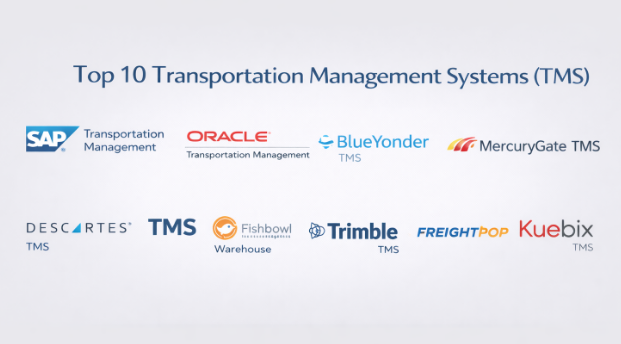
Top 10 Transportation Management Systems (TMS)
#1 — SAP Transportation Management
Short description (2–3 lines): A robust enterprise-grade TMS designed for complex logistics operations with deep integration into SAP supply chain systems.
Key Features
- Advanced route planning and optimization
- Freight cost management
- Carrier selection and tendering
- Real-time shipment tracking
- Integration with SAP ERP and EWM
- Compliance and documentation management
Pros
- Deep SAP ecosystem integration
- Highly scalable for global operations
Cons
- Complex implementation
- High cost
Platforms / Deployment
- Web
- Cloud / On-premise / Hybrid
Security & Compliance
- RBAC, encryption, audit logs
- Compliance varies by SAP environment
Integrations & Ecosystem
Strong integration within SAP ecosystem and third-party logistics tools.
- SAP ERP
- SAP EWM
- APIs
Support & Community
Enterprise-grade support with strong partner ecosystem.
#2 — Oracle Transportation Management
Short description (2–3 lines): A cloud-enabled TMS offering advanced logistics planning, execution, and analytics for large enterprises.
Key Features
- AI-based route optimization
- Freight settlement and billing
- Multi-modal transportation support
- Real-time visibility dashboards
- Scenario planning
Pros
- Strong analytics and optimization
- Supports complex logistics networks
Cons
- Complex setup
- Premium pricing
Platforms / Deployment
- Web
- Cloud / Hybrid
Security & Compliance
- Encryption, RBAC, audit logs
- Compliance varies
Integrations & Ecosystem
Wide integration with Oracle and external systems.
- Oracle ERP
- APIs
- Logistics platforms
Support & Community
Enterprise support with extensive documentation.
#3 — Blue Yonder TMS
Short description (2–3 lines): A modern TMS focused on AI-driven supply chain optimization and predictive logistics.
Key Features
- AI-powered demand and route optimization
- Real-time shipment visibility
- Carrier collaboration tools
- Scenario simulation
- End-to-end supply chain integration
Pros
- Advanced AI capabilities
- Strong predictive analytics
Cons
- High cost
- Complex deployment
Platforms / Deployment
- Web
- Cloud
Security & Compliance
- Encryption, RBAC
- Compliance varies
Integrations & Ecosystem
Integrates with supply chain and ERP systems.
- APIs
- ERP systems
Support & Community
Strong enterprise support and consulting network.
#4 — Manhattan Active Transportation Management
Short description (2–3 lines): A cloud-native TMS designed for unified supply chain operations and real-time logistics visibility.
Key Features
- Real-time transportation execution
- Route optimization
- Carrier management
- Integration with warehouse systems
- Analytics dashboards
Pros
- Unified supply chain platform
- Real-time decision-making
Cons
- Expensive
- Implementation complexity
Platforms / Deployment
- Web
- Cloud
Security & Compliance
- RBAC, encryption
- Compliance varies
Integrations & Ecosystem
Strong integration with supply chain systems.
- APIs
- ERP and WMS systems
Support & Community
Enterprise-level support.
#5 — MercuryGate TMS
Short description (2–3 lines): A flexible and configurable TMS suitable for multi-modal transportation and mid-market to enterprise users.
Key Features
- Multi-modal transportation planning
- Freight optimization
- Carrier management
- Real-time tracking
- Reporting tools
Pros
- Highly configurable
- Supports complex logistics
Cons
- UI can be complex
- Requires setup effort
Platforms / Deployment
- Web
- Cloud
Security & Compliance
- RBAC, encryption
- Compliance varies
Integrations & Ecosystem
Flexible integration with logistics systems.
- APIs
- ERP systems
Support & Community
Moderate support and partner ecosystem.
#6 — Descartes TMS
Short description (2–3 lines): A cloud-based TMS focused on logistics execution, compliance, and global trade management.
Key Features
- Route planning
- Compliance and customs management
- Real-time tracking
- Carrier connectivity
- Analytics
Pros
- Strong compliance features
- Global logistics support
Cons
- Limited customization
- Pricing varies
Platforms / Deployment
- Web
- Cloud
Security & Compliance
- Encryption, RBAC
- Compliance varies
Integrations & Ecosystem
Strong global logistics integrations.
- Carrier networks
- APIs
Support & Community
Good enterprise support.
#7 — Trimble TMS
Short description (2–3 lines): A transportation solution focused on fleet management, route planning, and real-time tracking.
Key Features
- Fleet management tools
- Route optimization
- GPS tracking
- Driver performance monitoring
- Reporting
Pros
- Strong fleet management capabilities
- Real-time visibility
Cons
- Limited enterprise features
- Less focus on multi-modal logistics
Platforms / Deployment
- Web / Mobile
- Cloud
Security & Compliance
- Basic RBAC, encryption
- Not publicly stated for advanced compliance
Integrations & Ecosystem
Integrates with fleet and logistics systems.
- APIs
- GPS systems
Support & Community
Moderate support.
#8 — FreightPOP
Short description (2–3 lines): A user-friendly TMS designed for SMBs with strong multi-carrier shipping capabilities.
Key Features
- Multi-carrier shipping
- Rate comparison
- Order management
- Real-time tracking
- Reporting tools
Pros
- Easy to use
- Affordable
Cons
- Limited advanced features
- Not ideal for large enterprises
Platforms / Deployment
- Web
- Cloud
Security & Compliance
- Basic RBAC
- Not publicly stated
Integrations & Ecosystem
Focused on SMB integrations.
- E-commerce platforms
- APIs
Support & Community
Good SMB support.
#9 — Shipwell
Short description (2–3 lines): A modern cloud-based TMS offering real-time visibility and automation for logistics operations.
Key Features
- Real-time shipment tracking
- Automated workflows
- Carrier management
- Analytics dashboards
- API integrations
Pros
- Modern UI
- Strong automation
Cons
- Limited enterprise depth
- Growing ecosystem
Platforms / Deployment
- Web
- Cloud
Security & Compliance
- Encryption, RBAC
- Compliance varies
Integrations & Ecosystem
API-first integration approach.
- ERP systems
- APIs
Support & Community
Growing support ecosystem.
#10 — Kuebix TMS
Short description (2–3 lines): A scalable TMS offering both free and enterprise tiers, suitable for growing businesses.
Key Features
- Freight management
- Route optimization
- Shipment tracking
- Carrier management
- Reporting
Pros
- Flexible pricing model
- Scalable
Cons
- Limited advanced analytics
- Customization constraints
Platforms / Deployment
- Web
- Cloud
Security & Compliance
- RBAC, encryption
- Not publicly stated
Integrations & Ecosystem
Integrates with common business systems.
- ERP
- APIs
Support & Community
Moderate support.
Comparison Table (Top 10)
| Tool Name | Best For | Platform(s) Supported | Deployment | Standout Feature | Public Rating |
|---|---|---|---|---|---|
| SAP TM | Enterprise logistics | Web | Hybrid | Deep SAP integration | N/A |
| Oracle TM | Global enterprises | Web | Hybrid | AI optimization | N/A |
| Blue Yonder | AI logistics | Web | Cloud | Predictive analytics | N/A |
| Manhattan Active | Unified supply chain | Web | Cloud | Real-time execution | N/A |
| MercuryGate | Multi-modal logistics | Web | Cloud | Configurability | N/A |
| Descartes | Global trade compliance | Web | Cloud | Compliance tools | N/A |
| Trimble | Fleet operations | Web/Mobile | Cloud | GPS tracking | N/A |
| FreightPOP | SMB shipping | Web | Cloud | Multi-carrier support | N/A |
| Shipwell | Modern logistics ops | Web | Cloud | Automation | N/A |
| Kuebix | Scalable SMB | Web | Cloud | Flexible pricing | N/A |
Evaluation & Scoring of Transportation Management Systems (TMS)
| Tool Name | Core | Ease | Integrations | Security | Performance | Support | Value | Weighted Total |
|---|---|---|---|---|---|---|---|---|
| SAP TM | 9 | 6 | 9 | 8 | 9 | 8 | 6 | 8.0 |
| Oracle TM | 9 | 7 | 9 | 8 | 9 | 8 | 6 | 8.2 |
| Blue Yonder | 9 | 6 | 8 | 8 | 9 | 8 | 6 | 7.9 |
| Manhattan Active | 9 | 7 | 8 | 8 | 9 | 8 | 6 | 8.1 |
| MercuryGate | 8 | 7 | 8 | 7 | 8 | 7 | 7 | 7.6 |
| Descartes | 8 | 7 | 7 | 8 | 8 | 7 | 7 | 7.7 |
| Trimble | 7 | 8 | 6 | 6 | 7 | 6 | 7 | 6.9 |
| FreightPOP | 6 | 9 | 7 | 6 | 7 | 7 | 9 | 7.3 |
| Shipwell | 7 | 8 | 8 | 7 | 7 | 7 | 8 | 7.5 |
| Kuebix | 7 | 8 | 7 | 6 | 7 | 7 | 8 | 7.2 |
How to interpret the scores:
- Scores are comparative, not absolute
- Enterprise tools excel in features and scalability
- SMB tools perform better in ease and value
- Choose based on operational needs, not just score
- Consider integration and long-term scalability
Which Transportation Management Systems (TMS)
Solo / Freelancer
FreightPOP or Kuebix provide simple and affordable solutions.
SMB
Shipwell and FreightPOP offer ease of use and scalability.
Mid-Market
MercuryGate and Descartes provide balance and flexibility.
Enterprise
SAP, Oracle, Manhattan, and Blue Yonder are ideal.
Budget vs Premium
- Budget: FreightPOP, Kuebix
- Premium: SAP, Oracle
Feature Depth vs Ease of Use
- Deep features: SAP, Oracle
- Easy to use: FreightPOP, Shipwell
Integrations & Scalability
- Strong: SAP, Oracle, Manhattan
- Moderate: SMB tools
Security & Compliance Needs
- High: SAP, Oracle, Descartes
- Moderate: Others
Frequently Asked Questions (FAQs)
1. What is a Transportation Management System?
A TMS is software that helps plan, execute, and optimize the movement of goods.
2. How much does a TMS cost?
Costs vary widely depending on scale and features; many use subscription pricing.
3. How long does implementation take?
From a few weeks for SMB tools to several months for enterprise platforms.
4. Can TMS integrate with WMS and ERP?
Yes, integration with WMS and ERP is a key feature.
5. What industries use TMS?
Retail, manufacturing, logistics, and e-commerce.
6. Is cloud TMS better than on-premise?
Cloud offers flexibility; on-premise suits strict compliance needs.
7. What are common mistakes when choosing TMS?
Ignoring scalability, underestimating integration needs, and not testing workflows.
8. Can TMS reduce logistics costs?
Yes, through route optimization and carrier selection.
9. Is real-time tracking standard?
Most modern TMS platforms include real-time tracking.
10. What are alternatives to TMS?
Basic shipping tools or ERP modules may suffice for smaller operations.
Conclusion
Transportation Management Systems play a critical role in modern logistics by improving efficiency, reducing costs, and providing visibility across supply chains. While enterprise platforms offer deep capabilities for complex operations, smaller tools provide flexibility and affordability for growing businesses.
