Introduction
Nonconformance Management Tools are software platforms designed to identify, document, track, and resolve deviations from quality standards, regulatory requirements, or internal processes. In simple terms, they help organizations manage “what went wrong” and ensure it doesn’t happen again.
In environment where compliance, audit readiness, and product quality directly impact revenue and brand trust, these tools are no longer optional. With increasing regulatory pressure, global supply chains, and digital transformation, businesses need structured systems to handle nonconformities efficiently.
Real-world use cases include:
- Managing quality issues in manufacturing production lines
- Tracking supplier defects in supply chain operations
- Handling compliance deviations in healthcare or pharma
- Documenting software bugs and process failures in IT/DevOps teams
- Supporting audit readiness for ISO, FDA, and internal audits
What buyers should evaluate:
- Workflow automation and configurability
- Root cause analysis and CAPA integration
- Audit trail and compliance reporting
- Ease of use and onboarding time
- Integration with ERP, MES, QMS systems
- Security features (RBAC, audit logs, encryption)
- Scalability across teams and locations
- Custom reporting and dashboards
- Pricing transparency and total cost of ownership
Best for: Quality managers, compliance officers, manufacturing leaders, healthcare organizations, regulated industries, and mid-to-large enterprises managing complex workflows.
Not ideal for: Freelancers, small teams without formal compliance requirements, or businesses that can manage issues through simple ticketing tools or spreadsheets.
Key Trends in Nonconformance Management Tools
- AI-driven root cause analysis and predictive quality insights
- Automated CAPA workflows integrated directly with nonconformance tracking
- Cloud-first platforms replacing legacy on-premise QMS systems
- Increased focus on regulatory compliance (ISO, FDA, GMP)
- Integration with ERP, MES, and supply chain platforms
- Mobile-first reporting for shop floor and field teams
- Low-code/no-code workflow customization
- Real-time dashboards and analytics for quality KPIs
- API-driven ecosystems for interoperability across tools
- Subscription-based pricing with modular features
How We Selected These Tools (Methodology)
- Evaluated market adoption and brand recognition across industries
- Assessed feature completeness for nonconformance tracking and resolution
- Considered reliability and scalability in production environments
- Reviewed security posture including access control and audit logging
- Analyzed integration capabilities with enterprise systems
- Examined usability and onboarding complexity
- Ensured coverage across enterprise and mid-market segments
- Included tools with strong ecosystem and vendor support
- Balanced modern cloud platforms with established legacy leaders
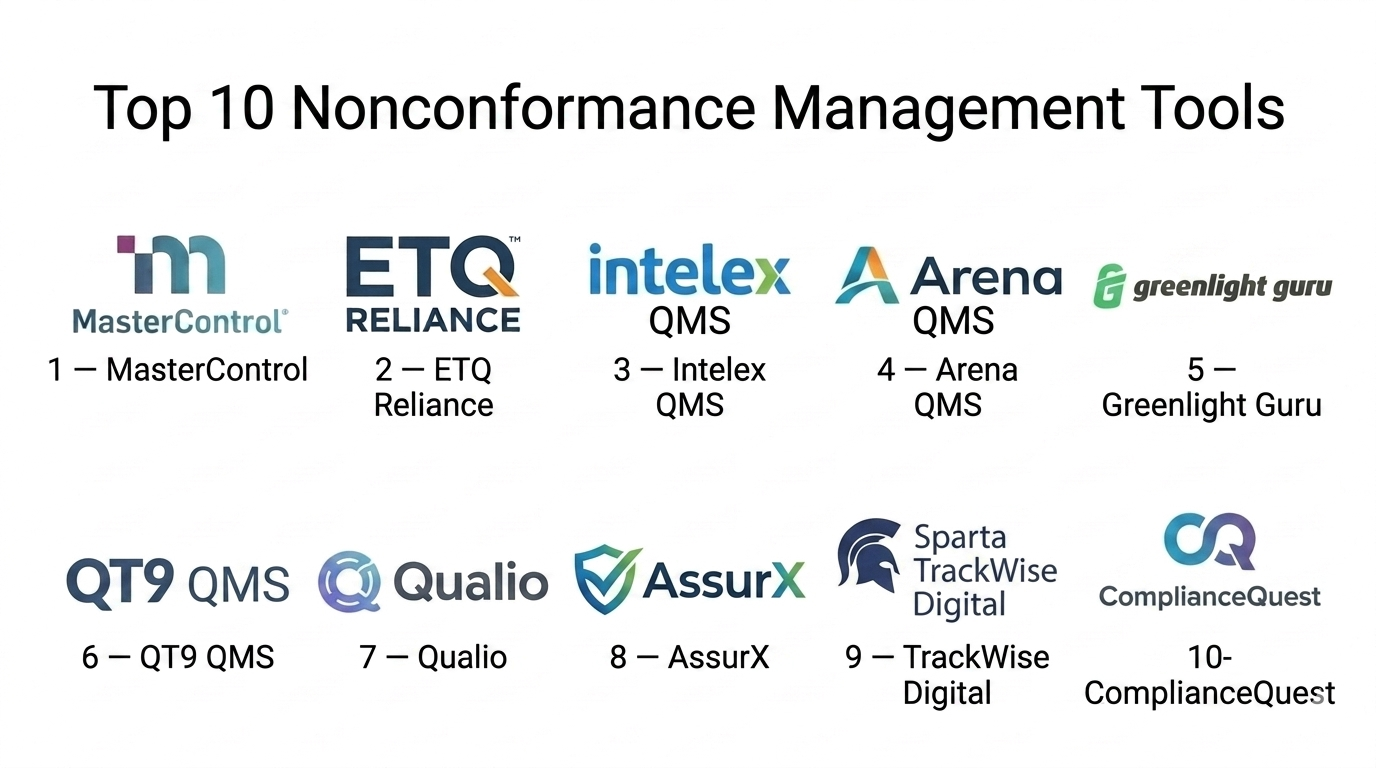
Top 10 Nonconformance Management Tools
#1 — MasterControl
Short description (2–3 lines):
A leading enterprise quality management system widely used in regulated industries like pharma and manufacturing. Designed for compliance-heavy environments with deep workflow automation.
Key Features
- Nonconformance tracking and CAPA integration
- Electronic document management
- Audit readiness and compliance workflows
- Risk management and supplier quality
- Workflow automation with approvals
- Training and compliance tracking
Pros
- Strong compliance capabilities
- Mature enterprise feature set
Cons
- Complex implementation
- Higher cost compared to SMB tools
Platforms / Deployment
- Web
- Cloud / Hybrid
Security & Compliance
- RBAC, audit logs, electronic signatures
- Compliance frameworks: ISO, FDA (industry-aligned)
Integrations & Ecosystem
Supports integration with ERP, PLM, and enterprise systems.
- SAP
- Oracle
- APIs available
- Document systems
- MES platforms
Support & Community
Strong enterprise support, structured onboarding, extensive documentation.
#2 — ETQ Reliance
Short description (2–3 lines):
A flexible, cloud-based QMS platform known for its adaptability and low-code workflow configuration.
Key Features
- Configurable nonconformance workflows
- CAPA and audit management
- Supplier quality management
- Risk-based quality processes
- Real-time analytics dashboards
- Low-code customization
Pros
- Highly customizable
- Strong analytics capabilities
Cons
- Requires configuration effort
- Learning curve for new users
Platforms / Deployment
- Web
- Cloud
Security & Compliance
- SSO, RBAC, audit logs
- Compliance frameworks supported
Integrations & Ecosystem
- ERP integrations
- APIs
- CRM tools
- MES systems
Support & Community
Good enterprise support with training programs.
#3 — Intelex QMS
Short description (2–3 lines):
A cloud-based platform focused on quality, environmental, and safety management with strong compliance features.
Key Features
- Nonconformance tracking
- CAPA management
- Incident and risk tracking
- Mobile data capture
- Reporting dashboards
- Compliance tracking
Pros
- Strong mobile capabilities
- Multi-module platform
Cons
- Interface may feel dated
- Configuration complexity
Platforms / Deployment
- Web / Mobile
- Cloud
Security & Compliance
- RBAC, audit logs
- Compliance support available
Integrations & Ecosystem
- ERP systems
- APIs
- Data connectors
Support & Community
Enterprise-level support and onboarding.
#4 — Arena QMS
Short description (2–3 lines):
A cloud-native QMS focused on product lifecycle and quality management, especially in manufacturing and electronics.
Key Features
- Nonconformance and CAPA workflows
- Supplier quality tracking
- Product lifecycle integration
- Document control
- Change management
- Collaboration tools
Pros
- Strong PLM integration
- Cloud-native architecture
Cons
- Limited customization depth
- Best suited for specific industries
Platforms / Deployment
- Web
- Cloud
Security & Compliance
- RBAC, audit trails
- Compliance support available
Integrations & Ecosystem
- PLM systems
- ERP integrations
- APIs
Support & Community
Reliable support and onboarding services.
#5 — Greenlight Guru
Short description (2–3 lines):
A QMS platform specifically designed for medical device companies with built-in compliance workflows.
Key Features
- Nonconformance and CAPA management
- Design control workflows
- Risk management
- Audit readiness tools
- Document management
- Training tracking
Pros
- Tailored for medical devices
- Strong compliance focus
Cons
- Limited outside healthcare
- Pricing may be high
Platforms / Deployment
- Web
- Cloud
Security & Compliance
- Compliance-focused (FDA, ISO)
- Audit logs, RBAC
Integrations & Ecosystem
- Limited integrations compared to enterprise tools
- APIs available
Support & Community
Strong onboarding and industry-specific support.
#6 — QT9 QMS
Short description (2–3 lines):
A modular QMS platform offering nonconformance management with strong reporting and usability.
Key Features
- Nonconformance tracking
- CAPA workflows
- Audit management
- Calibration tracking
- Reporting dashboards
- Document control
Pros
- Easy to use
- Modular pricing
Cons
- Limited advanced customization
- Smaller ecosystem
Platforms / Deployment
- Web
- Cloud
Security & Compliance
- RBAC, audit logs
- Compliance-ready features
Integrations & Ecosystem
- ERP integrations
- APIs
Support & Community
Good support for mid-sized organizations.
#7 — Qualio
Short description (2–3 lines):
A modern cloud QMS designed for life sciences startups and scaling companies.
Key Features
- Nonconformance workflows
- CAPA management
- Document control
- Training management
- Audit trails
- Risk management
Pros
- Clean and modern UI
- Fast onboarding
Cons
- Limited enterprise features
- Smaller integration ecosystem
Platforms / Deployment
- Web
- Cloud
Security & Compliance
- RBAC, audit logs
- Compliance support available
Integrations & Ecosystem
- APIs
- Limited third-party integrations
Support & Community
Responsive support, growing community.
#8 — AssurX
Short description (2–3 lines):
An enterprise QMS platform focused on compliance-heavy industries with deep workflow automation.
Key Features
- Nonconformance tracking
- CAPA and audit workflows
- Supplier quality
- Risk management
- Reporting tools
- Workflow automation
Pros
- Strong enterprise capabilities
- Highly configurable
Cons
- Complex setup
- Higher cost
Platforms / Deployment
- Web
- Cloud / Hybrid
Security & Compliance
- RBAC, audit logs
- Compliance frameworks supported
Integrations & Ecosystem
- ERP integrations
- APIs
- Custom connectors
Support & Community
Enterprise-grade support.
#9 — TrackWise Digital
Short description (2–3 lines):
A cloud-based quality management solution widely used in pharma and manufacturing.
Key Features
- Nonconformance tracking
- CAPA workflows
- Risk management
- Compliance tracking
- Reporting dashboards
- Workflow automation
Pros
- Strong industry reputation
- Scalable architecture
Cons
- Implementation complexity
- Premium pricing
Platforms / Deployment
- Web
- Cloud
Security & Compliance
- Compliance-focused features
- RBAC, audit logs
Integrations & Ecosystem
- ERP systems
- APIs
- Enterprise integrations
Support & Community
Strong enterprise support.
#10 — ComplianceQuest
Short description (2–3 lines):
A Salesforce-based QMS platform combining quality, compliance, and customer experience.
Key Features
- Nonconformance management
- CAPA workflows
- Supplier quality
- Risk and audit management
- AI-powered insights
- Salesforce integration
Pros
- Strong CRM integration
- Modern UI
Cons
- Requires Salesforce ecosystem
- Higher cost
Platforms / Deployment
- Web
- Cloud
Security & Compliance
- Salesforce-based security
- RBAC, audit logs
Integrations & Ecosystem
- Salesforce ecosystem
- APIs
- ERP integrations
Support & Community
Backed by Salesforce ecosystem support.
Comparison Table (Top 10)
| Tool Name | Best For | Platform(s) Supported | Deployment | Standout Feature | Public Rating |
|---|---|---|---|---|---|
| MasterControl | Regulated enterprises | Web | Cloud/Hybrid | Compliance workflows | N/A |
| ETQ Reliance | Custom workflows | Web | Cloud | Low-code customization | N/A |
| Intelex QMS | EHS + quality | Web/Mobile | Cloud | Multi-module platform | N/A |
| Arena QMS | Product-focused teams | Web | Cloud | PLM integration | N/A |
| Greenlight Guru | Medical devices | Web | Cloud | Industry-specific compliance | N/A |
| QT9 QMS | SMB manufacturing | Web | Cloud | Ease of use | N/A |
| Qualio | Startups | Web | Cloud | Modern UI | N/A |
| AssurX | Enterprise compliance | Web | Cloud/Hybrid | Deep configurability | N/A |
| TrackWise Digital | Pharma enterprises | Web | Cloud | Scalable architecture | N/A |
| ComplianceQuest | Salesforce users | Web | Cloud | CRM integration | N/A |
Evaluation & Scoring of Nonconformance Management Tools
| Tool Name | Core (25%) | Ease (15%) | Integrations (15%) | Security (10%) | Performance (10%) | Support (10%) | Value (15%) | Weighted Total |
|---|---|---|---|---|---|---|---|---|
| MasterControl | 9 | 6 | 8 | 9 | 8 | 9 | 6 | 7.9 |
| ETQ Reliance | 9 | 7 | 8 | 8 | 8 | 8 | 7 | 8.0 |
| Intelex QMS | 8 | 7 | 7 | 8 | 8 | 8 | 7 | 7.6 |
| Arena QMS | 8 | 8 | 7 | 8 | 8 | 7 | 7 | 7.7 |
| Greenlight Guru | 8 | 8 | 6 | 9 | 8 | 8 | 6 | 7.7 |
| QT9 QMS | 7 | 8 | 6 | 7 | 7 | 7 | 8 | 7.2 |
| Qualio | 7 | 9 | 6 | 7 | 7 | 8 | 7 | 7.3 |
| AssurX | 9 | 6 | 7 | 8 | 8 | 8 | 6 | 7.6 |
| TrackWise Digital | 9 | 6 | 8 | 9 | 8 | 9 | 6 | 7.9 |
| ComplianceQuest | 8 | 7 | 9 | 8 | 8 | 8 | 6 | 7.8 |
How to interpret the scores:
- Scores are comparative within this list, not absolute.
- “Core” reflects depth of nonconformance features.
- “Ease” reflects onboarding and usability.
- “Value” balances cost vs capability.
- Enterprise tools score higher in features but lower in ease/value.
- SMB tools score higher in usability but lower in depth.
Which Nonconformance Management Tools
Solo / Freelancer
Not necessary. Use spreadsheets or simple issue trackers instead.
SMB
QT9 QMS, Qualio — affordable, easy to deploy, quick onboarding.
Mid-Market
ETQ Reliance, Intelex QMS — balance between flexibility and scalability.
Enterprise
MasterControl, TrackWise Digital, AssurX — best for compliance-heavy environments.
Budget vs Premium
- Budget: QT9 QMS, Qualio
- Premium: MasterControl, TrackWise Digital
Feature Depth vs Ease of Use
- Deep features: MasterControl, AssurX
- Easy to use: Qualio, QT9
Integrations & Scalability
- Strong integrations: ComplianceQuest, ETQ Reliance
- Moderate: QT9, Qualio
Security & Compliance Needs
- High compliance: MasterControl, Greenlight Guru
- Moderate: QT9, Qualio
Frequently Asked Questions (FAQs)
1. What is a nonconformance management tool?
It is software that helps track, manage, and resolve quality issues or deviations from standards.
2. How is it different from CAPA tools?
Nonconformance tools identify issues, while CAPA tools focus on corrective and preventive actions.
3. Are these tools required for compliance?
In regulated industries, yes. They support audit readiness and documentation.
4. What industries use these tools most?
Manufacturing, healthcare, pharma, aerospace, and supply chain sectors.
5. How long does implementation take?
It varies from weeks to months depending on complexity.
6. Are cloud-based tools secure?
Most include encryption, RBAC, and audit logs, but always verify vendor details.
7. Can these tools integrate with ERP systems?
Yes, most enterprise tools support ERP and MES integrations.
8. What is the typical pricing model?
Subscription-based pricing, often per user or module.
9. Can small businesses use these tools?
Yes, but lightweight tools are more suitable than enterprise platforms.
10. What are common mistakes when choosing a tool?
Overpaying for unused features, ignoring integration needs, and underestimating onboarding complexity.
Conclusion
Nonconformance Management Tools play a critical role in maintaining quality, ensuring compliance, and improving operational efficiency. From simple tracking systems for small teams to complex enterprise platforms designed for regulated industries, the market offers a wide range of solutions tailored to different needs. The “best” tool depends entirely on your organization’s size, compliance requirements, integration needs, and budget. Enterprises may prioritize scalability and regulatory support, while smaller teams often value ease of use and affordability.
