Introduction
Quality Management Systems (QMS) are software platforms that help organizations manage quality processes such as document control, audits, compliance, training, supplier quality, and corrective actions. In simple terms, a QMS ensures that products and processes meet defined standards while reducing errors, risks, and compliance issues.
In modern business environments, especially across manufacturing, life sciences, and regulated industries, maintaining quality is no longer optional. Increasing regulatory pressure, global supply chains, and customer expectations require companies to adopt digital QMS platforms that provide automation, traceability, and real-time insights.
Real-world use cases:
- Managing SOPs, documents, and training records
- Handling CAPA (Corrective and Preventive Actions) workflows
- Conducting internal and external audits
- Tracking supplier quality and compliance
- Managing customer complaints and nonconformance issues
What buyers should evaluate:
- Document control and workflow automation
- CAPA, audit, and compliance features
- Integration with ERP, MES, PLM, and CRM systems
- Scalability across locations and teams
- Reporting and analytics capabilities
- Ease of implementation and user adoption
- Industry-specific compliance support
- Security, access control, and audit trails
- Vendor support and ecosystem
Best for: Manufacturing companies, healthcare organizations, life sciences firms, aerospace, automotive industries, and any business that must comply with strict quality and regulatory requirements.
Not ideal for: Small teams with minimal compliance needs, startups without formal processes, or businesses that only need basic document storage or task management tools.
Key Trends in Quality Management Systems (QMS)
- AI-assisted quality insights and predictive issue detection
- Cloud-native QMS platforms replacing legacy on-premise systems
- Increased focus on regulatory compliance and audit readiness
- Integration with ERP, MES, and supply chain platforms
- Mobile accessibility for field and shop floor teams
- Low-code customization of workflows
- Supplier quality management and collaboration features
- Real-time dashboards and analytics for quality metrics
- Subscription-based SaaS pricing models
- Increased emphasis on data security and governance
How We Selected These Tools (Methodology)
- Selected tools with strong market presence and industry adoption
- Evaluated feature completeness across QMS modules
- Assessed performance reliability in enterprise environments
- Considered integration capabilities with major business systems
- Reviewed usability and onboarding complexity
- Included tools for SMB, mid-market, and enterprise users
- Evaluated vendor support and ecosystem strength
- Focused on scalability and flexibility across industries
- Considered security capabilities where available
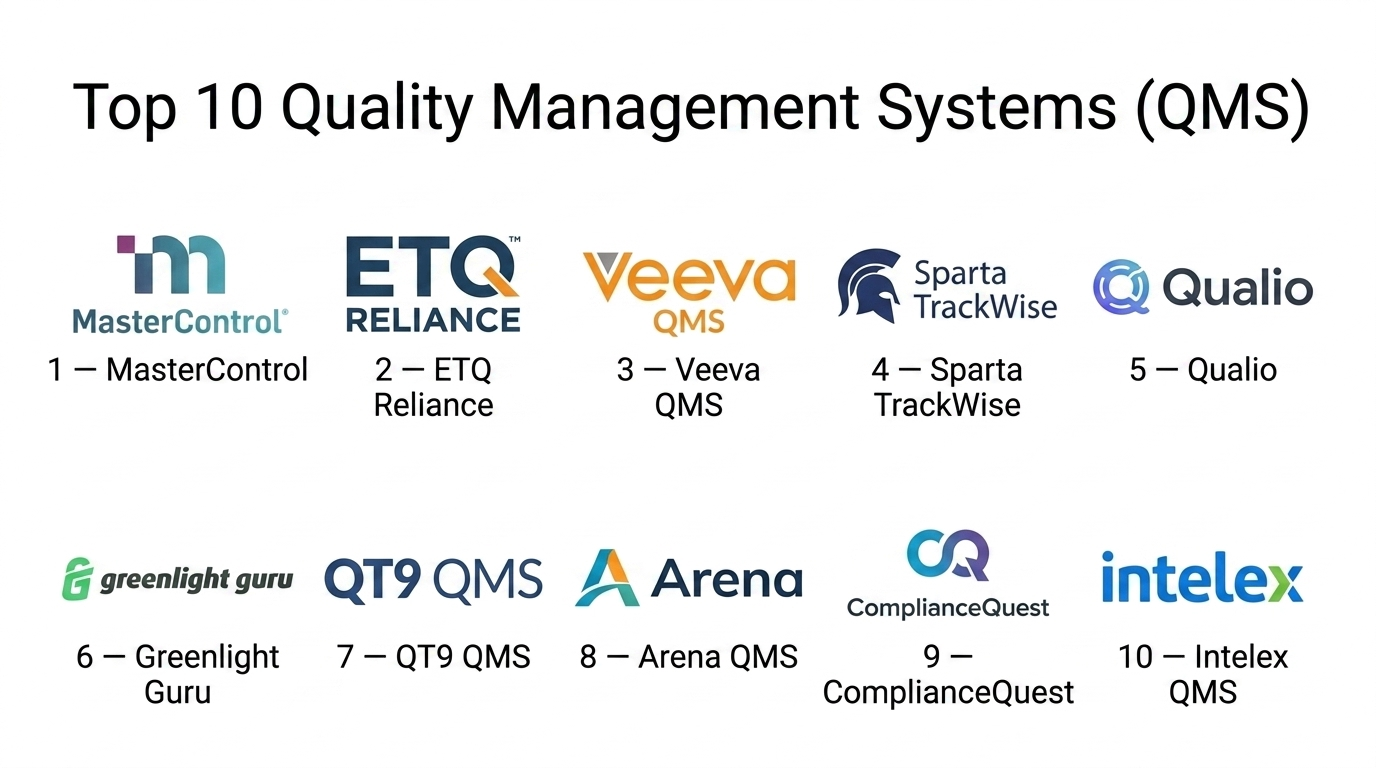
Top 10 Quality Management Systems (QMS)
#1 — MasterControl
Short description: Enterprise QMS platform designed for regulated industries like life sciences and manufacturing.
Key Features
- Document control and training management
- CAPA and audit management
- Risk management tools
- Supplier quality workflows
- Compliance tracking
- Reporting dashboards
Pros
- Strong compliance features
- Industry-specific workflows
Cons
- Complex implementation
- Higher cost
Platforms / Deployment
Web / Cloud
Security & Compliance
RBAC, audit logs (others not publicly stated)
Integrations & Ecosystem
Supports integration with enterprise systems.
- ERP systems
- CRM platforms
- PLM tools
Support & Community
Enterprise support with strong documentation.
#2 — ETQ Reliance
Short description: Flexible QMS platform with configurable workflows for manufacturing and enterprise use.
Key Features
- Workflow automation
- Document control
- Audit management
- Supplier quality
- CAPA tracking
- Analytics dashboards
Pros
- Highly configurable
- Scalable for large organizations
Cons
- Learning curve
- Requires setup effort
Platforms / Deployment
Web / Cloud
Security & Compliance
Not publicly stated
Integrations & Ecosystem
Integrates with enterprise systems and APIs.
- ERP tools
- MES platforms
- APIs
Support & Community
Strong enterprise support ecosystem.
#3 — Veeva QMS
Short description: Cloud-based QMS designed for life sciences and regulated industries.
Key Features
- Document control
- Training management
- CAPA workflows
- Change control
- Audit management
- Quality event tracking
Pros
- Strong compliance focus
- Cloud-native design
Cons
- Industry-specific focus
- Higher cost
Platforms / Deployment
Web / Cloud
Security & Compliance
Not publicly stated
Integrations & Ecosystem
Works within Veeva ecosystem.
- Regulatory tools
- CRM systems
Support & Community
Strong support for regulated industries.
#4 — Sparta TrackWise
Short description: Enterprise QMS platform for complex quality and compliance processes.
Key Features
- Quality event management
- CAPA workflows
- Audit and compliance tracking
- Risk management
- Reporting tools
Pros
- Enterprise-grade capabilities
- Strong compliance support
Cons
- Complex deployment
- High cost
Platforms / Deployment
Web / Cloud / On-premise
Security & Compliance
Not publicly stated
Integrations & Ecosystem
Integrates with enterprise systems.
- ERP platforms
- Compliance systems
Support & Community
Enterprise support with industry expertise.
#5 — Qualio
Short description: Modern cloud-based QMS designed for growing life sciences and healthcare startups.
Key Features
- Document management
- CAPA workflows
- Audit management
- Training tracking
- Compliance dashboards
Pros
- Easy to use
- Fast implementation
Cons
- Limited enterprise features
- Industry focus
Platforms / Deployment
Web / Cloud
Security & Compliance
Not publicly stated
Integrations & Ecosystem
Integrates with cloud tools and APIs.
- CRM tools
- Data platforms
Support & Community
Strong onboarding and support for SMBs.
#6 — Greenlight Gur
Short description: QMS platform specifically designed for medical device companies.
Key Features
- Design control
- Risk management
- CAPA workflows
- Audit management
- Compliance tracking
Pros
- Tailored for medtech
- Easy compliance workflows
Cons
- Limited outside medtech
- Feature scope narrower than enterprise tools
Platforms / Deployment
Web / Cloud
Security & Compliance
Not publicly stated
Integrations & Ecosystem
Focused ecosystem for medical devices.
- Regulatory tools
- Quality systems
Support & Community
Strong niche support community.
#7 — QT9 QMS
Short description: Scalable QMS solution for manufacturing and regulated industries.
Key Features
- Document control
- Audit management
- CAPA tracking
- Supplier management
- Compliance tools
Pros
- Flexible and scalable
- Good reporting features
Cons
- UI may feel dated
- Learning curve
Platforms / Deployment
Web / Cloud / On-premise
Security & Compliance
Not publicly stated
Integrations & Ecosystem
Supports integrations with enterprise systems.
- ERP tools
- Manufacturing systems
Support & Community
Good support and documentation.
#8 — Arena QMS
Short description: Cloud QMS integrated with product lifecycle management for manufacturing.
Key Features
- Document control
- Change management
- Quality workflows
- Supplier collaboration
- Product lifecycle integration
Pros
- Strong PLM integration
- Good collaboration features
Cons
- Best suited for manufacturing
- Limited outside product-based industries
Platforms / Deployment
Web / Cloud
Security & Compliance
Not publicly stated
Integrations & Ecosystem
Integrates with PLM and ERP tools.
- CAD systems
- ERP platforms
Support & Community
Moderate support ecosystem.
#9 — ComplianceQuest
Short description: Cloud-based QMS built on a modern platform with strong integration capabilities.
Key Features
- CAPA management
- Audit and compliance tracking
- Supplier quality
- Risk management
- Workflow automation
Pros
- Strong integration capabilities
- Modern architecture
Cons
- Requires configuration
- Enterprise focus
Platforms / Deployment
Web / Cloud
Security & Compliance
Not publicly stated
Integrations & Ecosystem
Strong integration with enterprise systems.
- ERP tools
- CRM systems
Support & Community
Enterprise support with growing ecosystem.
#10 — Intelex QMS
Short description: QMS platform focused on compliance, safety, and quality management.
Key Features
- Incident and quality management
- Audit tracking
- Compliance tools
- Risk management
- Reporting dashboards
Pros
- Strong compliance features
- Flexible workflows
Cons
- Complex setup
- Training required
Platforms / Deployment
Web / Cloud
Security & Compliance
Not publicly stated
Integrations & Ecosystem
Supports integration with enterprise platforms.
- ERP systems
- Safety tools
Support & Community
Enterprise-level support.
Comparison Table (Top 10)
| Tool Name | Best For | Platform(s) Supported | Deployment | Standout Feature | Public Rating |
|---|---|---|---|---|---|
| MasterControl | Enterprises | Web | Cloud | Compliance workflows | N/A |
| ETQ Reliance | Enterprises | Web | Cloud | Configurable workflows | N/A |
| Veeva QMS | Life sciences | Web | Cloud | Industry focus | N/A |
| Sparta TrackWise | Enterprises | Web | Cloud/On-premise | Quality events | N/A |
| Qualio | SMBs | Web | Cloud | Ease of use | N/A |
| Greenlight Guru | Medtech | Web | Cloud | Design control | N/A |
| QT9 QMS | Mid-market | Web | Cloud/On-premise | Flexibility | N/A |
| Arena QMS | Manufacturing | Web | Cloud | PLM integration | N/A |
| ComplianceQuest | Enterprises | Web | Cloud | Integration | N/A |
| Intelex QMS | Enterprises | Web | Cloud | Compliance focus | N/A |
Evaluation & Scoring of Quality Management Systems (QMS)
| Tool Name | Core (25%) | Ease (15%) | Integrations (15%) | Security (10%) | Performance (10%) | Support (10%) | Value (15%) | Weighted Total |
|---|---|---|---|---|---|---|---|---|
| MasterControl | 9 | 7 | 8 | 8 | 9 | 8 | 7 | 8.2 |
| ETQ Reliance | 9 | 7 | 9 | 7 | 9 | 8 | 7 | 8.3 |
| Veeva QMS | 9 | 7 | 8 | 8 | 9 | 8 | 6 | 8.1 |
| Sparta TrackWise | 9 | 6 | 8 | 8 | 9 | 8 | 6 | 8.0 |
| Qualio | 7 | 9 | 7 | 6 | 7 | 8 | 8 | 7.5 |
| Greenlight Guru | 7 | 8 | 6 | 7 | 7 | 8 | 7 | 7.3 |
| QT9 QMS | 8 | 7 | 7 | 7 | 8 | 7 | 7 | 7.5 |
| Arena QMS | 8 | 7 | 8 | 7 | 8 | 7 | 7 | 7.6 |
| ComplianceQuest | 9 | 7 | 9 | 8 | 9 | 8 | 7 | 8.4 |
| Intelex QMS | 8 | 6 | 7 | 7 | 8 | 7 | 7 | 7.4 |
How to interpret scores:
- Scores are relative across tools, not absolute performance guarantees
- Enterprise tools score higher in features and integrations
- SMB tools often score higher in ease of use and value
- Choose based on your industry, compliance needs, and team size
- Weighted scores help compare overall balance, not just one feature
Which Quality Management Systems (QMS)
Solo / Freelancer
Not typically required. Use simple document or task tools instead.
SMB
- Best choices: Qualio, QT9
- Focus on ease of use and quick deployment
Mid-Market
- Best choices: Arena, QT9, ComplianceQuest
- Balance features with scalability
Enterprise
- Best choices: MasterControl, ETQ, Veeva
- Focus on compliance, scalability, and integration
Budget vs Premium
- Budget: Qualio, QT9
- Premium: MasterControl, Veeva
Feature Depth vs Ease of Use
- Deep features: ETQ, TrackWise
- Easy to use: Qualio, Greenlight Guru
Integrations & Scalability
- Strong integrations: ComplianceQuest, ETQ
- Moderate: SMB tools
Security & Compliance Needs
- High compliance: Veeva, MasterControl
- Basic compliance: SMB tools
Frequently Asked Questions (FAQs)
1. What is a QMS system?
A QMS system is software that helps manage quality processes, documents, and compliance activities.
2. How much does a QMS cost?
Pricing varies widely depending on features, scale, and deployment model.
3. Are QMS tools only for regulated industries?
No, they can be used by any organization focused on quality and process improvement.
4. How long does implementation take?
It ranges from weeks for SMB tools to several months for enterprise systems.
5. Do QMS tools integrate with ERP systems?
Yes, most modern QMS tools integrate with ERP, MES, and other business systems.
6. What are common mistakes when selecting a QMS?
Ignoring scalability, underestimating training, and poor integration planning.
7. Are cloud QMS platforms secure?
Security varies by vendor, but enterprise platforms generally offer strong controls.
8. Can QMS tools scale with business growth?
Yes, most tools are designed to scale across teams and locations.
9. Is it difficult to switch QMS platforms?
Migration can be complex and requires proper planning and data mapping.
10. What alternatives exist to QMS tools?
Alternatives include document management systems or workflow tools, but they lack full quality features.
Conclusion
Quality Management Systems (QMS) have become essential for organizations aiming to maintain high standards, ensure compliance, and improve operational efficiency. From lightweight tools for growing companies to enterprise-grade platforms designed for complex regulatory environments, the market offers a wide range of solutions. The right choice depends on your industry requirements, team size, compliance needs, and integration priorities. Instead of searching for a single “best” solution, identify two or three tools that align with your processes and evaluate them through pilot testing. This approach ensures that the chosen system truly fits your operational workflow and long-term quality strategy.
