Introduction
Secure Access Service Edge (SASE) platforms combine networking and security capabilities into a unified cloud-delivered solution. Instead of managing separate tools for networking, security, and access control, SASE integrates features like Secure Web Gateway (SWG), Cloud Access Security Broker (CASB), Zero Trust Network Access (ZTNA), and Firewall-as-a-Service (FWaaS) into a single architecture.
As organizations adopt cloud-first strategies and support distributed workforces, traditional network perimeters are no longer effective. SASE platforms address this shift by delivering secure, scalable, and consistent access to applications and data—regardless of user location.
Common use cases include:
- Securing remote workforce access
- Replacing legacy VPN and network security tools
- Managing access to cloud and SaaS applications
- Enforcing zero-trust security policies
- Consolidating networking and security infrastructure
Key evaluation criteria for buyers:
- Integration of SWG, CASB, ZTNA, and FWaaS
- Global network performance and latency
- Identity and access control capabilities
- Data protection and compliance features
- Scalability for distributed environments
- Ease of deployment and management
- Integration with cloud and identity providers
- Automation and policy enforcement
- Visibility and analytics
Best for: Enterprises, IT teams, security professionals, and organizations with remote or hybrid workforces.
Not ideal for: Small organizations with simple network setups or those not using cloud-based infrastructure.
Key Trends in SASE Platforms
- Convergence of networking and security into unified platforms
- Increased adoption of zero-trust architectures
- AI-driven threat detection and analytics
- Cloud-native deployment models
- Integration with identity providers and IAM systems
- Expansion of edge computing and global PoPs
- API-driven integrations with SaaS and cloud platforms
- Automation of policy enforcement and remediation
- Enhanced visibility into user and application activity
- Flexible subscription-based pricing models
How We Selected These Tools (Methodology)
- Evaluated market leadership and adoption
- Assessed completeness of SASE components (SWG, CASB, ZTNA, FWaaS)
- Reviewed scalability and performance across global networks
- Considered integration with identity and cloud platforms
- Analyzed security capabilities and compliance support
- Included solutions for SMBs and enterprises
- Evaluated ease of deployment and usability
- Reviewed vendor support and documentation
- Balanced cloud-native and hybrid offerings
Top SASE Platforms
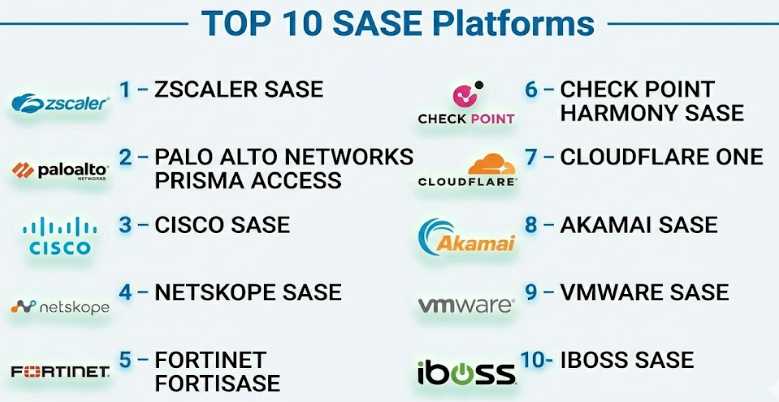
#1 — Zscaler SASE
Short description: A leading cloud-native SASE platform offering integrated security and networking services at global scale.
Key Features
- SWG, CASB, ZTNA integration
- Cloud firewall
- Zero-trust architecture
- Data protection
- Threat intelligence
- Global network coverage
Pros
- Strong scalability
- Comprehensive feature set
Cons
- Premium pricing
- Complex configuration
Platforms / Deployment
Cloud
Security & Compliance
SSO, MFA, RBAC, encryption, audit logs.
Integrations & Ecosystem
Integrates with major cloud and identity platforms.
- Azure AD
- Okta
- APIs
- Security tools
Support & Community
Enterprise-grade support.
#2 — Palo Alto Networks Prisma Access
Short description: Enterprise SASE platform combining advanced security and networking capabilities.
Key Features
- SWG and CASB
- ZTNA access
- Threat prevention
- Cloud firewall
- Data protection
Pros
- Strong security features
- Integrated platform
Cons
- Complexity
- Cost
Platforms / Deployment
Cloud
Security & Compliance
SSO, MFA, RBAC.
Integrations & Ecosystem
- Cloud platforms
- Security tools
- APIs
Support & Community
Strong enterprise support.
#3 — Cisco SASE (Umbrella + Secure Access)
Short description: Cisco’s SASE offering combining DNS security, SWG, and zero-trust access.
Key Features
- DNS-layer security
- SWG
- ZTNA
- Threat intelligence
- Cloud-delivered security
Pros
- Easy deployment
- Strong performance
Cons
- Limited advanced features
- Fragmented components
Platforms / Deployment
Cloud
Security & Compliance
SSO, MFA.
Integrations & Ecosystem
- Cisco ecosystem
- APIs
- Security tools
Support & Community
Strong support.
#4 — Netskope SASE
Short description: Cloud-native SASE platform focused on data protection and SaaS visibility.
Key Features
- SWG, CASB, ZTNA
- Data protection
- Threat detection
- Real-time monitoring
- Analytics
Pros
- Strong cloud integration
- Advanced analytics
Cons
- Pricing
- Learning curve
Platforms / Deployment
Cloud
Security & Compliance
SSO, MFA, encryption.
Integrations & Ecosystem
- SaaS apps
- APIs
- Security tools
Support & Community
Enterprise support.
#5 — Fortinet FortiSASE
Short description: SASE platform integrated with Fortinet’s security ecosystem.
Key Features
- SWG, CASB, ZTNA
- Firewall-as-a-Service
- Threat detection
- Policy enforcement
- Hybrid deployment
Pros
- Strong ecosystem integration
- Flexible deployment
Cons
- Complexity
- Requires Fortinet stack
Platforms / Deployment
Cloud / Hybrid
Security & Compliance
SSO, MFA, RBAC.
Integrations & Ecosystem
- Fortinet tools
- APIs
- Security platforms
Support & Community
Reliable support.
#6 — Check Point Harmony SASE
Short description: Unified SASE solution combining network security and remote access protection.
Key Features
- SWG and CASB
- ZTNA access
- Threat prevention
- Data protection
- Policy enforcement
Pros
- Strong security features
- Unified platform
Cons
- Cost
- Complexity
Platforms / Deployment
Cloud
Security & Compliance
SSO, MFA.
Integrations & Ecosystem
- Security tools
- APIs
- Cloud platforms
Support & Community
Enterprise-level support.
#7 — Cloudflare One
Short description: Cloud-native SASE platform offering fast and secure access to applications.
Key Features
- ZTNA
- SWG
- DDoS protection
- Traffic filtering
- Edge network
Pros
- Strong performance
- Easy deployment
Cons
- Limited advanced enterprise features
- Ecosystem dependency
Platforms / Deployment
Cloud
Security & Compliance
SSO, MFA.
Integrations & Ecosystem
- APIs
- Cloud platforms
- Identity tools
Support & Community
Growing support.
#8 — Akamai SASE
Short description: Global SASE platform leveraging Akamai’s edge network for secure access.
Key Features
- ZTNA
- SWG
- Traffic optimization
- Threat protection
- Global network
Pros
- Strong performance
- Global reach
Cons
- Cost
- Complexity
Platforms / Deployment
Cloud
Security & Compliance
SSO, MFA.
Integrations & Ecosystem
- APIs
- Cloud tools
- Identity providers
Support & Community
Enterprise-grade support.
#9 — VMware SASE
Short description: SASE solution combining SD-WAN and cloud security features.
Key Features
- SD-WAN integration
- SWG
- ZTNA
- Threat detection
- Network optimization
Pros
- Strong networking capabilities
- Integrated platform
Cons
- Complexity
- Cost
Platforms / Deployment
Cloud / Hybrid
Security & Compliance
SSO, MFA, RBAC.
Integrations & Ecosystem
- VMware ecosystem
- APIs
- Security tools
Support & Community
Strong enterprise support.
#10 — iboss SASE
Short description: Cloud-native SASE platform designed for distributed and remote workforces.
Key Features
- SWG
- ZTNA
- Data protection
- Threat detection
- Real-time monitoring
Pros
- Cloud-native
- Scalable
Cons
- Smaller ecosystem
- Feature limitations
Platforms / Deployment
Cloud
Security & Compliance
SSO, MFA.
Integrations & Ecosystem
- APIs
- Cloud apps
Support & Community
Growing support.
Comparison Table (Top 10)
| Tool Name | Best For | Platform(s) Supported | Deployment | Standout Feature | Public Rating |
|---|---|---|---|---|---|
| Zscaler SASE | Enterprise | Web | Cloud | Full SASE stack | N/A |
| Palo Alto Prisma Access | Enterprise | Web | Cloud | Advanced security | N/A |
| Cisco SASE | DNS security | Web | Cloud | DNS filtering | N/A |
| Netskope SASE | SaaS security | Web | Cloud | Data protection | N/A |
| Fortinet FortiSASE | Hybrid environments | Web | Cloud/Hybrid | Ecosystem integration | N/A |
| Check Point Harmony SASE | Enterprise | Web | Cloud | Unified security | N/A |
| Cloudflare One | Performance | Web | Cloud | Edge network | N/A |
| Akamai SASE | Global access | Web | Cloud | Edge performance | N/A |
| VMware SASE | Networking | Web | Cloud/Hybrid | SD-WAN integration | N/A |
| iboss SASE | Remote workforce | Web | Cloud | Cloud-native | N/A |
SASE Platforms
| Tool Name | Core | Ease | Integrations | Security | Performance | Support | Value | Weighted Total |
|---|---|---|---|---|---|---|---|---|
| Zscaler SASE | 9 | 7 | 9 | 9 | 9 | 8 | 7 | 8.5 |
| Palo Alto Prisma Access | 9 | 7 | 9 | 9 | 9 | 8 | 7 | 8.5 |
| Cisco SASE | 8 | 9 | 8 | 8 | 9 | 8 | 8 | 8.3 |
| Netskope SASE | 9 | 8 | 8 | 9 | 8 | 8 | 7 | 8.3 |
| Fortinet FortiSASE | 8 | 7 | 8 | 9 | 8 | 8 | 7 | 8.0 |
| Check Point Harmony SASE | 9 | 7 | 8 | 9 | 8 | 8 | 7 | 8.2 |
| Cloudflare One | 8 | 9 | 8 | 8 | 9 | 8 | 8 | 8.3 |
| Akamai SASE | 8 | 7 | 8 | 8 | 9 | 8 | 7 | 8.0 |
| VMware SASE | 9 | 7 | 8 | 9 | 9 | 8 | 7 | 8.3 |
| iboss SASE | 8 | 8 | 7 | 8 | 8 | 7 | 8 | 7.9 |
How to interpret scores:
These scores provide a comparative evaluation across key criteria such as features, usability, and value. Higher scores indicate stronger overall performance, while lower scores highlight trade-offs like complexity or limited features. The best platform depends on your organization’s needs.
Which Service Mesh Platforms Is Right for You?
Solo / Freelancer
Basic cloud security tools or lightweight solutions are sufficient.
SMB
Cloudflare One and iboss provide simplicity and affordability.
Mid-Market
Cisco SASE and Netskope offer strong balance and performance.
Enterprise
Zscaler, Palo Alto, and VMware are ideal for large deployments.
Budget vs Premium
Budget tools offer basic protection, while premium platforms provide full SASE capabilities.
Feature Depth vs Ease of Use
Cloudflare is easier, while Zscaler offers deeper features.
Integrations & Scalability
Enterprise tools provide better integrations and scalability.
Security & Compliance Needs
Highly regulated industries should choose enterprise-grade SASE platforms.
SASE Platforms
What is SASE?
It is a cloud-based architecture combining networking and security services.
Why is SASE important?
It simplifies security and networking for modern environments.
Does SASE replace VPN?
Yes, it can replace traditional VPN solutions.
Is SASE cloud-based?
Most solutions are cloud-native.
Does SASE support remote work?
Yes, it is designed for distributed teams.
Can SASE integrate with cloud apps?
Yes, integration is a key feature.
Is SASE expensive?
Pricing varies by vendor and features.
What are common mistakes?
Poor policy setup and lack of planning.
Does SASE improve performance?
Yes, many platforms optimize network traffic.
Are there alternatives?
ZTNA and SD-WAN are related solutions.
Conclusion
SASE platforms represent a significant shift in how organizations approach networking and security by combining multiple capabilities into a unified, cloud-delivered solution. As businesses move toward cloud-first strategies and support distributed workforces, SASE provides the scalability, visibility, and protection needed to secure modern environments. While enterprise solutions like Zscaler and Palo Alto offer comprehensive capabilities and global reach, platforms like Cloudflare and Cisco provide simpler deployment and strong performance for mid-sized organizations. The right choice depends on your infrastructure, workforce distribution, and security requirements. Start by identifying your priorities, shortlist a few platforms, and run pilot testing to ensure the solution aligns with your operational and security needs.
