Introduction
Exposure Management Platforms are advanced cybersecurity solutions that help organizations identify, prioritize, and reduce their overall security exposure across assets, vulnerabilities, identities, and attack paths. In simple terms, these platforms go beyond traditional vulnerability management by showing how real-world attackers could exploit weaknesses across your entire environment.
Modern organizations operate across cloud, SaaS, endpoints, APIs, and hybrid infrastructures, which creates complex and constantly evolving attack surfaces. Exposure management platforms unify signals from multiple tools—such as vulnerability scanners, identity systems, and threat intelligence—to provide contextual risk insights and actionable remediation strategies.
Common Use Cases
- Prioritizing vulnerabilities based on real attack paths
- Identifying misconfigurations across cloud and infrastructure
- Reducing attack surface exposure across environments
- Strengthening identity and access security
- Improving security posture for compliance and audits
What Buyers Should Evaluate
- Risk prioritization and contextual analysis
- Asset visibility across environments
- Integration with security stack (SIEM, EDR, ASM)
- Attack path analysis capabilities
- Automation and remediation workflows
- Ease of use and dashboards
- Scalability and performance
- Security and compliance features
- AI-driven insights and recommendations
- Vendor ecosystem and support
Best for: Enterprises, SOC teams, security leaders, and organizations managing complex hybrid environments.
Not ideal for: Small teams with limited infrastructure or those only needing basic vulnerability scanning tools.
Key Trends in Exposure Management Platforms
- Risk-based vulnerability prioritization: Focus on exploitable risks instead of all vulnerabilities
- Attack path analysis: Understanding how attackers chain vulnerabilities
- Unified security visibility: Combining ASM, vulnerability management, and identity risk
- AI-driven insights: Automated risk scoring and recommendations
- Cloud-native security integration: Visibility across multi-cloud environments
- Continuous exposure monitoring: Real-time updates instead of periodic scans
- Identity-centric security models: Linking exposure with identity risks
- Automation in remediation: Faster response to critical exposures
- Security posture dashboards: Executive-level visibility
- Integration with SOAR platforms: Automated response workflows
How We Selected These Tools (Methodology)
- Evaluated market leaders in exposure and risk management
- Assessed attack path and risk prioritization capabilities
- Reviewed asset discovery and visibility coverage
- Considered integration with broader security ecosystem
- Evaluated ease of use and reporting capabilities
- Analyzed performance and scalability indicators
- Reviewed security and compliance features
- Considered vendor reputation and adoption
- Balanced enterprise and mid-market solutions
- Focused on modern cybersecurity requirements
Top Exposure Management Platforms
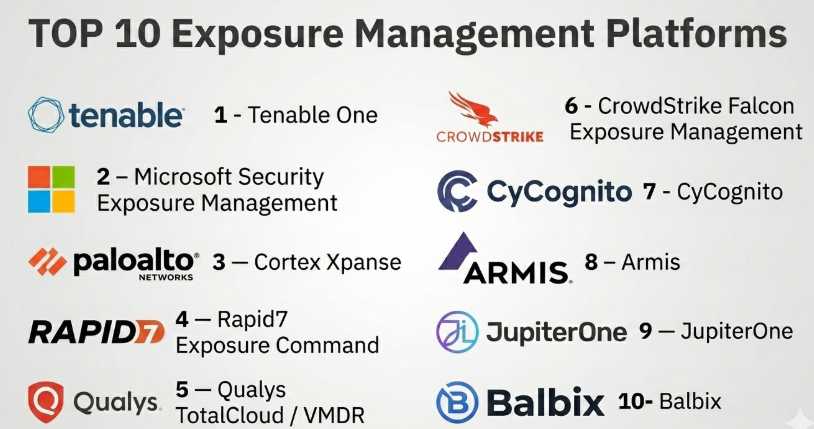
#1 — Tenable One
Short description: Unified exposure management platform combining vulnerability management, ASM, and identity security insights.
Key Features
- Attack path analysis
- Risk-based vulnerability prioritization
- Asset visibility across environments
- Identity exposure analysis
- Continuous monitoring
- Integration with Tenable ecosystem
Pros
- Comprehensive visibility
- Strong risk prioritization
Cons
- Requires ecosystem adoption
- Pricing complexity
Platforms / Deployment
Cloud
Security & Compliance
Not publicly stated
Integrations & Ecosystem
Integrates with Tenable tools and external systems
- Vulnerability scanners
- SIEM
- APIs
Support & Community
Enterprise support available
#2 — Microsoft Security Exposure Management
Short description: Integrated exposure management solution within Microsoft security ecosystem.
Key Features
- Risk prioritization
- Identity and endpoint exposure analysis
- Cloud and SaaS visibility
- Threat intelligence integration
- Continuous monitoring
Pros
- Strong Microsoft integration
- AI-driven insights
Cons
- Ecosystem dependency
- Limited standalone use
Platforms / Deployment
Cloud
Security & Compliance
MFA, RBAC; others Not publicly stated
Integrations & Ecosystem
- Microsoft Defender
- Azure
- Security tools
Support & Community
Strong enterprise support
#3 — Palo Alto Cortex Xpanse (Exposure Management)
Short description: Exposure management platform focused on external attack surface and risk prioritization.
Key Features
- External asset discovery
- Risk prioritization
- Continuous monitoring
- Threat intelligence
- Automation
Pros
- Strong visibility
- Enterprise-ready
Cons
- Premium pricing
- Complex setup
Platforms / Deployment
Cloud
Security & Compliance
Encryption, RBAC; others Not publicly stated
Integrations & Ecosystem
- Cortex platform
- SIEM/SOAR
- Cloud tools
Support & Community
Enterprise-level support
#4 — Rapid7 Exposure Command
Short description: Exposure management solution combining vulnerability, threat intelligence, and risk insights.
Key Features
- Risk prioritization
- Asset visibility
- Threat intelligence
- Attack path insights
- Continuous monitoring
Pros
- Strong analytics
- Integrated ecosystem
Cons
- Requires Rapid7 stack
- Moderate complexity
Platforms / Deployment
Cloud
Security & Compliance
Not publicly stated
Integrations & Ecosystem
- Insight platform
- SIEM
- APIs
Support & Community
Good documentation
#5 — Qualys TotalCloud / VMDR
Short description: Exposure management platform focused on cloud and vulnerability management.
Key Features
- Cloud asset visibility
- Vulnerability detection
- Risk prioritization
- Continuous monitoring
- Compliance reporting
Pros
- Strong cloud coverage
- Enterprise scalability
Cons
- UI complexity
- Learning curve
Platforms / Deployment
Cloud
Security & Compliance
Not publicly stated
Integrations & Ecosystem
- Cloud platforms
- APIs
- Security tools
Support & Community
Enterprise support
#6 — CrowdStrike Falcon Exposure Management
Short description: Endpoint-focused exposure management integrated with Falcon platform.
Key Features
- Endpoint exposure visibility
- Risk scoring
- Threat intelligence
- Continuous monitoring
- Integration with EDR
Pros
- Strong endpoint integration
- Real-time insights
Cons
- Limited outside endpoint scope
- Ecosystem dependency
Platforms / Deployment
Cloud
Security & Compliance
Not publicly stated
Integrations & Ecosystem
- Falcon platform
- APIs
- Security tools
Support & Community
Strong support
#7 — CyCognito
Short description: Exposure management platform focusing on external risk and attack surface.
Key Features
- Asset discovery
- Risk prioritization
- Attack path insights
- Continuous monitoring
- Security analytics
Pros
- Strong external visibility
- Good automation
Cons
- Limited ecosystem
- Pricing not transparent
Platforms / Deployment
Cloud
Security & Compliance
Not publicly stated
Integrations & Ecosystem
- APIs
- Security tools
- Cloud platforms
Support & Community
Enterprise support
#8 — Armis
Short description: Exposure management platform focusing on asset intelligence and IoT/OT security.
Key Features
- Asset discovery
- Risk analysis
- IoT/OT visibility
- Threat intelligence
- Continuous monitoring
Pros
- Strong IoT/OT focus
- Unique asset visibility
Cons
- Niche use case
- Complex deployment
Platforms / Deployment
Cloud
Security & Compliance
Not publicly stated
Integrations & Ecosystem
- Security tools
- APIs
- IoT platforms
Support & Community
Enterprise support
#9 — JupiterOne
Short description: Cyber asset management and exposure platform focused on cloud environments.
Key Features
- Asset inventory
- Graph-based analysis
- Risk prioritization
- Continuous monitoring
- Query-based insights
Pros
- Strong cloud visibility
- Flexible analysis
Cons
- Learning curve
- Limited traditional coverage
Platforms / Deployment
Cloud
Security & Compliance
Not publicly stated
Integrations & Ecosystem
- Cloud platforms
- APIs
- Security tools
Support & Community
Growing community
#10 — Balbix
Short description: AI-driven exposure management platform focusing on risk quantification.
Key Features
- Risk scoring
- Asset visibility
- AI-driven insights
- Continuous monitoring
- Vulnerability prioritization
Pros
- Strong analytics
- AI-driven approach
Cons
- Complex setup
- Smaller ecosystem
Platforms / Deployment
Cloud
Security & Compliance
Not publicly stated
Integrations & Ecosystem
- Security tools
- APIs
- Cloud platforms
Support & Community
Moderate support
Comparison Table (Top 10)
| Tool Name | Best For | Platform(s) Supported | Deployment | Standout Feature | Public Rating |
|---|---|---|---|---|---|
| Tenable One | Unified exposure | Web | Cloud | Attack path analysis | N/A |
| Microsoft Exposure | Microsoft ecosystem | Web | Cloud | AI insights | N/A |
| Cortex Xpanse | External exposure | Web | Cloud | Asset discovery | N/A |
| Rapid7 Exposure | Risk analytics | Web | Cloud | Threat intelligence | N/A |
| Qualys VMDR | Cloud exposure | Web | Cloud | Cloud visibility | N/A |
| CrowdStrike | Endpoint exposure | Web | Cloud | EDR integration | N/A |
| CyCognito | External risk | Web | Cloud | Automation | N/A |
| Armis | IoT/OT | Web | Cloud | Asset intelligence | N/A |
| JupiterOne | Cloud assets | Web | Cloud | Graph analysis | N/A |
| Balbix | Risk scoring | Web | Cloud | AI analytics | N/A |
Exposure Management Platforms
| Tool Name | Core (25%) | Ease (15%) | Integrations (15%) | Security (10%) | Performance (10%) | Support (10%) | Value (15%) | Weighted Total |
|---|---|---|---|---|---|---|---|---|
| Tenable One | 9 | 7 | 8 | 8 | 9 | 9 | 7 | 8.4 |
| Microsoft Exposure | 8 | 8 | 9 | 8 | 8 | 9 | 8 | 8.3 |
| Cortex Xpanse | 9 | 7 | 8 | 9 | 9 | 9 | 7 | 8.4 |
| Rapid7 | 8 | 8 | 8 | 8 | 8 | 8 | 7 | 8.0 |
| Qualys | 8 | 7 | 8 | 8 | 8 | 8 | 7 | 7.9 |
| CrowdStrike | 8 | 8 | 7 | 8 | 9 | 8 | 7 | 8.0 |
| CyCognito | 8 | 7 | 7 | 8 | 8 | 8 | 7 | 7.8 |
| Armis | 7 | 7 | 7 | 8 | 8 | 8 | 7 | 7.6 |
| JupiterOne | 8 | 7 | 8 | 7 | 8 | 7 | 8 | 7.8 |
| Balbix | 8 | 6 | 7 | 8 | 8 | 7 | 7 | 7.5 |
How to interpret scores:
These scores are relative comparisons across the listed tools. Higher scores indicate stronger capabilities in the given criteria. Enterprises should focus on integration depth and security, while smaller teams may prioritize ease of use and value.
Which Exposure Management Platform Is Right for You?
Solo / Freelancer
- Not typically required
- Consider basic security tools
SMB
- Best: UpGuard alternatives, JupiterOne
- Focus on simplicity and cost
Mid-Market
- Best: Qualys, Rapid7, Tenable
- Balance visibility and scalability
Enterprise
- Best: Tenable One, Cortex Xpanse, Microsoft Exposure
- Focus on automation, integration, and scale
Budget vs Premium
- Budget: JupiterOne
- Premium: Tenable One, Cortex Xpanse
Feature Depth vs Ease of Use
- Advanced: Tenable, Cortex Xpanse
- Easy: Microsoft Exposure, JupiterOne
Integrations & Scalability
- High: Microsoft, Rapid7
- Moderate: CyCognito, Balbix
Security & Compliance Needs
- High: Cortex Xpanse, Tenable
- Moderate: Qualys, Rapid7
Exposure Management Platforms FAQs
What is exposure management in cybersecurity?
It is the process of identifying and reducing security risks across all assets and environments.
How is it different from vulnerability management?
Exposure management prioritizes real-world risk instead of listing all vulnerabilities.
Are these tools only for enterprises?
Mostly, but some tools support mid-market use cases.
How much do they cost?
Pricing varies based on scale and features.
Can they prevent cyberattacks?
They reduce risk but do not replace security controls.
How long does deployment take?
Typically weeks depending on complexity.
Do they integrate with SIEM/SOAR?
Yes, most modern platforms support integrations.
Are they cloud-based?
Most are cloud-native solutions.
What are common mistakes?
Ignoring prioritization and failing to act on insights.
What are alternatives?
Traditional vulnerability scanners or ASM tools.
Conclusion
Exposure Management Platforms are transforming how organizations approach cybersecurity by shifting focus from simply identifying vulnerabilities to understanding real-world risk and attack paths. With increasing complexity in cloud, SaaS, and hybrid environments, having a unified view of exposure is essential for proactive security. Enterprise solutions like Tenable One and Cortex Xpanse provide deep capabilities, while platforms like JupiterOne offer flexibility for modern cloud environments. The right platform depends on your organization’s size, infrastructure, and security maturity. Instead of choosing based on features alone, focus on risk prioritization, integration capabilities, and operational usability. Start by shortlisting a few tools, run controlled pilots, and validate how effectively they reduce your actual exposure risk in real-world scenarios.
