As the world becomes more conscious of the impact of fossil fuels on the environment, car manufacturers are exploring alternative sources of power for their vehicles. Hybrid and electric cars are two of the most popular options that offer better fuel efficiency and reduced emissions compared to traditional gasoline-powered cars. However, while the two types of vehicles may seem similar at first glance, they operate on fundamentally different principles. In this blog post, we’ll take a closer look at the differences between hybrid and electric cars, including their power sources, performance, and environmental impact.
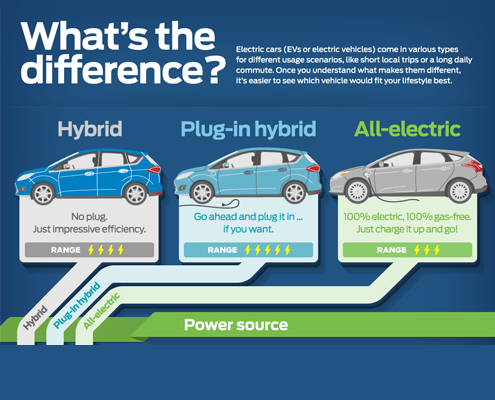
What is the hybrid car and an electric car?
Hybrid Cars: A hybrid car combines both an internal combustion engine (ICE) and an electric motor to power the vehicle. The electric motor is powered by a battery that is recharged through regenerative braking and the ICE. One of the main benefits of a hybrid car is that it can switch between using gas and electric power to optimize fuel efficiency. This makes them a popular choice for drivers who want to save money on gas and reduce their carbon footprint, but still need the flexibility to take longer trips. Examples of popular hybrid cars include the Toyota Prius, Honda Insight, and Ford Fusion Hybrid.
Electric Cars: An electric car, also known as a battery electric vehicle (BEV), is powered entirely by an electric motor and a battery. Unlike hybrid cars, electric cars don’t have an ICE and don’t produce emissions. They need to be charged by plugging them into a power source, such as a charging station or a wall outlet. One of the benefits of electric cars is their efficiency – they convert up to 80% of the energy stored in their batteries into motion, whereas gasoline engines are only around 20-30% efficient. Examples of popular electric cars include the Tesla Model S, Nissan Leaf, and Chevrolet Bolt.
Difference: The primary difference between hybrid and electric cars is the way they are powered. While hybrid cars have both an ICE and an electric motor, electric cars are solely powered by an electric motor and a battery. Hybrid cars are able to switch between gasoline and electric power, which makes them ideal for long-distance driving, while electric cars typically have a shorter range and require more frequent charging. Another difference is that hybrid cars produce emissions when they are running on gasoline, whereas electric cars produce zero emissions. Additionally, electric cars tend to have better fuel efficiency and lower operating costs, but are generally more expensive to purchase upfront compared to hybrid cars.
What is the difference between a hybrid car and an electric car?
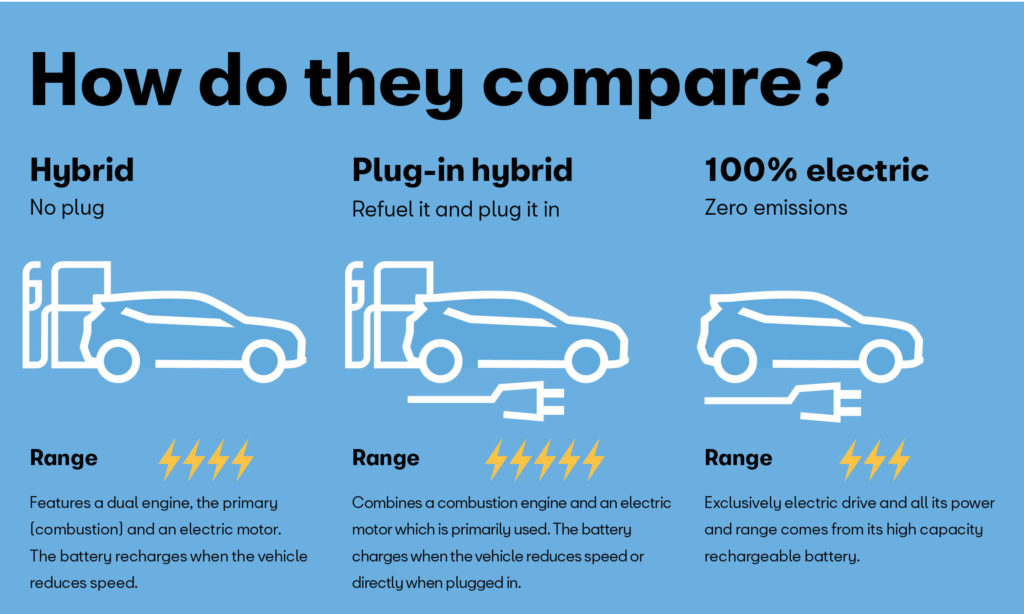
A hybrid car has both an internal combustion engine (ICE) and an electric motor. The electric motor assists the ICE and can also operate independently at low speeds. The battery in a hybrid car is charged through regenerative braking and through the ICE. The ICE is used to provide power when the battery is depleted or when the car is traveling at higher speeds.
On the other hand, an electric car, also known as a battery electric vehicle (BEV), is powered entirely by an electric motor and a battery. The battery is charged through plugging the car into a power source, such as a charging station or a wall outlet. Electric cars produce zero emissions and are generally more energy efficient than hybrid cars.
Here are the differences between hybrid cars and electric cars, along with examples:
Hybrid Cars:
- Uses both a gasoline-powered internal combustion engine and an electric motor
- Electric motor is usually used to assist the gas engine, providing extra power during acceleration or uphill driving
- Battery is recharged through regenerative braking or by the gas engine
- More fuel-efficient than traditional gas-powered cars
- Provides significant savings on fuel costs
- Examples: Toyota Prius, Honda Insight, Ford Fusion Hybrid
Electric Cars:
- Runs solely on electricity and does not have a gas engine
- Has an electric motor powered by a rechargeable battery pack
- Produces zero emissions, making them eco-friendly
- Has limited range and needs frequent recharging
- Examples: Tesla Model S, Nissan Leaf, Chevrolet Bolt
Overall, the primary difference between hybrid cars and electric cars is the way they are powered. Hybrid cars use both gasoline and electricity, while electric cars rely solely on electricity. Hybrid cars offer greater flexibility, while electric cars are more eco-friendly but have a shorter range.
Some examples of the difference between hybrid cars and electric cars
Hybrid Cars:
- Toyota Prius: This popular hybrid car is known for its fuel efficiency and reliability. It uses a combination of a gasoline engine and an electric motor to provide power.
- Honda Insight: Another popular hybrid car, the Honda Insight uses a 1.5-liter engine and an electric motor to deliver up to 151 horsepower.
- Ford Fusion Hybrid: This midsize sedan combines a 2.0-liter gas engine with an electric motor to deliver a total of 188 horsepower.
Electric Cars:
- Tesla Model S: This luxury electric car is known for its high performance and advanced technology. It can travel up to 373 miles on a single charge and has a top speed of 155 mph.
- Nissan Leaf: The Nissan Leaf is a popular electric car that offers a range of up to 150 miles on a single charge. It is also affordable, making it an attractive option for drivers on a budget.
- Chevrolet Bolt: The Chevrolet Bolt is a compact electric car that offers a range of up to 259 miles on a single charge. It is also known for its spacious interior and advanced safety features.
Conclusion
In conclusion, while both hybrid cars and electric cars are eco-friendly options that reduce emissions and save on fuel costs, they have significant differences in the way they are powered. Hybrid cars use both a gas engine and an electric motor, while electric cars rely solely on electricity. Hybrid cars offer greater flexibility and longer driving ranges, while electric cars are more environmentally friendly and have zero emissions. The choice between the two depends on personal preferences, driving habits, and budget. Regardless of which option drivers choose, it is clear that these alternative sources of power are becoming increasingly popular as the world continues to shift towards a more sustainable future.
