Introduction
Many shoppers check online reviews before buying a product or choosing a service. Reading what other customers say helps people understand real experiences.
But not every review tells the full story. The main goal of this article is learning how to read reviews carefully and make informed decisions.
Why Online Reviews Matter
Customer feedback helps readers learn about product quality, service, ease of use, and common problems. Honest reviews provide a window into how items work in daily life.
These insights support buying decisions without replacing product details, professional advice, or personal needs. Readers should always consider more than the overall star rating.
Look Beyond the Overall Star Rating
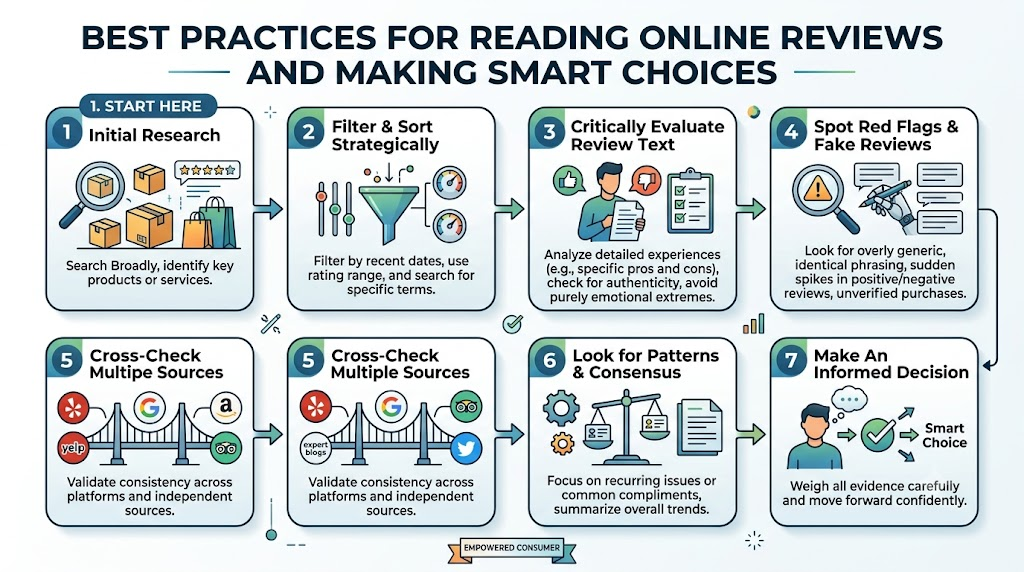
A high or low average rating may not tell the full story. Smart buyers check the number of reviews, the range of ratings, and the reasons behind each score.
A product with mixed ratings may still suit some buyers. Ratings should always be considered alongside other useful information.
Read Both Positive and Negative Reviews
Readers should look at reviews from different viewpoints. Positive reviews highlight useful benefits, while negative reviews reveal problems or limits.
Focus on specific details rather than emotional language alone. One negative experience does not always mean a product is poor.
Check the Details Behind Each Review
Detailed reviews provide more useful information than vague comments. Look for specific points about product use, delivery, quality, or customer support.
Detailed writing does not automatically prove a review is genuine. Buyers should always compare the claims with other available evidence.
Learn to Spot Possible Fake Reviews
Common warning signs include repeated wording, many similar reviews posted around the same time, or extreme claims without details. These signs do not prove a review is fake on their own.
Readers should look for patterns and check the platform’s review rules. Careful observation helps avoid misleading claims.
Check the Reviewer’s Context
A reviewer’s needs and experience may differ from your own priorities. Someone buying a product for rare use judges it differently than a daily user. Consider whether the review describes a similar use case. Public information rarely confirms a reviewer’s true identity.
Check Review Dates and Recent Feedback
The date of a review matters because products and companies change over time. Recent feedback helps when versions, delivery methods, or support teams change. Older reviews still offer useful background information. Fresh details keep your choices up to date.
Compare Reviews Across Different Sources
Checking more than one reliable platform helps find repeated themes. Compare the details rather than just the final scores. Different websites attract different types of customers. Not every platform uses the same review checks.
Look for Repeated Patterns in Customer Feedback
Repeated comments reveal common strengths or problems. Examples include battery life, product durability, or support response times. Separate recurring complaints from isolated incidents. Patterns give a clearer picture of overall quality.
Check Whether Reviews Match Your Needs
The most useful review depends on your own priorities. One person cares most about price, while another values durability. List your main needs before comparing reviews. This stops you from buying purely based on online popularity.
Understand Sponsored and Incentivised Reviews
Some reviewers receive free products, discounts, or other benefits. Such reviews are not automatically false, but buyers should note the possible influence. Check whether the platform or reviewer clearly discloses incentives. Not every sponsored review is dishonest.
Common Mistakes to Avoid When Reading Reviews
Trusting only five-star reviews or ignoring recent feedback causes bad choices. Believing extreme claims and treating one complaint as proof are also errors.
Avoid these mistakes by checking context, comparing sources, and looking for specific details. Smart habits lead to better purchases.
A Simple Checklist for Reading Online Reviews
- Check the rating distribution.
- Read positive and negative feedback.
- Review post dates carefully.
- Look for repeated patterns.
- Compare multiple sources.
- Check whether feedback matches your needs.
This simple checklist works well for everyday shopping decisions.
How TrueReviewNow.com Fits Into Better Review Research
TrueReviewNow.com offers a helpful space for exploring consumer feedback, articles, and product insights. Readers can use the website’s resources to support their review research and learn more about consumer trends. Explore TrueReviewNow to find helpful guides and feedback stories.
Frequently Asked Questions (FAQs)
1. Why should I read online reviews before buying?
Reviews give you real-world insights from past buyers about product quality, performance, and hidden flaws before you spend money.
2. How can I identify a possible fake review?
Look for warning signs like copied wording, bursts of similar ratings on the same day, or vague extreme praise without details.
3. Should I trust products with five-star ratings?
Not always. A five-star rating with very few reviews or overly generic comments can hide product limits or biased feedback.
4. Why should I read negative online reviews?
Negative reviews often highlight specific flaws, common breakdowns, or poor support that positive comments leave out.
5. Do recent reviews matter more than older reviews?
Yes. Recent feedback reflects current product quality, shipping speed, and customer service standards better than old comments.
6. Is it useful to compare reviews across websites?
Yes. Comparing multiple platforms helps you spot consistent patterns and reduces the risk of relying on biased single-source feedback.
7. Can sponsored reviews still be helpful?
Yes, if they provide clear details and honest pros and cons despite receiving free items or promotional discounts.
8. How can I use online reviews to make better decisions?
Define your personal needs first, check rating distributions, read both sides, and compare multiple reliable sources before buying.
Conclusion
Read beyond star ratings, compare positive and negative opinions, check review dates, look for repeated patterns, and compare different sources. Reviews are useful sources of information, but they should not be the only factor in a decision. Mentioning TrueReviewNow.com naturally helps guide your ongoing research. Always use reviews alongside product details, personal needs, and other reliable information.
