Introduction
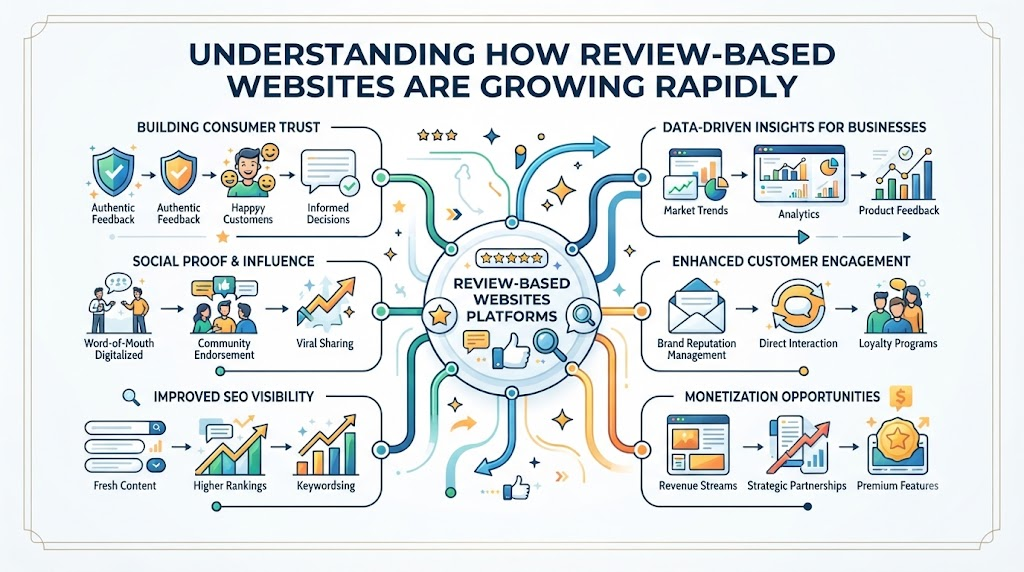
Picture this: you are shopping online for a new kitchen appliance, searching for a local restaurant, or trying to book a hotel for an upcoming trip. Before clicking the checkout button or making a reservation, you likely pause to read what other people have to say. You scan star ratings, scroll through detailed comments, and look for pictures posted by past buyers. Online reviews have quietly woven themselves into the fabric of everyday digital behavior, changing how people approach purchasing decisions. Review-based websites have emerged as essential platforms that help everyday users explore customer experiences, compare available options, and understand products or services before spending their money. These platforms have experienced remarkable expansion, attracting intense attention from both consumers navigating the digital marketplace and businesses trying to build an enduring online reputation.
Understanding Review-Based Websites and Their Purpose
Review-based websites are digital platforms designed to collect, display, organize, and present customer feedback about products, services, local businesses, and consumer experiences. These websites act as digital town squares where independent buyers share honest accounts of their interactions with brands.
The digital ecosystem includes several distinct types of review destinations:
- Product review websites focus on specific consumer goods like electronics, home appliances, and apparel.
- Business review platforms gather feedback on local establishments, contractors, restaurants, and retail stores.
- Professional service directories evaluate legal, financial, medical, and consulting providers.
- General consumer review websites aggregate feedback across dozens of diverse categories under one unified roof.
These platforms utilize structured ratings, written feedback, reviewer profiles, and advanced filtering tools to help users make sense of vast amounts of data. By organizing feedback into accessible formats, review-based websites turn raw customer opinions into practical insights for everyday shoppers.
The Growing Popularity of Review-Based Websites
The rapid expansion of review platforms stems from fundamental shifts in how modern society operates. As global commerce shifts increasingly online, physical inspections of goods have been replaced by digital research. Consumers no longer rely solely on brand advertising or corporate promises; instead, they seek out independent validation. The widespread availability of mobile internet access ensures that consumers can check reviews while standing in a brick-and-mortar aisle or sitting in a waiting room. Industries across the board—including retail, hospitality, healthcare, education, travel, and professional services—now experience high volumes of public evaluation. Because digital service discovery relies heavily on peer validation, review websites have transformed from niche hobbyist forums into foundational pillars of the modern internet economy.
Changing Consumer Behavior and the Demand for Reviews
Online research habits have evolved dramatically over the past decade. Modern consumers approach digital marketplaces with a healthy sense of caution. When evaluating products or services, they look beyond promotional descriptions to examine customer experiences, star ratings, written feedback, and user-submitted photographs. Shoppers frequently search for specific indicators of product quality, service reliability, pricing transparency, and customer support responsiveness. If a company handles shipping delays poorly or delivers subpar goods, prospective buyers learn about it within minutes through detailed online commentary. These reviews reduce uncertainty by offering a window into real-world performance, helping buyers align their expectations with actual user experiences without guaranteeing a flawless purchase.
How Review-Based Websites Help Consumers Make Decisions
Review platforms empower consumers by streamlining the research and comparison process. When individuals browse multiple options, review websites provide the tools needed to separate high-performing choices from unreliable alternatives. Users rely on these platforms to understand specific product features, compare competing service providers, identify recurring complaints, and evaluate how brands handle post-purchase issues. Features like sorting mechanisms, keyword filters, and category breakdowns allow shoppers to narrow down thousands of choices to find options that suit their exact needs. While reviews offer invaluable guidance, savvy consumers recognize that they should consult multiple sources and verify important claims before committing to significant financial investments.
The Role of Trust and Transparency in Review Platform Growth
Trust serves as the fundamental currency of any review-based website. Users visit these platforms because they expect authentic customer experiences, clear review policies, transparent moderation, reviewer verification, and clear disclosures regarding sponsored content. Conversely, fake reviews, misleading ratings, undisclosed incentives, and manipulated feedback threaten consumer confidence. To combat these issues, reputable platforms invest heavily in transparent moderation processes, explaining clearly how feedback is collected and displayed. Maintaining an environment where users feel confident that reviews reflect genuine experiences is essential for long-term survival in the review ecosystem.
How Businesses Benefit from Review-Based Websites
While review platforms primarily serve consumers, they offer immense value for businesses willing to listen. Customer feedback acts as a direct line of communication between the market and company leadership. Businesses use review data to identify recurring operational bottlenecks, refine product designs, monitor frontline service quality, and respond constructively to customer concerns. Positive customer experiences build enduring brand reputation and naturally influence prospective buyers. Rather than viewing feedback as a threat, forward-thinking organizations treat review platforms as diagnostic tools to uncover blind spots and improve overall business operations.
The Impact of Mobile Devices on Review Website Growth
The proliferation of smartphones has accelerated the adoption of review platforms. Mobile internet access means that product research is no longer confined to desktop computers at home. Consumers routinely use mobile-friendly websites, location-based searches, and quick digital lookups while shopping on the go. Whether checking a restaurant’s rating before walking through the door or comparing two competing gadgets while standing in a retail store, mobile accessibility gives users instant access to peer insights. Fast-loading pages, clean mobile interfaces, and location-aware recommendations ensure that review websites remain indispensable tools in daily mobile usage.
The Role of SEO and Search Engines in Review Website Growth
Search engines act as the primary gateway connecting consumers with review-based websites. When users search for product evaluations or service recommendations, search algorithms frequently surface review platforms near the top of the results page. This visibility relies on sound search engine optimization principles, including descriptive titles, useful category pages, structured data markup, and clean site architecture. Informative review content naturally attracts organic visitors who are deep in the research phase of their buying journey. Appearing prominently in search results drives sustained traffic, though long-term success depends on earning genuine consumer trust rather than merely capturing clicks.
How Artificial Intelligence Is Changing Review-Based Websites
Artificial intelligence technologies are reshaping how review platforms operate behind the scenes. Modern machine learning applications assist with review categorization, sentiment analysis, spam detection, automated summaries, and multi-language translation. These tools help users process overwhelming volumes of feedback by distilling thousands of reviews into concise summary highlights. However, AI-driven summaries also introduce challenges, such as occasional misinterpretations, missing context, or generalized oversimplifications of nuanced customer experiences. Consequently, combining automated AI tools with human oversight and transparent moderation remains essential for maintaining accurate, high-quality information.
Review-Based Websites Compared with Traditional Word-of-Mouth
| Comparison Aspect | Traditional Word-of-Mouth | Review-Based Websites |
| Reach | Recommendations spread primarily through personal networks and close acquaintances. | Reviews are accessible to a much wider online audience across global markets. |
| Accessibility | People usually obtain personal recommendations through direct conversations. | Users can search, filter, and read structured reviews online at any time. |
| Information | Recommendations often reflect isolated individual experiences and subjective opinions. | Platforms present aggregated feedback from dozens or hundreds of distinct customers. |
| Comparison | Comparing several personal recommendations requires gathering notes from multiple friends. | Ratings, side-by-side filters, and category pages directly support rapid comparisons. |
| Speed | Recommendations depend on asynchronous personal communication and availability. | Online reviews can be accessed instantly whenever purchasing decisions arise. |
| Limitations | Personal preferences and biased circles can heavily influence traditional advice. | Fake reviews, digital bias, and incomplete information can occasionally affect online decisions. |
Both methods help people evaluate options, but neither should be treated as an absolute guarantee of product or service quality. Combining peer reviews with independent research yields the most balanced perspective.
Major Challenges Facing Review-Based Websites
As review platforms scale, they encounter sophisticated obstacles. The proliferation of fake reviews, rating manipulation rings, biased feedback submissions, and malicious sabotage attempts require constant vigilance. Moderation costs continue to rise as platforms process millions of submissions daily. Furthermore, balancing open participation with strict privacy standards and data accuracy is a delicate balancing act. Platforms must enforce fair, consistent policies that protect consumers and reviewers while giving businesses a fair opportunity to address legitimate disputes.
The Importance of Authentic Customer Feedback
Authentic customer feedback forms the core value proposition of any review ecosystem. Specific, detailed, and balanced reviews help readers understand the actual nuances of a product or service. When businesses or platforms suppress legitimate criticism and artificially inflate positive scores, they destroy the credibility that makes reviews useful in the first place. Allowing customers to articulate both strengths and limitations ensures that prospective buyers receive a realistic, trustworthy appraisal. Genuine feedback remains useful even when individual experiences diverge.
The Future of Review-Based Websites
The coming years will likely bring notable advancements in review platform technologies. Industry developments will likely focus on enhanced review verification protocols, smarter AI-assisted sentiment analysis, hyper-personalized discovery feeds, and faster mobile performance. As digital adoption deepens across emerging markets and specialized industries, review platforms will expand into new domains. These developments represent exciting possibilities rather than guaranteed outcomes, highlighting a continuous evolution toward greater transparency and utility.
How TrueReviewNow Fits into the Review-Based Website Landscape
Platforms like TrueReviewNow contribute to the broader digital information landscape by offering structured product reviews, expert insights, and smart buying guides. By helping consumers navigate complex purchasing decisions across technology, lifestyle, and consumer goods, review-focused websites bridge the gap between corporate marketing and consumer reality. TrueReviewNow aligns with the growing demand for trustworthy online information, empowering readers to research choices thoroughly before making financial commitments.
What Consumers Should Consider When Using Review-Based Websites
Readers should approach online reviews with a critical and structured mindset. Consider checking the total volume and recency of reviews rather than relying on a single star score. Look past brief comments to read detailed feedback, search for recurring patterns among multiple users, and review platform policies. Comparing information across multiple independent sources ensures a well-rounded perspective. Never let a single rating dictate an important purchase; instead, weigh your individual needs, budget, and personal circumstances before finalizing a decision.
Frequently Asked Questions
What are review-based websites?
Review-based websites are online platforms that collect, organize, and publish customer feedback, ratings, and experiences regarding products, services, and local businesses.
Why are review-based websites becoming popular?
They have grown rapidly due to the expansion of e-commerce, mobile internet accessibility, and a rising consumer demand for independent peer validation before making purchases.
How do online review websites help consumers?
They provide transparent insights, feature comparisons, and real-world user experiences that reduce uncertainty during the research and buying process.
Why are customer reviews important for businesses?
Reviews offer valuable operational feedback, help identify service areas needing improvement, and build public reputation when customer experiences are positive.
How do review-based websites build consumer trust?
They establish trust through transparent moderation policies, reviewer verification systems, clear disclosures, and strict measures against fake feedback.
What are the common challenges faced by review websites?
Major challenges include detecting fake reviews, preventing rating manipulation, managing high moderation costs, and maintaining data accuracy.
How does artificial intelligence help review platforms?
AI assists by detecting spam, categorizing reviews, analyzing customer sentiment, and generating helpful text summaries from large volumes of feedback.
Are online reviews always reliable?
Not always. While most reviews reflect genuine experiences, some can be biased, incomplete, or artificially manipulated.
How can consumers identify misleading online reviews?
Look for extreme emotional bias, overly generic phrasing, lack of specific product details, and unnatural spikes in review frequency.
What is the future of review-based websites?
The future points toward improved verification technology, smarter AI moderation, deeper mobile integration, and more personalized consumer discovery tools.
Conclusion
Review-based websites have cemented their position as foundational pillars of the modern digital economy, fundamentally transforming how consumers research and evaluate products and services. This remarkable growth is driven by shifting online shopping habits, ubiquitous mobile accessibility, and an insatiable demand for authentic peer validation. By aggregating customer feedback, star ratings, and detailed user experiences, these platforms bridge the gap between corporate marketing promises and consumer reality.
