Introduction
Digital Identity Wallets are secure applications that allow individuals to store, manage, and share their identity credentials digitally. These credentials can include government IDs, driving licenses, educational certificates, health records, and even financial identity proofs—all stored in a secure, user-controlled wallet.
As digital transformation accelerates globally, identity is becoming decentralized and user-owned. Governments, financial institutions, and enterprises are moving toward self-sovereign identity (SSI) and verifiable credentials, making digital identity wallets a critical component of modern digital ecosystems.
Common real-world use cases include:
- Digital KYC verification for banking and fintech
- Secure login and authentication without passwords
- Travel identity verification (airports, immigration)
- Sharing verified educational or professional credentials
- Access to healthcare records and services
What buyers should evaluate:
- Support for verifiable credentials and SSI standards
- Security features (encryption, biometrics, key management)
- Interoperability with government and enterprise systems
- User experience and ease of onboarding
- Mobile and cross-platform support
- Privacy controls and selective disclosure
- Integration with identity providers and APIs
- Compliance with global identity standards
- Scalability and performance
Best for: Governments, fintech companies, healthcare providers, enterprises implementing digital identity frameworks, and privacy-focused platforms.
Not ideal for: Small businesses with minimal identity verification needs or organizations relying entirely on traditional identity systems without digital transformation plans.
Key Trends in Digital Identity Wallets
- Self-sovereign identity (SSI) adoption giving users full control over identity data
- Verifiable credentials (VCs) becoming standard for digital identity exchange
- Decentralized identity (DID) frameworks reducing reliance on central authorities
- Biometric authentication integration for secure access
- Mobile-first identity wallets with offline credential support
- Zero-knowledge proofs (ZKP) enabling privacy-preserving verification
- Government-backed digital ID initiatives driving adoption
- Blockchain-based identity storage and validation
- Interoperability standards (W3C DID/VC) gaining traction
- Integration with Web3 ecosystems and digital assets
How We Selected These Tools (Methodology)
- Reviewed global adoption and ecosystem maturity
- Evaluated support for SSI, DID, and verifiable credentials
- Assessed security architecture and privacy controls
- Considered developer ecosystem and API availability
- Analyzed ease of use for end-users and enterprises
- Checked integration capabilities with identity providers
- Ensured representation across government, enterprise, and Web3 use cases
- Evaluated scalability and real-world deployment readiness
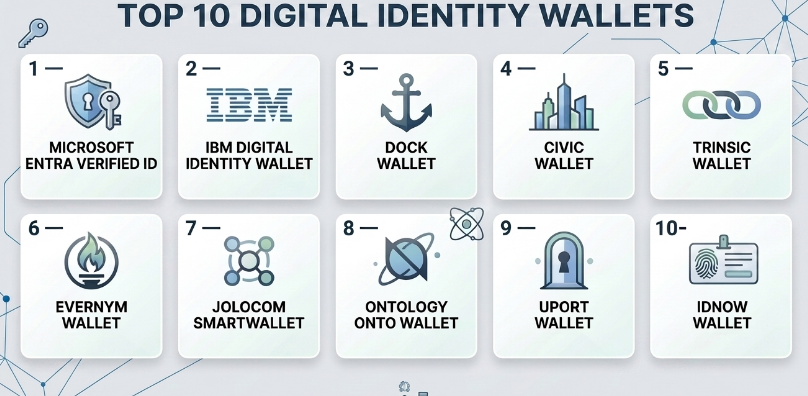
Top 10 Digital Identity Wallets
#1 — Microsoft Entra Verified ID
Short description :
Microsoft Entra Verified ID is a decentralized identity solution enabling organizations to issue and verify credentials securely. It integrates deeply with enterprise systems and supports verifiable credentials aligned with global standards.
Key Features
- Verifiable credentials issuance and verification
- Decentralized identity support
- Integration with enterprise identity systems
- Secure credential storage
- API-based architecture
- Compliance-focused design
Pros
- Strong enterprise integration
- Backed by a large ecosystem
Cons
- Requires Azure ecosystem familiarity
- Complex setup for smaller teams
Platforms / Deployment
Cloud
Security & Compliance
MFA, encryption, RBAC; other certifications Not publicly stated
Integrations & Ecosystem
Works with enterprise identity systems and cloud services.
- Azure Active Directory integration
- APIs for custom apps
- Enterprise SaaS tools
Support & Community
Strong enterprise support and documentation
#2 — IBM Digital Identity Wallet
Short description :
IBM offers a digital identity wallet solution focused on decentralized identity and enterprise use cases. It supports secure identity sharing and credential verification across ecosystems.
Key Features
- SSI-based identity management
- Credential issuance and validation
- Blockchain-backed identity support
- Privacy controls
- Secure storage
Pros
- Strong security foundation
- Enterprise-ready
Cons
- Complex deployment
- Requires technical expertise
Platforms / Deployment
Cloud / Hybrid
Security & Compliance
Not publicly stated
Integrations & Ecosystem
Integrates with enterprise and blockchain systems.
- APIs
- Identity providers
- Data platforms
Support & Community
Enterprise support available
#3 — Dock Wallet
Short description :
Dock Wallet is a decentralized identity wallet designed for storing verifiable credentials. It supports blockchain-based identity frameworks and is suitable for Web3 and enterprise applications.
Key Features
- Verifiable credentials support
- Blockchain integration
- Secure credential storage
- Privacy controls
- Mobile wallet interface
Pros
- Strong Web3 integration
- User-controlled identity
Cons
- Limited enterprise adoption
- Smaller ecosystem
Platforms / Deployment
Mobile / Cloud
Security & Compliance
Not publicly stated
Integrations & Ecosystem
Supports decentralized identity frameworks.
- Blockchain networks
- APIs
- Credential issuers
Support & Community
Moderate community support
#4 — Civic Wallet
Short description :
Civic Wallet focuses on identity verification for Web3 and digital services. It enables users to control and share identity data securely with privacy-first features.
Key Features
- Identity verification tools
- Secure credential storage
- Privacy-first design
- Blockchain integration
- User-controlled data sharing
Pros
- Easy to use
- Strong privacy focus
Cons
- Limited enterprise features
- Primarily Web3-focused
Platforms / Deployment
Mobile / Cloud
Security & Compliance
Not publicly stated
Integrations & Ecosystem
Integrates with blockchain and Web3 apps.
- APIs
- Identity verification tools
- Web3 platforms
Support & Community
Active developer community
#5 — Trinsic Wallet
Short description :
Trinsic provides a developer-friendly digital identity wallet platform. It focuses on enabling businesses to build identity solutions using verifiable credentials and decentralized identity frameworks.
Key Features
- Developer APIs for identity solutions
- Verifiable credentials support
- Secure identity storage
- Workflow automation
- SDKs for integration
Pros
- Developer-friendly
- Flexible integration
Cons
- Requires development effort
- Not plug-and-play
Platforms / Deployment
Cloud
Security & Compliance
Not publicly stated
Integrations & Ecosystem
Strong API ecosystem for developers.
- SDKs
- Identity providers
- Application integrations
Support & Community
Good documentation and developer support
#6 — Evernym Wallet
Short description :
Evernym Wallet is built on decentralized identity principles and supports self-sovereign identity frameworks. It is widely used in SSI-based identity ecosystems.
Key Features
- Self-sovereign identity support
- Verifiable credentials
- Secure storage
- Privacy controls
- Identity verification
Pros
- Strong SSI foundation
- Privacy-focused
Cons
- Limited mainstream adoption
- Requires technical setup
Platforms / Deployment
Mobile / Cloud
Security & Compliance
Not publicly stated
Integrations & Ecosystem
Supports SSI ecosystems and frameworks.
- APIs
- Identity networks
- Credential issuers
Support & Community
Moderate support and ecosystem
#7 — Jolocom SmartWallet
Short description :
Jolocom SmartWallet is designed for decentralized identity and credential management. It emphasizes privacy and interoperability across identity ecosystems.
Key Features
- Decentralized identity support
- Verifiable credentials
- Privacy-first design
- Mobile wallet
- Interoperability
Pros
- Strong privacy features
- Interoperable
Cons
- Limited enterprise features
- Smaller adoption
Platforms / Deployment
Mobile
Security & Compliance
Not publicly stated
Integrations & Ecosystem
Works with identity networks and APIs.
- APIs
- Identity frameworks
- Credential systems
Support & Community
Open-source community support
#8 — Ontology ONTO Wallet
Short description :
ONTO Wallet provides decentralized identity and asset management capabilities. It is widely used in blockchain ecosystems and supports identity verification.
Key Features
- Identity and asset management
- Blockchain integration
- Secure wallet
- Credential management
- Privacy controls
Pros
- Multi-purpose wallet
- Strong blockchain support
Cons
- Complex for beginners
- Web3-focused
Platforms / Deployment
Mobile
Security & Compliance
Not publicly stated
Integrations & Ecosystem
Integrates with blockchain ecosystems.
- APIs
- Web3 apps
- Identity systems
Support & Community
Active community support
#9 — uPort Wallet
Short description :
uPort Wallet is a decentralized identity solution enabling users to manage identity credentials securely. It focuses on blockchain-based identity and privacy.
Key Features
- Decentralized identity
- Credential storage
- Blockchain-based verification
- Privacy controls
- Secure sharing
Pros
- Strong decentralization
- Privacy-focused
Cons
- Limited enterprise adoption
- Requires blockchain knowledge
Platforms / Deployment
Mobile
Security & Compliance
Not publicly stated
Integrations & Ecosystem
Works with decentralized apps and identity frameworks.
- APIs
- Blockchain platforms
- Credential issuers
Support & Community
Community-driven support
#10 — IDnow Wallet
Short description :
IDnow Wallet focuses on digital identity verification and compliance. It is widely used in regulated industries like banking and fintech.
Key Features
- Identity verification
- Compliance tools
- Secure credential storage
- KYC integration
- Reporting
Pros
- Strong compliance capabilities
- Suitable for regulated industries
Cons
- Less focus on decentralization
- Limited flexibility
Platforms / Deployment
Cloud
Security & Compliance
Not publicly stated
Integrations & Ecosystem
Integrates with KYC and compliance systems.
- APIs
- Banking systems
- Identity providers
Support & Community
Enterprise support available
Comparison Table (Top 10)
| Tool Name | Best For | Platform(s) Supported | Deployment | Standout Feature | Public Rating |
|---|---|---|---|---|---|
| Microsoft Entra Verified ID | Enterprise identity | Web | Cloud | Verifiable credentials | N/A |
| IBM Digital Identity Wallet | Enterprise SSI | Web | Cloud/Hybrid | Blockchain identity | N/A |
| Dock Wallet | Web3 identity | Mobile | Cloud | Decentralized credentials | N/A |
| Civic Wallet | Web3 apps | Mobile | Cloud | Privacy-first identity | N/A |
| Trinsic Wallet | Developers | Web | Cloud | API-first identity | N/A |
| Evernym Wallet | SSI ecosystems | Mobile | Cloud | Self-sovereign identity | N/A |
| Jolocom SmartWallet | Privacy-focused users | Mobile | N/A | Interoperability | N/A |
| ONTO Wallet | Blockchain users | Mobile | N/A | Identity + assets | N/A |
| uPort Wallet | Decentralized apps | Mobile | N/A | Blockchain identity | N/A |
| IDnow Wallet | Regulated industries | Web | Cloud | Compliance tools | N/A |
Evaluation & Digital Identity Wallets
| Tool Name | Core (25%) | Ease (15%) | Integrations (15%) | Security (10%) | Performance (10%) | Support (10%) | Value (15%) | Weighted Total |
|---|---|---|---|---|---|---|---|---|
| Microsoft Entra Verified ID | 9 | 7 | 9 | 9 | 9 | 8 | 7 | 8.5 |
| IBM Digital Identity Wallet | 9 | 6 | 8 | 9 | 8 | 8 | 6 | 8.1 |
| Dock Wallet | 7 | 7 | 7 | 7 | 7 | 6 | 7 | 7.0 |
| Civic Wallet | 7 | 8 | 7 | 7 | 7 | 7 | 7 | 7.3 |
| Trinsic Wallet | 8 | 7 | 8 | 8 | 8 | 7 | 7 | 7.8 |
| Evernym Wallet | 8 | 6 | 7 | 8 | 7 | 6 | 7 | 7.4 |
| Jolocom SmartWallet | 7 | 7 | 7 | 7 | 7 | 6 | 7 | 7.0 |
| ONTO Wallet | 7 | 6 | 7 | 7 | 7 | 6 | 7 | 6.9 |
| uPort Wallet | 7 | 6 | 7 | 7 | 7 | 6 | 7 | 6.9 |
| IDnow Wallet | 8 | 7 | 8 | 8 | 8 | 8 | 6 | 7.9 |
Interpretation:
Scores reflect relative positioning within this category. Enterprise tools score higher in integrations and security, while Web3 wallets often perform better in privacy and decentralization. Choose based on your ecosystem, not just score.
Which Digital Identity Wallets
Solo / Freelancer
Use simple wallets like Civic or Dock for managing identity credentials.
SMB
Trinsic or IDnow provide a balance of usability and compliance.
Mid-Market
IBM or Evernym offer scalable identity frameworks.
Enterprise
Microsoft Entra and IBM are best for large-scale deployments.
Budget vs Premium
- Budget: Dock, Civic
- Premium: Microsoft, IBM
Feature Depth vs Ease of Use
- Deep features: Microsoft, IBM
- Easy to use: Civic, Dock
Integrations & Scalability
- Strong: Microsoft, Trinsic
- Moderate: Web3 wallets
Security & Compliance Needs
- High compliance: Microsoft, IDnow
- Privacy-focused: Jolocom, uPort
Frequently Asked Questions (FAQs)
1. What is a digital identity wallet?
It is an application that stores and manages digital identity credentials securely.
2. How is it different from a password manager?
Identity wallets manage verified credentials, not just passwords.
3. Are these wallets secure?
Yes, most use encryption and secure authentication, but security varies by provider.
4. What are verifiable credentials?
They are digital credentials that can be cryptographically verified.
5. Do these wallets use blockchain?
Some do, especially decentralized identity wallets.
6. Can they replace traditional IDs?
Not fully yet, but adoption is growing.
7. Are they compliant with regulations?
Enterprise solutions often support compliance, but details vary.
8. How do businesses use them?
For KYC, authentication, and secure identity sharing.
9. Can they integrate with existing systems?
Yes, most offer APIs and integrations.
10. What should I avoid when choosing one?
Avoid tools that lack interoperability or strong security controls.
Conclusion
Digital Identity Wallets are becoming a foundational layer for secure digital interactions across industries. As organizations move toward decentralized identity models, these tools enable users to control their data while simplifying verification processes. Enterprise platforms like Microsoft Entra and IBM provide robust capabilities for large-scale deployments, while solutions like Dock and Civic offer flexibility for Web3 and privacy-focused use cases. The right choice depends on your use case, integration needs, and regulatory environment. Start by identifying your identity workflows, shortlist two or three tools, and run a controlled pilot to validate usability, security, and scalability before making a long-term commitment.
