Introduction
Airport Operations Management Software is a specialized platform that helps airports manage day-to-day operations such as flight scheduling, gate allocation, resource planning, passenger flow, and real-time coordination between different stakeholders. In simple terms, it acts as the central system that keeps an airport running smoothly and efficiently.
As aviation continues to grow and airports become more complex, especially in the modern digital-first environment, the need for intelligent, automated, and integrated systems has become critical. Airports today are no longer just transit points—they are high-traffic, high-risk, data-driven ecosystems where delays, inefficiencies, or security issues can have massive operational and financial impacts.
Common use cases include:
- Real-time flight and gate management
- Resource allocation (staff, equipment, runways)
- Passenger flow and congestion management
- Incident and disruption handling
- Integration with airline and air traffic systems
What buyers should evaluate:
- Real-time data capabilities
- Integration with legacy systems
- Scalability for growing passenger volumes
- Security and compliance features
- Automation and AI capabilities
- Ease of use for operational teams
- Reporting and analytics depth
- Vendor support and reliability
Best for: Large airports, airport authorities, airline operators, and aviation IT teams managing complex, high-volume operations.
Not ideal for: Small regional airstrips or private aviation setups with minimal operational complexity, where simpler scheduling or manual systems may suffice.
Key Trends in Airport Operations Management Software
- AI-driven predictive analytics for delay management and demand forecasting
- Automation of gate, baggage, and crew allocation to reduce human errors
- Cloud-based deployment models for scalability and remote management
- Integration with IoT and smart sensors for real-time monitoring
- Digital twin technology to simulate airport operations
- Enhanced cybersecurity frameworks due to critical infrastructure risks
- Passenger experience optimization tools using data insights
- API-first architectures enabling easier integrations
- Sustainability tracking features for emissions and energy usage
- Mobile-first operational dashboards for field teams
How We Selected These Tools (Methodology)
- Evaluated market adoption and global usage across major airports
- Assessed feature completeness including scheduling, analytics, and automation
- Considered system reliability and uptime expectations
- Reviewed security posture and compliance readiness
- Analyzed integration capabilities with aviation systems
- Checked vendor ecosystem and long-term viability
- Evaluated usability for operations teams
- Compared deployment flexibility (cloud vs on-premise)
- Reviewed fit across different airport sizes and needs
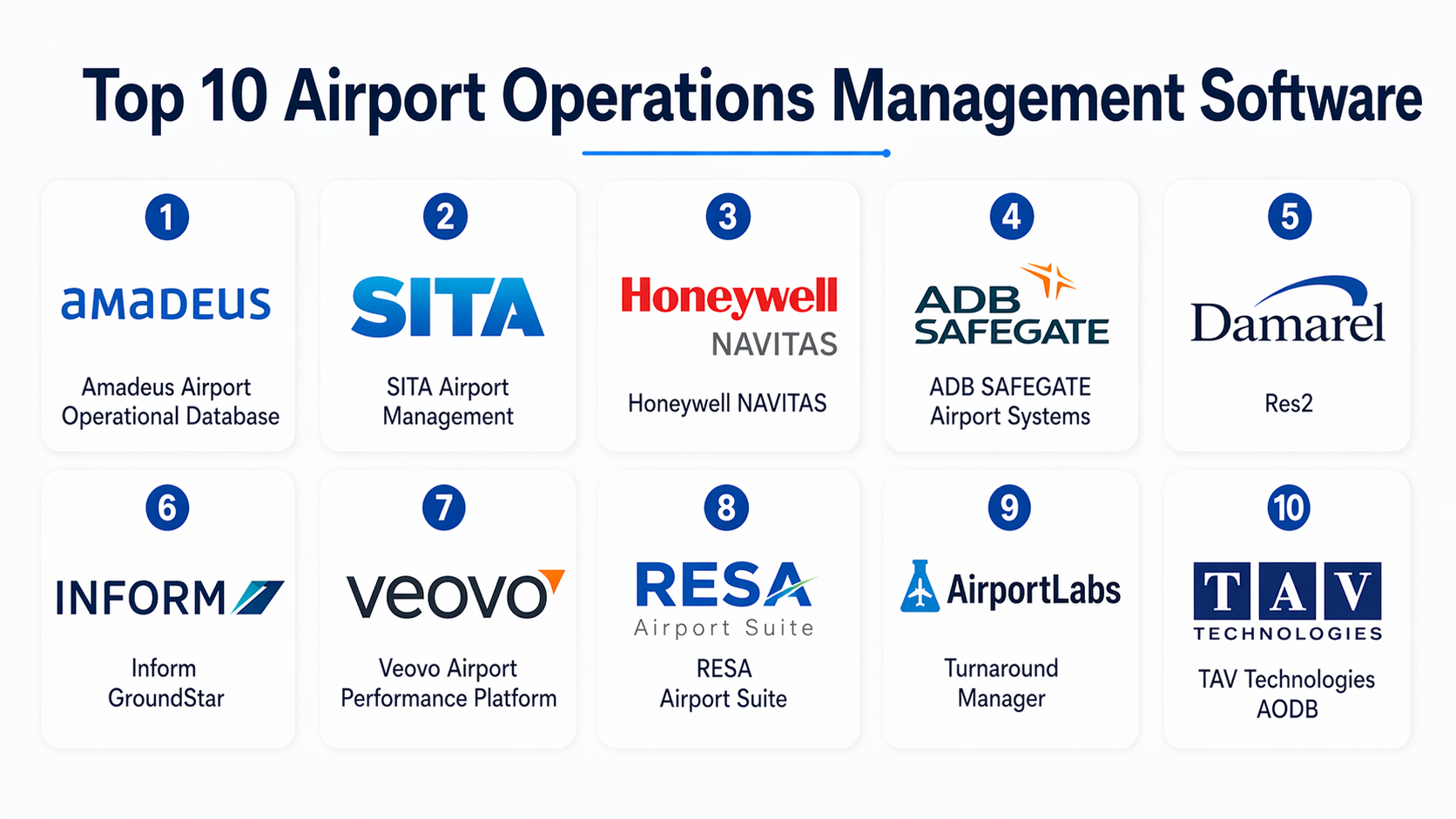
Top 10 Airport Operations Management Software
#1 — Amadeus Airport Operational Database (AODB)
Short description:
A comprehensive operational database platform that centralizes airport data and supports real-time coordination. It is widely used by large international airports for managing flight data, resources, and operational workflows.
Key Features
- Centralized operational data management
- Real-time flight updates and tracking
- Resource allocation and planning
- Integration with airline and ATC systems
- Advanced reporting and dashboards
Pros
- Highly scalable for large airports
- Strong integration capabilities
Cons
- Complex implementation
- High cost for smaller airports
Platforms / Deployment
- Web
- Cloud / Hybrid
Security & Compliance
- RBAC, audit logs, encryption
- Additional certifications: Not publicly stated
Integrations & Ecosystem
Integrates with airline systems, baggage handling, and ATC systems
- APIs for third-party integrations
- Legacy system compatibility
Support & Community
Enterprise-grade support with onboarding assistance. Documentation is strong.
#2 — SITA Airport Management
Short description:
A modular airport management system designed for end-to-end operational visibility. It focuses on improving collaboration between airport stakeholders.
Key Features
- Flight information display systems
- Resource optimization tools
- Real-time operational dashboards
- Passenger flow analytics
- Incident management
Pros
- Strong global presence
- Flexible modular design
Cons
- Customization can be complex
- Pricing not transparent
Platforms / Deployment
- Web
- Cloud
Security & Compliance
- MFA, encryption, RBAC
- Certifications: Not publicly stated
Integrations & Ecosystem
Works with airline systems, security platforms, and airport infrastructure
- Open APIs
- Partner ecosystem
Support & Community
Global support network with enterprise-level service.
#3 — Honeywell NAVITAS
Short description:
An integrated airport operations suite focused on real-time decision-making and predictive insights.
Key Features
- Real-time operational monitoring
- Predictive analytics
- Resource planning
- Passenger experience tracking
- Incident alerts
Pros
- Strong analytics capabilities
- Good for large-scale operations
Cons
- Requires skilled staff
- Setup complexity
Platforms / Deployment
- Web
- Cloud / Hybrid
Security & Compliance
- Encryption, RBAC
- Not publicly stated certifications
Integrations & Ecosystem
- Integrates with IoT devices
- Supports APIs
Support & Community
Enterprise support; documentation varies.
#4 — ADB SAFEGATE Airport Systems
Short description:
A solution focused on airside and landside operations, including lighting, docking, and traffic management.
Key Features
- Airside traffic control
- Gate and docking systems
- Real-time monitoring
- Safety compliance tools
- Integrated control systems
Pros
- Strong airside capabilities
- Reliable infrastructure
Cons
- Limited business analytics
- Hardware dependency
Platforms / Deployment
- Hybrid
Security & Compliance
- Not publicly stated
Integrations & Ecosystem
- Integrates with airport hardware systems
- Limited API ecosystem
Support & Community
Vendor-led support; niche expertise required.
#5 — Damarel Res2
Short description:
A flexible airport operations platform focusing on resource management and operational efficiency.
Key Features
- Resource allocation
- Flight scheduling
- Data analytics
- Operational reporting
- Workflow automation
Pros
- Flexible system design
- Good mid-market fit
Cons
- Limited AI features
- UI could improve
Platforms / Deployment
- Web
- Cloud
Security & Compliance
- Not publicly stated
Integrations & Ecosystem
- Supports integration with airline systems
- API support
Support & Community
Moderate support; depends on contract.
#6 — Inform GroundStar
Short description:
A real-time decision support system focused on ground operations and turnaround management.
Key Features
- Turnaround optimization
- Real-time alerts
- Predictive analytics
- Resource coordination
- KPI dashboards
Pros
- Strong turnaround management
- Good analytics
Cons
- Learning curve
- Requires integration effort
Platforms / Deployment
- Web
- Cloud
Security & Compliance
- Not publicly stated
Integrations & Ecosystem
- Integrates with airline and baggage systems
- API support
Support & Community
Strong enterprise support.
#7 — Veovo Airport Performance Platform
Short description:
A data-driven platform designed to optimize airport flow, retail, and passenger experience.
Key Features
- Passenger flow analytics
- Queue management
- Retail analytics
- Real-time dashboards
- Predictive insights
Pros
- Focus on passenger experience
- Strong analytics
Cons
- Less focus on airside operations
- Pricing varies
Platforms / Deployment
- Web
- Cloud
Security & Compliance
- Not publicly stated
Integrations & Ecosystem
- Integrates with sensors and tracking systems
- API-based architecture
Support & Community
Good support; analytics-focused documentation.
#8 — RESA Airport Suite
Short description:
An integrated suite for airport operations including AODB, RMS, and billing systems.
Key Features
- Operational database
- Billing and invoicing
- Resource management
- Reporting tools
- Integration modules
Pros
- All-in-one solution
- Strong operational coverage
Cons
- UI complexity
- Customization needed
Platforms / Deployment
- Web
- Cloud / On-premise
Security & Compliance
- Not publicly stated
Integrations & Ecosystem
- Integrates with airport billing and finance systems
- API support
Support & Community
Moderate support; enterprise-focused.
#9 — AirportLabs Turnaround Manager
Short description:
A modern platform focusing on real-time turnaround operations and digital workflows.
Key Features
- Turnaround management
- Real-time alerts
- Digital workflow automation
- Data analytics
- Collaboration tools
Pros
- Modern UI
- Fast deployment
Cons
- Limited enterprise depth
- Smaller ecosystem
Platforms / Deployment
- Web
- Cloud
Security & Compliance
- Not publicly stated
Integrations & Ecosystem
- API-based integrations
- Supports airline systems
Support & Community
Good onboarding; growing community.
#10 — TAV Technologies AODB
Short description:
A comprehensive airport operations database system supporting large-scale airport environments.
Key Features
- Centralized data management
- Resource planning
- Flight scheduling
- Reporting tools
- Integration capabilities
Pros
- Strong enterprise focus
- Reliable performance
Cons
- Implementation complexity
- Requires customization
Platforms / Deployment
- Web
- Cloud / Hybrid
Security & Compliance
- Not publicly stated
Integrations & Ecosystem
- Integrates with airport and airline systems
- API support
Support & Community
Enterprise-level support.
Comparison Table (Top 10)
| Tool Name | Best For | Platform(s) | Deployment | Standout Feature | Public Rating |
|---|---|---|---|---|---|
| Amadeus AODB | Large airports | Web | Cloud/Hybrid | Centralized data | N/A |
| SITA Airport Management | Global airports | Web | Cloud | Modular design | N/A |
| Honeywell NAVITAS | Enterprise | Web | Hybrid | Predictive analytics | N/A |
| ADB SAFEGATE | Airside ops | Hybrid | Hybrid | Safety systems | N/A |
| Damarel Res2 | Mid-market | Web | Cloud | Flexible workflows | N/A |
| Inform GroundStar | Turnaround ops | Web | Cloud | Real-time decisions | N/A |
| Veovo Platform | Passenger flow | Web | Cloud | Analytics | N/A |
| RESA Suite | Integrated ops | Web | Hybrid | All-in-one system | N/A |
| AirportLabs | Modern ops | Web | Cloud | Fast deployment | N/A |
| TAV AODB | Enterprise | Web | Hybrid | Data centralization | N/A |
Evaluation & Scoring of Airport Operations Management Software
| Tool Name | Core | Ease | Integrations | Security | Performance | Support | Value | Weighted Total |
|---|---|---|---|---|---|---|---|---|
| Amadeus AODB | 9 | 7 | 9 | 8 | 9 | 8 | 7 | 8.4 |
| SITA | 9 | 8 | 9 | 8 | 9 | 8 | 7 | 8.5 |
| Honeywell | 9 | 7 | 8 | 8 | 9 | 8 | 7 | 8.2 |
| ADB SAFEGATE | 8 | 6 | 7 | 7 | 9 | 7 | 6 | 7.4 |
| Damarel | 7 | 8 | 7 | 6 | 7 | 7 | 8 | 7.4 |
| GroundStar | 8 | 7 | 8 | 7 | 8 | 8 | 7 | 7.8 |
| Veovo | 8 | 8 | 8 | 7 | 8 | 7 | 7 | 7.9 |
| RESA | 8 | 6 | 7 | 6 | 8 | 7 | 7 | 7.3 |
| AirportLabs | 7 | 9 | 7 | 6 | 7 | 7 | 8 | 7.6 |
| TAV | 8 | 6 | 8 | 7 | 8 | 8 | 7 | 7.7 |
How to interpret scores:
These scores are comparative, not absolute. A higher score means better alignment with enterprise needs. Smaller organizations may prioritize ease of use and value over deep features.
Which Airport Operations Management Software
Solo / Freelancer
Not applicable; these tools are enterprise-focused.
SMB
Look for lighter tools like AirportLabs or Damarel.
Mid-Market
Consider Inform GroundStar or Veovo.
Enterprise
Amadeus, SITA, Honeywell are top choices.
Budget vs Premium
- Budget: AirportLabs, Damarel
- Premium: Amadeus, SITA
Feature Depth vs Ease of Use
- Deep features: Amadeus, Honeywell
- Easy to use: AirportLabs
Integrations & Scalability
Enterprise tools provide better integration.
Security & Compliance Needs
Choose vendors with strong enterprise security frameworks.
Frequently Asked Questions (FAQs)
1. What is Airport Operations Management Software?
It is a system that helps manage airport operations such as flights, gates, and resources in real time.
2. How much does it cost?
Pricing varies widely depending on scale and vendor.
3. Is it cloud-based?
Many modern tools are cloud-based or hybrid.
4. How long does implementation take?
It can take weeks to months depending on complexity.
5. Can it integrate with airline systems?
Yes, most tools support integrations.
6. Is it secure?
Security depends on vendor; enterprise tools offer strong protections.
7. Can small airports use it?
Yes, but simpler tools may be better.
8. What are common mistakes?
Choosing overly complex systems without proper planning.
9. Can it scale?
Yes, enterprise tools are highly scalable.
10. What are alternatives?
Manual systems or simpler scheduling tools.
Conclusion
Airport Operations Management Software has become essential for modern aviation environments where efficiency, safety, and real-time coordination are critical. While enterprise platforms like Amadeus and SITA offer deep capabilities, newer solutions provide flexibility and faster deployment. The right choice depends on your airport size, operational complexity, and integration needs. Instead of looking for a one-size-fits-all solution, focus on aligning the software with your operational priorities. A practical next step is to shortlist two or three tools, run a pilot implementation, and validate how well they integrate with your existing systems and workflows before making a final decision.
