Introduction
Reservation Management Software helps businesses manage bookings, reservations, and customer scheduling in an organized and automated way. Instead of relying on manual systems like spreadsheets or phone calls, this software enables customers to reserve services, rooms, or resources online while businesses track availability, manage capacity, and streamline operations.
In today’s digital-first environment, customers expect instant confirmations, flexible booking options, and seamless experiences across devices. Reservation systems are no longer just operational tools—they are directly tied to customer satisfaction, revenue optimization, and operational efficiency. Modern solutions now include AI-driven forecasting, automated workflows, and deep integrations with CRM, POS, and analytics platforms.
Real-world use cases:
- Hotels managing room availability and pricing
- Restaurants handling table reservations and waitlists
- Travel agencies coordinating bookings and itineraries
- Event venues managing seat reservations and scheduling
- Healthcare providers organizing patient appointments
What buyers should evaluate:
- Real-time availability management
- Multi-channel booking support
- Payment and billing integration
- Automation (notifications, confirmations, reminders)
- Reporting and analytics capabilities
- Scalability and multi-location support
- Integration with CRM/POS systems
- Customization and branding
- Security and compliance features
Best for: Hospitality businesses, restaurants, travel companies, healthcare providers, and service-based organizations handling high booking volumes.
Not ideal for: Businesses with minimal scheduling needs, one-time transactions, or operations that do not require structured reservation workflows.
Key Trends in Reservation Management Software
- AI-driven demand forecasting: Predict booking patterns and optimize capacity
- Dynamic pricing models: Adjust pricing based on demand and availability
- Mobile-first reservation systems: Optimized for customer bookings via smartphones
- Contactless and digital check-ins: Enhanced customer convenience
- Integration with POS and CRM systems: Unified customer experience
- Cloud-based deployment dominance: Faster scalability and remote access
- Automation of workflows: Reduced manual work for staff
- Personalized customer experiences: Data-driven recommendations
- API-first architecture: Easier integration with third-party platforms
- Enhanced security features: Encryption and identity verification
How We Selected These Tools (Methodology)
- Evaluated tools with strong market presence and adoption
- Focused on feature completeness including booking, payments, and automation
- Considered performance reliability and uptime expectations
- Reviewed security posture and compliance indicators
- Analyzed integration capabilities with CRM, POS, and payment systems
- Ensured coverage for small businesses to enterprise use cases
- Prioritized tools with scalability and multi-location support
- Included both general-purpose and industry-specific platforms
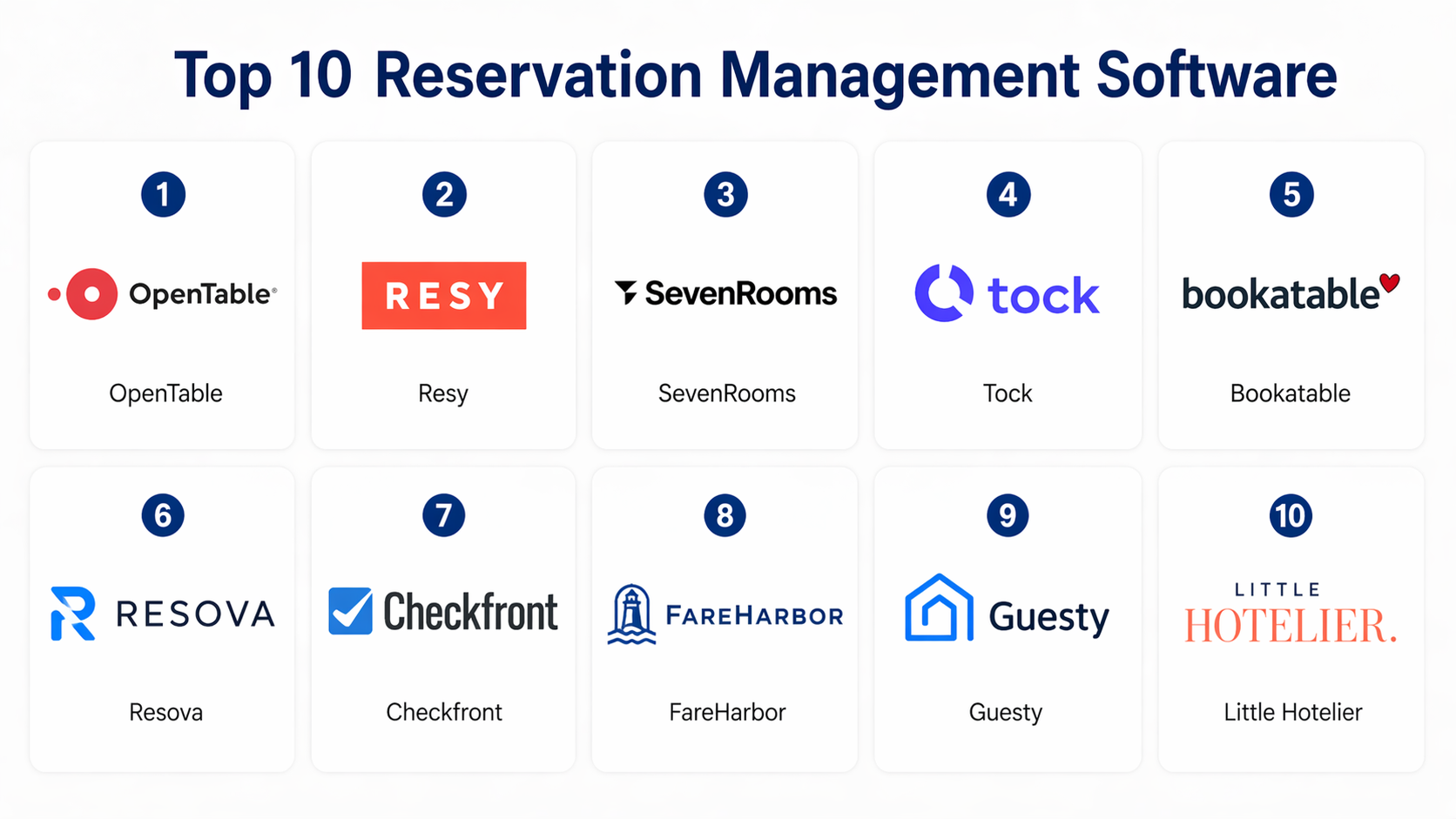
Top 10 Reservation Management Software
#1 — OpenTable
Short description:
OpenTable is a widely recognized restaurant reservation platform designed for managing table bookings and guest experiences. It allows restaurants to accept online reservations, manage seating, and optimize operations. It is especially popular among mid-sized to large restaurants. The platform also helps attract customers through its marketplace. It is best suited for hospitality businesses.
Key Features
- Real-time table availability
- Guest management tools
- Waitlist and queue handling
- Automated confirmations
- Analytics and reporting
- Mobile booking support
Pros
- Strong brand recognition
- Helps attract new customers
Cons
- Pricing may be higher
- Limited outside restaurant use
Platforms / Deployment
- Web / Mobile
- Cloud
Security & Compliance
- Encryption, access control
- Not publicly stated for certifications
Integrations & Ecosystem
OpenTable connects with hospitality and operational systems.
- POS systems
- CRM tools
- Payment integrations
Support & Community
Well-established support with strong onboarding resources.
#2 — Resy
Short description:
Resy is a modern restaurant reservation platform focusing on customer experience and operational efficiency. It offers tools for managing bookings, guest preferences, and dining experiences.
Key Features
- Reservation and waitlist management
- Guest profiling
- Mobile-first booking
- Real-time updates
- Analytics dashboard
Pros
- Excellent customer experience
- Strong mobile interface
Cons
- Limited to hospitality industry
- Customization may be limited
Platforms / Deployment
- Web / Mobile
- Cloud
Security & Compliance
- Not publicly stated
Integrations & Ecosystem
- POS systems
- Payment platforms
- CRM tools
Support & Community
Reliable support with industry-focused resources.
#3 — SevenRooms
Short description:
SevenRooms is a hospitality-focused reservation and guest experience platform. It offers advanced CRM capabilities along with reservation management.
Key Features
- Reservation and table management
- CRM and guest insights
- Marketing automation
- Reporting tools
- Multi-location support
Pros
- Strong CRM integration
- Good for enterprise restaurants
Cons
- Higher cost
- Requires training
Platforms / Deployment
- Web / Mobile
- Cloud
Security & Compliance
- Not publicly stated
Integrations & Ecosystem
- POS systems
- Marketing tools
- Payment gateways
Support & Community
Strong enterprise-level support.
#4 — Tock
Short description:
Tock is a reservation platform designed for restaurants, wineries, and hospitality venues. It supports ticketed reservations and prepaid experiences.
Key Features
- Ticketed reservations
- Prepaid booking options
- Event management
- Inventory tracking
- Reporting tools
Pros
- Unique prepaid model
- Good for events
Cons
- Limited outside niche use
- Setup complexity
Platforms / Deployment
- Web / Mobile
- Cloud
Security & Compliance
- Not publicly stated
Integrations & Ecosystem
- Payment platforms
- POS integrations
- Event systems
Support & Community
Good support with onboarding assistance.
#5 — Bookatable
Short description:
Bookatable is a restaurant reservation system designed to improve customer booking experiences. It supports online reservations and table management.
Key Features
- Online reservation system
- Table management
- Customer notifications
- Reporting tools
- Multi-location support
Pros
- Easy to use
- Good for restaurants
Cons
- Limited features compared to competitors
- Regional availability
Platforms / Deployment
- Web
- Cloud
Security & Compliance
- Not publicly stated
Integrations & Ecosystem
- POS systems
- CRM tools
Support & Community
Moderate support availability.
#6 — Resova
Short description:
Resova is a reservation system designed for tours, activities, and rentals. It focuses on managing bookings and customer interactions.
Key Features
- Reservation scheduling
- Payment processing
- Customer management
- Reporting tools
- Inventory tracking
Pros
- Great for tours and activities
- Easy booking workflows
Cons
- Limited enterprise features
- UI can be basic
Platforms / Deployment
- Web
- Cloud
Security & Compliance
- Not publicly stated
Integrations & Ecosystem
- Payment systems
- CRM tools
Support & Community
Basic support with documentation.
#7 — Checkfront
Short description:
Checkfront is a reservation system designed for travel and activity businesses. It supports bookings, payments, and inventory management.
Key Features
- Real-time booking management
- Inventory control
- Payment integration
- Reporting tools
- Multi-channel bookings
Pros
- Strong inventory management
- Good for travel businesses
Cons
- Learning curve
- Customization limitations
Platforms / Deployment
- Web
- Cloud
Security & Compliance
- Not publicly stated
Integrations & Ecosystem
- Payment gateways
- Booking channels
- APIs
Support & Community
Reliable support with onboarding help.
#8 — FareHarbor
Short description:
FareHarbor is a reservation platform for tour operators and activity providers. It offers booking, payment, and customer management tools.
Key Features
- Booking and scheduling
- Payment processing
- Customer management
- Reporting tools
- Mobile booking
Pros
- Strong industry focus
- Easy to use
Cons
- Limited outside tourism
- Pricing may vary
Platforms / Deployment
- Web / Mobile
- Cloud
Security & Compliance
- Not publicly stated
Integrations & Ecosystem
- Payment tools
- Booking channels
- APIs
Support & Community
Good support with onboarding assistance.
#9 — Guesty
Short description:
Guesty is a property management and reservation platform for short-term rentals. It is widely used by Airbnb hosts and property managers.
Key Features
- Reservation management
- Channel management
- Automation tools
- Reporting and analytics
- Multi-property support
Pros
- Strong for property rentals
- Automation features
Cons
- Not suitable for all industries
- Setup complexity
Platforms / Deployment
- Web / Mobile
- Cloud
Security & Compliance
- Not publicly stated
Integrations & Ecosystem
- Booking platforms
- Payment systems
- CRM tools
Support & Community
Strong support for property managers.
#10 — Little Hotelier
Short description:
Little Hotelier is a reservation system designed for small hotels and accommodation providers. It offers booking management and channel integrations.
Key Features
- Reservation management
- Channel manager
- Payment processing
- Reporting tools
- Mobile access
Pros
- Ideal for small hotels
- Easy to use
Cons
- Limited scalability
- Basic customization
Platforms / Deployment
- Web / Mobile
- Cloud
Security & Compliance
- Not publicly stated
Integrations & Ecosystem
- Booking channels
- Payment gateways
- APIs
Support & Community
Good support with onboarding resources.
Comparison Table (Top 10)
| Tool Name | Best For | Platform(s) Supported | Deployment | Standout Feature | Public Rating |
|---|---|---|---|---|---|
| OpenTable | Restaurants | Web/Mobile | Cloud | Customer marketplace | N/A |
| Resy | Restaurants | Web/Mobile | Cloud | Mobile-first experience | N/A |
| SevenRooms | Enterprise hospitality | Web/Mobile | Cloud | CRM integration | N/A |
| Tock | Events/dining | Web/Mobile | Cloud | Prepaid reservations | N/A |
| Bookatable | Restaurants | Web | Cloud | Easy booking system | N/A |
| Resova | Tours | Web | Cloud | Activity booking | N/A |
| Checkfront | Travel | Web | Cloud | Inventory management | N/A |
| FareHarbor | Tours | Web/Mobile | Cloud | Industry focus | N/A |
| Guesty | Rentals | Web/Mobile | Cloud | Channel management | N/A |
| Little Hotelier | Hotels | Web/Mobile | Cloud | Channel integration | N/A |
Evaluation & Scoring of Reservation Management Software
| Tool Name | Core (25%) | Ease (15%) | Integrations (15%) | Security (10%) | Performance (10%) | Support (10%) | Value (15%) | Weighted Total |
|---|---|---|---|---|---|---|---|---|
| OpenTable | 9 | 8 | 8 | 7 | 9 | 9 | 7 | 8.2 |
| Resy | 8 | 9 | 7 | 7 | 8 | 8 | 7 | 7.9 |
| SevenRooms | 9 | 7 | 9 | 7 | 8 | 9 | 7 | 8.3 |
| Tock | 8 | 7 | 7 | 7 | 8 | 8 | 7 | 7.6 |
| Bookatable | 7 | 8 | 6 | 6 | 7 | 7 | 7 | 7.0 |
| Resova | 7 | 8 | 6 | 6 | 7 | 7 | 7 | 7.0 |
| Checkfront | 8 | 7 | 8 | 7 | 8 | 8 | 7 | 7.7 |
| FareHarbor | 8 | 8 | 7 | 7 | 8 | 8 | 7 | 7.8 |
| Guesty | 9 | 7 | 9 | 7 | 8 | 9 | 7 | 8.2 |
| Little Hotelier | 8 | 8 | 7 | 6 | 7 | 8 | 8 | 7.7 |
How to interpret scores:
These scores provide a comparative view of each platform’s strengths. Higher scores indicate stronger overall performance across key criteria. However, the best choice depends on specific business needs rather than just numerical ranking.
Which Reservation Management Software
Solo / Freelancer
Tools like Resova or basic booking platforms are sufficient for simple operations.
SMB
Little Hotelier, FareHarbor, and Bookatable provide good balance between features and affordability.
Mid-Market
Checkfront and Tock offer better scalability and operational depth.
Enterprise
SevenRooms and Guesty are suitable for complex workflows and multi-location operations.
Budget vs Premium
Budget tools offer core booking features, while premium tools provide automation, analytics, and integrations.
Feature Depth vs Ease of Use
Simpler tools are easier to deploy, while advanced platforms require training but offer more capabilities.
Integrations & Scalability
Choose tools with strong API support and CRM/POS integrations for long-term growth.
Security & Compliance Needs
Focus on tools with encryption and access control for sensitive customer data.
Frequently Asked Questions (FAQs)
1. What is reservation management software?
It is a system that helps businesses manage bookings, availability, and customer reservations digitally.
2. How much does it cost?
Pricing varies based on features, users, and business size.
3. Is it secure?
Most platforms offer encryption, but compliance certifications vary.
4. Can I accept payments?
Yes, many tools support integrated payment gateways.
5. How long does setup take?
Typically a few hours to a few days depending on complexity.
6. Can I manage multiple locations?
Yes, many tools support multi-location operations.
7. What industries use it?
Hospitality, travel, healthcare, and event management.
8. Can I migrate from another system?
Yes, but data migration may require planning.
9. Do I need technical expertise?
Most tools are user-friendly with minimal technical requirements.
10. Are there alternatives?
Manual booking systems exist but are less efficient.
Conclusion
Reservation Management Software plays a critical role in modern business operations where managing bookings efficiently can directly impact customer satisfaction and revenue. From restaurants and hotels to travel agencies and service providers, these tools help streamline scheduling, reduce manual errors, and improve overall operational visibility. Platforms like OpenTable and Resy are excellent for hospitality-focused businesses, while Guesty and SevenRooms provide more advanced capabilities for enterprises with complex needs.
