Introduction
Audit Management Software helps organizations plan, execute, track, and report audits in a structured and efficient way. Instead of relying on spreadsheets, emails, and manual checklists, these platforms centralize audit workflows, automate documentation, and ensure compliance with internal policies and external regulations.
In today’s environment, where organizations must deal with increasing regulatory pressure and operational risks, audit management tools are becoming essential. Whether it’s internal audits, IT audits, financial audits, or compliance audits, having a system that ensures consistency and traceability is critical.
Common real-world use cases include:
- Managing internal and external audits across departments
- Tracking audit findings and corrective actions
- Ensuring compliance with standards like ISO, SOC, and regulatory frameworks
- Automating audit evidence collection and reporting
- Managing risk assessments linked to audit outcomes
What buyers should evaluate:
- Ease of use and auditor-friendly interface
- Workflow automation and audit lifecycle support
- Reporting and dashboard capabilities
- Integration with GRC, ERP, and security tools
- Scalability across teams and geographies
- Customization of audit templates and workflows
- Security and data protection features
- Real-time collaboration capabilities
- Pricing and ROI
Best for: Internal audit teams, compliance officers, risk managers, finance teams, IT auditors, and enterprises that conduct frequent audits across departments.
Not ideal for: Very small teams with occasional audit needs or companies that only require basic checklist-based auditing—simpler tools may be enough in those cases.
Key Trends in Audit Management Software
- AI-assisted audit insights: Tools are using AI to detect anomalies and suggest audit focus areas
- Continuous auditing models: Moving from periodic audits to real-time monitoring
- Automation of audit workflows: Reducing manual effort in planning, execution, and reporting
- Cloud-based audit platforms: Faster deployment and remote accessibility
- Integrated risk and audit systems: Linking audit results directly with enterprise risk management
- Mobile audit capabilities: Auditors can conduct audits on-site using mobile apps
- Data-driven decision making: Advanced analytics for audit outcomes
- Regulatory complexity support: Multi-framework audit tracking
- Collaboration features: Real-time communication between auditors and stakeholders
- Low-code customization: Custom audit workflows without heavy development
How We Selected These Tools (Methodology)
- Strong adoption in audit and compliance teams
- Feature completeness across audit lifecycle management
- Ease of use for auditors and non-technical users
- Scalability across SMBs and enterprises
- Integration capabilities with business systems
- Security and compliance readiness
- Vendor reputation and maturity
- Flexibility across industries and audit types
- Balance between automation and customization
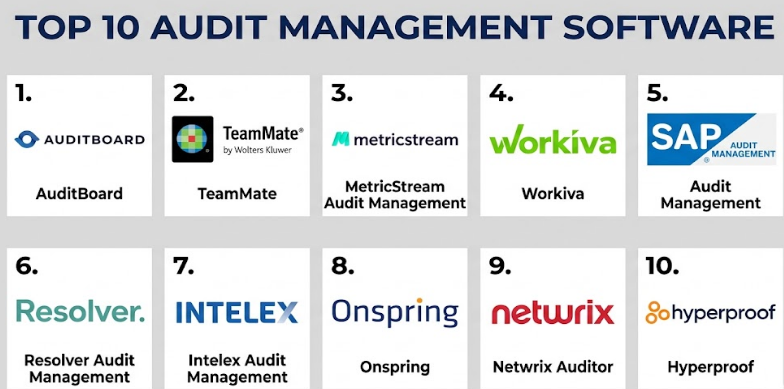
Top 10 Audit Management Software Tools
#1 — AuditBoard
Short description: A leading audit management platform designed for internal audit, risk, and compliance teams in mid-market and enterprise organizations.
Key Features
- End-to-end audit lifecycle management
- Risk-based audit planning
- Issue tracking and remediation workflows
- Real-time dashboards and reporting
- SOX compliance support
- Collaboration tools for audit teams
Pros
- User-friendly interface
- Strong reporting capabilities
Cons
- Premium pricing
- Limited flexibility for niche use cases
Platforms / Deployment
- Web
- Cloud
Security & Compliance
- SSO, MFA, encryption, audit logs
- Not publicly stated for certifications
Integrations & Ecosystem
- ERP systems
- Data analytics tools
- APIs for customization
Support & Community
Strong onboarding and enterprise-level support.
#2 — TeamMate+
Short description: A comprehensive audit solution widely used for internal audit and assurance processes.
Key Features
- Audit planning and execution
- Risk assessment tools
- Issue tracking
- Reporting and analytics
- Workflow automation
Pros
- Trusted by large organizations
- Strong audit-specific features
Cons
- Interface can feel dated
- Learning curve for new users
Platforms / Deployment
- Web
- Cloud / On-premise
Security & Compliance
- SSO, encryption
- Not publicly stated
Integrations & Ecosystem
- Financial systems
- Enterprise tools
- APIs
Support & Community
Well-established support network.
#3 — MetricStream Audit Management
Short description: An enterprise-grade audit management system integrated with broader GRC capabilities.
Key Features
- Risk-based audit planning
- Compliance tracking
- Audit workflows
- Issue management
- Analytics dashboards
Pros
- Deep enterprise capabilities
- Highly scalable
Cons
- Complex implementation
- Higher cost
Platforms / Deployment
- Web
- Cloud / Hybrid
Security & Compliance
- SSO, RBAC, encryption
- Not publicly stated
Integrations & Ecosystem
- GRC systems
- ERP platforms
- APIs
Support & Community
Strong enterprise support.
#4 — Workiva
Short description: A cloud-based platform that combines audit, compliance, and reporting workflows.
Key Features
- Audit and compliance management
- Real-time collaboration
- Document management
- Workflow automation
- Reporting tools
Pros
- Strong collaboration features
- Cloud-native platform
Cons
- Pricing can be high
- Limited deep audit customization
Platforms / Deployment
- Web
- Cloud
Security & Compliance
- SSO, encryption
- Not publicly stated
Integrations & Ecosystem
- Finance tools
- Reporting systems
- APIs
Support & Community
Good documentation and support.
#5 — SAP Audit Management
Short description: An enterprise audit solution integrated with SAP systems for large organizations.
Key Features
- Audit planning and execution
- Risk and control monitoring
- Workflow automation
- Reporting dashboards
- Integration with SAP modules
Pros
- Strong integration with SAP
- Enterprise-grade features
Cons
- Best suited for SAP users
- Complex setup
Platforms / Deployment
- Web
- Cloud / On-premise
Security & Compliance
- SSO, RBAC, encryption
- Not publicly stated
Integrations & Ecosystem
- SAP ecosystem
- Enterprise tools
Support & Community
Strong enterprise support.
#6 — Resolver Audit Management
Short description: A flexible audit and risk management platform focused on operational audits.
Key Features
- Audit planning
- Risk assessments
- Incident tracking
- Reporting dashboards
- Workflow automation
Pros
- Flexible configuration
- Strong risk integration
Cons
- UI can be improved
- Limited small-team features
Platforms / Deployment
- Web
- Cloud
Security & Compliance
- SSO, encryption
- Not publicly stated
Integrations & Ecosystem
- Risk tools
- APIs
Support & Community
Moderate support ecosystem.
#7 — Intelex Audit Management
Short description: A compliance-focused audit tool used in industries like manufacturing and energy.
Key Features
- Audit scheduling
- Compliance tracking
- Incident management
- Reporting tools
- Workflow automation
Pros
- Strong compliance features
- Industry-specific capabilities
Cons
- Less flexibility outside core industries
- UI may feel complex
Platforms / Deployment
- Web
- Cloud
Security & Compliance
- SSO, encryption
- Not publicly stated
Integrations & Ecosystem
- Industry tools
- APIs
Support & Community
Good industry-specific support.
#8 — Onspring
Short description: A no-code platform for audit, risk, and compliance management.
Key Features
- No-code workflow builder
- Audit tracking
- Risk management
- Reporting dashboards
- Custom forms
Pros
- Easy customization
- Quick deployment
Cons
- Limited advanced analytics
- Smaller ecosystem
Platforms / Deployment
- Web
- Cloud
Security & Compliance
- SSO, encryption
- Not publicly stated
Integrations & Ecosystem
- APIs
- SaaS tools
Support & Community
Responsive support; smaller community.
#9 — Netwrix Auditor
Short description: A tool focused on IT audit and compliance monitoring.
Key Features
- IT audit tracking
- User activity monitoring
- Compliance reporting
- Risk detection
- Data access auditing
Pros
- Strong IT audit capabilities
- Good security insights
Cons
- Limited general audit features
- Best for IT-focused teams
Platforms / Deployment
- Windows
- On-premise / Cloud
Security & Compliance
- RBAC, audit logs
- Not publicly stated
Integrations & Ecosystem
- Microsoft ecosystem
- Security tools
Support & Community
Strong documentation and support.
#10 — Hyperproof
Short description: A modern audit and compliance platform focused on continuous audit readiness.
Key Features
- Audit workflows
- Evidence management
- Risk tracking
- Reporting dashboards
- Task automation
Pros
- Easy to use
- Strong audit workflows
Cons
- Limited enterprise features
- Smaller ecosystem
Platforms / Deployment
- Web
- Cloud
Security & Compliance
- SSO, encryption
- Not publicly stated
Integrations & Ecosystem
- SaaS tools
- APIs
Support & Community
Good onboarding support.
Comparison Table (Top 10)
| Tool Name | Best For | Platform(s) Supported | Deployment | Standout Feature | Public Rating |
|---|---|---|---|---|---|
| AuditBoard | Internal audits | Web | Cloud | Audit lifecycle management | N/A |
| TeamMate+ | Large enterprises | Web | Cloud/On-premise | Audit workflows | N/A |
| MetricStream Audit Management | Enterprises | Web | Cloud/Hybrid | Risk-based audits | N/A |
| Workiva | Collaboration | Web | Cloud | Real-time collaboration | N/A |
| SAP Audit Management | SAP users | Web | Cloud/On-premise | SAP integration | N/A |
| Resolver | Risk audits | Web | Cloud | Risk integration | N/A |
| Intelex | Compliance-heavy industries | Web | Cloud | Industry compliance | N/A |
| Onspring | No-code users | Web | Cloud | Custom workflows | N/A |
| Netwrix Auditor | IT audits | Windows | On-premise/Cloud | Activity monitoring | N/A |
| Hyperproof | Continuous audits | Web | Cloud | Evidence tracking | N/A |
Evaluation & Scoring of Audit Management Software
| Tool Name | Core (25%) | Ease (15%) | Integrations (15%) | Security (10%) | Performance (10%) | Support (10%) | Value (15%) | Weighted Total |
|---|---|---|---|---|---|---|---|---|
| AuditBoard | 9 | 8 | 8 | 8 | 8 | 8 | 7 | 8.1 |
| TeamMate+ | 9 | 6 | 7 | 8 | 8 | 8 | 6 | 7.6 |
| MetricStream Audit Management | 9 | 6 | 8 | 8 | 8 | 8 | 6 | 7.7 |
| Workiva | 8 | 8 | 7 | 7 | 7 | 7 | 6 | 7.3 |
| SAP Audit Management | 9 | 5 | 8 | 9 | 9 | 8 | 6 | 7.9 |
| Resolver | 7 | 7 | 6 | 7 | 7 | 7 | 7 | 7.0 |
| Intelex | 7 | 6 | 6 | 7 | 7 | 7 | 6 | 6.8 |
| Onspring | 7 | 8 | 6 | 7 | 7 | 7 | 7 | 7.1 |
| Netwrix Auditor | 8 | 7 | 6 | 8 | 8 | 7 | 7 | 7.4 |
| Hyperproof | 7 | 8 | 6 | 7 | 7 | 7 | 7 | 7.1 |
How to interpret scores:
- Scores are comparative across this list
- Higher “Core” = deeper audit functionality
- Higher “Ease” = faster adoption
- “Value” reflects ROI vs pricing
- Choose based on your needs, not just the top score
Which Audit Management Software Tool Is Right for You?
Solo / Freelancer
Basic tools or spreadsheets may be enough unless compliance requirements increase.
SMB
AuditBoard, Hyperproof, and Onspring are easier to adopt and manage.
Mid-Market
Workiva and Resolver offer a good balance of features and scalability.
Enterprise
MetricStream, SAP Audit Management, and TeamMate+ are better suited for large-scale audits.
Budget vs Premium
- Budget: Onspring, Hyperproof
- Premium: AuditBoard, SAP
Feature Depth vs Ease of Use
- Depth: MetricStream, SAP
- Ease: AuditBoard, Hyperproof
Integrations & Scalability
Choose tools with strong API and enterprise integrations if you use multiple systems.
Security & Compliance Needs
Highly regulated industries should choose enterprise-grade tools.
Frequently Asked Questions (FAQs)
What is audit management software?
It helps organizations plan, execute, and track audits efficiently.
How much does it cost?
Pricing varies widely based on features and scale.
Is it only for large companies?
No, many tools support SMBs.
How long does implementation take?
Typically weeks to months depending on complexity.
Does it support compliance frameworks?
Yes, most tools support multiple frameworks.
Can it integrate with ERP systems?
Yes, most enterprise tools offer integrations.
Is data secure?
Most tools provide encryption and access controls.
What are common mistakes?
Choosing overly complex tools for simple needs.
Can tools scale with growth?
Yes, most platforms are scalable.
Are there alternatives?
Manual processes or simpler checklist tools.
Conclusion
Audit management software has become a critical part of modern organizations that need to maintain compliance, manage risks, and ensure operational transparency. As audit complexity increases, relying on manual processes is no longer practical or efficient.however, there is no one-size-fits-all solution. Smaller teams may benefit from lightweight and easy-to-use platforms like Hyperproof or Onspring, while enterprises handling multiple regulatory frameworks will need robust solutions like MetricStream or SAP Audit Management.
