Introduction
Recommendation Engines are systems that analyze user data—such as behavior, preferences, and interactions—to suggest relevant products, content, or actions. They power experiences like “You may also like,” “Recommended for you,” and “Customers also bought,” helping businesses increase engagement, conversions, and retention.
These tools are widely used across eCommerce, media platforms, SaaS products, and marketplaces. Modern recommendation engines leverage machine learning, real-time data processing, and behavioral analytics to deliver highly personalized suggestions across multiple channels.
As digital experiences become more competitive, recommendation engines are evolving into core growth infrastructure, integrating deeply with analytics, personalization, and marketing systems.
Common use cases:
- Product recommendations in eCommerce
- Content recommendations in media platforms
- Personalized email and marketing suggestions
- Cross-sell and upsell strategies
- In-app recommendations for SaaS products
What buyers should evaluate:
- Recommendation algorithms (AI vs rules-based)
- Real-time personalization capabilities
- Data integration and ingestion
- API flexibility and developer support
- Scalability for large datasets
- Performance and latency
- Ease of implementation
- Omnichannel support
- Reporting and analytics
Best for: eCommerce businesses, media platforms, SaaS companies, marketplaces, and data-driven organizations.
Not ideal for: Small websites with limited traffic/data, or businesses without personalization strategies.
Key Trends in Recommendation Engines
- AI and machine learning dominance: Deep learning-based recommendations
- Real-time personalization: Instant recommendations based on behavior
- Hybrid recommendation models: Combining collaborative and content-based filtering
- API-first architectures: Developer-friendly implementations
- Integration with CDPs and data warehouses: Centralized data usage
- Edge-based recommendations: Faster delivery with low latency
- Privacy-first data handling: Compliance-focused personalization
- Omnichannel recommendations: Web, mobile, email, and ads
- Explainable AI: Transparency in recommendation logic
- Automation and self-learning systems: Continuous optimization
How We Selected These Tools (Methodology)
- Evaluated market adoption and usage across industries
- Assessed AI and recommendation capabilities
- Reviewed ease of implementation and API flexibility
- Considered integration ecosystem
- Analyzed real-time processing and performance
- Evaluated scalability for large datasets
- Included tools for SMBs to enterprise
- Reviewed omnichannel capabilities
- Considered pricing and value
- Balanced developer-first and marketer-friendly tools
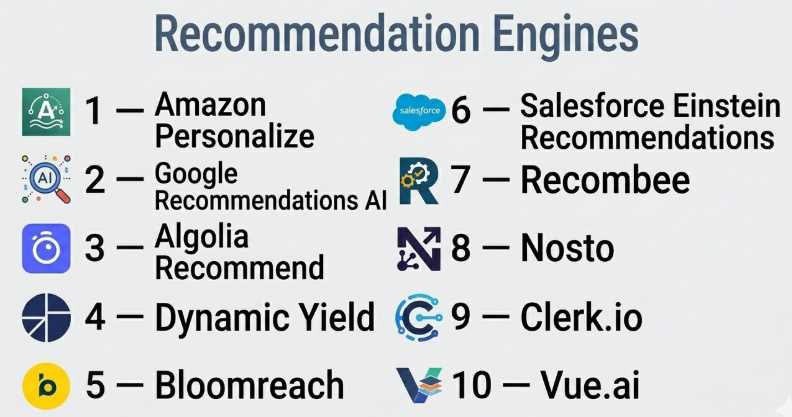
Top 10 Recommendation Engines
#1 — Amazon Personalize
Short description: A machine learning-powered recommendation service that enables developers to build real-time personalized experiences.
Key Features
- Machine learning-based recommendations
- Real-time personalization
- Custom recommendation models
- API-based integration
- Data ingestion pipelines
- User segmentation
Pros
- Highly scalable
- Strong AI capabilities
- Flexible customization
Cons
- Requires technical expertise
- Complex setup
- Pricing can vary
Platforms / Deployment
Web / Cloud
Security & Compliance
Encryption; Compliance: Not publicly stated
Integrations & Ecosystem
Strong integration within cloud ecosystems.
- APIs
- Data platforms
- Analytics tools
Support & Community
Strong developer support; large community.
#2 — Google Recommendations AI
Short description: A recommendation engine designed for retail and eCommerce personalization.
Key Features
- AI-driven recommendations
- Retail-focused models
- Real-time personalization
- Integration with Google Cloud
- Data ingestion
- API access
Pros
- Strong AI performance
- Scalable
- Optimized for eCommerce
Cons
- Limited outside Google ecosystem
- Requires setup
- Pricing concerns
Platforms / Deployment
Web / Cloud
Security & Compliance
Encryption; Compliance: Not publicly stated
Integrations & Ecosystem
Google Cloud integrations.
- APIs
- Analytics tools
- Data platforms
Support & Community
Strong developer ecosystem.
#3 — Algolia Recommend
Short description: A fast, API-first recommendation engine built on top of search infrastructure.
Key Features
- Real-time recommendations
- API-first design
- Personalization models
- Search integration
- Low latency
- Easy implementation
Pros
- Fast performance
- Developer-friendly
- Easy integration
Cons
- Limited advanced AI features
- Requires development
- Not a full personalization suite
Platforms / Deployment
Web / Cloud
Security & Compliance
Encryption; Compliance: Not publicly stated
Integrations & Ecosystem
Strong developer ecosystem.
- APIs
- eCommerce platforms
- Search tools
Support & Community
Active developer community.
#4 — Dynamic Yield
Short description: A personalization platform with strong recommendation engine capabilities for customer experiences.
Key Features
- Product recommendations
- Real-time personalization
- AI-driven insights
- A/B testing
- Omnichannel support
- Audience segmentation
Pros
- Strong recommendation engine
- Flexible personalization
- Scalable
Cons
- Pricing concerns
- Learning curve
- Requires setup
Platforms / Deployment
Web / Cloud
Security & Compliance
Encryption; Compliance: Not publicly stated
Integrations & Ecosystem
Strong integrations.
- CRM tools
- APIs
- Marketing platforms
Support & Community
Good support.
#5 — Bloomreach
Short description: A digital experience platform offering AI-powered search and recommendation capabilities.
Key Features
- AI recommendations
- Search integration
- Customer segmentation
- Personalization
- Analytics
- Omnichannel support
Pros
- Strong eCommerce focus
- Scalable
- AI-driven insights
Cons
- Complex setup
- Pricing concerns
- Learning curve
Platforms / Deployment
Web / Cloud
Security & Compliance
Encryption; Compliance: Not publicly stated
Integrations & Ecosystem
Strong integrations.
- eCommerce platforms
- APIs
- marketing tools
Support & Community
Enterprise support.
#6 — Salesforce Einstein Recommendations
Short description: A recommendation engine integrated within Salesforce for personalized customer experiences.
Key Features
- AI recommendations
- CRM data integration
- Real-time personalization
- Customer segmentation
- Omnichannel delivery
- Automation
Pros
- Strong CRM integration
- Real-time capabilities
- Enterprise-ready
Cons
- Requires Salesforce ecosystem
- Expensive
- Complex setup
Platforms / Deployment
Web / Cloud
Security & Compliance
Encryption; Compliance: Not publicly stated
Integrations & Ecosystem
Salesforce ecosystem integrations.
- CRM tools
- APIs
- marketing platforms
Support & Community
Enterprise support.
#7 — Recombee
Short description: A developer-friendly recommendation engine offering customizable recommendation logic.
Key Features
- Real-time recommendations
- API-based integration
- Custom models
- Data analytics
- Personalization
- Low latency
Pros
- Flexible
- Fast performance
- Easy API integration
Cons
- Requires development
- Smaller ecosystem
- Limited UI tools
Platforms / Deployment
Web / Cloud
Security & Compliance
Encryption; Compliance: Not publicly stated
Integrations & Ecosystem
Developer-focused integrations.
- APIs
- data tools
- custom platforms
Support & Community
Growing community.
#8 — Nosto
Short description: An eCommerce-focused personalization and recommendation engine for online stores.
Key Features
- Product recommendations
- Personalization
- AI insights
- Merchandising tools
- Analytics
- Omnichannel support
Pros
- Easy for eCommerce
- Strong personalization
- Good UI
Cons
- Limited outside eCommerce
- Pricing concerns
- Smaller ecosystem
Platforms / Deployment
Web / Cloud
Security & Compliance
Encryption; Compliance: Not publicly stated
Integrations & Ecosystem
eCommerce integrations.
- Shopify
- APIs
- marketing tools
Support & Community
Good support.
#9 — Clerk.io
Short description: A recommendation and personalization engine designed for eCommerce businesses.
Key Features
- Product recommendations
- Search integration
- Personalization
- Email recommendations
- Analytics
- Automation
Pros
- Easy to use
- Good for SMBs
- Affordable
Cons
- Limited advanced AI
- Smaller ecosystem
- Basic customization
Platforms / Deployment
Web / Cloud
Security & Compliance
Encryption; Compliance: Not publicly stated
Integrations & Ecosystem
Basic integrations.
- eCommerce platforms
- APIs
- marketing tools
Support & Community
Good support.
#10 — Vue.ai
Short description: An AI-powered personalization and recommendation platform focused on retail and eCommerce.
Key Features
- AI recommendations
- Visual AI capabilities
- Personalization
- Automation
- Analytics
- Omnichannel support
Pros
- Strong AI capabilities
- Good for retail
- Scalable
Cons
- Pricing concerns
- Complex setup
- Learning curve
Platforms / Deployment
Web / Cloud
Security & Compliance
Encryption; Compliance: Not publicly stated
Integrations & Ecosystem
Moderate integrations.
- APIs
- eCommerce platforms
- marketing tools
Support & Community
Growing community.
Comparison Table (Top 10)
| Tool Name | Best For | Platform(s) Supported | Deployment | Standout Feature | Public Rating |
|---|---|---|---|---|---|
| Amazon Personalize | Enterprise | Web | Cloud | ML models | N/A |
| Google Recommendations AI | eCommerce | Web | Cloud | Retail AI | N/A |
| Algolia Recommend | Developers | Web | Cloud | API-first | N/A |
| Dynamic Yield | Personalization | Web | Cloud | Real-time recs | N/A |
| Bloomreach | eCommerce | Web | Cloud | Search + recs | N/A |
| Salesforce Einstein | CRM users | Web | Cloud | CRM integration | N/A |
| Recombee | Developers | Web | Cloud | Custom logic | N/A |
| Nosto | eCommerce | Web | Cloud | Easy setup | N/A |
| Clerk.io | SMB | Web | Cloud | Affordability | N/A |
| Vue.ai | Retail | Web | Cloud | Visual AI | N/A |
Evaluation & Scoring of Recommendation Engines
| Tool Name | Core (25%) | Ease (15%) | Integrations (15%) | Security (10%) | Performance (10%) | Support (10%) | Value (15%) | Weighted Total |
|---|---|---|---|---|---|---|---|---|
| Amazon Personalize | 10 | 6 | 9 | 9 | 9 | 8 | 7 | 8.6 |
| Google Recommendations AI | 9 | 6 | 9 | 9 | 9 | 8 | 7 | 8.4 |
| Algolia Recommend | 8 | 7 | 8 | 8 | 9 | 7 | 7 | 7.9 |
| Dynamic Yield | 9 | 7 | 8 | 8 | 8 | 8 | 7 | 8.1 |
| Bloomreach | 9 | 6 | 8 | 8 | 8 | 8 | 6 | 7.9 |
| Salesforce Einstein | 9 | 6 | 9 | 9 | 8 | 9 | 6 | 8.2 |
| Recombee | 8 | 7 | 7 | 8 | 9 | 7 | 8 | 7.9 |
| Nosto | 8 | 8 | 7 | 7 | 8 | 7 | 7 | 7.6 |
| Clerk.io | 7 | 9 | 6 | 7 | 7 | 7 | 8 | 7.5 |
| Vue.ai | 8 | 6 | 7 | 8 | 8 | 7 | 7 | 7.6 |
How to interpret the scores:
- Scores are relative comparisons within this category.
- Higher scores indicate stronger recommendation capabilities.
- Enterprise tools excel in scalability and AI depth.
- Developer-first tools offer flexibility and performance.
- Choose based on your use case and technical needs.
Which Recommendation Engine Is Right for You?
Solo / Freelancer
- Best choices: Clerk.io, Nosto
- Focus on simplicity and affordability.
SMB
- Best choices: Nosto, Clerk.io
- Balance between ease of use and features.
Mid-Market
- Best choices: Dynamic Yield, Recombee
- Focus on personalization and scalability.
Enterprise
- Best choices: Amazon Personalize, Google Recommendations AI, Salesforce Einstein
- Focus on AI capabilities and integration.
Budget vs Premium
- Budget: Clerk.io, Recombee
- Premium: Amazon Personalize, Salesforce Einstein
Feature Depth vs Ease of Use
- Deep features: Amazon Personalize, Google AI
- Easy tools: Nosto, Clerk.io
Integrations & Scalability
- Strong: Salesforce, Amazon
- Moderate: Others
Security & Compliance Needs
- Strong: Enterprise tools
- Moderate: Others
Frequently Asked Questions (FAQs)
What is a recommendation engine?
It suggests products or content based on user behavior.
How does it work?
It uses algorithms and data to generate recommendations.
Do I need AI?
Not always, but AI improves accuracy.
Can it increase sales?
Yes, through personalization and upselling.
Is it hard to implement?
Depends on the tool; some require developers.
Can I use it for content?
Yes, for media and blogs.
Does it work in real-time?
Most modern tools support real-time recommendations.
Are they expensive?
Pricing varies widely.
Can I integrate with eCommerce platforms?
Yes, most tools support integrations.
Can I switch later?
Yes, but migration requires planning.
Conclusion
Recommendation Engines are a powerful way to deliver personalized experiences that drive engagement and conversions. From enterprise solutions like Amazon Personalize to SMB-friendly tools like Clerk.io, there are options for every business size.