Introduction
Presentation software enables individuals and teams to create structured, visually engaging slideshows for communication, storytelling, and decision-making. These tools combine text, visuals, animations, and multimedia elements to deliver ideas effectively—whether in business meetings, classrooms, or conferences.
Modern presentation tools have evolved far beyond static slides. Today, they include AI-assisted design, real-time collaboration, cloud-based access, and seamless integrations with productivity ecosystems. As remote work and digital communication continue to grow, presentation software plays a critical role in delivering clear, impactful messages across distributed teams.
Common use cases include:
- Business presentations and executive briefings
- Sales pitches and investor decks
- Educational lectures and training sessions
- Marketing and product launches
- Internal reporting and data storytelling
What buyers should evaluate:
- Ease of use and learning curve
- Design templates and customization options
- Collaboration and real-time editing
- Multimedia support (video, audio, animations)
- Integration with productivity tools
- Cloud vs desktop accessibility
- Export and sharing options
- Performance with large presentations
- Pricing and licensing model
Best for: Business professionals, educators, marketers, startups, and enterprises that rely on structured visual communication.
Not ideal for: Users who only need simple document creation or text-heavy content; word processors or note-taking tools may be more suitable.
Key Trends in Presentation Software
- AI-powered slide creation: Automated layouts, content suggestions, and design enhancements.
- Cloud-based collaboration: Real-time editing and sharing across distributed teams.
- Interactive presentations: Embedded polls, live Q&A, and audience engagement tools.
- Integration with productivity ecosystems: Seamless workflows with office and collaboration tools.
- Template-driven design systems: Faster presentation creation with reusable components.
- Multimedia-rich presentations: Increased use of video, animation, and dynamic content.
- Cross-device accessibility: Present and edit from desktop, tablet, or mobile.
- Data visualization improvements: Better charts, graphs, and analytics integration.
- Subscription-based pricing models: Growing shift toward cloud subscriptions.
How We Selected These Tools (Methodology)
- Evaluated market adoption and user base size
- Assessed core presentation and design capabilities
- Considered ease of use and onboarding experience
- Reviewed collaboration and sharing features
- Analyzed integration with productivity ecosystems
- Included tools for different user segments (individuals to enterprises)
- Balanced cloud-based and desktop solutions
- Considered performance and reliability
- Factored in community support and documentation quality
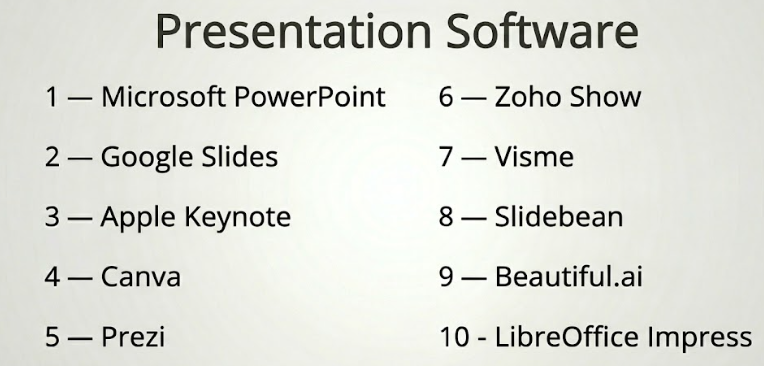
Top 10 Presentation Software Tools
#1 — Microsoft PowerPoint
Short description: A widely used presentation tool offering robust features for business, education, and enterprise use.
Key Features
- Slide design and templates
- Advanced animations and transitions
- Data visualization tools
- Collaboration features
- Presenter tools
- Integration with office suite
Pros
- Industry standard with broad compatibility
- Rich feature set
Cons
- Can feel complex for beginners
- Subscription required for full features
Platforms / Deployment
Windows / macOS / Web / iOS / Android
Security & Compliance
SSO, MFA; others not publicly stated
Integrations & Ecosystem
Microsoft PowerPoint integrates deeply into productivity workflows.
- Integration with Word and Excel
- Cloud storage support
- Enterprise collaboration tools
Support & Community
Extensive documentation and global user base.
#2 — Google Slides
Short description: A cloud-based presentation tool focused on simplicity and real-time collaboration.
Key Features
- Real-time collaboration
- Cloud-based editing
- Templates and themes
- Version history
- Easy sharing
- Integration with productivity tools
Pros
- Easy to use
- Excellent collaboration features
Cons
- Limited advanced design features
- Requires internet for full functionality
Platforms / Deployment
Web / iOS / Android
Security & Compliance
SSO, MFA; others not publicly stated
Integrations & Ecosystem
- Integration with Google Workspace
- Cloud storage
- Add-ons marketplace
Support & Community
Strong community and documentation.
#3 — Apple Keynote
Short description: A presentation tool known for its sleek design capabilities and smooth animations, popular among Apple users.
Key Features
- High-quality templates
- Smooth animations
- Multimedia integration
- Collaboration tools
- Presenter tools
Pros
- Beautiful design output
- Easy to use
Cons
- Limited to Apple ecosystem
- Fewer integrations
Platforms / Deployment
macOS / iOS / Web
Security & Compliance
Not publicly stated
Integrations & Ecosystem
- Apple ecosystem integration
- Cloud sync
- File compatibility
Support & Community
Strong Apple user community.
#4 — Canva
Short description: A cloud-based design platform with presentation capabilities, ideal for marketing and non-designers.
Key Features
- Drag-and-drop editor
- Templates and design assets
- Collaboration tools
- Multimedia support
- Brand kits
Pros
- Extremely easy to use
- Large template library
Cons
- Limited advanced customization
- Not ideal for complex presentations
Platforms / Deployment
Web / iOS / Android
Security & Compliance
SSO, MFA; others not publicly stated
Integrations & Ecosystem
- Social media integrations
- Asset libraries
- Template marketplace
Support & Community
Large user base and extensive tutorials.
#5 — Prezi
Short description: A presentation tool focused on dynamic, zoomable presentations instead of traditional slides.
Key Features
- Zoom-based presentation style
- Templates and themes
- Collaboration tools
- Cloud-based editing
- Multimedia support
Pros
- Unique presentation style
- Engaging visual storytelling
Cons
- Learning curve
- Not suitable for all use cases
Platforms / Deployment
Web / Windows / macOS
Security & Compliance
Not publicly stated
Integrations & Ecosystem
- Cloud integrations
- Presentation tools
- Export options
Support & Community
Moderate documentation and user base.
#6 — Zoho Show
Short description: A cloud-based presentation tool designed for teams using Zoho’s productivity ecosystem.
Key Features
- Slide creation tools
- Collaboration features
- Templates
- Cloud storage
- Broadcast presentations
Pros
- Good for Zoho ecosystem users
- Easy collaboration
Cons
- Limited advanced design features
- Smaller ecosystem
Platforms / Deployment
Web / iOS / Android
Security & Compliance
Not publicly stated
Integrations & Ecosystem
- Zoho apps integration
- Cloud storage
- Business tools
Support & Community
Moderate support and documentation.
#7 — Visme
Short description: A presentation and content creation tool focused on visual storytelling and data visualization.
Key Features
- Presentation templates
- Infographics and charts
- Multimedia integration
- Branding tools
- Collaboration features
Pros
- Strong visual design tools
- Good for marketing content
Cons
- Limited offline capabilities
- Pricing tiers
Platforms / Deployment
Web
Security & Compliance
Not publicly stated
Integrations & Ecosystem
- Data visualization tools
- Asset libraries
- Export options
Support & Community
Growing community and tutorials.
#8 — Slidebean
Short description: An AI-driven presentation tool designed for startups and pitch decks.
Key Features
- AI slide design
- Templates for pitch decks
- Collaboration tools
- Analytics
- Cloud-based editing
Pros
- Fast slide creation
- Ideal for startups
Cons
- Limited customization
- Subscription model
Platforms / Deployment
Web
Security & Compliance
Not publicly stated
Integrations & Ecosystem
- Startup tools
- Cloud integrations
- Analytics tools
Support & Community
Focused support for business users.
#9 — Beautiful.ai
Short description: A presentation tool that uses AI to automate slide design and layout.
Key Features
- AI-powered design
- Smart templates
- Collaboration tools
- Branding controls
- Cloud storage
Pros
- Saves design time
- Consistent slide layouts
Cons
- Limited manual control
- Subscription pricing
Platforms / Deployment
Web
Security & Compliance
Not publicly stated
Integrations & Ecosystem
- Cloud tools
- Branding systems
- Export tools
Support & Community
Moderate documentation and growing user base.
#10 — LibreOffice Impress
Short description: An open-source presentation tool offering basic features for offline use.
Key Features
- Slide creation tools
- Templates
- Basic animations
- File compatibility
- Offline editing
Pros
- Free and open-source
- Works offline
Cons
- Limited advanced features
- Outdated interface
Platforms / Deployment
Windows / macOS / Linux
Security & Compliance
Not publicly stated
Integrations & Ecosystem
- Open-source ecosystem
- File compatibility
- Export tools
Support & Community
Active open-source community.
Comparison Table (Top 10)
| Tool Name | Best For | Platform(s) Supported | Deployment | Standout Feature | Public Rating |
|---|---|---|---|---|---|
| Microsoft PowerPoint | Enterprise use | Win/macOS/Web/iOS/Android | Hybrid | Advanced features | N/A |
| Google Slides | Collaboration | Web/iOS/Android | Cloud | Real-time editing | N/A |
| Apple Keynote | Apple users | macOS/iOS/Web | Hybrid | Smooth animations | N/A |
| Canva | Marketing teams | Web/iOS/Android | Cloud | Templates | N/A |
| Prezi | Visual storytelling | Web/Win/macOS | Hybrid | Zoom presentations | N/A |
| Zoho Show | Zoho users | Web/iOS/Android | Cloud | Ecosystem integration | N/A |
| Visme | Data storytelling | Web | Cloud | Infographics | N/A |
| Slidebean | Startups | Web | Cloud | AI slide creation | N/A |
| Beautiful.ai | Automated design | Web | Cloud | AI layouts | N/A |
| LibreOffice Impress | Free users | Win/macOS/Linux | Desktop | Open-source | N/A |
Evaluation & Scoring of Presentation Software
| Tool Name | Core | Ease | Integrations | Security | Performance | Support | Value | Weighted Total |
|---|---|---|---|---|---|---|---|---|
| Microsoft PowerPoint | 10 | 8 | 10 | 8 | 9 | 10 | 7 | 8.9 |
| Google Slides | 8 | 10 | 9 | 8 | 8 | 9 | 9 | 8.8 |
| Apple Keynote | 8 | 9 | 7 | 7 | 9 | 8 | 8 | 8.1 |
| Canva | 7 | 10 | 8 | 7 | 8 | 9 | 8 | 8.2 |
| Prezi | 7 | 7 | 6 | 6 | 7 | 7 | 7 | 6.9 |
| Zoho Show | 7 | 8 | 8 | 7 | 7 | 7 | 8 | 7.5 |
| Visme | 7 | 8 | 7 | 6 | 7 | 7 | 7 | 7.2 |
| Slidebean | 6 | 9 | 6 | 6 | 7 | 7 | 7 | 7.0 |
| Beautiful.ai | 6 | 9 | 6 | 6 | 7 | 7 | 7 | 7.0 |
| LibreOffice Impress | 6 | 7 | 5 | 6 | 6 | 7 | 10 | 6.9 |
How to interpret:
- Scores are comparative, not absolute.
- Higher scores indicate better balance across features and usability.
- Core features and integrations are weighted more heavily.
- Value reflects pricing relative to capabilities.
- Choose based on your specific presentation needs.
Which Presentation Software Tool Is Right for You?
Solo / Freelancer
- Best: Canva, Google Slides
- Focus on simplicity and speed
SMB
- Best: Zoho Show, Visme
- Balance collaboration and design
Mid-Market
- Best: PowerPoint, Keynote
- Strong features and performance
Enterprise
- Best: Microsoft PowerPoint
- Integration, scalability, and reliability
Budget vs Premium
- Budget: LibreOffice Impress, Google Slides
- Premium: PowerPoint, Prezi
Feature Depth vs Ease of Use
- Deep control: PowerPoint
- Ease: Canva, Google Slides
Integrations & Scalability
- Strongest: PowerPoint, Google Slides
- Moderate: Zoho Show
Security & Compliance Needs
- Enterprise tools offer SSO/MFA
- Open-source tools may lack compliance visibility
Frequently Asked Questions (FAQs)
What is presentation software?
It is software used to create slide-based presentations with text, visuals, and multimedia.
Which tool is best for beginners?
Canva and Google Slides are easy to learn and use.
Are free tools available?
Yes, tools like Google Slides and LibreOffice Impress are free.
Can I collaborate with others?
Yes, cloud-based tools support real-time collaboration.
Do I need internet access?
Cloud tools require internet; desktop tools can work offline.
What formats can I export?
Common formats include PPT, PDF, and video.
Are AI features useful?
Yes, they help automate design and save time.
Can I switch tools easily?
Possible, but formatting may change.
What are common mistakes?
Overloading slides and ignoring design consistency.
Are these tools secure?
Some offer enterprise security features, but details vary.
Conclusion
Presentation software is essential for communicating ideas effectively in today’s digital environment. From AI-powered design to real-time collaboration, these tools offer a wide range of capabilities for different users and use cases.