Introduction
Marketing Automation Platforms are software tools that help businesses automate repetitive marketing tasks such as email campaigns, lead nurturing, customer segmentation, and analytics. Instead of manually sending emails or tracking customer journeys, these platforms streamline workflows and personalize communication at scale.
In the current landscape, where customer expectations are high and digital touchpoints are fragmented, automation is no longer optional. Businesses rely on these platforms to deliver timely, relevant, and consistent experiences across channels. With AI-driven personalization and predictive analytics becoming standard, marketing automation is evolving into a core growth engine.
Common use cases include:
- Lead generation and nurturing workflows
- Email and SMS marketing campaigns
- Customer journey orchestration
- Behavioral segmentation and personalization
- Campaign performance tracking and analytics
What buyers should evaluate:
- Ease of use and onboarding
- Workflow automation capabilities
- AI and personalization features
- Integration with CRM and other tools
- Scalability and performance
- Pricing and ROI potential
- Security and compliance features
- Reporting and analytics depth
- Multi-channel support
Best for: Marketing teams, growth managers, SaaS companies, eCommerce businesses, and enterprises that need to scale customer engagement efficiently.
Not ideal for: Very small businesses with minimal marketing needs, or teams that only require basic email sending (where simpler email marketing tools may suffice).
Key Trends in Marketing Automation Platforms
- AI-powered personalization: Platforms increasingly use machine learning to tailor messaging, predict behavior, and optimize campaigns automatically.
- Omnichannel orchestration: Email alone is no longer enough—platforms now integrate SMS, push notifications, ads, and in-app messaging.
- First-party data focus: With privacy regulations tightening, tools emphasize first-party data collection and management.
- Composable architectures: Businesses prefer modular platforms that integrate seamlessly with existing stacks.
- Real-time automation: Trigger-based workflows react instantly to user actions instead of batch processing.
- Low-code/no-code builders: Drag-and-drop automation builders reduce reliance on developers.
- Privacy and compliance: GDPR and similar frameworks drive stronger consent management and data governance.
- Customer Data Platform (CDP) convergence: Many tools now include built-in CDP capabilities.
- Usage-based pricing models: Flexible pricing aligned with contacts, events, or API usage is becoming common.
- Deeper analytics with AI insights: Predictive analytics and automated reporting are standard expectations.
How We Selected These Tools (Methodology)
The tools listed below were selected based on a balanced evaluation framework:
- Strong market presence and widespread adoption
- Comprehensive feature sets across automation, segmentation, and analytics
- Reliability and performance at scale
- Security posture and enterprise readiness signals
- Integration ecosystem and API flexibility
- Suitability for multiple business sizes (SMB to enterprise)
- Innovation in AI and automation capabilities
- Usability and onboarding experience
- Customer support reputation and documentation quality
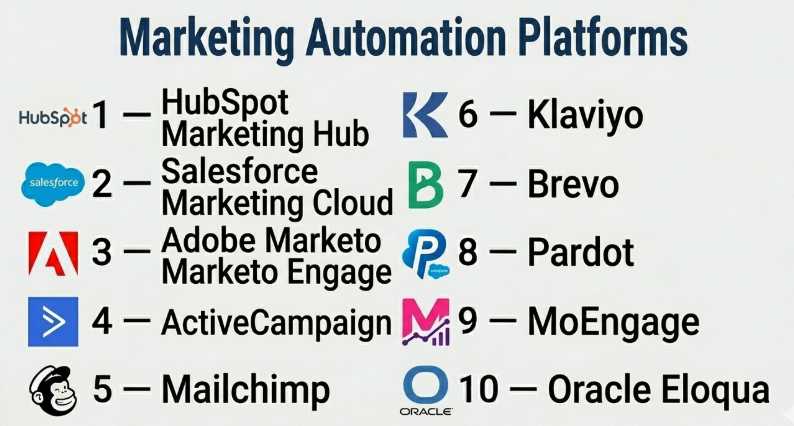
Top 10 Marketing Automation Platforms Tools
#1 — HubSpot Marketing Hub
Short description: A widely adopted all-in-one marketing automation platform designed for SMBs to enterprises, offering CRM integration, automation, and analytics.
Key Features
- Visual workflow automation builder
- Email marketing and campaign management
- Built-in CRM integration
- Lead scoring and segmentation
- Landing pages and forms
- Marketing analytics dashboard
- AI-powered content recommendations
Pros
- User-friendly interface
- Strong all-in-one ecosystem
- Excellent onboarding experience
Cons
- Can become expensive at scale
- Limited flexibility for advanced customization
Platforms / Deployment
- Web
- Cloud
Security & Compliance
- SSO/SAML, MFA, encryption
- GDPR support
- SOC 2 (commonly associated; exact scope varies)
Integrations & Ecosystem
HubSpot integrates with a wide range of business tools including CRM systems, eCommerce platforms, and analytics tools.
- Salesforce
- Shopify
- Slack
- Zapier
- REST APIs
Support & Community
Strong documentation, onboarding programs, and a large global community. Tiered support available.
#2 — Salesforce Marketing Cloud
Short description: Enterprise-grade marketing automation platform designed for large organizations requiring advanced personalization and multi-channel orchestration.
Key Features
- Journey Builder for customer journeys
- AI-driven personalization (Einstein AI)
- Email, SMS, and ad management
- Advanced segmentation
- Data integration with Salesforce CRM
- Real-time engagement tracking
Pros
- Highly scalable
- Deep personalization capabilities
- Strong enterprise ecosystem
Cons
- Complex setup
- High cost
Platforms / Deployment
- Web
- Cloud
Security & Compliance
- SSO, MFA, encryption, RBAC
- GDPR support
- SOC 2 (varies)
Integrations & Ecosystem
Deep integration within Salesforce ecosystem and third-party tools.
- Salesforce CRM
- MuleSoft
- Google Analytics
- APIs
Support & Community
Enterprise-level support with dedicated account management.
#3 — Adobe Marketo Engage
Short description: A robust B2B marketing automation platform known for lead management and advanced campaign workflows.
Key Features
- Lead lifecycle management
- Advanced segmentation
- Account-based marketing (ABM)
- Email marketing automation
- Analytics and reporting
- AI-driven insights
Pros
- Strong B2B capabilities
- Flexible automation workflows
- Mature platform
Cons
- Steep learning curve
- Interface can feel outdated
Platforms / Deployment
- Web
- Cloud
Security & Compliance
- SSO, encryption
- GDPR support
- Not publicly stated for other certifications
Integrations & Ecosystem
Integrates with CRM and enterprise tools.
- Salesforce
- Microsoft Dynamics
- APIs
Support & Community
Strong enterprise support and community resources.
#4 — ActiveCampaign
Short description: A popular SMB-focused marketing automation platform combining email marketing, CRM, and automation.
Key Features
- Email automation workflows
- CRM integration
- Behavioral tracking
- Segmentation tools
- SMS marketing
- Predictive sending
Pros
- Affordable for SMBs
- Easy to use
- Strong automation features
Cons
- Limited enterprise features
- Reporting can be basic
Platforms / Deployment
- Web
- Cloud
Security & Compliance
- Encryption, GDPR support
- Not publicly stated for certifications
Integrations & Ecosystem
- Shopify
- WooCommerce
- Zapier
- APIs
Support & Community
Good documentation and responsive support.
#5 — Mailchimp
Short description: A well-known platform for email marketing and automation, ideal for small businesses and startups.
Key Features
- Email campaign builder
- Basic automation workflows
- Audience segmentation
- Analytics dashboard
- Landing pages
- AI content suggestions
Pros
- Easy to get started
- Free tier available
- Strong brand recognition
Cons
- Limited advanced automation
- Can become costly as list grows
Platforms / Deployment
- Web / Mobile
- Cloud
Security & Compliance
- Encryption, GDPR support
- Not publicly stated for certifications
Integrations & Ecosystem
- Shopify
- WordPress
- APIs
Support & Community
Extensive documentation and tutorials.
#6 — Klaviyo
Short description: A marketing automation platform focused on eCommerce businesses with strong data-driven personalization.
Key Features
- Email and SMS automation
- Customer segmentation
- Predictive analytics
- eCommerce integrations
- Campaign performance tracking
Pros
- Excellent for eCommerce
- Strong data insights
- Easy integration with stores
Cons
- Limited outside eCommerce
- Pricing scales quickly
Platforms / Deployment
- Web
- Cloud
Security & Compliance
- Encryption, GDPR support
- Not publicly stated for certifications
Integrations & Ecosystem
- Shopify
- Magento
- APIs
Support & Community
Good support for eCommerce users.
#7 — Brevo (formerly Sendinblue)
Short description: A cost-effective marketing automation platform offering email, SMS, and CRM features.
Key Features
- Email marketing automation
- SMS campaigns
- CRM capabilities
- Workflow builder
- Transactional emails
Pros
- Affordable pricing
- Multi-channel support
- Easy to use
Cons
- Limited advanced analytics
- Smaller ecosystem
Platforms / Deployment
- Web
- Cloud
Security & Compliance
- GDPR support
- Not publicly stated for certifications
Integrations & Ecosystem
- WordPress
- Shopify
- APIs
Support & Community
Basic support with growing community.
#8 — Pardot (Salesforce Account Engagement)
Short description: A B2B marketing automation platform designed for alignment with sales teams.
Key Features
- Lead nurturing
- Email automation
- CRM integration
- ROI reporting
- Campaign tracking
Pros
- Strong Salesforce integration
- B2B focus
- Good reporting
Cons
- Limited outside Salesforce ecosystem
- Expensive
Platforms / Deployment
- Web
- Cloud
Security & Compliance
- SSO, encryption
- GDPR support
Integrations & Ecosystem
- Salesforce CRM
- APIs
Support & Community
Enterprise-level support.
#9 — MoEngage
Short description: A customer engagement platform focusing on mobile-first and omnichannel automation.
Key Features
- Push notifications
- Email and SMS campaigns
- Customer journey builder
- AI personalization
- Analytics
Pros
- Strong mobile engagement
- AI capabilities
- Omnichannel focus
Cons
- Less known globally
- Limited enterprise depth
Platforms / Deployment
- Web / Mobile
- Cloud
Security & Compliance
- Not publicly stated
Integrations & Ecosystem
- Mobile SDKs
- APIs
Support & Community
Growing support and documentation.
#10 — Oracle Eloqua
Short description: An enterprise-grade marketing automation platform for complex, large-scale campaigns.
Key Features
- Campaign orchestration
- Lead scoring
- Advanced segmentation
- Analytics and reporting
- CRM integration
Pros
- Enterprise-ready
- Powerful automation
- Scalable
Cons
- Complex interface
- High cost
Platforms / Deployment
- Web
- Cloud
Security & Compliance
- Not publicly stated
Integrations & Ecosystem
- Oracle ecosystem
- CRM integrations
- APIs
Support & Community
Enterprise support with training resources.
Comparison Table (Top 10)
| Tool Name | Best For | Platform(s) Supported | Deployment | Standout Feature | Public Rating |
|---|---|---|---|---|---|
| HubSpot Marketing Hub | SMB to Enterprise | Web | Cloud | All-in-one platform | N/A |
| Salesforce Marketing Cloud | Enterprise | Web | Cloud | AI personalization | N/A |
| Adobe Marketo Engage | B2B Marketing | Web | Cloud | Lead lifecycle mgmt | N/A |
| ActiveCampaign | SMB | Web | Cloud | Automation workflows | N/A |
| Mailchimp | Small businesses | Web/Mobile | Cloud | Ease of use | N/A |
| Klaviyo | eCommerce | Web | Cloud | Predictive analytics | N/A |
| Brevo | SMB budget users | Web | Cloud | SMS + Email | N/A |
| Pardot | B2B Salesforce users | Web | Cloud | CRM alignment | N/A |
| MoEngage | Mobile-first teams | Web/Mobile | Cloud | Omnichannel engagement | N/A |
| Oracle Eloqua | Enterprise | Web | Cloud | Campaign orchestration | N/A |
Evaluation & Scoring of Marketing Automation Platforms
| Tool Name | Core (25%) | Ease (15%) | Integrations (15%) | Security (10%) | Performance (10%) | Support (10%) | Value (15%) | Weighted Total |
|---|---|---|---|---|---|---|---|---|
| HubSpot | 9 | 9 | 9 | 8 | 9 | 9 | 7 | 8.6 |
| Salesforce MC | 10 | 6 | 10 | 9 | 9 | 9 | 6 | 8.5 |
| Marketo | 9 | 6 | 8 | 8 | 9 | 8 | 6 | 7.9 |
| ActiveCampaign | 8 | 9 | 8 | 7 | 8 | 8 | 9 | 8.3 |
| Mailchimp | 7 | 10 | 7 | 7 | 8 | 8 | 8 | 7.9 |
| Klaviyo | 8 | 8 | 8 | 7 | 8 | 8 | 7 | 7.9 |
| Brevo | 7 | 8 | 7 | 6 | 7 | 7 | 9 | 7.5 |
| Pardot | 8 | 6 | 9 | 8 | 8 | 8 | 6 | 7.8 |
| MoEngage | 8 | 7 | 7 | 6 | 8 | 7 | 8 | 7.5 |
| Eloqua | 9 | 5 | 8 | 8 | 9 | 8 | 5 | 7.7 |
How to interpret scores:
- Scores are comparative, not absolute.
- Higher scores indicate stronger overall capability.
- Weighting prioritizes core features and value.
- Enterprise tools score higher in features but lower in ease/value.
- SMB tools often balance usability and affordability.
Which Marketing Automation Platforms Tool Is Right for You?
Solo / Freelancer
- Best choices: Mailchimp, Brevo
- Focus on simplicity and low cost
SMB
- Best choices: HubSpot, ActiveCampaign, Brevo
- Balance between automation and affordability
Mid-Market
- Best choices: HubSpot, Klaviyo, Marketo
- Need scalability and deeper analytics
Enterprise
- Best choices: Salesforce Marketing Cloud, Oracle Eloqua, Marketo
- Focus on scalability, compliance, and integrations
Budget vs Premium
- Budget: Brevo, Mailchimp
- Premium: Salesforce, Adobe, Oracle
Feature Depth vs Ease of Use
- Easy: Mailchimp, HubSpot
- Advanced: Salesforce, Marketo
Integrations & Scalability
- Strong: Salesforce, HubSpot
- Moderate: ActiveCampaign, Klaviyo
Security & Compliance Needs
- Enterprise-grade: Salesforce, Oracle
- Basic: Mailchimp, Brevo
Frequently Asked Questions (FAQs)
What is a marketing automation platform?
A tool that automates marketing tasks like email campaigns, lead nurturing, and analytics to improve efficiency and personalization.
How much do these platforms cost?
Pricing varies widely based on features, contacts, and usage. Entry-level plans may start low, while enterprise tools can be expensive.
Is marketing automation only for large companies?
No, many tools are designed for SMBs and startups with scalable pricing.
How long does implementation take?
It can range from a few hours (simple tools) to several months (enterprise platforms).
What integrations are important?
CRM, eCommerce platforms, analytics tools, and communication channels are key.
Are these platforms secure?
Most offer encryption and GDPR compliance; advanced certifications vary.
Can I switch platforms easily?
Migration is possible but may require data cleanup and workflow rebuilding.
What are common mistakes?
Over-automation, poor segmentation, and ignoring analytics.
Do I need technical skills?
Many platforms offer no-code tools, but advanced setups may require technical expertise.
Are there alternatives?
Yes, simpler email marketing tools or CRM systems with basic automation.
Conclusion
Marketing Automation Platforms have become essential for modern businesses aiming to scale customer engagement and improve efficiency. From SMB-friendly tools like Mailchimp and ActiveCampaign to enterprise solutions like Salesforce Marketing Cloud and Oracle Eloqua, the right choice depends on your business size, goals, and technical needs.