Introduction
Feature Flag Management Tools (also known as feature toggles or feature management platforms) allow teams to enable or disable features in their applications without deploying new code. By separating feature releases from code deployments, these tools help teams reduce risk, accelerate delivery, and control user experiences in real time.
Modern software development increasingly relies on continuous delivery, experimentation, and progressive rollouts. Feature flag tools make it possible to test features with specific user segments, roll out updates gradually, and quickly roll back problematic changes without downtime. They are essential for teams practicing DevOps, agile development, and product-led growth.
Common use cases:
- Gradual feature rollouts
- A/B testing and experimentation
- Canary releases and safe deployments
- Feature toggling for different user segments
- Emergency feature rollback
What buyers should evaluate:
- Feature flagging flexibility and targeting
- Rollout strategies and controls
- Integration with CI/CD pipelines
- Real-time updates and performance impact
- Analytics and experimentation support
- Security and access control
- SDK support for different platforms
- Ease of use for developers and non-developers
- Scalability and reliability
Best for: Developers, DevOps teams, product managers, SaaS companies, and organizations practicing continuous delivery.
Not ideal for: Small projects without frequent releases, static applications, or teams without deployment complexity.
Key Trends in Feature Flag Management Tools
- Feature flags + experimentation convergence: Unified platforms for testing and rollout
- Real-time control and instant rollbacks: Reducing deployment risk
- Server-side and client-side flags: Flexible implementation
- AI-driven targeting: Smarter user segmentation
- Integration with DevOps pipelines: CI/CD automation
- Observability integration: Linking flags with monitoring tools
- Granular permissions and governance: Enterprise control
- Edge-based feature delivery: Faster feature toggling
- Open-source adoption: Developer-driven solutions
- Multi-environment support: Dev, staging, production management
How We Selected These Tools (Methodology)
- Evaluated market adoption and developer popularity
- Assessed feature flagging capabilities and flexibility
- Reviewed integration with CI/CD and DevOps tools
- Considered ease of implementation and SDK support
- Analyzed performance and scalability
- Evaluated security and governance features
- Included tools for SMBs to enterprise
- Reviewed analytics and experimentation support
- Considered pricing and value
- Balanced cloud and open-source solutions
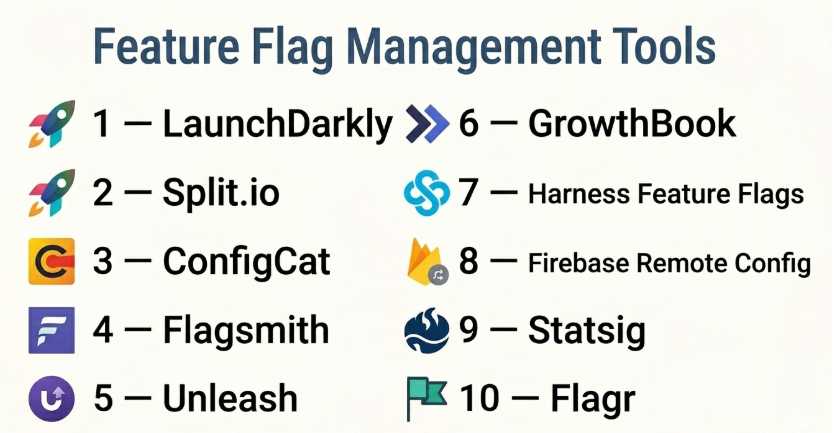
Top 10 Feature Flag Management Tools
#1 — LaunchDarkly
Short description: A leading feature management platform offering advanced feature flagging, experimentation, and rollout capabilities.
Key Features
- Feature flags (client & server-side)
- Gradual rollouts
- Targeting and segmentation
- Experimentation tools
- Real-time updates
- Audit logs
- Multi-environment support
Pros
- Enterprise-grade platform
- Strong integrations
- Reliable and scalable
Cons
- Expensive
- Learning curve
- Requires setup
Platforms / Deployment
Web / Cloud
Security & Compliance
SSO, RBAC, audit logs; Compliance: Not publicly stated
Integrations & Ecosystem
Extensive integrations across DevOps and analytics tools.
- CI/CD tools
- APIs
- Cloud platforms
- Monitoring tools
Support & Community
Strong enterprise support; large developer community.
#2 — Split.io
Short description: A feature delivery platform combining feature flags with experimentation and analytics.
Key Features
- Feature flags
- A/B testing
- Real-time data
- Rollout controls
- Monitoring integration
- APIs and SDKs
Pros
- Strong analytics integration
- Developer-friendly
- Scalable
Cons
- Complex setup
- Limited visual tools
- Pricing concerns
Platforms / Deployment
Web / Cloud
Security & Compliance
Encryption; Compliance: Not publicly stated
Integrations & Ecosystem
Strong DevOps integrations.
- APIs
- Monitoring tools
- Data platforms
Support & Community
Good documentation; active community.
#3 — ConfigCat
Short description: A simple and affordable feature flagging service designed for developers and small teams.
Key Features
- Feature flags
- Targeting rules
- Percentage rollouts
- SDK support
- Dashboard
- Environment management
Pros
- Easy to use
- Affordable
- Quick setup
Cons
- Limited advanced features
- Smaller ecosystem
- Basic analytics
Platforms / Deployment
Web / Cloud
Security & Compliance
Encryption; Compliance: Not publicly stated
Integrations & Ecosystem
Moderate integrations.
- APIs
- Dev tools
- Cloud platforms
Support & Community
Good support; growing community.
#4 — Flagsmith
Short description: An open-source feature flag and remote config platform with cloud and self-hosted options.
Key Features
- Feature flags
- Remote configuration
- User segmentation
- A/B testing
- Self-hosted deployment
- API access
Pros
- Open-source flexibility
- Self-hosting option
- Developer-friendly
Cons
- Requires setup
- Smaller ecosystem
- Limited UI features
Platforms / Deployment
Web / Cloud / Self-hosted
Security & Compliance
Encryption; Compliance: Not publicly stated
Integrations & Ecosystem
Developer-focused integrations.
- APIs
- Dev tools
- Custom integrations
Support & Community
Active open-source community.
#5 — Unleash
Short description: An open-source feature management platform designed for enterprise use cases.
Key Features
- Feature toggles
- Gradual rollouts
- Strategy-based targeting
- Self-hosted deployment
- API access
- Environment support
Pros
- Open-source
- Enterprise-ready
- Flexible
Cons
- Requires technical expertise
- Setup complexity
- Limited UI
Platforms / Deployment
Web / Self-hosted / Cloud
Security & Compliance
RBAC; Compliance: Not publicly stated
Integrations & Ecosystem
Developer-focused ecosystem.
- APIs
- DevOps tools
- Custom integrations
Support & Community
Strong open-source community.
#6 — GrowthBook
Short description: An open-source feature flagging and experimentation platform built for data-driven teams.
Key Features
- Feature flags
- A/B testing
- Experimentation analytics
- Self-hosted option
- API integration
- Data warehouse support
Pros
- Open-source
- Strong experimentation
- Flexible
Cons
- Requires setup
- Smaller ecosystem
- Limited UI
Platforms / Deployment
Web / Cloud / Self-hosted
Security & Compliance
Encryption; Compliance: Not publicly stated
Integrations & Ecosystem
Data-focused integrations.
- Data warehouses
- APIs
- Analytics tools
Support & Community
Growing community.
#7 — Harness Feature Flags
Short description: A feature flag solution integrated within the Harness DevOps platform.
Key Features
- Feature flags
- CI/CD integration
- Rollout controls
- Monitoring integration
- Targeting
- Analytics
Pros
- Strong DevOps integration
- Scalable
- Enterprise-ready
Cons
- Requires Harness ecosystem
- Pricing concerns
- Learning curve
Platforms / Deployment
Web / Cloud
Security & Compliance
Encryption; Compliance: Not publicly stated
Integrations & Ecosystem
DevOps-focused integrations.
- CI/CD tools
- APIs
- Monitoring platforms
Support & Community
Enterprise support.
#8 — Firebase Remote Config
Short description: A feature flag and configuration tool for mobile and web apps within the Firebase ecosystem.
Key Features
- Remote configuration
- Feature flags
- Targeting rules
- A/B testing integration
- Real-time updates
- Analytics integration
Pros
- Easy integration with Firebase
- Good for mobile apps
- Scalable
Cons
- Limited outside Firebase
- Less advanced features
- Ecosystem dependency
Platforms / Deployment
Web / Cloud
Security & Compliance
Encryption; Compliance: Not publicly stated
Integrations & Ecosystem
Firebase ecosystem integrations.
- Analytics tools
- APIs
- Mobile SDKs
Support & Community
Strong developer community.
#9 — Statsig
Short description: A feature management and experimentation platform designed for fast-moving product teams.
Key Features
- Feature flags
- Experimentation
- Analytics
- Rollouts
- Targeting
- API access
Pros
- Fast setup
- Strong experimentation
- Developer-friendly
Cons
- Smaller ecosystem
- Limited enterprise features
- Growing platform
Platforms / Deployment
Web / Cloud
Security & Compliance
Encryption; Compliance: Not publicly stated
Integrations & Ecosystem
Moderate integrations.
- APIs
- Data tools
- Dev platforms
Support & Community
Growing community.
#10 — Flagr
Short description: An open-source feature flagging service designed for scalable experimentation.
Key Features
- Feature flags
- A/B testing
- Targeting
- API-based control
- Self-hosted
- Scalable architecture
Pros
- Open-source
- Scalable
- Flexible
Cons
- Requires technical expertise
- Minimal UI
- Smaller community
Platforms / Deployment
Web / Self-hosted
Security & Compliance
Encryption; Compliance: Not publicly stated
Integrations & Ecosystem
Developer-focused integrations.
- APIs
- Custom tools
- Data systems
Support & Community
Small but active community.
Comparison Table (Top 10)
| Tool Name | Best For | Platform(s) Supported | Deployment | Standout Feature | Public Rating |
|---|---|---|---|---|---|
| LaunchDarkly | Enterprise | Web | Cloud | Advanced flags | N/A |
| Split.io | Dev teams | Web | Cloud | Experimentation | N/A |
| ConfigCat | SMB | Web | Cloud | Simplicity | N/A |
| Flagsmith | Open-source | Web | Hybrid | Self-hosting | N/A |
| Unleash | Enterprise OSS | Web | Hybrid | Flexibility | N/A |
| GrowthBook | Data teams | Web | Hybrid | Experimentation | N/A |
| Harness | DevOps | Web | Cloud | CI/CD integration | N/A |
| Firebase Remote Config | Mobile apps | Web | Cloud | Firebase integration | N/A |
| Statsig | Startups | Web | Cloud | Fast setup | N/A |
| Flagr | Developers | Web | Self-hosted | Open-source | N/A |
Evaluation & Scoring of Feature Flag Management Tools
| Tool Name | Core (25%) | Ease (15%) | Integrations (15%) | Security (10%) | Performance (10%) | Support (10%) | Value (15%) | Weighted Total |
|---|---|---|---|---|---|---|---|---|
| LaunchDarkly | 10 | 7 | 9 | 9 | 9 | 9 | 6 | 8.8 |
| Split.io | 9 | 7 | 9 | 8 | 8 | 8 | 7 | 8.2 |
| ConfigCat | 7 | 9 | 7 | 7 | 8 | 7 | 9 | 7.9 |
| Flagsmith | 8 | 7 | 7 | 8 | 8 | 7 | 9 | 8.0 |
| Unleash | 8 | 6 | 7 | 8 | 8 | 7 | 9 | 7.9 |
| GrowthBook | 8 | 6 | 8 | 8 | 8 | 7 | 9 | 8.0 |
| Harness | 9 | 7 | 9 | 8 | 8 | 8 | 6 | 8.1 |
| Firebase Remote Config | 7 | 8 | 8 | 7 | 8 | 7 | 8 | 7.8 |
| Statsig | 8 | 8 | 7 | 7 | 8 | 7 | 8 | 7.8 |
| Flagr | 7 | 5 | 7 | 7 | 8 | 6 | 9 | 7.4 |
How to interpret the scores:
- Scores are relative comparisons within this category.
- Higher scores indicate stronger overall platforms.
- Enterprise tools excel in scalability and governance.
- Open-source tools offer flexibility and value.
- Choose based on your development workflow and team needs.
Which Feature Flag Management Tool Is Right for You?
Solo / Freelancer
- Best choices: ConfigCat, Statsig
- Focus on simplicity and affordability.
SMB
- Best choices: ConfigCat, Flagsmith
- Balance between ease and flexibility.
Mid-Market
- Best choices: Split.io, GrowthBook
- Focus on experimentation and scalability.
Enterprise
- Best choices: LaunchDarkly, Harness, Unleash
- Focus on governance, integrations, and performance.
Budget vs Premium
- Budget: Flagsmith, GrowthBook
- Premium: LaunchDarkly, Split.io
Feature Depth vs Ease of Use
- Deep features: LaunchDarkly, Harness
- Easy tools: ConfigCat, Statsig
Integrations & Scalability
- Strong: LaunchDarkly, Split.io
- Moderate: Others
Security & Compliance Needs
- Strong: LaunchDarkly, Harness
- Moderate: Others
Frequently Asked Questions (FAQs)
What are feature flags?
They allow you to enable or disable features without deploying code.
Why use feature flags?
They reduce risk and allow safe, controlled releases.
Are they only for developers?
Mostly, but product teams also use them for experimentation.
Can I run A/B tests with feature flags?
Yes, many tools combine both capabilities.
Do they impact performance?
Minimal impact when implemented properly.
Are open-source tools good?
Yes, but they require technical expertise.
Can I roll back features instantly?
Yes, that’s one of the main benefits.
Do they support mobile apps?
Most tools support web and mobile platforms.
Are they secure?
Most tools offer enterprise-grade security controls.
Can I integrate with CI/CD?
Yes, integration with pipelines is a key feature.
Conclusion
Feature Flag Management Tools are essential for modern software delivery, enabling teams to release features safely, experiment effectively, and respond quickly to issues. From enterprise platforms like LaunchDarkly to open-source solutions like Flagsmith and GrowthBook, there are options for every team size and maturity level.