Introduction
Email Marketing Software helps businesses create, send, automate, and analyze email campaigns at scale. These tools are designed to manage subscriber lists, segment audiences, personalize messaging, and track performance—all from a centralized platform.
Email remains one of the highest ROI marketing channels, especially as businesses focus on owned audiences and first-party data. With increasing privacy regulations and reduced reliance on third-party cookies, email marketing software has become a critical component of modern digital strategies. Today’s platforms go beyond simple newsletters—they enable automation, behavioral targeting, AI-driven content, and omnichannel engagement.
Common use cases include:
- Newsletter campaigns and announcements
- Lead nurturing and drip sequences
- Transactional emails (receipts, confirmations)
- Customer retention and re-engagement campaigns
- Promotional and eCommerce campaigns
What buyers should evaluate:
- Ease of use and campaign builder
- Automation and workflow capabilities
- Deliverability and email infrastructure
- Segmentation and personalization features
- Integration with CRM and eCommerce platforms
- Analytics and reporting depth
- Pricing model (contacts, sends, features)
- Compliance and consent management
- Template design and customization
- Scalability and performance
Best for: Marketers, startups, eCommerce businesses, SaaS companies, and enterprises looking to build direct customer relationships and drive engagement.
Not ideal for: Businesses that rely primarily on paid ads or social media with minimal need for owned communication channels, or teams needing only basic one-off email sending.
Key Trends in Email Marketing Software
- AI-driven content creation: Tools now suggest subject lines, email copy, and send times automatically.
- Hyper-personalization: Behavioral data and segmentation enable highly targeted messaging.
- Privacy-first marketing: Stronger consent management and compliance features are becoming standard.
- Omnichannel expansion: Email tools now include SMS, push notifications, and in-app messaging.
- Real-time automation: Trigger-based emails based on user behavior (clicks, purchases, visits).
- Improved deliverability tools: Advanced spam testing, domain authentication, and inbox placement optimization.
- Low-code campaign builders: Drag-and-drop editors simplify campaign creation.
- Integration with CDPs and CRMs: Unified customer data drives better targeting.
- Usage-based pricing: Flexible pricing based on email volume or contacts.
- Advanced analytics: Predictive insights and engagement scoring are becoming more common.
How We Selected These Tools (Methodology)
The following tools were selected based on a structured evaluation:
- Market adoption and brand recognition
- Feature completeness (email + automation + analytics)
- Deliverability reputation and infrastructure reliability
- Integration capabilities with CRM, eCommerce, and SaaS tools
- Scalability across SMB and enterprise use cases
- Security and compliance readiness signals
- Ease of use and onboarding experience
- Innovation in AI and automation features
- Customer support and documentation quality
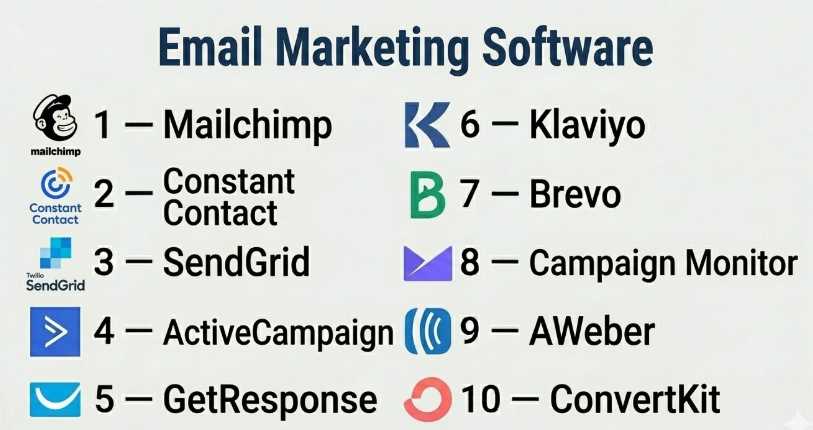
Top 10 Email Marketing Software Tools
#1 — Mailchimp
Short description: A widely used email marketing platform ideal for beginners and small businesses, offering automation, templates, and analytics.
Key Features
- Drag-and-drop email builder
- Pre-designed templates
- Basic automation workflows
- Audience segmentation
- A/B testing
- Analytics dashboard
- AI content suggestions
Pros
- Easy to use for beginners
- Free tier available
- Strong ecosystem
Cons
- Limited advanced automation
- Pricing increases with contacts
Platforms / Deployment
- Web / Mobile
- Cloud
Security & Compliance
- Encryption, GDPR support
- Not publicly stated for certifications
Integrations & Ecosystem
Mailchimp integrates with a wide variety of platforms, especially for eCommerce and CMS use cases.
- Shopify
- WordPress
- Zapier
- APIs
Support & Community
Extensive documentation, tutorials, and a large user base.
#2 — Constant Contact
Short description: A beginner-friendly email marketing tool focused on small businesses and event-based campaigns.
Key Features
- Email templates and editor
- Contact management
- Event marketing tools
- Social media integrations
- Reporting dashboard
Pros
- Simple interface
- Good for small businesses
- Strong onboarding
Cons
- Limited automation features
- Higher pricing for features
Platforms / Deployment
- Web
- Cloud
Security & Compliance
- GDPR support
- Not publicly stated
Integrations & Ecosystem
- Shopify
- Event tools
- APIs
Support & Community
Strong customer support and onboarding resources.
#3 — SendGrid
Short description: A developer-focused email platform specializing in transactional and high-volume email delivery.
Key Features
- Transactional email APIs
- Email marketing campaigns
- Deliverability tools
- Templates and editor
- Analytics
Pros
- Excellent deliverability
- Scalable infrastructure
- Developer-friendly
Cons
- Less intuitive UI for marketers
- Limited design features
Platforms / Deployment
- Web
- Cloud
Security & Compliance
- Encryption, authentication tools
- Not publicly stated for certifications
Integrations & Ecosystem
- APIs
- Cloud platforms
- CRM integrations
Support & Community
Strong developer documentation and API support.
#4 — ActiveCampaign
Short description: A powerful email marketing and automation platform for SMBs focusing on personalization and workflows.
Key Features
- Advanced automation builder
- Email campaigns
- CRM integration
- Segmentation
- Predictive sending
Pros
- Strong automation capabilities
- Good value for SMBs
- Easy to use
Cons
- Learning curve for advanced features
- Reporting could be deeper
Platforms / Deployment
- Web
- Cloud
Security & Compliance
- Encryption, GDPR support
- Not publicly stated
Integrations & Ecosystem
- Shopify
- WooCommerce
- APIs
Support & Community
Responsive support and solid documentation.
#5 — GetResponse
Short description: An all-in-one marketing platform combining email marketing, automation, and landing pages.
Key Features
- Email automation
- Landing page builder
- Webinar tools
- Segmentation
- Analytics
Pros
- All-in-one capabilities
- Competitive pricing
- Easy campaign setup
Cons
- UI can feel dated
- Limited enterprise features
Platforms / Deployment
- Web
- Cloud
Security & Compliance
- GDPR support
- Not publicly stated
Integrations & Ecosystem
- eCommerce tools
- CRM integrations
- APIs
Support & Community
Good support and onboarding materials.
#6 — Brevo (formerly Sendinblue)
Short description: A cost-effective platform offering email, SMS, and automation features for SMBs.
Key Features
- Email campaigns
- SMS marketing
- Workflow automation
- Transactional emails
- CRM features
Pros
- Affordable pricing
- Multi-channel support
- Easy to use
Cons
- Limited advanced analytics
- Smaller ecosystem
Platforms / Deployment
- Web
- Cloud
Security & Compliance
- GDPR support
- Not publicly stated
Integrations & Ecosystem
- WordPress
- Shopify
- APIs
Support & Community
Basic support with growing resources.
#7 — Klaviyo
Short description: A data-driven email marketing platform designed for eCommerce businesses.
Key Features
- Email and SMS automation
- Customer segmentation
- Predictive analytics
- Campaign tracking
- Personalization
Pros
- Excellent for eCommerce
- Strong analytics
- Easy integration
Cons
- Expensive at scale
- Limited outside eCommerce
Platforms / Deployment
- Web
- Cloud
Security & Compliance
- GDPR support
- Not publicly stated
Integrations & Ecosystem
- Shopify
- Magento
- APIs
Support & Community
Strong eCommerce-focused support.
#8 — Campaign Monitor
Short description: A design-focused email marketing platform known for its templates and ease of use.
Key Features
- Email builder
- Templates
- Automation workflows
- Segmentation
- Analytics
Pros
- Great design tools
- Easy to use
- Reliable delivery
Cons
- Limited advanced automation
- Pricing can be high
Platforms / Deployment
- Web
- Cloud
Security & Compliance
- Not publicly stated
Integrations & Ecosystem
- CMS integrations
- APIs
Support & Community
Good documentation and support.
#9 — AWeber
Short description: A long-standing email marketing tool focused on simplicity and reliability.
Key Features
- Email campaigns
- Automation
- Templates
- Subscriber management
- Analytics
Pros
- Easy setup
- Reliable delivery
- Good for beginners
Cons
- Limited advanced features
- Outdated UI
Platforms / Deployment
- Web
- Cloud
Security & Compliance
- Not publicly stated
Integrations & Ecosystem
- Website builders
- APIs
Support & Community
Strong support and tutorials.
#10 — ConvertKit
Short description: An email marketing platform tailored for creators, bloggers, and digital entrepreneurs.
Key Features
- Email automation
- Subscriber tagging
- Landing pages
- Visual automation builder
- Analytics
Pros
- Creator-focused
- Easy automation setup
- Clean interface
Cons
- Limited enterprise features
- Fewer templates
Platforms / Deployment
- Web
- Cloud
Security & Compliance
- Not publicly stated
Integrations & Ecosystem
- Creator tools
- APIs
Support & Community
Active community and helpful documentation.
Comparison Table (Top 10)
| Tool Name | Best For | Platform(s) Supported | Deployment | Standout Feature | Public Rating |
|---|---|---|---|---|---|
| Mailchimp | Beginners | Web/Mobile | Cloud | Ease of use | N/A |
| Constant Contact | Small businesses | Web | Cloud | Event marketing | N/A |
| SendGrid | Developers | Web | Cloud | Email APIs | N/A |
| ActiveCampaign | SMB | Web | Cloud | Automation workflows | N/A |
| GetResponse | SMB | Web | Cloud | All-in-one tools | N/A |
| Brevo | Budget users | Web | Cloud | SMS + Email | N/A |
| Klaviyo | eCommerce | Web | Cloud | Predictive analytics | N/A |
| Campaign Monitor | Designers | Web | Cloud | Templates | N/A |
| AWeber | Beginners | Web | Cloud | Simplicity | N/A |
| ConvertKit | Creators | Web | Cloud | Tag-based automation | N/A |
Evaluation & Scoring of Email Marketing Software
| Tool Name | Core (25%) | Ease (15%) | Integrations (15%) | Security (10%) | Performance (10%) | Support (10%) | Value (15%) | Weighted Total |
|---|---|---|---|---|---|---|---|---|
| Mailchimp | 8 | 10 | 8 | 7 | 8 | 9 | 8 | 8.4 |
| Constant Contact | 7 | 9 | 7 | 6 | 7 | 8 | 7 | 7.5 |
| SendGrid | 9 | 6 | 9 | 7 | 9 | 8 | 7 | 8.0 |
| ActiveCampaign | 9 | 9 | 8 | 7 | 8 | 8 | 9 | 8.6 |
| GetResponse | 8 | 8 | 7 | 6 | 8 | 7 | 8 | 7.7 |
| Brevo | 7 | 8 | 7 | 6 | 7 | 7 | 9 | 7.5 |
| Klaviyo | 9 | 8 | 8 | 7 | 8 | 8 | 7 | 8.0 |
| Campaign Monitor | 7 | 9 | 7 | 6 | 8 | 7 | 7 | 7.4 |
| AWeber | 7 | 9 | 6 | 6 | 7 | 8 | 7 | 7.3 |
| ConvertKit | 8 | 9 | 7 | 6 | 8 | 8 | 8 | 7.9 |
How to interpret scores:
- Scores are relative comparisons across tools, not absolute benchmarks.
- Higher scores indicate stronger overall balance of features and usability.
- SMB tools often score higher in ease and value.
- Developer and enterprise tools score higher in performance and integrations.
- Choose based on your specific needs, not just the highest score.
Which Email Marketing Software Tool Is Right for You?
Solo / Freelancer
- Best choices: ConvertKit, Mailchimp, AWeber
- Focus on simplicity, affordability, and ease of automation
SMB
- Best choices: ActiveCampaign, Brevo, GetResponse
- Need automation, integrations, and cost efficiency
Mid-Market
- Best choices: ActiveCampaign, Klaviyo
- Require advanced segmentation and analytics
Enterprise
- Best choices: SendGrid, Klaviyo
- Focus on scalability, API access, and deliverability
Budget vs Premium
- Budget: Brevo, Mailchimp
- Premium: Klaviyo, ActiveCampaign
Feature Depth vs Ease of Use
- Easy: Mailchimp, Constant Contact
- Advanced: ActiveCampaign, SendGrid
Integrations & Scalability
- Strong: SendGrid, ActiveCampaign
- Moderate: Mailchimp, GetResponse
Security & Compliance Needs
- Stronger controls: SendGrid
- Basic needs: Mailchimp, AWeber
Frequently Asked Questions (FAQs)
What is email marketing software?
It is a tool used to create, send, automate, and analyze email campaigns for marketing and communication purposes.
How much does email marketing software cost?
Costs vary based on contacts, email volume, and features. Many tools offer free tiers and scalable pricing.
Which tool is best for beginners?
Mailchimp and Constant Contact are widely considered beginner-friendly.
Can I automate emails?
Yes, most platforms support automation such as drip campaigns and triggered emails.
What is deliverability?
Deliverability refers to the ability of emails to reach inboxes instead of spam folders.
Do I need coding skills?
No, most tools provide drag-and-drop editors. Developer tools like SendGrid may require coding.
Can I integrate with my CRM?
Yes, most platforms integrate with popular CRM systems.
Is email marketing still effective?
Yes, it remains one of the highest ROI marketing channels.
What are common mistakes?
Poor segmentation, over-emailing, and ignoring analytics.
Can I switch tools later?
Yes, but migration may require effort in moving contacts and workflows.
Conclusion
Email Marketing Software remains a foundational tool for building direct relationships with customers. Whether you’re a solo creator using ConvertKit, an SMB leveraging ActiveCampaign, or a large business relying on SendGrid or Klaviyo, the right platform depends on your goals, scale, and technical needs.