Introduction
API Management Platforms are tools that help organizations design, publish, secure, monitor, and scale APIs (Application Programming Interfaces). In simple terms, they act as the control center for how applications communicate with each other—whether internally or with external partners and developers.
As businesses become increasingly digital and interconnected, APIs are no longer optional—they are core infrastructure. In the current landscape, companies rely on APIs for everything from mobile apps and SaaS integrations to AI services and microservices architectures.
Common use cases include:
- Managing internal microservices communication
- Exposing APIs to partners or third-party developers
- Securing and monitoring API traffic
- Monetizing APIs as products
- Integrating cloud services and SaaS platforms
What buyers should evaluate:
- API gateway performance and scalability
- Security features (authentication, rate limiting, encryption)
- Developer portal and documentation tools
- Analytics and monitoring capabilities
- Integration support and ecosystem
- Deployment flexibility (cloud, hybrid, on-premise)
- Pricing structure and cost predictability
- Ease of use and onboarding
- Compliance and governance features
Best for:
Enterprises, SaaS companies, fintech firms, and tech-driven startups that rely heavily on APIs for product delivery, integrations, or partner ecosystems.
Not ideal for:
Small businesses with minimal API usage or static websites may not need a full API management platform. In such cases, lightweight API gateways or backend frameworks may be sufficient.
Key Trends in API Management Platforms
- AI-driven API governance: Platforms are using AI to detect anomalies, optimize traffic, and suggest improvements in API design.
- Shift to API-first architecture: Organizations are building products with APIs as the primary interface rather than an afterthought.
- Rise of GraphQL and event-driven APIs: Beyond REST, platforms are supporting modern API paradigms like GraphQL and async/event-based APIs.
- Zero-trust security models: Strong authentication, tokenization, and identity-based access controls are becoming standard.
- Hybrid and multi-cloud deployments: Businesses demand flexibility to run APIs across cloud providers and on-premise environments.
- API monetization features: Built-in billing, usage tracking, and subscription management for API products.
- Developer experience focus: Enhanced portals, auto-generated documentation, and SDKs to attract developers.
- Edge computing integration: APIs are being deployed closer to users for lower latency.
- Compliance automation: Tools increasingly support regulatory compliance with built-in auditing and reporting.
How We Selected These Tools (Methodology)
The following tools were selected based on a balanced evaluation of:
- Market adoption and brand credibility
- Feature completeness across API lifecycle
- Performance and scalability capabilities
- Security and governance features
- Integration ecosystem and extensibility
- Support for modern API standards (REST, GraphQL, event-driven)
- Deployment flexibility (cloud, hybrid, on-premise)
- Developer experience and usability
- Customer fit across SMB, mid-market, and enterprise segments
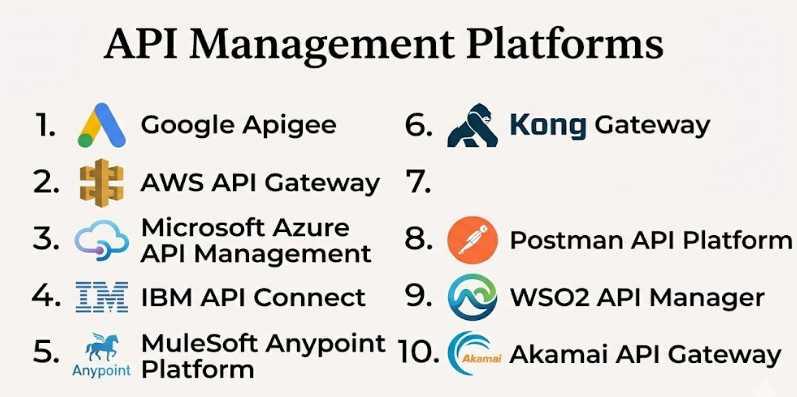
Top 10 API Management Platforms
#1 — Google Apigee
Short description: A full lifecycle API management platform designed for enterprises needing advanced analytics, security, and scalability.
Key Features
- API gateway and traffic management
- Advanced analytics and monitoring
- Developer portal with documentation tools
- API monetization capabilities
- Security policies and threat protection
- Support for REST and GraphQL APIs
Pros
- Strong analytics and insights
- Scales well for enterprise workloads
Cons
- Complex setup for beginners
- Premium pricing
Platforms / Deployment
Cloud / Hybrid
Security & Compliance
SSO, RBAC, encryption, audit logs. Compliance: Not publicly stated
Integrations & Ecosystem
Integrates well with cloud services and enterprise systems.
- Google Cloud ecosystem
- CI/CD tools
- Identity providers
- Monitoring tools
Support & Community
Strong enterprise support with extensive documentation and training resources.
#2 — AWS API Gateway
Short description: A scalable API management solution tightly integrated with AWS services.
Key Features
- Serverless API hosting
- Traffic throttling and caching
- Authentication with IAM and Cognito
- Monitoring via CloudWatch
- REST and WebSocket APIs
Pros
- Seamless AWS integration
- Pay-as-you-go pricing
Cons
- Vendor lock-in
- Limited flexibility outside AWS
Platforms / Deployment
Cloud
Security & Compliance
IAM, encryption, RBAC. Compliance: Not publicly stated
Integrations & Ecosystem
Deep AWS ecosystem integration.
- Lambda
- DynamoDB
- S3
- CloudWatch
Support & Community
Extensive documentation; strong developer community.
#3 — Microsoft Azure API Management
Short description: A comprehensive API platform for enterprises using Azure cloud services.
Key Features
- API gateway and lifecycle management
- Developer portal
- Analytics dashboard
- Policy-based security
- Hybrid deployment options
Pros
- Strong Microsoft ecosystem
- Hybrid capabilities
Cons
- Learning curve
- Cost complexity
Platforms / Deployment
Cloud / Hybrid
Security & Compliance
SSO, RBAC, encryption. Compliance: Not publicly stated
Integrations & Ecosystem
- Azure services
- Active Directory
- DevOps tools
Support & Community
Enterprise-grade support and documentation.
#4 — IBM API Connect
Short description: Enterprise-grade API management platform with strong governance and security features.
Key Features
- API lifecycle management
- Built-in security policies
- Developer portal
- Analytics and monitoring
- API monetization
Pros
- Strong governance features
- Reliable for large enterprises
Cons
- Expensive
- Complex UI
Platforms / Deployment
Cloud / Self-hosted / Hybrid
Security & Compliance
RBAC, encryption, audit logs. Compliance: Not publicly stated
Integrations & Ecosystem
- IBM Cloud
- Legacy systems
- Enterprise tools
Support & Community
Strong enterprise support; smaller developer community.
#5 — MuleSoft Anypoint Platform
Short description: Integration-focused platform combining API management with integration capabilities.
Key Features
- API lifecycle management
- Integration builder
- API gateway
- Analytics and monitoring
- Pre-built connectors
Pros
- Excellent for integrations
- Strong enterprise features
Cons
- High cost
- Complex for small teams
Platforms / Deployment
Cloud / Hybrid
Security & Compliance
SSO, RBAC. Compliance: Not publicly stated
Integrations & Ecosystem
- Salesforce ecosystem
- SaaS apps
- Databases
Support & Community
Strong support; active enterprise community.
#6 — Kong Gateway
Short description: Open-source API gateway with enterprise extensions for scalability and security.
Key Features
- High-performance API gateway
- Plugin-based architecture
- Microservices support
- Traffic control
- Security plugins
Pros
- Highly customizable
- Open-source flexibility
Cons
- Requires technical expertise
- Enterprise features cost extra
Platforms / Deployment
Cloud / Self-hosted / Hybrid
Security & Compliance
RBAC, plugins for security. Compliance: Not publicly stated
Integrations & Ecosystem
- Kubernetes
- DevOps tools
- Plugins ecosystem
Support & Community
Large open-source community; enterprise support available.
#7 — Tyk
Short description: Developer-friendly API management platform with open-source and enterprise versions.
Key Features
- API gateway
- Developer portal
- Analytics dashboard
- GraphQL support
- Flexible deployment
Pros
- Easy to deploy
- Open-source option
Cons
- Limited enterprise features vs competitors
- Smaller ecosystem
Platforms / Deployment
Cloud / Self-hosted / Hybrid
Security & Compliance
RBAC, encryption. Compliance: Not publicly stated
Integrations & Ecosystem
- Kubernetes
- CI/CD tools
- Identity providers
Support & Community
Growing community; good documentation.
#8 — Postman API Platform
Short description: Developer-centric platform focused on API design, testing, and collaboration.
Key Features
- API design and testing tools
- Collaboration features
- API monitoring
- Mock servers
- Documentation generation
Pros
- Excellent for developers
- Easy to use
Cons
- Limited gateway features
- Not full lifecycle management
Platforms / Deployment
Web / Windows / macOS / Linux
Security & Compliance
Not publicly stated
Integrations & Ecosystem
- CI/CD tools
- Git platforms
- Testing frameworks
Support & Community
Very strong global developer community.
#9 — WSO2 API Manager
Short description: Open-source API management solution with enterprise-grade capabilities.
Key Features
- API gateway
- Analytics
- Developer portal
- Identity and access management
- Multi-cloud support
Pros
- Open-source flexibility
- Strong feature set
Cons
- Complex setup
- Requires maintenance
Platforms / Deployment
Cloud / Self-hosted / Hybrid
Security & Compliance
SSO, RBAC. Compliance: Not publicly stated
Integrations & Ecosystem
- Identity systems
- Enterprise apps
- Cloud platforms
Support & Community
Active open-source community; enterprise support available.
#10 — Akamai API Gateway (formerly Linode / legacy integrations)
Short description: API management with a strong focus on edge delivery and performance.
Key Features
- Edge-based API delivery
- Security and rate limiting
- Traffic optimization
- Monitoring tools
- CDN integration
Pros
- High performance
- Strong global delivery
Cons
- Limited developer tooling
- Less flexible for complex workflows
Platforms / Deployment
Cloud
Security & Compliance
Encryption, rate limiting. Compliance: Not publicly stated
Integrations & Ecosystem
- CDN services
- Security tools
- Cloud services
Support & Community
Enterprise support; moderate community presence.
Comparison Table (Top 10)
| Tool Name | Best For | Platform(s) Supported | Deployment | Standout Feature | Public Rating |
|---|---|---|---|---|---|
| Google Apigee | Enterprise APIs | Web | Cloud/Hybrid | Advanced analytics | N/A |
| AWS API Gateway | AWS users | Web | Cloud | Serverless APIs | N/A |
| Azure API Management | Microsoft ecosystem | Web | Cloud/Hybrid | Hybrid support | N/A |
| IBM API Connect | Large enterprises | Web | Cloud/Hybrid | Governance | N/A |
| MuleSoft Anypoint | Integrations | Web | Cloud/Hybrid | Connectors | N/A |
| Kong Gateway | DevOps teams | Web/Linux | Hybrid | Plugin system | N/A |
| Tyk | SMBs & dev teams | Web/Linux | Hybrid | Open-source | N/A |
| Postman | Developers | Multi-platform | Cloud | API testing | N/A |
| WSO2 API Manager | Open-source users | Web/Linux | Hybrid | IAM integration | N/A |
| Akamai API Gateway | Performance-focused | Web | Cloud | Edge delivery | N/A |
Evaluation & Scoring of API Management Platforms Tools
| Tool Name | Core (25%) | Ease (15%) | Integrations (15%) | Security (10%) | Performance (10%) | Support (10%) | Value (15%) | Weighted Total |
|---|---|---|---|---|---|---|---|---|
| Apigee | 9 | 7 | 9 | 9 | 9 | 8 | 7 | 8.4 |
| AWS API Gateway | 8 | 7 | 9 | 8 | 9 | 8 | 8 | 8.2 |
| Azure API Management | 8 | 7 | 8 | 8 | 8 | 8 | 7 | 7.8 |
| IBM API Connect | 9 | 6 | 8 | 9 | 8 | 8 | 6 | 7.9 |
| MuleSoft | 9 | 6 | 9 | 8 | 8 | 8 | 6 | 7.9 |
| Kong | 8 | 6 | 8 | 8 | 9 | 7 | 8 | 7.9 |
| Tyk | 7 | 7 | 7 | 7 | 8 | 7 | 8 | 7.4 |
| Postman | 6 | 9 | 7 | 6 | 7 | 8 | 9 | 7.5 |
| WSO2 | 8 | 6 | 8 | 8 | 8 | 7 | 8 | 7.7 |
| Akamai | 7 | 7 | 7 | 8 | 9 | 7 | 7 | 7.6 |
How to interpret the scores:
- Scores are relative comparisons across tools, not absolute benchmarks.
- A higher weighted total indicates a more balanced platform across all criteria.
- Enterprise tools often score higher in features but lower in ease of use.
- Open-source tools may offer better value but require more technical effort.
- Choose based on your priorities, not just the highest score.
Which API Management Platforms Tool Is Right for You?
Solo / Freelancer
- Best options: Postman, Tyk (open-source)
- Focus on ease of use and low cost
SMB
- Best options: Tyk, Kong
- Balance between cost, flexibility, and scalability
Mid-Market
- Best options: Azure API Management, AWS API Gateway
- Need integration with cloud ecosystems
Enterprise
- Best options: Apigee, MuleSoft, IBM API Connect
- Focus on governance, security, and scale
Budget vs Premium
- Budget: Tyk, WSO2
- Premium: Apigee, MuleSoft
Feature Depth vs Ease of Use
- Feature-rich: Apigee, MuleSoft
- Easy to use: Postman
Integrations & Scalability
- Strong integrations: AWS, Azure, MuleSoft
- High scalability: Kong, Apigee
Security & Compliance Needs
- High security: IBM, Apigee
- Moderate needs: Tyk, Postman
Frequently Asked Questions (FAQs)
What is an API management platform?
It is a tool that helps manage APIs across their lifecycle—design, deployment, security, and monitoring.
How much do these platforms cost?
Pricing varies widely. Some offer free tiers, while enterprise plans can be expensive.
Are open-source tools reliable?
Yes, but they require more setup and maintenance.
Can I use multiple API platforms?
Yes, especially in multi-cloud environments.
What security features are essential?
Authentication, encryption, rate limiting, and monitoring.
How long does implementation take?
From a few days (simple setups) to months (enterprise deployments).
Do these platforms support GraphQL?
Many modern platforms now support GraphQL APIs.
Can APIs be monetized?
Yes, some platforms offer built-in monetization features.
What are common mistakes?
Poor API design, lack of documentation, and weak security.
Is API management needed for small apps?
Not always—basic gateways may suffice.
Conclusion
API Management Platforms have become essential infrastructure for modern digital businesses. Whether you’re building microservices, enabling integrations, or launching API products, the right platform can significantly impact performance, security, and developer experience.